
Indian River Mall was supposed to be the place that kept Vero Beach's retail spending in the county. For a while, that is exactly what it was.
The mall opened in 1996 on 20th Street with four department-store anchors and a full concourse of specialty shops and restaurants. A food court and 24-screen theater followed the next year. Occupancy held above 87 percent into the mid-2000s.
Burdines became Macy's in 2005. Sears closed in October 2019, and Macy's followed six months later. By mid-2019, 24 storefronts sat empty, and the food court had thinned to a handful of options.
The mall is still open. The plan to rebuild its eastern half has been waiting for demolition to begin for months.
Burdines Was the One That Felt Like Florida
Burdines was the one that felt like it belonged here. Not JCPenney, not Sears, not even Dillard's.
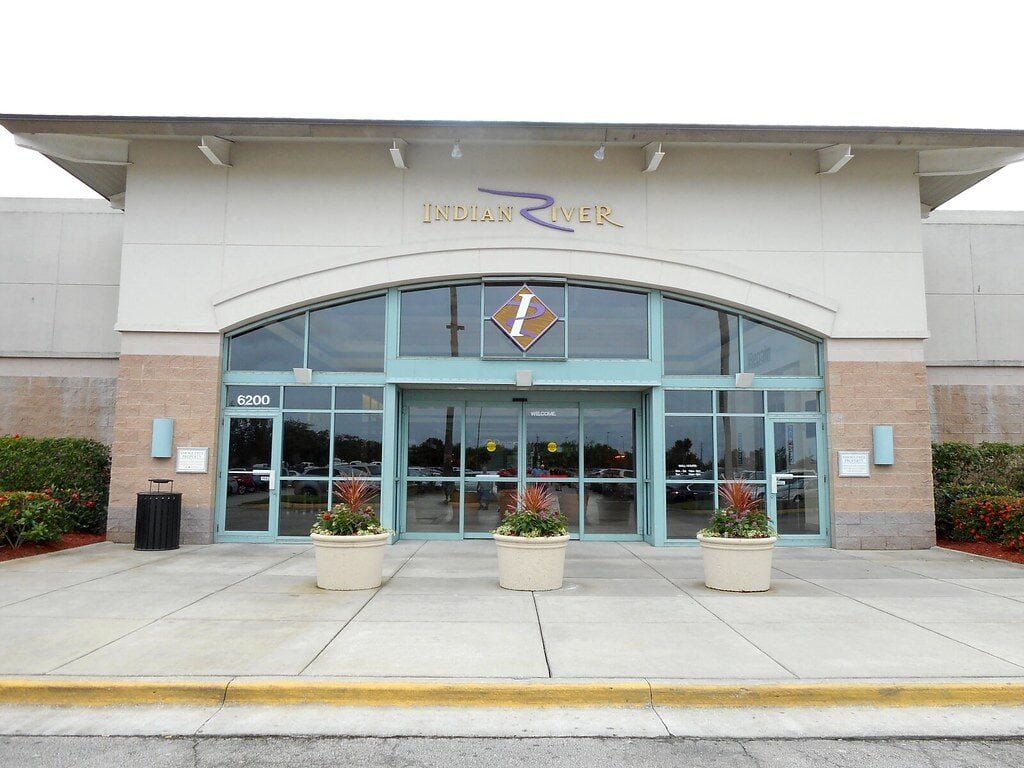
Burdines was the Florida store, the department store the state had grown up with, and it anchored one end of the concourse at 6200 20th Street the way it anchored malls across the state: as the local anchor in a building full of national ones.
The mall opened as a one-story enclosed regional center, about 748,000 square feet, with four department stores arranged around an interior concourse of specialty shops, restaurants, and service tenants.
JCPenney, Sears, and Dillard's took three of the anchors. Burdines took the fourth. Vero Beach had not had anything like it.
The spending that used to travel north to Melbourne or south to Stuart now had a reason to stay in Indian River County.
The building followed the logic of the era: department stores at the ends, specialty shops in between, surface parking surrounding everything, and no particular relationship with 20th Street beyond the entrance drives.
The format worked as long as people came inside.
The Food Court, the Theater, and the Year It Filled Out
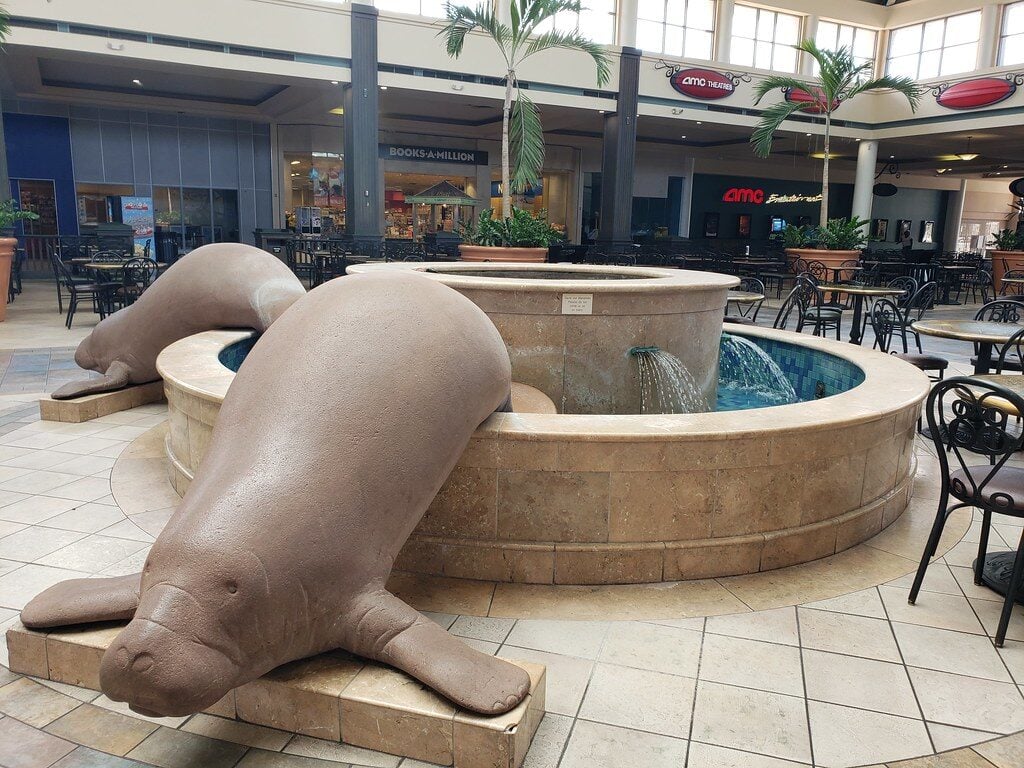
In 1997, the food court and a 24-screen AMC theater were added. The theater became the most durable piece of the mall's identity.
You went to see a movie the way you went to return something to JCPenney: the stores were incidental to the reason you were there.
The food court meant you could eat before or after without leaving the property.
Indian River Commons opened the same year, just east of the mall, carrying Lowe's, Best Buy, Ross Dress for Less, Bed Bath & Beyond, and Michaels.
The open-air center and the enclosed mall were separate properties, but they functioned as one retail district. The 20th Street corridor around 6200 became the commercial spine of the county.
The Peak Years and What Held the Place Together
By 2004, ownership records listed 88.3 percent occupancy. All four original anchors were still open. Gap was there. Disney Store.
RJ Gator's for the casual-dining crowd. The food court had a full lineup of options, and the inline shops ran the length of the concourse.
Burdines still had its name on the building. The 24-screen AMC was booking national releases. Families ran multiple errands under one roof.
Teenagers spent weekend afternoons there. Holiday shopping filled every lane of the parking lot.
Simon Property Group-related ownership held the property as a 50 percent-owned fee asset, one of hundreds in the Simon portfolio, not a flagship, but a healthy mid-sized regional center in a county with no competing enclosed mall.
Burdines Loses Its Name (2005)
Federated Department Stores converted Burdines to the Macy's nameplate in 2005. Every Burdines in Florida became Macy's.
The store at Indian River Mall kept its location and its square footage, but its merchandise mix was brought into line with the Macy's conversion.
The name above the door changed.
Macy's was a perfectly functional department store. It was also the same Macy's in every mall in every state. Burdines had been particular to Florida; Macy's was not particular to anywhere.
For shoppers who had grown up going to Burdines, who thought of it as the Florida store the way you think of a regional grocery chain or a local radio station, the conversion was a specific and irreversible loss.
The four anchors were still open. Nothing visible had changed from a leasing standpoint.
But one of the things that had made the mall feel connected to the place it occupied had been replaced with something that could have been anywhere in America.
Gap, Disney Store, RJ Gator's: The First Exits
Gap, Disney Store, and RJ Gator's all closed in 2008. The financial crisis accelerated a process already underway: national retail chains were becoming more selective about which malls they would stay in.
Malls with strong traffic held their tenants. Those on the weaker end of the performance range lost them.
A closed Gap is a dark storefront where a busy store used to be. A closed Disney Store is a space that used to pull families with children and now pulls no one.
By 2014, the mall's reported occupancy had slipped to 84.3 percent, still above 80 percent, still with four department-store anchors in place.
That year, Simon defaulted on roughly $71 million to $71.3 million in debt tied to Indian River Mall and Indian River Commons together.
The mall entered foreclosure.
In 2015, the property went to auction. No outside bidders came. It transferred for $100 to a lender-controlled structure connected to Wells Fargo as mortgage holder.
The anchor stores were separately owned and stayed open through the transfer.
The Kohan Period: A Mall Learning to Fill Its Own Spaces
Kohan Retail Investment Group bought Indian River Mall in 2017 for approximately $12 million, against a property that had been appraised at more than $40 million in 1998.
Nearly twenty years of national mall decline and department-store contraction had compressed it that far, and by 2019 the appraised value had fallen further, to approximately $10.3 million.
By mid-2019, about 24 storefronts sat empty, and the food court had thinned to a handful of operating options.
A vape shop occupied one space. A military-themed store, another. A pet adoption center. Martial arts studios.
A church. H.A.L.O. No-Kill Rescue was doing real work for the county's animals. Charr-Nix's New Generation School of Beauty was training students.
The church had a congregation. But the concourse that had once held Gap, Hollister, Victoria's Secret, and the Disney Store was now something else entirely.
Kohan had fallen behind on more than $250,000 in property taxes before catching up, and a water-service shutoff had been scheduled before a small unpaid utility balance was cleared.
Sears in October, Macy's in April
Sears had been at Indian River Mall since opening day in 1996. In August 2019, the company announced the Vero Beach store would close as part of a national round of closures.
It shut in October 2019. The Sears Auto Center had already closed earlier in that process.
The Macy's closure followed five months later. In January 2020, Macy's announced the Indian River Mall location would close.
It shut in April 2020. Victoria's Secret and TGI Friday's also closed in 2020. Hollister closed in early 2021.
Two of the four original anchors were gone within six months of each other. The eastern side of the mall became a corridor of shuttered storefronts and darkened anchor boxes.
In the former TGI Friday's space near the AMC entrance, the empty restaurant was remodeled for Casa Amigos, a regional Mexican restaurant operator.
The bar and patio were reworked. The building did not sit empty; it got a replacement. The replacement was not the same thing.
Dillard's stayed. JCPenney stayed. AMC Theatres kept its 24 screens running.
The food court and the theater kept the western half functioning as something that resembled what the mall had been. The eastern half had crossed into a different condition.
DTS, Indian River Commons, and the Decision to Rebuild
DTS Properties II had owned Indian River Commons since 2016, when it bought the adjacent open-air center for approximately $16.5 million.
In March 2024, DTS bought the former Macy's parcel and adjacent west-side property for approximately $4.75 million.
On May 16, 2024, it bought the main mall property for approximately $14.8 million, and the same owner now controlled the enclosed mall and the open-air big-box center to its east.
The April 2025 site plan called for demolishing the former Sears building, altering the eastern mall interior near the former Macy's entrance, and reducing the enclosed footprint by approximately 35 percent.
Five large retail spaces totaling about 115,000 square feet were planned for the Route 60 frontage, plus a drive-through restaurant and landscaped green space replacing what was torn down.
Sprouts Farmers Market was confirmed as a tenant in 2026. Academy Sports + Outdoors, Nordstrom Rack, and Hobby Lobby were named during the planning period without confirmed signed leases.
Later phases included a proposed 130-room hotel, but a 58-foot design height ran ten feet over the applicable limit.
Residential development would require a land-use amendment because the site's Regional Commercial classification did not allow multifamily housing without additional approvals.
Indian River Mall Today: Open, Waiting, and in Between
As of late March 2026, no demolition had begun, and no formal county approvals had been issued. The project engineers had not yet responded to the county's latest round of plan comments.
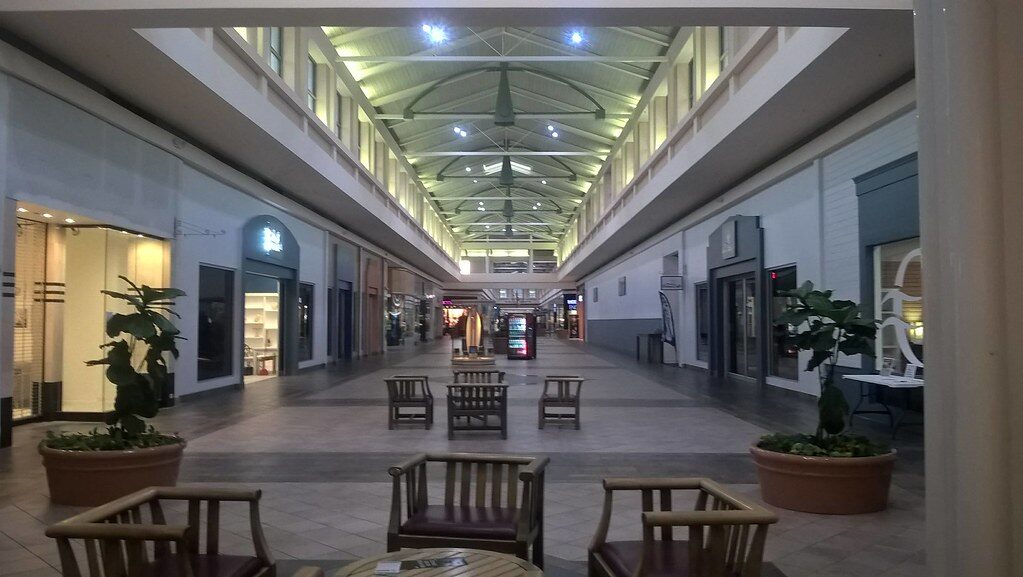
The mall was open. Hours ran Monday through Thursday from 11 a.m. to 7 p.m., Friday and Saturday to 8 p.m., and Sunday from noon to 6 p.m.
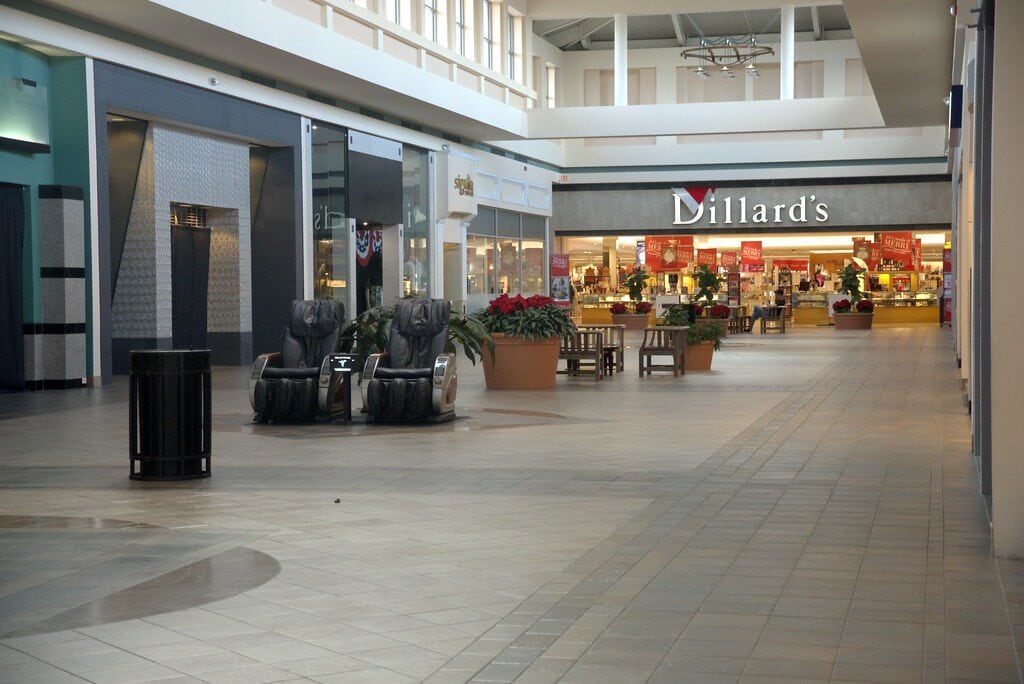
Dillard's and JCPenney were open. AMC Theatres was still open under the Indian River 24 name.
Casa Amigos occupied the old TGI Friday's. GameTime and Gamer's Hut were drawing teenagers on weekends.
H.A.L.O. No-Kill Rescue was still in the building. Charr-Nix's New Generation School of Beauty was still operating.
Brow Arc, Banter, Asian Chao, T-Mobile, Bath & Body Works, Claire's, LensCrafters, Journeys, and Books-A-Million filled pieces of what the concourse had been.
The eastern half of the mall no longer held a Sears, a Macy's, a Burdines, a Gap, a Disney Store, a TGI Friday's, a Victoria's Secret, or a Hollister.
It was now a stretch of enclosed building shaped by former anchors and storefronts that had gone dark at different points over the previous five to eighteen years, depending on which storefront you were standing in front of.
The 2027-2028 completion window depends on permits, approvals, demolition sequencing, and tenant buildouts falling into alignment.
If they do, the property will shrink by roughly a third and turn outward toward the road, with storefronts facing 20th Street, the way 1990s enclosed mall design specifically avoided.
The AMC theater is expected to stay.
The logic of the new property will be legibility from the road and dedicated parking for individual tenants, exactly the format that drew retailers away from the enclosed concourse to begin with.
The concourse that once connected four department stores now connects two.
The 24-screen theater is still there, the most durable structure on the site, the one piece of the 1997 expansion that has outlasted every national retail tenant that came and went in the building around it.
Independent Publisher Notice
BestAttractions is an independent editorial publisher. We are not affiliated with, endorsed by, or acting on behalf of any location, business, property owner, manager, government agency, or organization described in this article. Comments posted on this page are not forwarded to, reviewed by, or acted upon by any entity mentioned in the article. For official inquiries, complaints, applications, bookings, or other requests, please contact the relevant entity directly through its official website or other verified channels.
What about the Orange Blossom Mall in Fort Pierce? It withered and died when the Indian River Mall was built. Seems like these big malls are destined to be white elephants...
While it's true that malls may face challenges, let's remain optimistic that creative solutions and reinvention can breathe new life into these spaces, ensuring they continue to serve their communities and create fond memories for generations to come.
Thank you for the historical on the mall. Maybe we can write an article that will entice businesses to come back our population is growing explosively, and there are no fine retailers in our area.
It's exciting to see the population in Vero Beach booming, and I believe the Indian River Mall has immense potential to attract top-tier retailers.
A vibrant destination? Seriously? I've lived in Vero for 17 and have watched the mall fade tremendously during that time.
While it's true that the Indian River Mall may not be as vibrant as it once was, I believe that with the right vision and resources, it can be transformed into a top-tier destination for shopping and entertainment in the Vero Beach area.
They should put a go cart track in the mall where sears us to be I group here in vero beach
A go-kart track could be a unique and engaging addition to the mall, offering a fun and exciting activity for visitors of all ages.
i’ve lived here almost 40 years, remember the “little” mall in the center of town, pretty sure there was a Sears and Botnicks (?). now Publix and Hair Cuttery , etc. on 12th St. it’s now a successful and very busy plaza, because of timely and attractive changes. if the now “old”. mall will be able to reinvent itself and get current it will definitely remain an important part of Vero Beach as it’s the only shopping plaza under one roof that we have (and need)
Thank you for sharing your experience and perspective about Vero Beach, Florida. Your comment about the need for the mall to stay current and relevant is spot on.
Another could be done with much of the vacant spaces in the Vero Beach Mall Such as a Musium, large indoor Fresh Water and Salt Water Aquariums like in Baltimore MD. A PHOTO Gallory Featuring New photographers from across Florida and around the USA that changes and features new pieces weekly. A one Wheel shop.
Thanks for sharing your ideas! I agree that incorporating cultural aspects like museums and photo galleries could add a unique touch and appeal to a broader audience.
it would be nice to get a mall back here .. bring new stores and products to this city.. as an resident we have to travel to Jensen Beach or Melbourne to shop why when we have an mall here ...its a shopping mall not an nevermind but bring back the old mall but with new and better STORES!!!! FOR SHOPPING
Thank you for your comment on Indian River Mall. I agree that revitalizing the mall with new stores could greatly benefit the community. It's an exciting prospect and resonates with many residents.
I went to Books-A-Million (BAM) yesterday and was told that they have been kicked out by DTS. BAM had an agreement that they would be relocated in the mall and everything was set. Then BAM was told that DTS wanted Barnes & Noble and not them!!
BAM was included in the redevelopment plans published in 2024. I could not find anything official explaining its apparent departure or confirming Barnes & Noble as the replacement.