
North Port is one city on a map, but it increasingly offers two ways to organize everyday life.
One is the older North Port pattern: established residential plats spread across a very large city, where a house may sit on a quiet street while groceries, work, dinner, and other services remain separate drives.
The other is the Wellen Park model: newer master-planned development built around its own center of gravity, with a downtown, shopping, and other amenities intended to sit closer to daily life.
That split explains why conflicting descriptions can both sound right.
Someone in an established residential area may say North Port has no single downtown that structures the week.
Someone near Downtown Wellen lives around a newly created center
Likewise, "North Port is all new construction" misses the older development pattern, while "North Port is a spread-out Florida city" misses what is being built in the south.
The difference changes how often you get in the car, what "community" feels like, and what you may pay extra to have nearby.
"Old North Port" is a development pattern, not a house age
The first mistake is to sort the city into old homes and new homes.
Older North Port is better understood as an established plat pattern.
Residential streets were laid out across a broad area, and individual lots have been built on at different times.
A newer house can therefore sit inside the older version of North Port.
The home may be recent while the surrounding street network, lot pattern, and relationship to commercial services still follow the dispersed model.
That distinction matters in a city this large. U.S. Census Bureau QuickFacts puts North Port's 2020 land area at 99.38 square miles.
Its estimated population rose from a 2020 estimates base of 75,009 to 96,551 in 2025, a 28.7 percent increase.
Rapid growth inside nearly 100 square miles does not create one uniform living experience.
In established parts of North Port, the house can be the main destination.
You come home to your street and lot, but the rest of the day's tasks may be distributed elsewhere.
The useful question is not whether a supermarket or restaurant exists in North Port.
It is whether the places you use sit naturally between your home and the trips you already make.
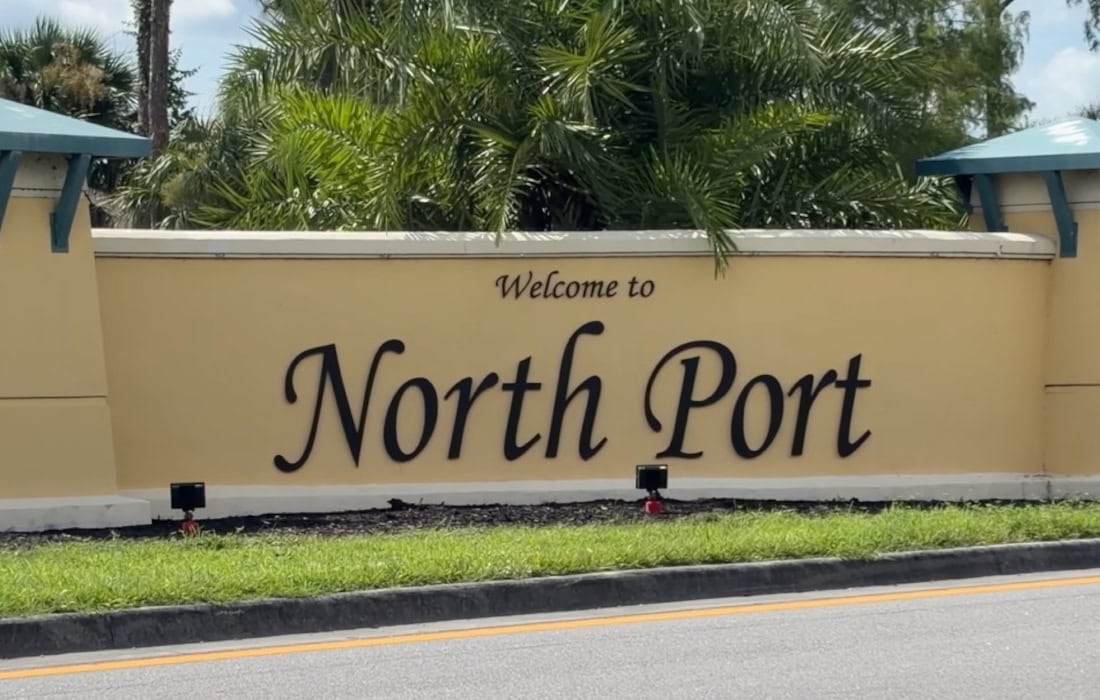
A weekday in established North Port can be a chain of drives
Picture a normal Tuesday. You leave for work, come home, realize you need groceries, and later decide to pick up dinner.
In a dispersed residential setting, those activities can become separate car trips because home, work, retail, and recreation do not necessarily share one compact center.
The Census Bureau reports a mean travel time to work of 29.4 minutes for North Port workers age 16 and older in 2020-2024.
That citywide average cannot predict an individual commute, but it shows why location inside North Port matters.
The upside is separation from commercial activity.
For a buyer who values the home and lot more than having several destinations close together, that may be the point.
The downside appears through repetition.
Add food, exercise, errands, and appointments across a week and the cost of dispersion becomes the number of times ordinary life asks you to start the car.
Wellen Park changes the equation by creating a center
Wellen Park represents the other model.
Instead of adding homes lot by lot across an older residential framework, it is master-planned and is building its own downtown, shopping, and newer amenities.
The advantage is not that every resident can walk everywhere. Master-planned does not mean car-free.
It means more activities may be concentrated in the same part of the city.
The U.S. Environmental Protection Agency's National Walkability Index is useful here because it treats walkability as more than distance.
Its methodology considers street intersection density, proximity to transit, and diversity of land uses.
A destination becomes more useful on foot when the street network connects to it and different kinds of daily activity sit near one another.
That is the practical promise of the Wellen Park model.
If home, food, a social stop, and recreation cluster around the same center, an evening can require fewer disconnected trips even if a car remains part of the day.
A household may still commute elsewhere or drive for specialized services, but some local tasks have a better chance of being combined.
The exact address still matters. A home inside a large planned community is not automatically a short walk from its center.
Test the route rather than buying the word "walkable."

The two models create different kinds of "sense of place"
Established North Port can feel less like a town organized around one civic-commercial core and more like residential pockets connected by roads.
Its identity comes from the street, the house, nearby neighbors, and the routes a resident builds over time.
That can feel pleasantly uncurated. Housing can vary from lot to lot because construction happened across different periods.
For some buyers, that individual character is part of the appeal.
Wellen Park reverses the process.
A master-planned community intentionally puts homes, streets, public-facing spaces, and amenity areas into a common plan.
That can create a more immediate sense that there is a "there" there: a recognizable place to meet, eat, walk, or spend part of the evening.
Neither version is automatically more authentic.
The better fit depends on whether you prefer independence around the home or a more coordinated setting beyond the property line.
Do not assume older means bigger lots or newer means smaller ones
Lot size is one of the easiest places to turn this comparison into a bad shortcut.
An established platted area can have a different streetscape from a master-planned neighborhood, but "old North Port" does not guarantee a large lot.
Wellen Park does not guarantee a small one. Product types, setbacks, lot dimensions, and housing density can vary inside both models.
Compare actual properties.
Look at lot width and depth, distance between homes, front setbacks, sidewalk continuity, driveway placement, and how much of the street is devoted to cars.
Then assess the house separately: age, floor plan, garage placement, outdoor space, and maintenance needs.
A new infill house in established North Port can even provide a middle ground: newer construction inside the older street pattern.
What it does not automatically provide is Wellen Park's concentration of nearby destinations.
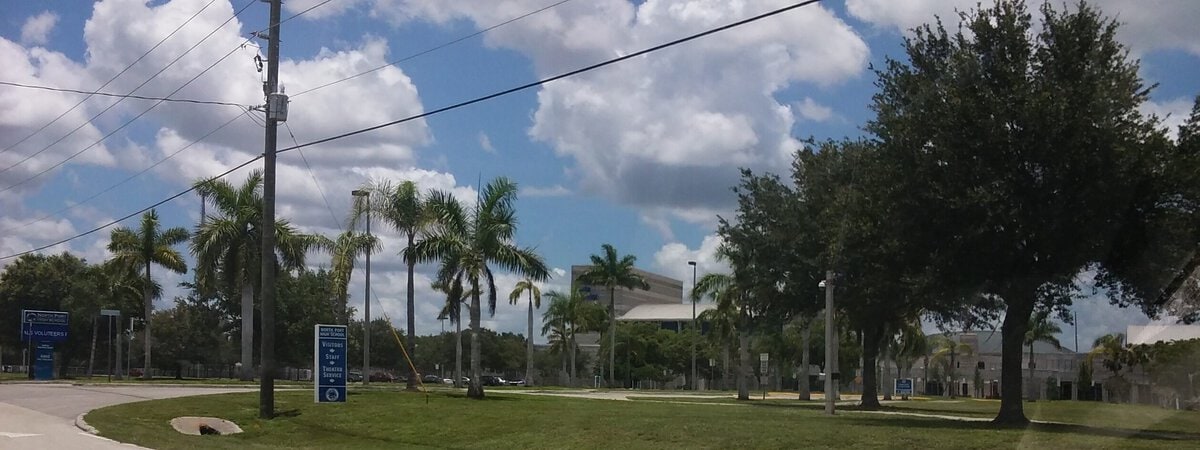
Is a planned-community premium worth paying?
There is no responsible citywide number that answers this.
Whether that premium is worth paying changes with the homes being compared, financing, community fees, insurance, taxes, and market conditions.
Use a matched-home comparison. Start with two properties that are realistic alternatives.
Convert the difference in purchase price and recurring charges into a monthly household cost using your financing terms.
Then compare that cost with what the planned setting changes in your real week.
Count dedicated trips. Where will you buy groceries? Where will you eat on a casual weeknight?
Where will you walk after dinner? How often will you use nearby amenities rather than drive elsewhere?
Does the planned center remove trips you dislike, or does your job and social life still pull you away?
If you would use the closer environment several times a week, paying more for location and planning can buy something tangible: less daily friction.
If you still expect to leave for most work, shopping, dining, and recreation, the premium may be paying mainly for the setting rather than time saved.
The same logic works in reverse. An established address is not a bargain if its location creates a driving routine you already know you will resent.
Test the week, not the sales pitch
The best way to choose between the two North Ports is to rehearse ordinary life from an exact address.
Visit when you would leave for work. Drive the grocery trip you expect to make on a weekday evening.
See whether dinner, exercise, a park, or coffee can be combined with another trip or each becomes a separate outing.
Walk the streets after dinner. Repeat the exercise on a weekend, when commuting matters less and the immediate surroundings matter more.
Then compare the two candidate homes by car starts, separate errand trips, useful destinations close to home, recurring community costs, and the private space you actually receive.
North Port is too large and too fast-growing for "Is it convenient?"
to have one answer. The better question is which version fits the way you already live.
For one household, the established city may offer the right balance of residential separation, individual housing character, and freedom from paying for amenities it would rarely use.
For another, Wellen Park's newer center of gravity may justify a higher housing cost because it turns several weekly tasks into one connected routine.
You are not simply choosing a neighborhood. You are choosing which model of the city gets to shape your week.


Sources and further reading
- https://www.northportfl.gov/
- U.S. Census Bureau QuickFacts: North Port city, Florida
- U.S. Environmental Protection Agency: National Walkability Index User Guide and Methodology
- U.S. Environmental Protection Agency: Smart Location Mapping
Independent Publisher Notice
BestAttractions is an independent editorial publisher. We are not affiliated with, endorsed by, or acting on behalf of any location, business, property owner, manager, government agency, or organization described in this article. Comments posted on this page are not forwarded to, reviewed by, or acted upon by any entity mentioned in the article. For official inquiries, complaints, applications, bookings, or other requests, please contact the relevant entity directly through its official website or other verified channels.