
Sebastian is easy to misunderstand if you arrive with one phrase in mind: "coastal Florida." The city sits beside the Indian River Lagoon, while the Atlantic Ocean is across the barrier-island system.
That sounds like a small geographic distinction. In daily life, it changes almost everything. Sebastian's water-centered routine is built around the lagoon, fishing, boating, parks, and quiet residential streets.
The ocean is close enough to be part of weekends and spontaneous outings, but living here is not the same as stepping out of a beach-town apartment and walking straight to the surf.
The useful question is whether lagoon-side Florida gives you enough of the coastal life you actually want.
The water you live with every day is the lagoon
Sebastian's most immediate water connection is the Indian River Lagoon.
The U.S. Fish and Wildlife Service places Pelican Island National Wildlife Refuge just offshore from Sebastian in the lagoon.
The refuge's public areas include roughly seven miles of trails, and its waters support boating and fishing.
Florida State Parks also describes the Indian River as an estuary and lagoon where ocean saltwater and mainland freshwater mix.
That creates a different everyday relationship with water than a pure beach town.
A weekday evening can mean kayaking, fishing, or spending time beside calmer lagoon water.
For boat owners, that geography can become part of the weekly routine.
For someone whose ideal Florida life revolves around boating, fishing, wildlife, and sunset water views, Sebastian can fit extremely well.
For someone whose main image is surf, sand, and walking to an Atlantic beach every morning, the fit is less automatic.
The Atlantic is an outing, even when it is a frequent one
Sebastian Inlet State Park sits between the Indian River Lagoon and the Atlantic Ocean on the barrier island.
Florida State Parks lists more than three miles of ocean-facing beach there, along with surfing, fishing, paddling, boating, and other coastal recreation.
Sebastian residents can use a real Atlantic beach, but the beach is still a destination.
You pack the car, choose the beach or inlet, cross toward the barrier island, and plan around weather, parking, and the time of day.
That is different from living directly on the ocean side of the county.
The distinction matters most for frequency. If you expect to visit the beach once or twice a week, Sebastian can make the ocean feel very accessible.
If you expect the beach to structure every morning, every dog walk, and most evenings, you may value a barrier-island or beachside address more than you expect.
Before moving, count the coastal activities you actually do. Boating and fishing may favor Sebastian's lagoon position. Daily surf walks may not.
The quieter pace is visible in the demographics
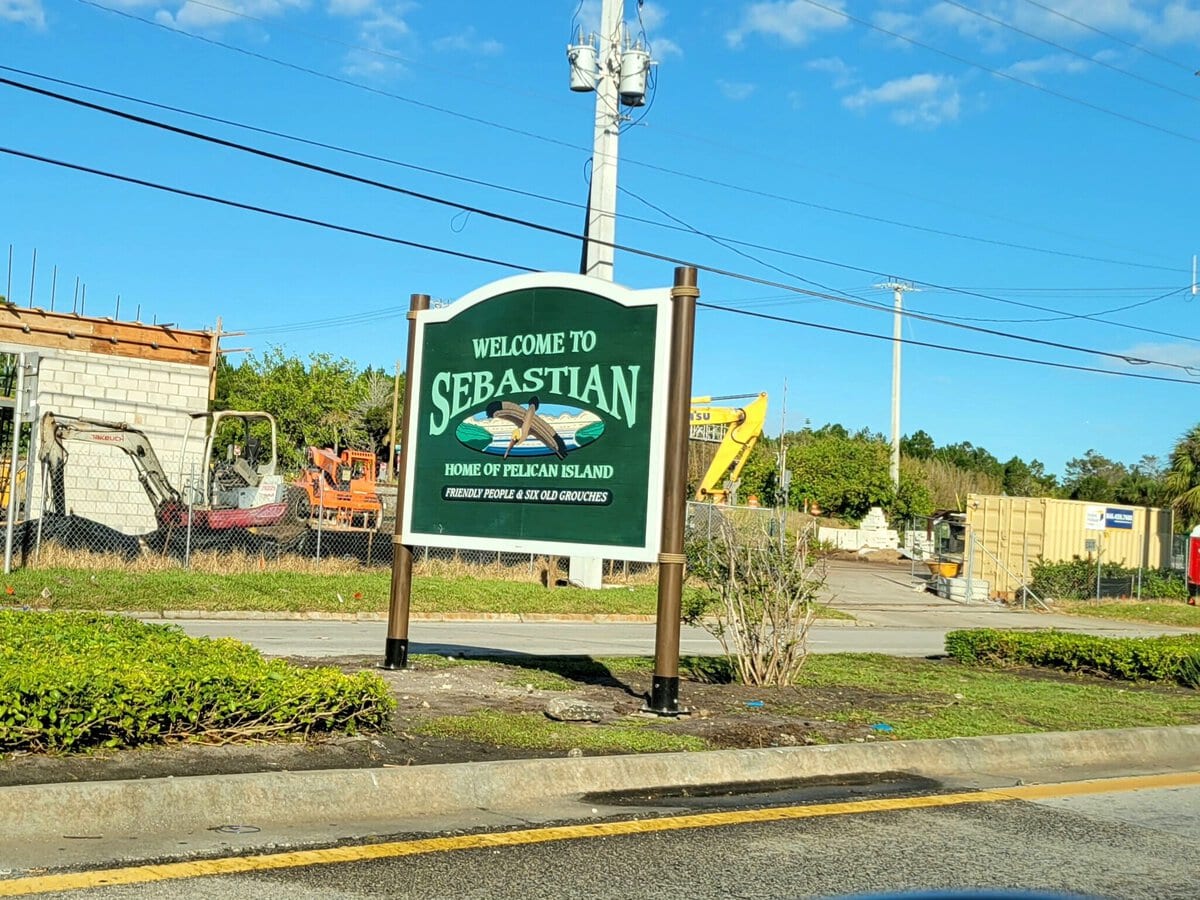
Sebastian is not simply a small city. It is also an older, heavily owner-occupied one.
Census Bureau estimates for 2020-2024 show that 36.8% of residents were 65 or older and 85.2% of occupied housing units were owner-occupied.
About 89.4% of residents age one and older had lived in the same house a year earlier.
Those numbers do not prove that every street is quiet or that every newcomer is retired.
They do explain why a settled, homeowner-oriented routine is a major part of the city's character.
This can be a strength if you want familiar local places and regular outdoor habits.
It can feel limiting if your preferred city life depends on late-night activity, frequent new restaurants, or a dense cultural calendar.
Sebastian rewards people who are comfortable generating their own routine rather than expecting the city to generate one for them.
Working residents should test the job fit before falling for the lifestyle
The employment picture is another place where Sebastian's scale matters.
The Census Bureau reports a mean travel time to work of 31.1 minutes for Sebastian workers age 16 and older in 2020-2024.
At the wider Sebastian-Vero Beach-West Vero Corridor metropolitan level, the Bureau of Labor Statistics reported an average hourly wage of $28.25 in May 2025, below the national average of $33.54.
The local job mix also differs from a large metro.
Food preparation and serving accounted for 12.0% of area employment, office and administrative support 11.6%, sales 11.4%, and healthcare practitioners and technical occupations 8.6%.
Computer and mathematical occupations accounted for 1.2%, compared with 3.4% nationally.
That makes Sebastian especially easy to understand for retirees, remote workers, and people whose careers fit the regional service, healthcare, sales, construction, or related economy.
A specialized professional who needs a deep local employer market should research the exact field before choosing the house.
Housing can look reasonable, but the Florida-specific costs need their own check
Census estimates for 2020-2024 put Sebastian's median owner-occupied home value at $317,000, median monthly owner costs with a mortgage at $1,613, and median gross rent at $1,451.
Those figures are useful baselines, not current asking prices.
More important, a coastal-region purchase should never stop at the purchase price.
Flood zone, insurance terms, roof age, wind mitigation, drainage, and the exact elevation or flood designation of a property can change the real monthly cost.
FEMA's Flood Map Service Center allows searches by exact street address. That is the right level for flood-zone due diligence.
A citywide statement that Sebastian is "safe from flooding" or "in a flood zone" would be too crude to guide a purchase.
Summer changes how the outdoor lifestyle works
Sebastian's outdoor appeal is real, but Florida summer changes the schedule.
At the nearby Vero Beach climate station, National Weather Service 1991-2020 normals put the July average maximum at 90.5°F, the average minimum at 73.3°F, and normal July rainfall at 5.68 inches.
That pushes a lot of outdoor life toward mornings and evenings.
A summer walk, trail ride, fishing trip, or yard project feels very different at 7 a.m. than at mid-afternoon.
Cooler hours and seasons make longer outdoor stretches easier.
St. Sebastian River Preserve State Park adds another layer to that routine.
Florida State Parks lists more than 60 miles of multi-use trails there for hiking, biking, horseback riding, and wildlife viewing.
Sebastian is strongest for people who will actually use that access, not merely like the idea of living near nature.
Who will love Sebastian - and who may outgrow it
Sebastian makes the most sense for someone who wants a smaller Florida city where water and nature matter more than urban intensity.
It is a strong fit for retirees, remote workers with verified internet service, boaters, anglers, people who enjoy wildlife and trails, and households that do not need a large entertainment or employer market close to home.
It is a weaker fit for someone who expects a car-free coastal lifestyle, wants the Atlantic beach woven into every day, or needs big-city career depth and nightlife.
The best moving test is simple: build your ideal week before you choose an address.
Mark how many days involve the lagoon, how many require the ocean, where work happens, where groceries and healthcare happen, and how often you expect to leave the Sebastian-Vero Beach area for entertainment or specialized services.
If most of the week works locally and your favorite version of Florida is quieter, water-centered, and outdoors-heavy, Sebastian's slower scale becomes an advantage.
If what you really want is a beach town, Sebastian may always feel one step removed from the life you pictured.
That is the distinction worth getting right before the housing price or river view makes the decision for you.
Sources and further reading
- U.S. Census Bureau QuickFacts: Sebastian city, Florida
- U.S. Bureau of Labor Statistics: Occupational Employment and Wages in Sebastian-Vero Beach-West Vero Corridor, May 2025
- Florida State Parks: Sebastian Inlet State Park
- Florida State Parks: St. Sebastian River Preserve State Park
- U.S. Fish & Wildlife Service: Pelican Island National Wildlife Refuge
- National Weather Service Melbourne: Vero Beach July 2026 Climate Summary and 1991-2020 Normals
- FEMA Flood Map Service Center
Independent Publisher Notice
BestAttractions is an independent editorial publisher. We are not affiliated with, endorsed by, or acting on behalf of any location, business, property owner, manager, government agency, or organization described in this article.
Comments posted on this page are not forwarded to, reviewed by, or acted upon by any entity mentioned in the article.
For official inquiries, complaints, applications, bookings, or other requests, please contact the relevant entity directly through its official website or other verified channels.