It was late September 1967, and Tampa had something it had never seen before. Walk through the doors of WestShore Plaza, and the Florida heat disappeared.
Inside was a fully air-conditioned mall - long corridors of shops under one roof, foot traffic filling the common areas on opening day and many days after that.
The mall had been taking shape since October 19, 1966, when Maas Brothers opened its three-level, 238,000-square-foot store as the first anchor.
J.C. Penney followed on September 7, 1967, and the formal dedication took place on September 28, 1967.
Developers Strouse, Greenberg & Company and Dreyfuss Properties, working with Boston architect Sumner Schein, were not just building a place to shop.
They wanted a place where people spent the better part of a day.
Beyond the two department stores, the original WestShore had a Pantry Pride supermarket, a Walgreen Drug, an F.W. Woolworth five-and-dime, a Piccadilly Cafeteria, and a bank branch.
A J.C. Penney Auto Center and a Firestone outparcel handled car needs outside the main building.
With 623,400 square feet and 38 stores, the mall covered groceries, banking, lunch, and car maintenance all in one address.
Expansion and a Changing Lineup
The first major expansion of WestShore Plaza was announced in June 1972.
A new northeast wing and a multi-level parking garage would make room for Robinson's of Florida, a two-level, 159,000-square-foot department store.
Robinson's opened on November 4, 1974, alongside 25 additional inline stores - among them Gourmet Wine & Cheese, Record Bar, Casual Corner, and Farrell's Ice Cream Parlour & Restaurant.
WestShore now held a stronger position, though the local market was growing more crowded by the year.
Gateway Mall opened in St. Petersburg in 1968, Sunshine Mall in Clearwater the same year, and Tampa Bay Center arrived in 1976.
Changes kept coming inside the mall, too. Pantry Pride closed on January 27, 1979, and its space was split into five inline stores, with Oshman's Sporting Goods among the arrivals.
The old structure was later expanded and turned into a small food court. By the mid-1980s, the mall had grown to roughly 869,000 square feet and 76 stores.
The anchor names were changing as well. Robinson's became Maison Blanche by March 1988. Dillard's took over that box in August 1991.
And on October 20, 1991, the Maas Brothers store was rebranded as Burdines. The faces on the storefronts changed, but the large anchor spaces stayed occupied throughout.
A Makeover, Woolworth's Exit, and Saks Arrives
Grosvenor International acquired the mall in 1990 and launched a full interior overhaul.
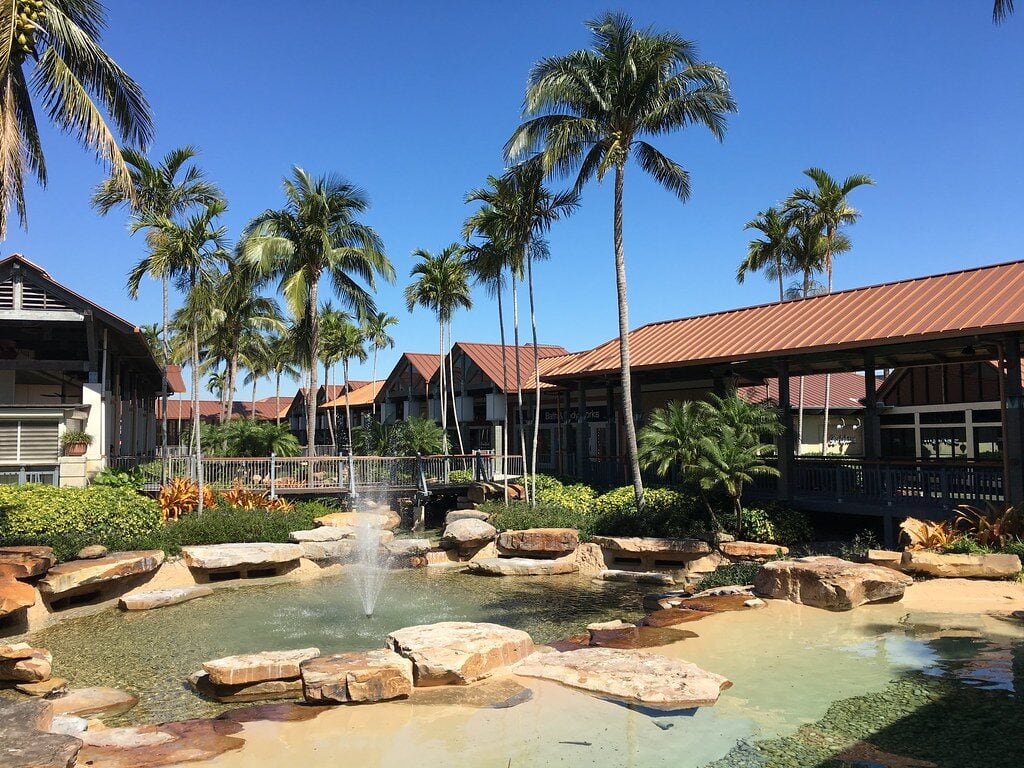
The first phase, priced at $9 million, gave WestShore Plaza a Spanish-Mediterranean look: skylights, marble floors, tile fountains, and palm trees in the common areas.
A three-story bell tower was added over the center court, entrances were rebuilt, and new tenants came in, including Cache, Gymboree, and Audrey Jones.
The Bombay Company relocated to a larger space. That work finished in May 1993.
Woolworth closed in January 1994, and its former space was split by a new east-west concourse, making room for additional inline stores. The mall was visibly moving upmarket.
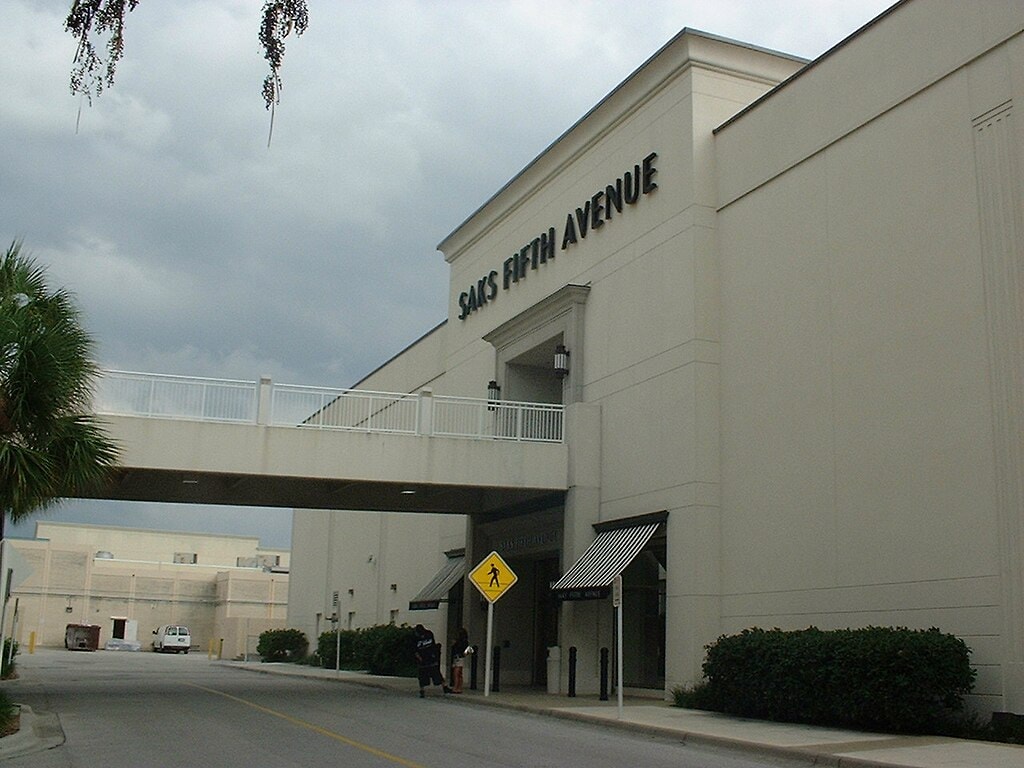
The second phase, announced in 1997, cost $170 million and added three new parking structures along with a two-level, 101,500-square-foot Saks Fifth Avenue on the west side.
Saks opened on November 12, 1998, and its arrival drew other upscale retailers to the property.
The mall that had opened with a supermarket and a five-and-dime in 1967 was now home to one of the most recognizable luxury department store chains in the country.
Dinner, Movies, and a Rival Opens Nearby
The third and final phase of WestShore Plaza's expansion began in 2000, with $85 million going into a rebuild of the mall's southeast corner.
The old food court moved east into the former Pantry Pride structure, freeing up the south edge for a new restaurant district.
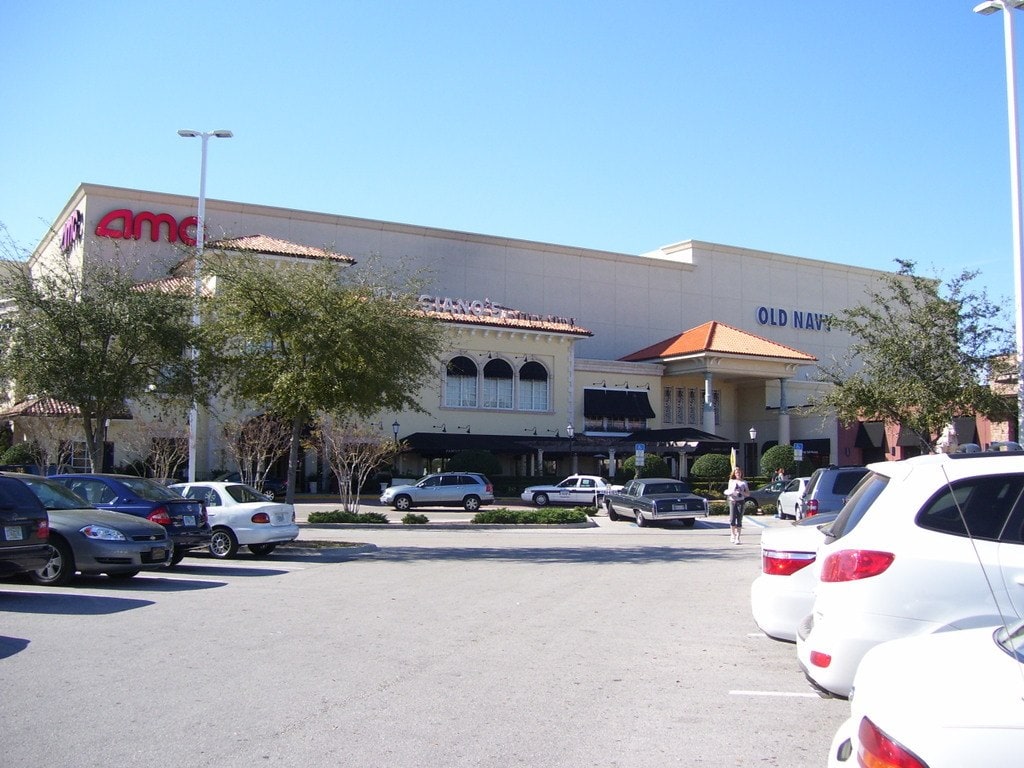
Old Navy and AMC Westshore 14, a 14-screen multiplex, both opened on November 10, 2000.
Maggiano's Little Italy followed on June 28, 2001, and The Palm opened on July 26, 2001.
Food court vendors like Little Tokyo, Twin Cactus, and Bourbon Street Cafe filled in around them.
The mall's name shifted from "West Shore Plaza" to "WestShore Plaza" during this same period.
The goal was to make WestShore a full evening destination, not just a daytime shopping stop.
Between the luxury anchor, the restaurants, the multiplex, and a larger parking supply, the formula was solid.
But a direct competitor opened nearby almost immediately: International Plaza launched in September 2001.
It pulled Dillard's away from WestShore, and that store closed on September 13, 2001. Sears filled the vacancy in October 2002, coming over from Tampa Bay Center.
WestShore held on, but its run as the unchallenged top mall in the area had ended.
A Property Sold, Traded, and Restructured
After the expansions were complete, WestShore Plaza changed ownership. Grosvenor had held the mall since 1990.
In 2003, Glimcher Realty Trust agreed to buy it, paying $153 million for a 1.06-million-square-foot property with 86 percent inline occupancy and anchors including Saks Fifth Avenue, Burdines (later Macy's), Sears, J.C. Penney, and AMC.
Seven years later, Glimcher entered a joint venture with Blackstone covering WestShore and a mall called Lloyd Center.
In 2013, Glimcher bought back Blackstone's 60 percent indirect stake for about $112 million, which included assumed debt and $40 million in cash.
Washington Prime Group then took over Glimcher entirely in January 2015, briefly operating as WP Glimcher before settling on the Washington Prime Group name in 2016.
The ownership story took its most dramatic turn in June 2021, when Washington Prime filed for Chapter 11 bankruptcy.
Declining department-store sales and the effects of the COVID-19 pandemic on mall traffic had combined to create an unsustainable position.
The company emerged from bankruptcy in October 2021 after eliminating nearly $1 billion in debt, still holding WestShore Plaza, but the bankruptcy made clear that enclosed malls nationwide were facing serious pressure.
WestShore Plaza Stays Open While Redevelopment Awaits a Start Date
Saks Fifth Avenue closed in May 2013, and Dick's Sporting Goods opened in that space in April 2014.
Sears closed in 2019. After WPG's 2021 bankruptcy, the mall kept losing major tenants.
Dick's left in October 2024 for International Plaza. In late 2024, Washington Prime purchased the Macy's property. That gave it control of the last major part of the property it did not already own.
Macy's closed on March 23, 2025. JCPenney, the only original anchor still on the site, was announced for closure in June 2020, but it has stayed open.
In April 2024, the Tampa City Council gave full approval to tear down the mall and rebuild the entire 52-acre site with a mix of homes, shops, and offices.
The plan includes 1,700 housing units, about 1 million square feet of retail and dining space, office space, a hotel, medical facilities, and a dedicated HART bus station.
In February 2025, CBRE listed the property for sale as "Westshore 54" and noted that it has over 8.1 million square feet of total entitlements.
In Spring 2025, Divine Iron Gym leased the former Dick's space and planned to open, but later the venture was dissolved.
As of early 2026, dozens of stores inside WestShore Plaza are still open every day, and there is still no word on when demolition or construction will begin.