
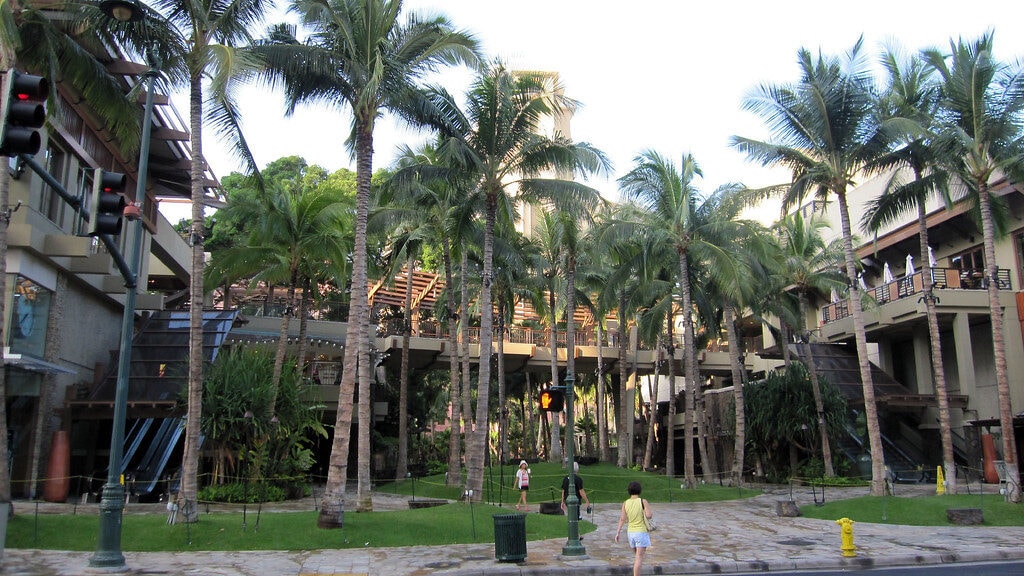
International Market Place is an open-air shopping and dining complex in Waikiki, on the island of O'ahu, Honolulu County, Hawaii.
It sits on six acres of Kalakaua Avenue - Waikiki's main commercial strip - with parking and secondary access running through to Kuhio Avenue.
The center attracts visitors and residents from across Oahu, with around 90 stores, 10 restaurants, a third-level Grand Lanai dining terrace, and free cultural performances on site.
The original market opened in 1956. After closing in 2013 and a complete demolition and rebuild, it reopened on August 25, 2016.
Its land has historic ties to Queen Emma's 19th-century estate, and today it is owned by the Queen Emma Land Company, with the revenues it generates going directly to The Queen's Medical Center.
Royal Land, Royal Legacy: The Origins of International Market Place
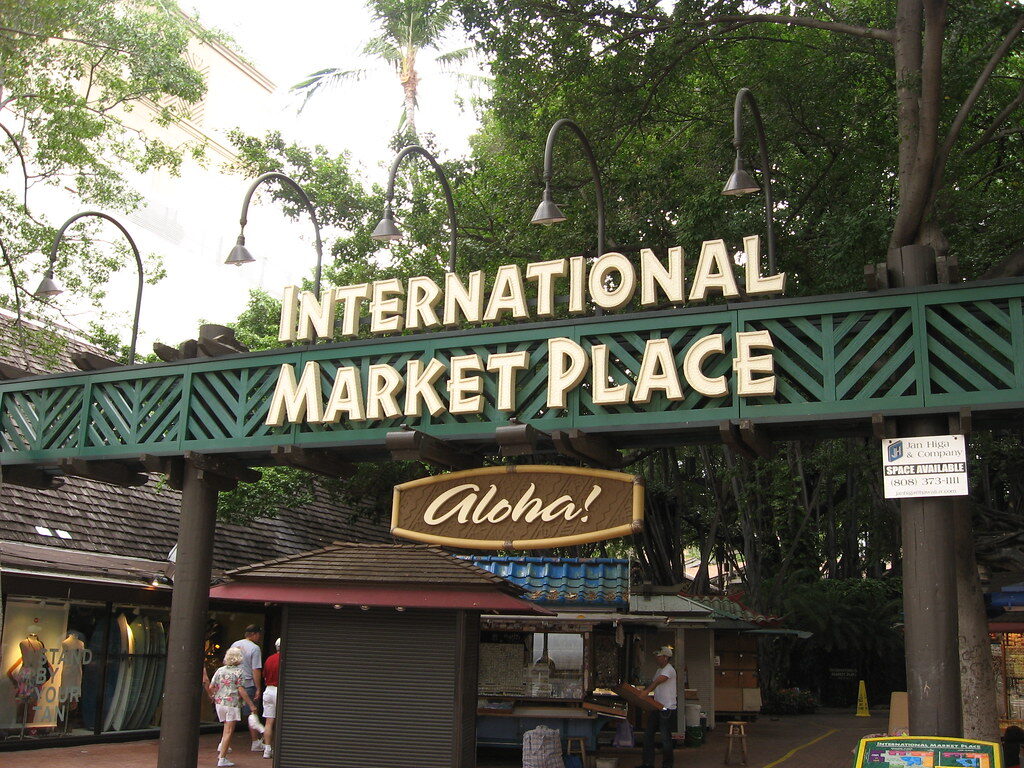
Walk to the corner of Kalakaua Avenue now, and you will find shops open to the air and a wide banyan tree overhead.
Long before this, the land belonged to Hawaiian royalty. King William Charles Lunalilo, the first elected king in Hawaiian history, used it as his summer residence.
He was called ke ali'i lokomaikaʻi, or "the kind king." He later gave the property to Queen Emma, wife of King Kamehameha IV.
Queen Emma and her husband founded The Queen's Hospital in 1859.
She committed her own money and constant effort to building a hospital for the Hawaiian people. When she died in 1885, she left this land to support that work.
The Queen Emma Land Company continues to manage it, and the income now goes to The Queen's Medical Center.
At the center of the property stands a banyan tree that is roughly a century older than the shopping complex.
Harry Macfarlane, a New Zealand entrepreneur, planted it with his wife in the mid-1800s. By the time redevelopment was considered, the tree had become too established and valued to remove.
How Donn Beach Built His Waikiki Fantasy, 1955-1957
Clinton Murchison Jr. and Paul Trousdale signed a 55-year lease on the property in January 1955. Their idea was something they called an "international village" marketplace.
Donn Beach - father of tiki culture, founder of the original Don the Beachcomber chain - was one of the people who pushed it into existence.
He and architect Pete Wimberly reportedly sketched the whole thing out on wrapping paper in the back of the old Moana Cottages.
Construction on the first phase began in September 1956. The makai portion opened by February 1957, with the rest following shortly after.
Beach hired carver Edward "Mick" Brownlee to produce much of the original woodwork, then built himself an office treehouse in the banyan where he could look down at everything happening below.
What went on around that tree was not a shopping center in any conventional sense. Themed "villages" for Japan, Korea, China, and the South Seas.
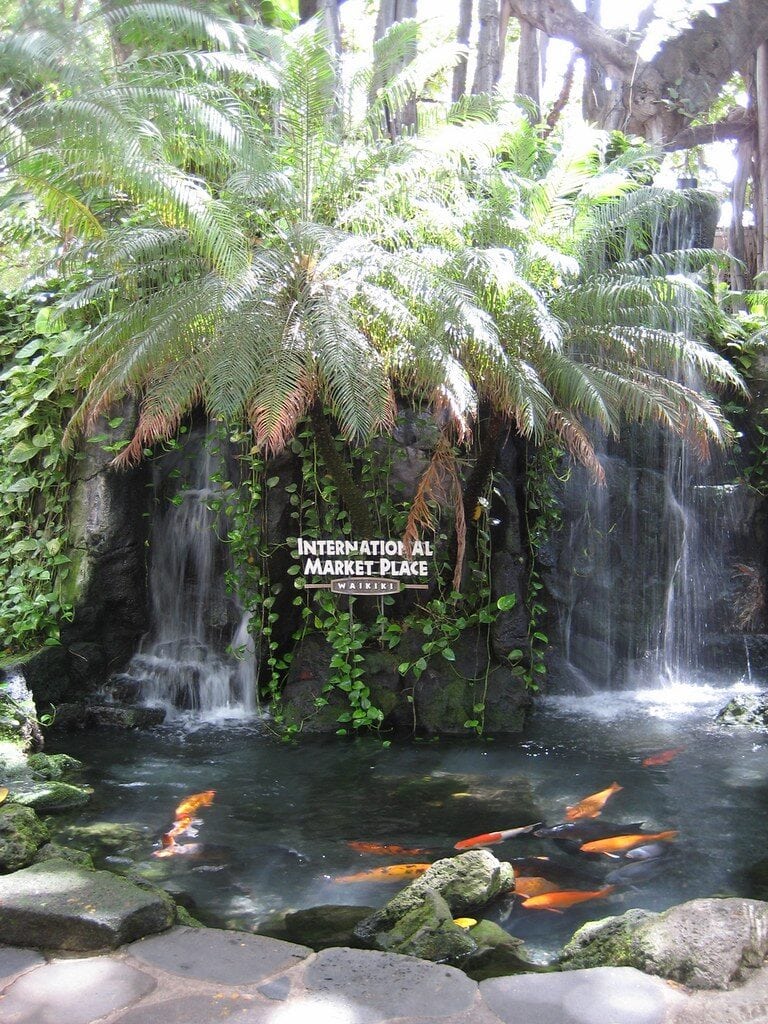
A central bazaar with thatched stalls. Pools, bridges, vines, tikis, and paths laid out to disorient you just enough.
The Gourmet Bazaar stocked specialty foods of the kind you might find in New York or Paris.
The whole thing was built for a Hawaii still two years from statehood, and it felt like it - part fantasy, part fever dream, entirely deliberate.
Don Ho, Martin Denny, and the Rise and Slow Fade of Waikīkī Nights
Clocks on the property were set seven minutes behind. People called it "Hawaiian Time." At its peak, the market had 50 shops, nightclubs, and restaurants.
Donn Beach owned three of them, including The Colonel's Plantation and Beef Steak and Coffee House.
Martin Denny performed there during the exotica years, with his band blending new wave jazz and jungle-style sounds into something new.
Don Ho built his career at Duke Kahanamoku's nightclub on the property. Starting in 1964, he performed three shows a night there as his fame grew. In 1957, Beach received a House Resolution Tourism Award.
The decline happened slowly. "Hawaiian Time" ended in 1967. A fire in 1966 destroyed Christopher's, the Colonel's Plantation, and The Mynah Bird.
All three were rebuilt within months as a Polynesian-style longhouse. In 1969, the grassy performance area was paved over to make room for vendor carts.
There was no clear turning point. The place gradually changed from one kind of destination to another.
The First Threat - and the Next One
By the 1980s, the club scene had declined, and the market's purpose had narrowed. It had not seen a major renovation since its original period, and the most recent building on the site dated back to 1970.
In 1988, the first major threat to the market appeared when the Hawaii state Legislature chose the site for a proposed convention center.
Merchants responded with strong and sometimes physical resistance. Clashes included an incident in which a security guard was roughed up.
Protesters marched with signs made using blood and hair. At least one merchant threatened self-immolation rather than give up the space.
The proposal was ultimately redirected, and the Hawaii Convention Center was constructed elsewhere.
Another challenge came from within. In 1998, WDC Venture relinquished control to avoid a trial and repayment of about $7.75 million in back rent.
In 1999, the Queen Emma Foundation assumed management and soon notified vendors of plans to redevelop the property.
In September 2003, Queen Emma introduced a $100 million redevelopment plan.
It stalled and was canceled in 2005 after the landowner decided not to continue in the mall business or take on the financial risks tied to development.
The Final Closure: 180 Tenants and the End of an Era in 2013
The decision that finally ended the old market came after Queen Emma Land partnered with Taubman Centers and CoastWood Capital Group.
The 2013 announcement described a new six-acre project: approximately 60 stores, a three-level Saks Fifth Avenue, seven third-level restaurants, a 750-space parking garage, and an area honoring Queen Emma.
Queen Emma Land framed the redevelopment as a financial necessity for sustaining hospital income in a changing healthcare environment.
The old market closed on December 31, 2013, after 56 years on Kalakaua Avenue. Demolition began in January 2014.
About 180 tenants across the International Market Place, Waikiki Town Center, and the neighboring Miramar hotel were told to clear out.
What was being lost was specific: a dense maze of kiosks, cheap souvenirs, fortune tellers, snack spots, and low-rent immigrant-run businesses that had become one of the last working-class commercial spaces in central Waikiki.
Donn Beach died in Hawaii in 1989 and never saw it go. Many merchants from the old market relocated to Duke's Marketplace.
This nearby alley market still preserves some of the bargaining and souvenir-stall atmosphere the pre-2014 International Market Place was known for.
The Rebuilt International Market Place Opens in August 2016
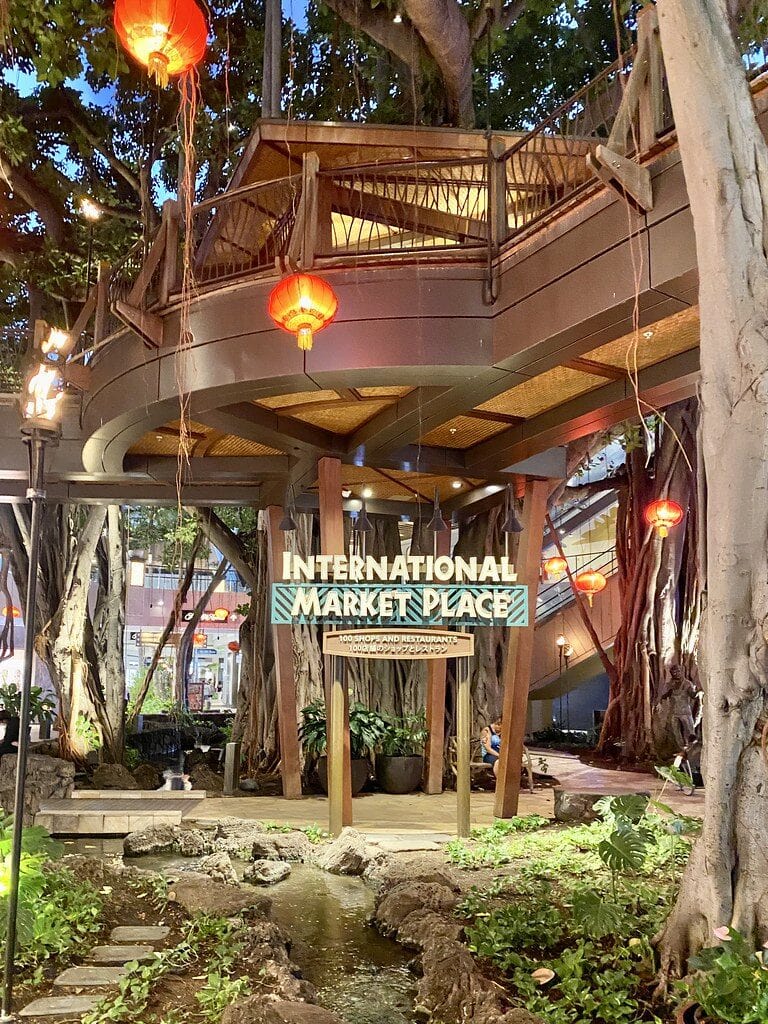
Construction started in March 2014. The design team worked with local cultural consultants and digitally mapped the banyan's root system to avoid damaging it.
Pile locations were excavated early so any objects or remains could be assessed. The one constant across every plan and every version of the project was that the banyan tree would survive.
At the 2014 groundbreaking, plans called for 75 retail locations, seven restaurants, Saks as the anchor, and roughly 700 parking spaces.
By the August 25, 2016, grand opening, the numbers had grown: a 345,000-square-foot open-air center with approximately 90 retailers and 10 restaurants, nearly half unique to Oahu at opening.
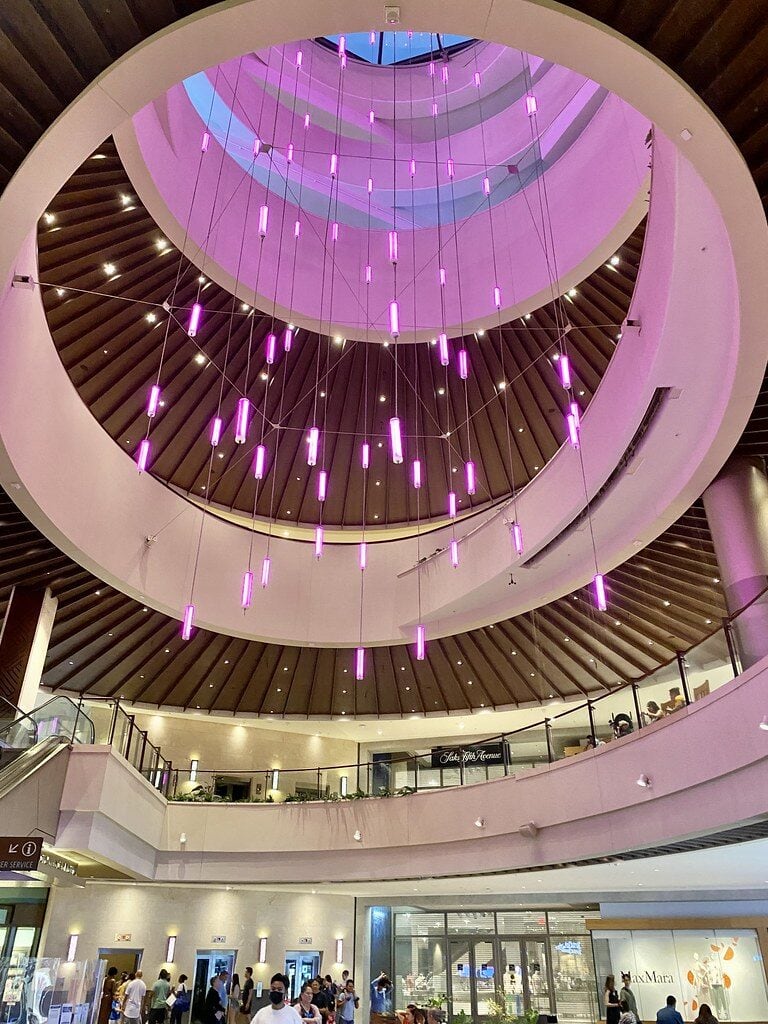
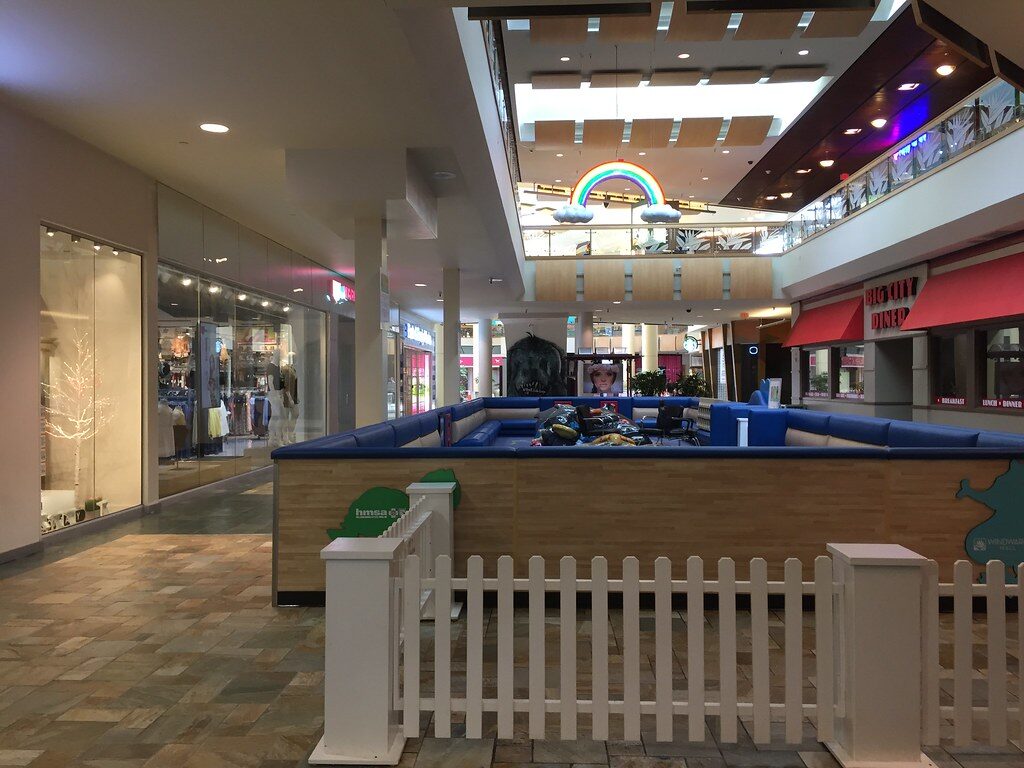
The architecture firm Cooper Carry described the rebuilt center as a "living room" for Oahu, with two shopping levels and a dedicated dining level on top.
The completed project included 25 plaques for a self-guided historical tour through the site. A nightly show called "O Na Lani Sunset Stories" launched at the opening.
A commemorative plaque on the new "Don's Treehouse" reads in part: "The opening of Dagger Bar and the Bazaar Buildings in 1956 marked the establishment of Waikiki Village."
International Market Place Today: Don Ho, Target, Simon, and a Changing Retail Mix
In August 2017, on what would have been Don Ho's 87th birthday, International Market Place unveiled a bronze statue of the singer near the banyan tree.
The location connected the updated mall to the entertainment scene from the Duke's era that once defined the site.
The mix of stores has continued to change. Saks Fifth Avenue, the main anchor of the 2016 redevelopment and its only full-line store in Hawaii, announced in 2022 that it would leave.
A Target opened in October 2024 in the former Saks space, taking up Levels 1 and 2 on the Kuhio side.
Simon Property Group announced in 2020 that it would acquire an 80 percent stake in Taubman Realty Group, and in 2025 said it had purchased the remaining share.
The center is now marketed as a Simon property. Today, it offers free hula shows, a Grand Lanai dining level, luau programs, multilingual visitor services, and a self-guided walking tour about the site's history.
In March 2026, the 30th Honolulu Festival used the center as a public venue. Performances planned for Saturday, March 14, were canceled because of severe weather. The land is still owned by the Queen Emma Land Company.
Revenue from the property continues to support The Queen's Medical Center, and the banyan tree, planted more than 170 years ago, remains at the center of the site.
Independent Publisher Notice
BestAttractions is an independent editorial publisher. We are not affiliated with, endorsed by, or acting on behalf of any location, business, property owner, manager, government agency, or organization described in this article.
Comments posted on this page are not forwarded to, reviewed by, or acted upon by any entity mentioned in the article.
For official inquiries, complaints, applications, bookings, or other requests, please contact the relevant entity directly through its official website or other verified channels.
Loved the old. Won't go near the new.
30 year resident.
Your comment serves as a reminder that while progress is inevitable, preserving the elements that make a place unique is essential.
Since visiting in 1978 was looking forward to visiting IMP. Now I find out they killed it. Just another shopping mall. International Market Place was so unique. A true reflection of the Hawaiian culture and experience. What's special about it now. I can go to those stores anyplace.
The old International Market Place really is gone. The original market closed at the end of 2013, and the replacement opened in 2016 with a fundamentally different purpose and tenant mix. As a visitor experience, it is much closer to an upscale open-air mall than the International Market Place you saw in 1978.