
The last two tenants in Lakehurst Mall were Gift Tree and Barbary Coast. Both had been there from near the beginning, part of the mall through its good years and its long retreat.
At its best, the mall was Lake County's first big regional shopping center, centered around three main department stores and about a hundred other shops.
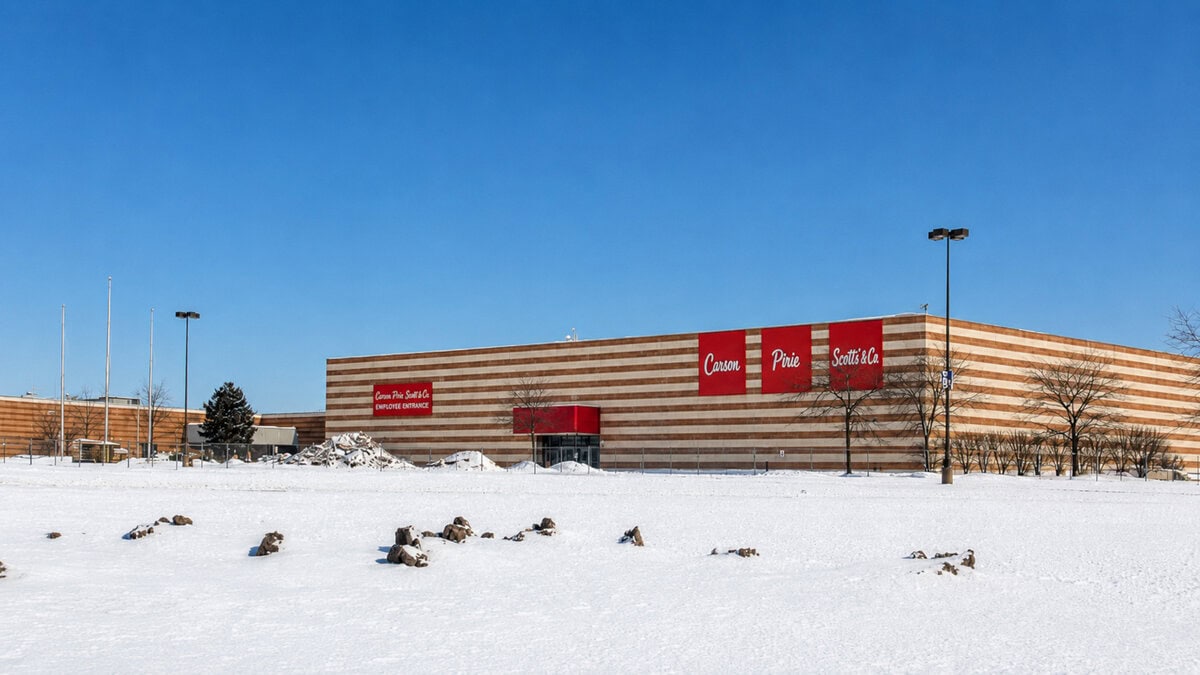
By the time those two stores closed, the mall's three original anchor spaces were down to one occupied tenant, Carson Pirie Scott, which had its own exterior entrance and continued operating as a standalone store.
The inside was mostly empty. Their leases were the only reason the mall interior stayed open. What took the place of the mall, and what the site is like now, is a different story from what the opening ceremony suggested.
Lakehurst Mall's Opening Day 1971: A Silver Mobile in Center Court
On August 19, 1971, a large silver mobile was illuminated for the first time in the center court of Lakehurst Mall.
A New York artist named Joseph McDonald had designed it, and it cost about $20,000. Waukegan Mayor Robert Sabonjian was there, along with Pamela Eldred, Miss America 1970, and Miss Illinois.
A Lakehurst flag was unfurled. About 65 stores were open, with more to come.
Outside, parking fields held space for 6,000 cars, color-coded by section so shoppers could find their way back after a few hours inside.
Lakehurst opened as the first major regional shopping center in Lake County.
It was built to draw from Waukegan, North Chicago, Gurnee, Zion, Winthrop Harbor, the Great Lakes area, and the broader northern Illinois suburbs toward Wisconsin.
Nothing on that scale had existed in Lake County before.
Before Lakehurst Mall: Farmland, Oak Groves, Annexation
The 80 acres Lakehurst occupied were not a blank commercial lot.
Before development, the site near the intersection of Belvidere Road (Illinois Route 120) and Waukegan Road (Illinois Route 43) held farmland and oak groves from the former Edellyn Farms area.
Some of that land had been considered for possible forest preserve acquisition.
Waukegan annexed the property in the late 1960s, and the process drew objections.
Downtown merchants worried the mall would drain shoppers from the older business district near Lake Michigan. Conservation concerns surrounded the oak groves.
The legal basis for the annexation was questioned. Construction began in September 1969 anyway, with architectural work by Sidney H. Morris of Chicago and Victor Gruen Associates of Los Angeles.
The original development plan included a fourth anchor location, a southwest wing, that was never built.
Lakehurst opened as a three-anchor mall and carried that unfilled fourth position through its entire operating life.
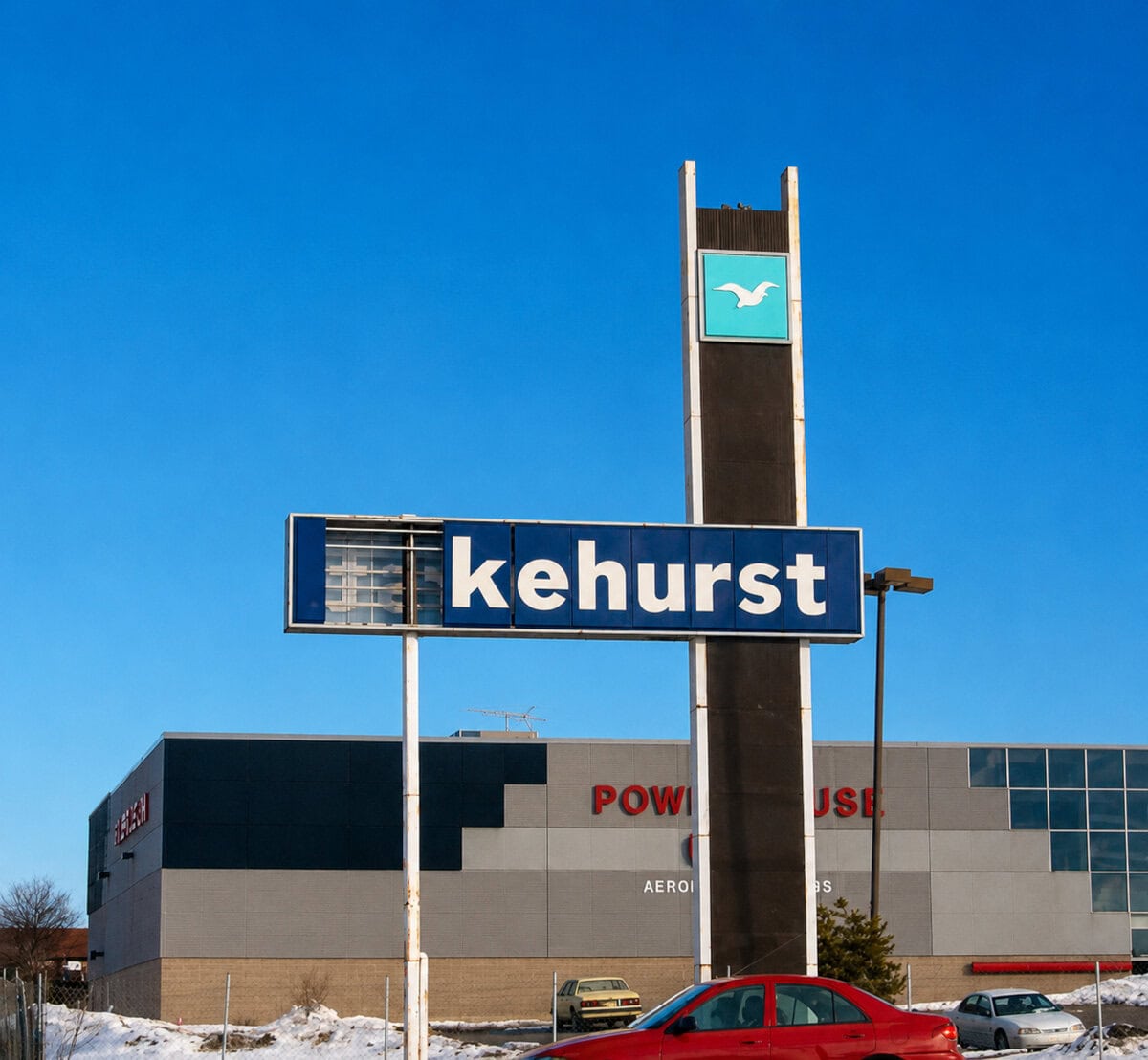
Carson, Wieboldt's, and Penney: The Mall in Full
Carson Pirie Scott was the largest anchor, three levels and 226,000 square feet, including a budget department and a restaurant.
Wieboldt's occupied two levels across 191,800 square feet. J.C. Penney, delayed by construction problems, opened in October 1971 with 173,800 square feet and an auto center.
Together, those three stores defined what Lakehurst was built to be: full-line department shopping under one climate-controlled roof.
Between those anchors, smaller stores filled the concourses. Early tenants included Camelot Music, B. Dalton, Waldenbooks, Hickory Farms, Orange Julius, Bresler's 33 Flavors, Chess King, and Foxmoor Casuals.
A convenience center west of the mall brought Jewel Foods and Osco Drug.
General Cinema opened a three-screen theater southeast of the mall on February 15, 1974, and expanded through the 1980s, reaching 12 screens by 1987.
A Brunswick bowling center, Fun Harbour, Service Merchandise, Pizza Hut, Red Lobster, Denny's, Olive Garden, apartments, hotels, and a bank branch appeared near the mall through the 1970s and early 1980s.
It surpassed Belvidere Mall, the county's earlier and smaller center, almost immediately.
Shopping traffic shifted toward western Waukegan and the highway corridor. The older downtown, already losing business to suburban retail, lost more.
The 1982 Facelift and the Loss of Wieboldt's
By the early 1980s, Lakehurst's original interior showed its age. A 1982 renovation refreshed common areas, toned down parts of the original 1970s design, and added new center-court fountain features.
The basic layout stayed the same. Many enclosed malls of the same generation made similar updates during this period, and Lakehurst was keeping pace.
The Wieboldt's anchor had a different fate. The chain collapsed and closed its Lakehurst store in August 1986.
The vacant space found an unusual use: after flooding damaged schools in Gurnee, more than 600 students used the former department-store building while their regular school buildings were unavailable.
On April 12, 1988, the upper level of the former Wieboldt's reopened as an approximately 81,500-square-foot Montgomery Ward.
The lower level was divided into smaller retail bays. No single tenant ever filled the full Wieboldt's footprint again.

Gurnee Mills and Lakehurst's Long Retreat
Gurnee Mills opened in 1991, a few miles northwest. It was larger, outlet-oriented, entertainment-focused, and built for a retail market that had changed in the 20 years since Lakehurst opened.
Lakehurst had no comparable response.
In the early 1990s, Lakehurst still carried about 100 tenants. By 1997, the count had dropped to roughly 50.
Then, in the same year, both remaining department-store anchors left. J.C. Penney closed on December 27, 1997.
Montgomery Ward closed before the year ended. Carson Pirie Scott stood alone as the only major department store still operating, with the southwest anchor slot that had always been empty.
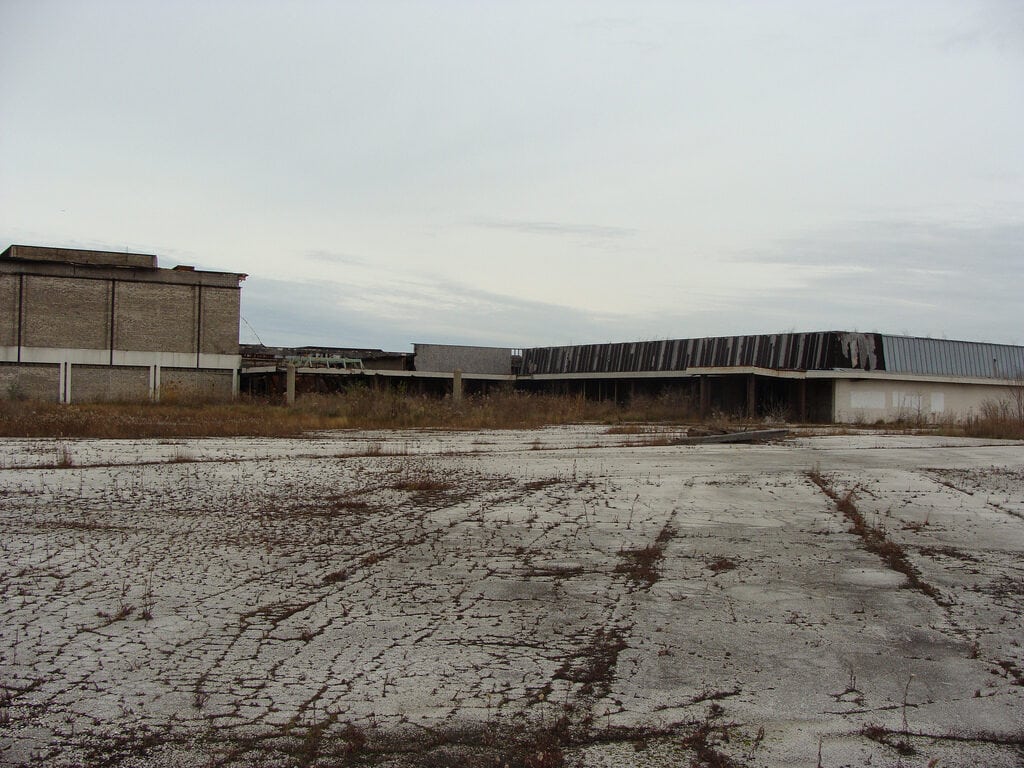
The long concourses that had once connected three department stores to a hundred specialty shops were now mostly vacant corridors.
The Final Tenants: Gift Tree and Barbary Coast
Gift Tree and Barbary Coast had each been part of Lakehurst for most of their operating lives. By 2000, they were the only stores left inside.
Their leases ran to the end of January 2001. When they closed, the enclosed mall interior closed with them on January 31, 2001.
Carson Pirie Scott remained open from its anchor building as a standalone store for almost three more years, closing on January 15, 2004.
During that period, one proposal would have linked the site to the University Center of Lake County for higher-education use.
The University Center ultimately opened at the College of Lake County in Grayslake. No reuse of the existing Lakehurst structure followed.
Demolition and the Arrival of Fountain Square
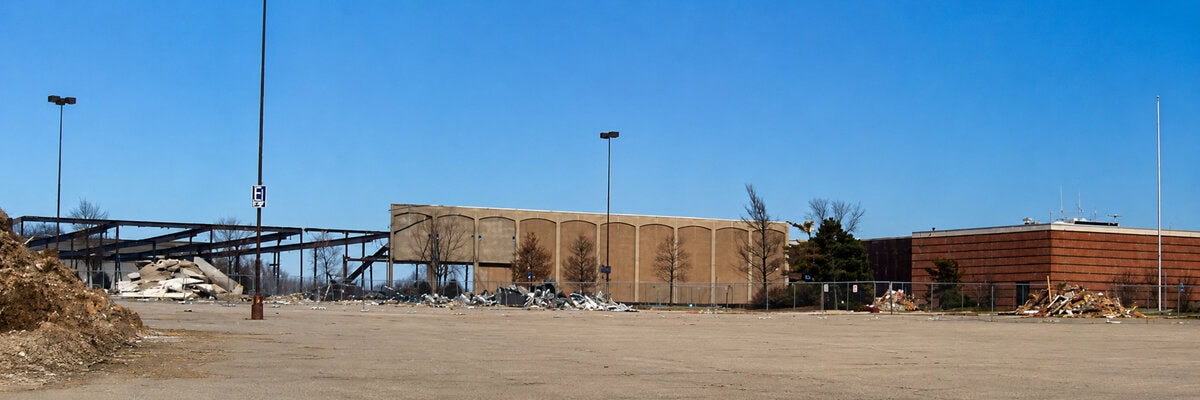
The Shaw Company acquired the property in 2003 and began demolition in late 2003, starting near the former J.C. Penney end while Carson Pirie Scott ran its last holiday season.
Carson's closed in January 2004. By May 2004, the enclosed mall was rubble.
A new internal road named Fountain Square Place was cut through the former mall site. A 204,000-square-foot Walmart Supercenter opened in April 2006 as the first major new anchor.
Fifth Third Bank, Murphy USA, Chili's, Sweet Tomatoes, and SpringHill Suites followed in the early Fountain Square years.
A 50,400-square-foot strip retail building opened in 2008. Later additions included Marshalls, Chipotle, Buffalo Wild Wings, LA Fitness, and Raising Cane's.
The former movie theater closed in early January 2007 and was demolished that summer. The large Lakehurst sign near Belvidere Road and Greenleaf Street was removed in 2007.
The climate-controlled building with its center court and silver mobile became open parking fields, chain restaurants, and freestanding commercial structures under the sky.
American Place: Lake County's First Casino
Illinois authorized a Waukegan casino license in 2019.
After a contested process involving multiple competing proposals and litigation that eventually reached the Illinois Supreme Court, Full House Resorts received a temporary casino operating permit in February 2023 and a casino owner's license on June 15, 2023.
The Illinois Supreme Court resolved the state challenge in January 2025, and a remaining federal appeal was rejected in February 2025, leaving the license in place.
The Temporary by American Place opened at 4011 Fountain Square Place on February 17, 2023, in a large fabric-structure facility.
It operates roughly 900 to 1,000 slot machines, table games, a sportsbook, restaurants, bars, and event space. It is Lake County's first casino.
The permanent American Place project is planned on the same site area: a casino floor, sportsbook, multiple restaurants, a multi-tiered entertainment venue, and a boutique hotel component called The Mansion.
Full House Resorts described in 2026 an expected construction start within weeks and an 18-to-24-month build timeline, pointing toward a fall 2027 opening.
Revised site plans received local approval in September 2025. The temporary casino's operating authority runs to August 2027 unless extended.
As of May 2026, no Lakehurst Mall structure exists.
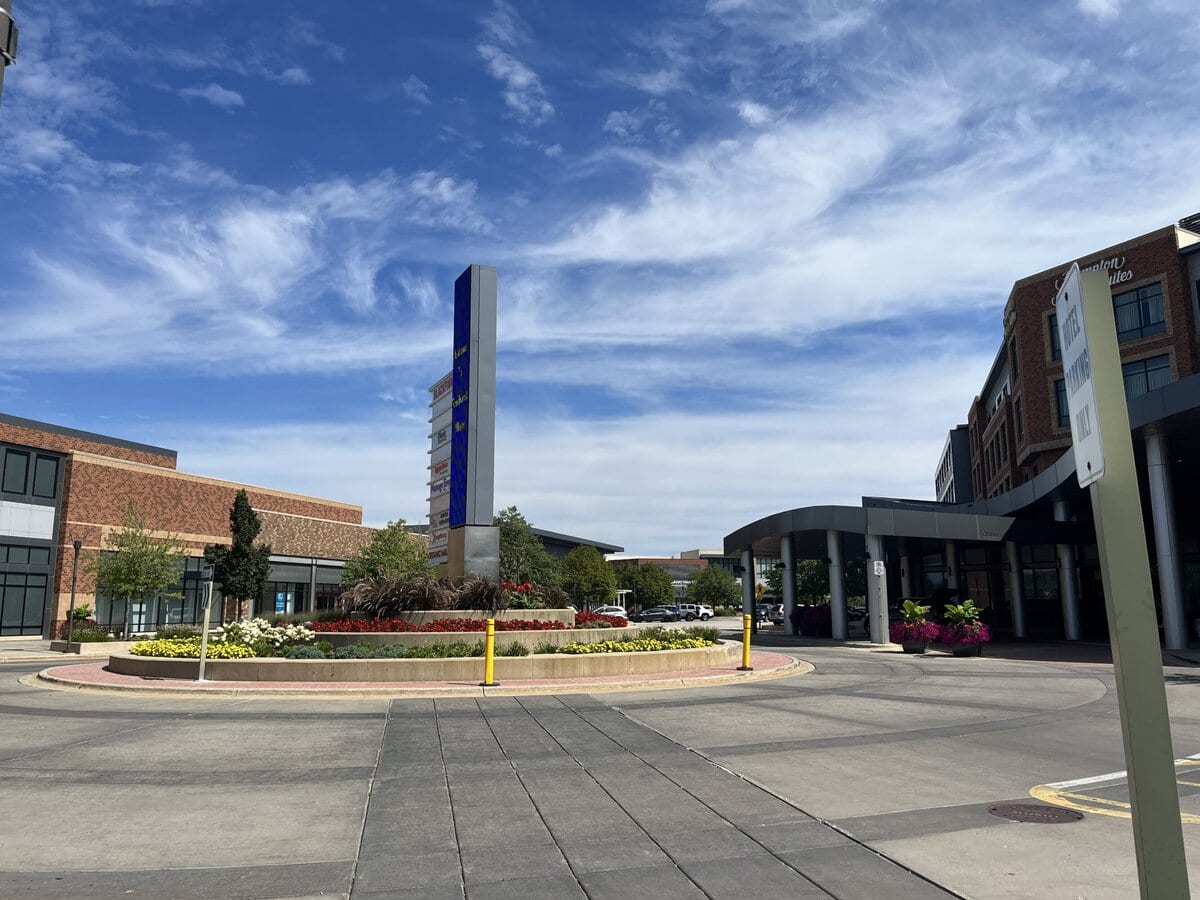
Fountain Square operates with Walmart Supercenter, Marshalls, Raising Cane's, Chipotle, Buffalo Wild Wings, and dozens of other tenants alongside the temporary casino.
Two available suites totaling 5,770 square feet remained as of late 2025, an active district still not entirely full.
The land moved from oak groves and farmland to the largest enclosed shopping center in Lake County, then to rubble, then to a Walmart-anchored commercial strip, and now to the location of Lake County's first casino.
The silver mobile, the color-coded parking lots, Orange Julius, and the final two stores holding their leases through January 2001 left no physical trace.
What persists is the geography: the same road access, the same regional draw, and the same western-edge acreage that made Lakehurst viable in 1971 and makes American Place plausible today.
Independent Publisher Notice
BestAttractions is an independent editorial publisher. We are not affiliated with, endorsed by, or acting on behalf of any location, business, property owner, manager, government agency, or organization described in this article.
Comments posted on this page are not forwarded to, reviewed by, or acted upon by any entity mentioned in the article.
For official inquiries, complaints, applications, bookings, or other requests, please contact the relevant entity directly through its official website or other verified channels.