Towne West Square and the west-side wager
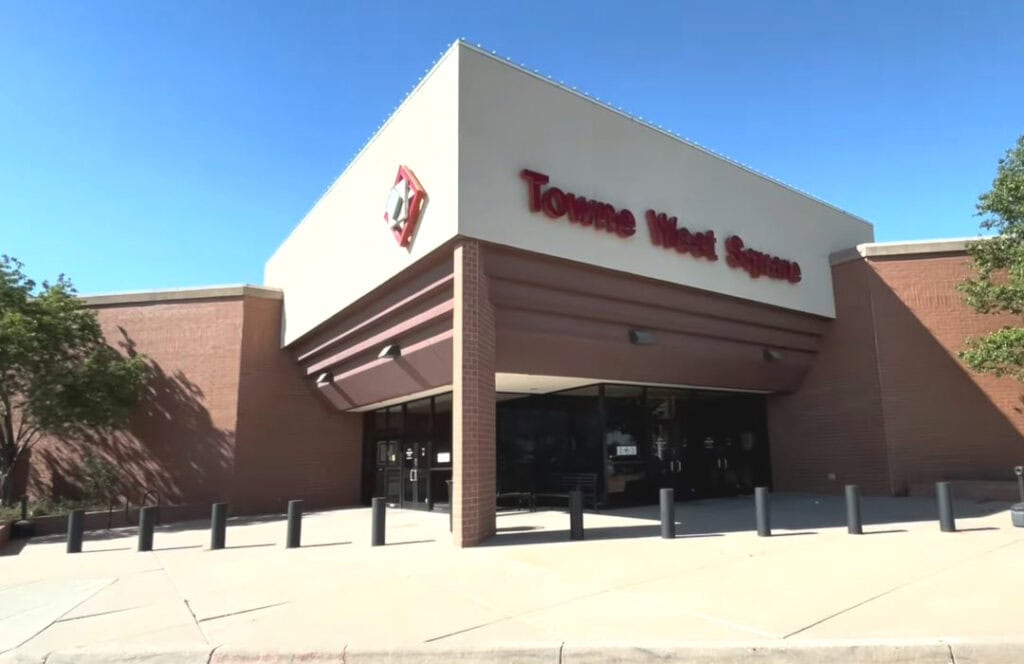
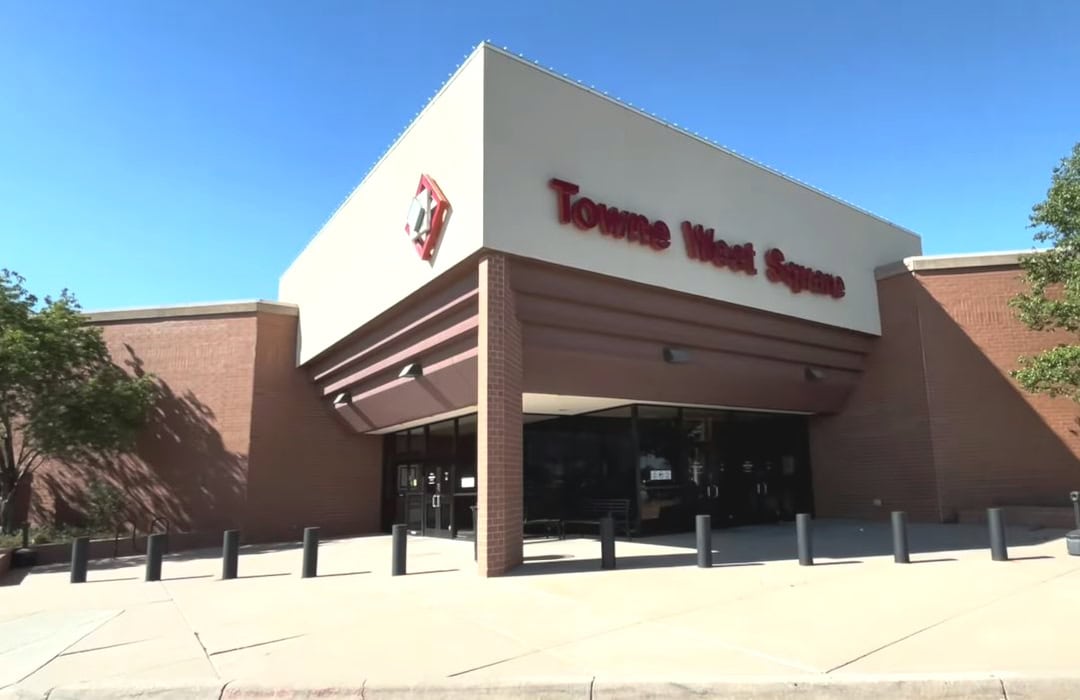
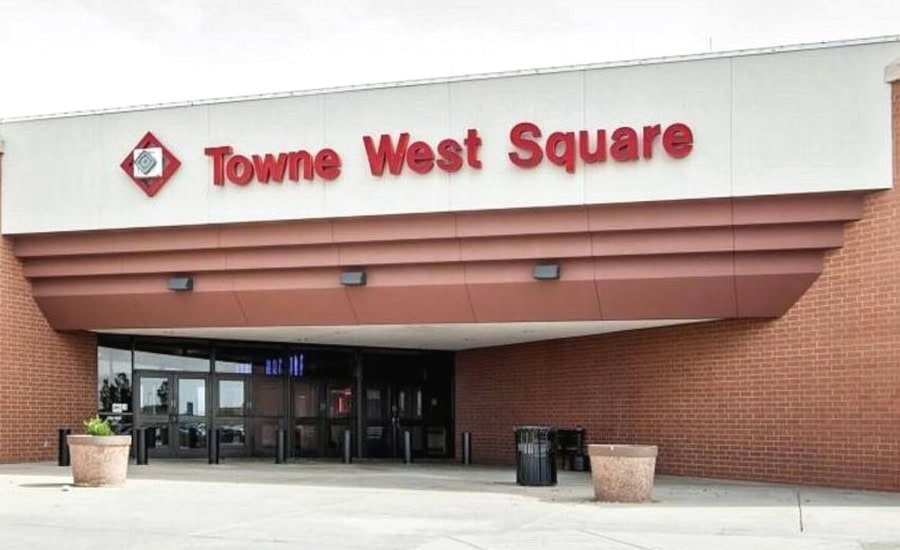
Towne West Square started as a straightforward plan. In 1978, on sixty acres at 4600 W Kellogg Drive, Melvin Simon and Associates began building an indoor mall for a city that was growing west and seemed like it would keep growing that way forever.
The building would eventually have 951,000 square feet of space to rent out. The $50 million cost showed the quiet confidence of the time: the future would show up, park, and come inside.
The location was not chosen for beauty. It was chosen because it was easy to get to. Wichita's west side was growing, and the roads to it were getting better.
Kellogg Avenue was raised to make it easier to cross the Arkansas River, and the I-235 exchange made it simple to reach the southwest part of the city.
The mall opened five years after Simon had opened Towne East Square in 1975, and it was the third mall Simon built in Wichita.
It was also the seventh and last indoor shopping mall built in the Wichita area, as if the city had decided it had enough.
Even its opening was a bit of a trade-off. Some stores started in October 1980, but the official grand opening was on Friday, March 6, 1981, when the mall could finally act like it had always been there.
The original anchors and first-wave retailers
On opening day, Towne West Square showed itself as a complete place, not just a group of stores.
Five main stores were meant to keep the rest of the mall busy: Dillard's, JCPenney, Montgomery Ward, Henry's Clothiers, and Service Merchandise.
Dillard's made news as the second Dillard's in Kansas. Montgomery Ward brought a long history with Simon.
Henry's, a Wichita store, moved from Twin Lakes Mall, bringing a familiar name to a mall that was otherwise proud to be brand new.
Service Merchandise finished the group, a store where you ordered from a catalog, which had been called Wilson's Catalog Showroom before Service Merchandise bought it in 1985.
The mall opened with more than fifty stores, enough to fill up a Saturday. B Dalton Booksellers sold lots of paperbacks.
Camelot Music played music, sometimes live. Spencer's Gifts was a place teenagers had to visit, and parents found surprising.
Casual Corner sold the classic clothes you expect at a mall. Helzberg Diamonds opened on day one and stayed for years.
Food came from well-known places like Chick-fil-A and Orange Julius, plus Wyatt's Cafeteria, where you could slide your tray along and feel in control for a moment.
Towne West Square was designed for walking, browsing, and bumping into someone you knew, which, in Wichita, was never a far-fetched scenario.
Henry's closes, and rooms change purpose
In the nineteen-eighties, Towne West Square quickly became part of daily life for families on the west side.
It was a place where running errands turned into a fun trip and where teenagers figured out how to be noticed. But malls are not as steady as they seem.
They last because of their buildings, but they succeed because of the people who go there.
Henry's Clothiers, well-known at first and proudly local, was the first big store to show how quickly things can change.
The store had to compete with a busier Dillard's and with new types of customers moving into the area. In 1988, Henry's closed its Towne West Square store.
This was not just a story about a local business closing but an early sign that the mall's most successful stores would probably be big national chains with more money.
The chain stayed open in other places for a while. The last Henry's at Towne East Square closed in 1993, making the west-side closing seem less like a random event and more like a sign of things to come.
The space where Henry's used to be did what mall spaces always do when they need to survive: it changed. It became an arcade, swapping clothes for flashing game machines and the never-ending hope of getting a high score.
Later, that area was closed off again and turned into a country dance hall, something the original plans never expected, but that made sense for the community.
People still wanted a place to come together. They just did not always want to come together to shop.
Sears arrives, and the mall gets bright again
In 1992, Towne West Square decided it was time to look new again. The mall put $16.5 million into a renovation and expansion, and it tied that makeover to the tenant everyone had been expecting for years: Sears.
The idea of a Sears at Towne West Square had been floating around since the mall opened, but the company did not actually commit until 1990.
Even then, the project moved slowly, and the store did not open until 1993.
When it finally arrived, Sears came from the declining Twin Lakes Shopping Center, which made the move feel less like a celebration and more like a transfer of weight from one struggling place to another that still had momentum.
Sears called itself "the store of the future." In April 1994, it held a grand opening that brought a noticeable increase in traffic, not only to Sears but through the rest of the mall.
The renovation changed the way the interior felt. A real food court was built. The design was updated.
New tile went in and the behind-the-scenes upgrades made the place work better in small ways that shoppers rarely describe but always register.
By 1997, Towne West Square hit its highest occupancy since it first opened, which was the mall's clearest proof that the nineties makeover had done its job.
Eddie Bauer, New Market Square, and 2001
Towne West Square was thriving in the late nineties, but shoppers were beginning to change their habits. When Eddie Bauer opened in 1997.
It was notable, not for its sweaters, but because it was the first major national store at Towne West Square that wasn't also at Towne East Square.
In the friendly competition between Wichita's indoor malls, this was seen as a win.
Then things changed. In 2001, New Market Square opened in Wichita as an outdoor shopping and lifestyle center.
Its new approach gradually pulled customers away from the traditional indoor mall. People liked the newer buildings, easier parking, and the chance to shop while enjoying the outdoors.
That year brought another challenge. Montgomery Ward closed its main store on March 5, 2001, after going bankrupt.
An empty anchor store in a mall means fewer reasons for shoppers to visit. Towne West Square responded quickly.
In 2001, Dillard's took over the old Montgomery Ward space, doubling its size and using the new area for men's and children's departments.
The mall continued, but it felt more like rearranging what was already there than expanding.
Dick's opens, and the mall begins to shift direction
In the 2000s, Towne West Square changed gradually instead of dramatically. The mall stayed important for Wichita shoppers, even as new ways of shopping and large chain stores became more popular.
It tried to stay useful by offering stores and experiences that felt comfortable and normal, instead of fancy.
In 2003, Dick's Sporting Goods opened, taking over the former Service Merchandise location.
The move marked a clear turn toward sporting goods and toward a kind of retail that could function as both shopping and a pastime.
The mall's tenant mix began to tilt toward entertainment and recreation, the logic being that if people would not come solely to buy, they might come to do something.
The mall still carried the muscle memory of its earlier decades: anchors at the edges, specialty stores in the middle, food as a reward for walking.
But the tone was changing. The enclosed mall was no longer the newest idea in town. It was a familiar one, and familiarity, in retail, is both comfort and risk.
Towne West Square was adjusting without admitting it was adjusting, which is often what places do right before they are forced to admit much more.
Sears closes, Convergys moves in, prices drop
The twenty-tens brought changes that felt deep, not just on the surface.
In December 2014, Sears closed, removing one of Towne West Square's major anchors and leaving behind a large space that had once shown off the mall's new confidence.
The replacement showed how much the building's identity was changing. The former Sears space was taken over by Convergys, later renamed Concentrix, which turned it into office space.
Importantly, those offices could no longer be reached from inside the mall.
An anchor store that you could not get to by walking through the mall was an anchor in name only. The building's flow had been changed.
In 2017, Dillard's changed how it did business at the mall. The women's store on the north side closed, and the men's store, located in the old Montgomery Ward space, was turned into a Dillard's Clearance Center.
The change sent a clear message: selling things at full price was no longer a safe choice here. The mall that had once been built to show off new things started to rely on discounts.
Meanwhile, the old Henry's space became a Sears Hometown store, a smaller version of the main store, in a spot that had already been an arcade and a dance hall.
Sears Hometown closed in 2019, making the mall's full-service shopping options even fewer. By then, the mall was still open, still running, but more and more known for what was gone instead of what was new.
Utility shutoffs under Kohan's ownership
In July 2019, Kohan Retail Investment Group, a New York company that invests in real estate, bought Towne West Square for $14 million.
Kohan was known for buying struggling malls in smaller cities and towns, often without putting much money back into them.
The company said it would remodel and fix up the mall to attract shoppers.
The crisis that made the situation impossible to ignore involved the most basic promise a mall makes: that the lights will be on.
On June 16, 2023, Evergy sent its first warning that it might turn off the power. Power was shut off on September 8, 2023, forcing tenants to close for a while, and again on November 6, 2023.
In December 2023, water was turned off to parts of the mall because bills to the city were not paid.
In 2024, the problems kept happening: Evergy turned off the power again on February 7, and the City of Wichita turned off the water on April 10.
About fifty-eight small businesses got stuck in the middle of the problems. JCPenney and Dillard's stayed open because they had their own utility accounts.
This difference made it feel like there was a social pecking order built into the building itself.
Kohan also fell behind on taxes, owing more than $363,000 by 2023 after not paying since 2021.
Closure, sale, and Wichita Business Park
There were late bright spots. In May 2022, Boulevard Theatres reopened the former Movie Machine theater space that had been operated by Warren Theatres.
But the mall era ended fast in 2025. Dick's Sporting Goods closed on March 1, 2025. On March 13, the property was sold to Wichita Maple Company, LLC, and zoning was moved to add "light industrial" to "commercial."
On June 12, remaining in-mall tenants were told to vacate by 5:00 PM on June 30. A final tour was held on June 29, and the interior closed on June 30, leaving Dillard's, JCPenney, and Boulevard Theatres.
Renovations began July 7, 2025, and the City Council approving the project with industrial revenue bonds on July 15.
Industrial Realty Group and Provider Real Estate Partners acquired the property.
They set out to remake it as Wichita Business Park: modern offices, light industrial, advanced manufacturing, research and development, and flex space, benefiting from proximity to Dwight D. Eisenhower National Airport.
In December 2025, the City Council considered a $13 million tax increment financing district.
On December 8, 2025, PROtect signed a 41,700-square-foot lease as the lead anchor tenant, planning to consolidate its headquarters and Wichita operations center, with the facility expected to be fully functional by summer 2026.
The old mall's future, it turned out, was not more shopping, but more work.