
Indian Springs Mall opened in 1971
Indian Springs Mall opened in September 1971 in Kansas City, Kansas, under the official name Indian Springs Shopping Center.
Copaken, White & Blitt developed it, architect Chris P. Ramos designed it, and it ran two levels and 716,000 square feet with 83 stores.
It sat at State Avenue (U.S. 40) and the new Interstate 635, with direct highway access and a 15-minute drive to Kansas City International Airport, which opened in 1972.
At opening it was one of the largest enclosed malls in the Midwest.
The opening ran over several days instead of one event.
Promotions included Kansas and Missouri Miss USA preliminaries, boat shows, pet shows, fashion shows, world trade shows, art fairs, and truck shows, all meant to make the mall a regional draw from the start.
The timing helped. Downtown Kansas City, Kansas, was being remodeled and losing stores, and shoppers were already moving toward highway sites.
Indian Springs pulled both retailers and customers out of the downtown core. A University of Missouri-Kansas City urban studies scholar later described it as the nail in the coffin of downtown KCK.
Anchor stores and early sales, 1971 to 1977
The three original anchors were JCPenney, Montgomery Ward, and Macy's, each in a large corner space that pulled traffic through the corridors.
Dillard's later took over the Macy's space. Montgomery Ward held the north end, Dillard's the south end, and JCPenney sat in the middle where the two levels met.
Sales climbed fast. In 1972 the metro's leading retail centers were still downtown Kansas City, the Country Club Plaza, and Metcalf South, and Indian Springs ranked below them.
By 1977 its retail sales had doubled and it ranked eighth among all shopping centers in the metro area.
Fountains, the indoor maze, and the talking Christmas tree
The interior was built to keep people inside. The mall had many fountains, several set nearly flush with the floor and, in the early years, without guardrails, so water ran right along the walkways.
Barriers came later. A full-sized indoor walking maze sat on the lower level and drew families.
Each holiday season the mall set up a large talking Christmas tree: children spoke into an intercom in the branches and heard a voice answer back.
Through the 1970s and into the early 1980s the building worked as both a store hub and an indoor gathering place.
AMC movie theaters and 10 screens
Indian Springs ran two movie theaters, one on each level, under the name AMC Indian Springs Theaters, for 10 screens in total.
The first, built in the early 1970s, had four screens, a small concession area, and long narrow auditoriums with center aisles and small screens, a common no-frills layout for the period.
In the early 1980s a six-screen complex opened on the lower level with a larger lobby and marquee lighting, a full-service concession stand, bigger screens, upgraded surround sound, and better seats.
The original four-screen house stayed open as a discount theater showing second-run films and children's movies.
The mid-1980s renovation
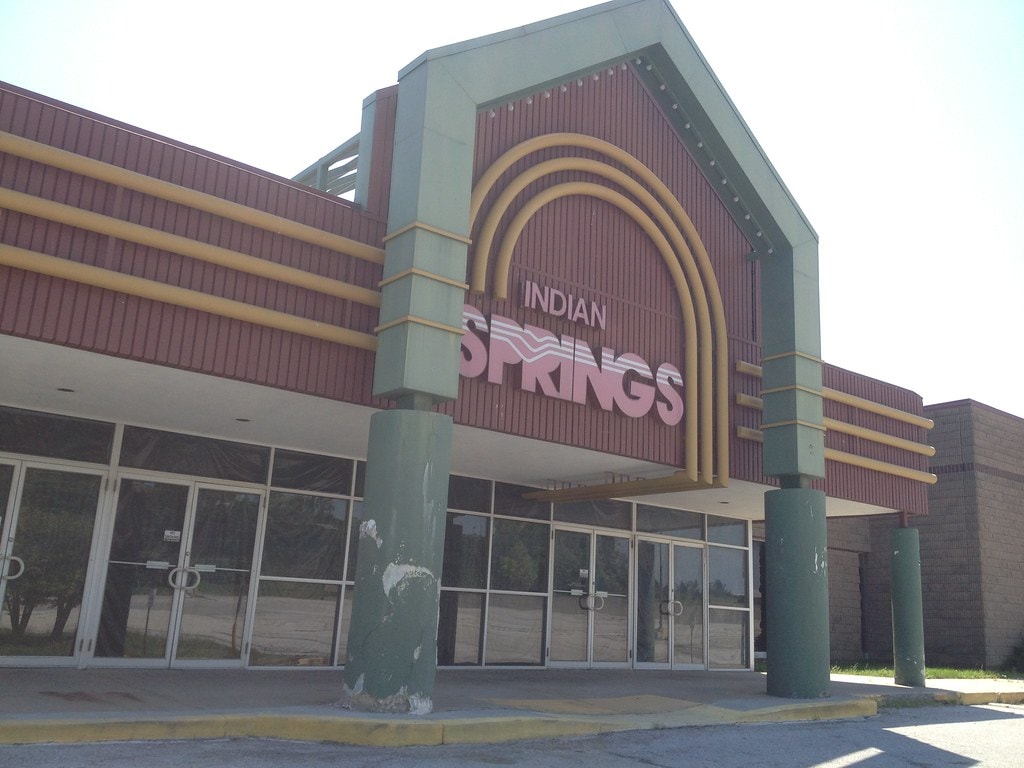
A major renovation in the mid-1980s updated the entrances and the interior. New entrance canopies used metallic finishes with chrome, glass brick, and neon, visible from the parking lots.
Inside, the work removed the large 1970s light-sculpture chandeliers and added indirect lighting, with new planters and benches along the concourses.
The fountains were redesigned in the same project, and guardrails were added to separate them from the walkways. The color palette moved from the original look to mauve and teal, and later to green and gold.
1989 arcade incident and the drop in visitors
On a Saturday night in 1989, a confrontation at the mall's Fun Factory arcade changed how the region saw the property.
An 18-year-old patron, Patrick Sills, broke the screen of "The Empire Strikes Back" arcade game. A security guard chased him into the parking lot and shot him, and Sills died.
Foot traffic fell afterward. Some families stopped coming, parents kept teenagers away, and security around the building grew more visible.
Indian Springs went into the 1990s with a weaker reputation in a crowded mall market.
Wonderscope children's museum, 1990 to 1998
Wonderscope, the Children's Museum, moved into Indian Springs in 1990 and stayed until 1998. It added a family draw next to the stores and theaters.
School groups came during the week, families at other times, and the hands-on exhibits brought repeat visits through the decade.
Competition was rising at the same time. The metro market was oversaturated, with several malls carrying the same national tenants.
Oak Park Mall, a 20-minute drive away, grew to 1.5 million square feet with four anchors and took customers and retailers from Indian Springs.
Anchor closures and decline, 1997 to 2001
The anchors left in quick succession. Dillard's closed in 1997, and JCPenney closed later that year as an under-performing store.
Montgomery Ward held on until early 2001, then closed when the chain went bankrupt nationally.
With the last anchor gone, the smaller shops lost their traffic, and Indian Springs was a dead mall by the early 2000s. Through the late 1990s, locals had floated other uses, such as an aquarium or a community center.
Conversion to Park West Business Center, 1995 to 2006
In 1995 a California-based group bought the property and operated it as Kansas City Mall Associates, planning to fix it up.
They leased space to government offices, worked with private firms including a telemarketing company, and set up a 10-year property-tax freeze starting in 1998.
A 2005 tax appeal valued the four parcels at $2.65 million across 57 acres: $1.5 million for the main mall, $1 million for the former Dillard's, $100,000 for a former Franklin Bank building, and $50,000 for a former Brotherhood Bank building.
The site was rezoned from retail to business-park use that year.
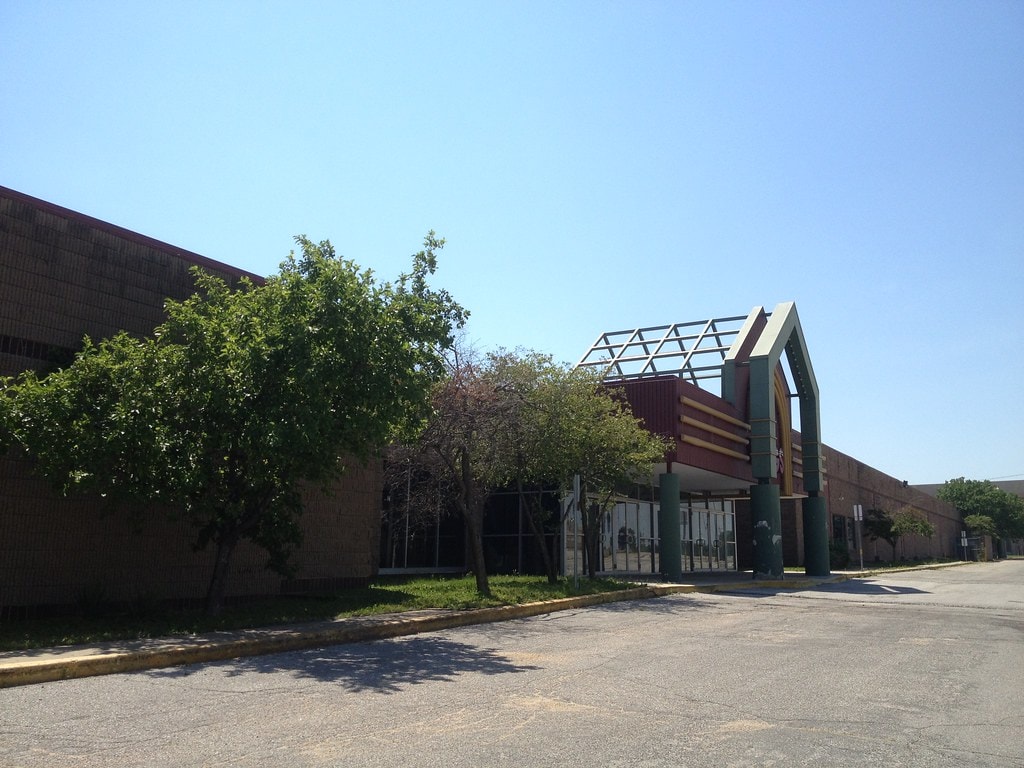
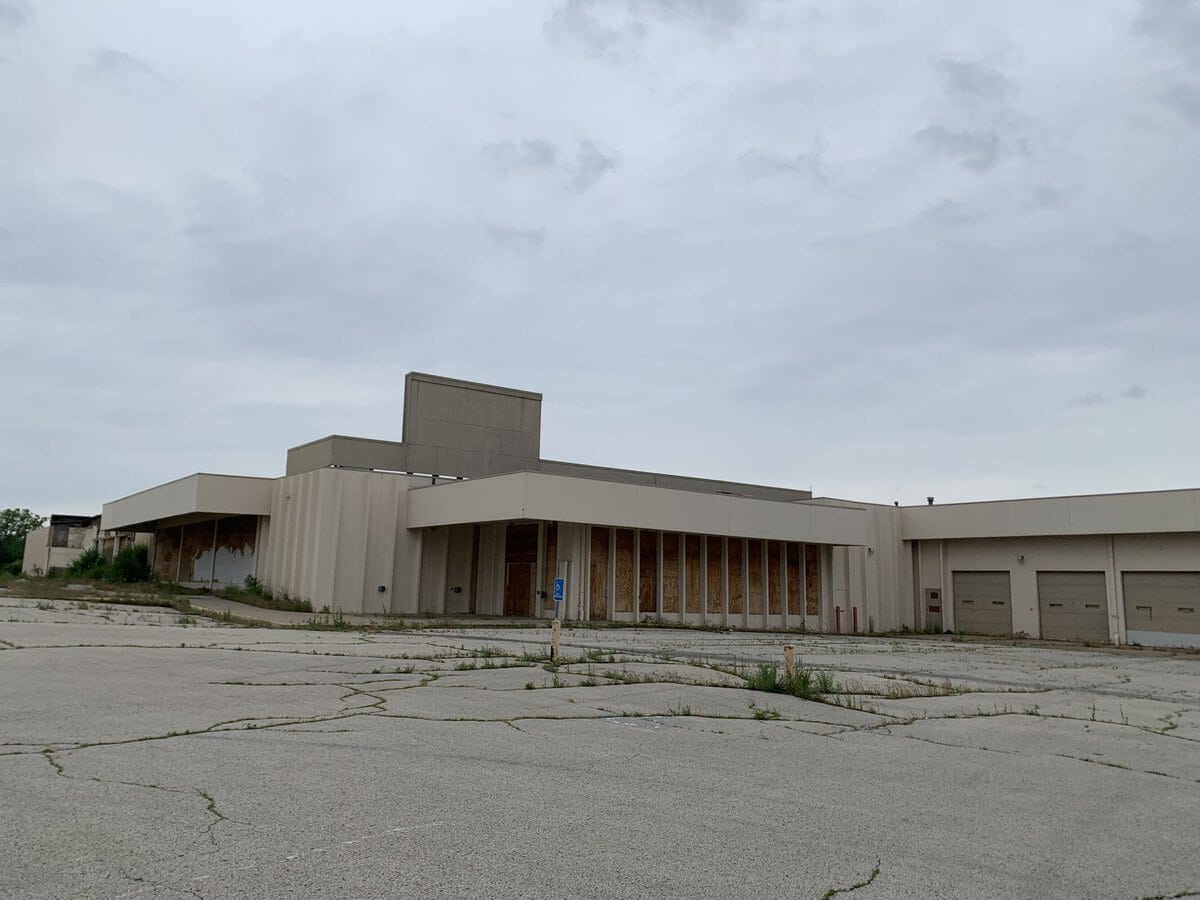
By late 2006 the signage read "Park West Business Center." The Dillard's space became a U.S. Postal Service customer service center, and the former JCPenney housed the Kansas City, Kansas school district.
Public ownership and demolition, 2007 to 2016
On June 20, 2007, the Unified Government of Wyandotte County and Kansas City, Kansas, acquired the 57-acre site through eminent domain for $8.4 million.
The former owner, Kansas City Mall Associates, contested the valuation and argued the land should be priced as a business-park site.
The compensation was set at $7 million at trial and upheld by a 2012 Kansas Supreme Court decision.
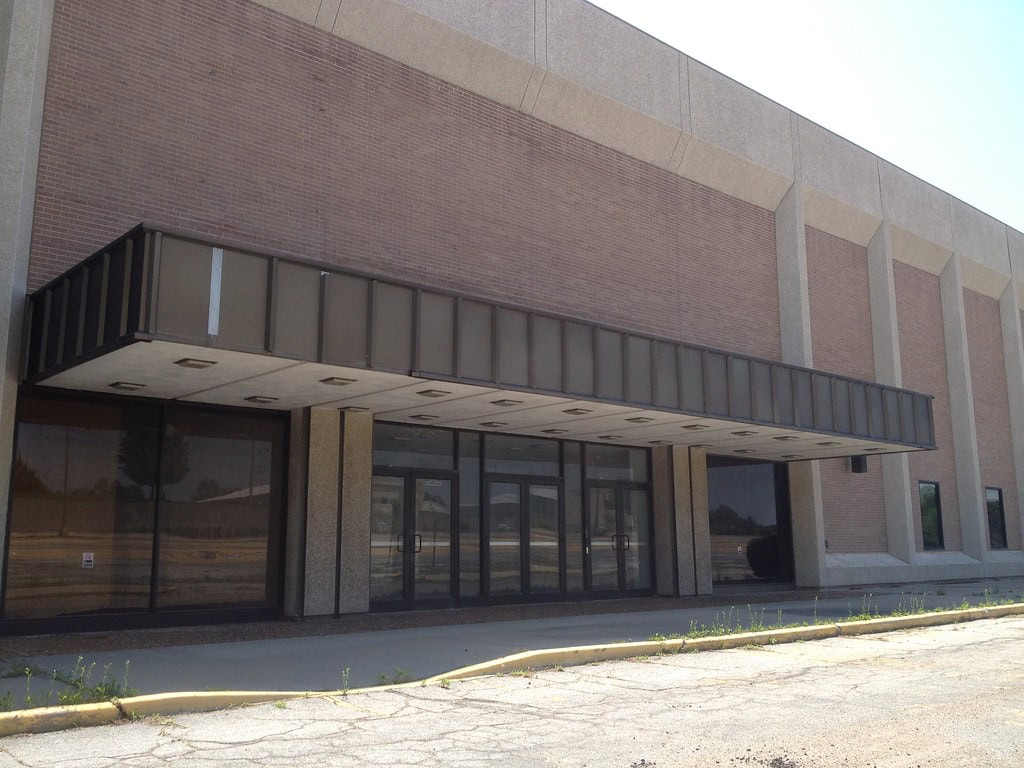
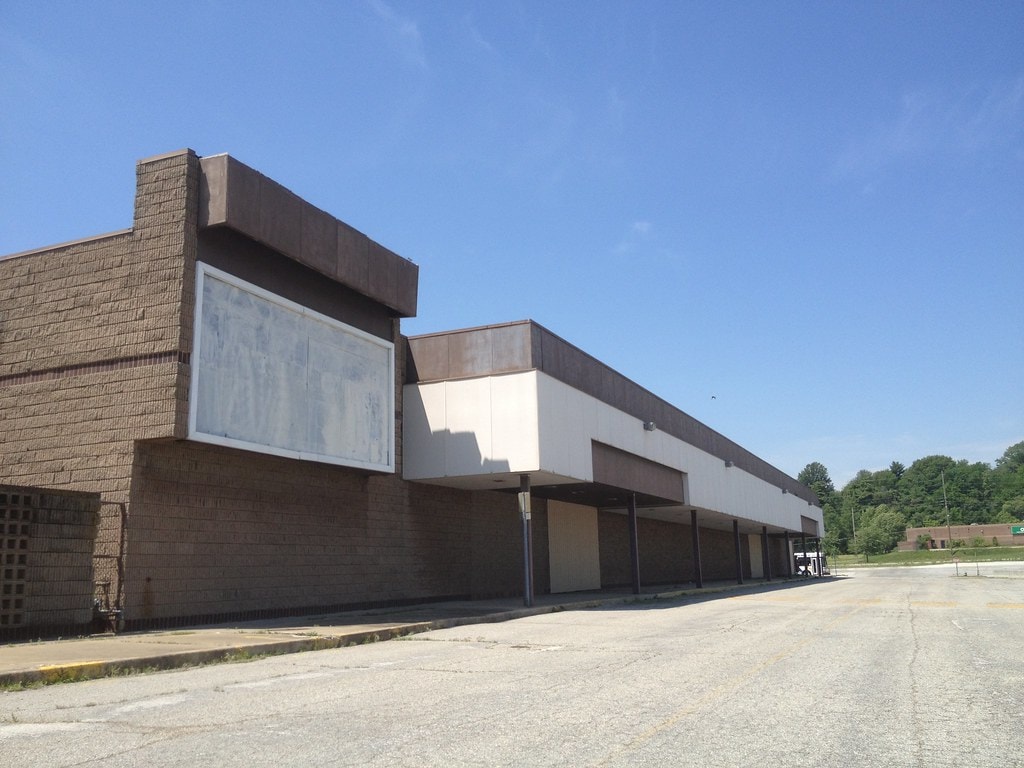
The building then sat mostly empty and kept deteriorating. Environmental work, including asbestos removal, was needed. By 2011 no full redevelopment had happened, and the interior got the green and gold paint scheme.
Public costs added up. By 2019, records showed more than $19.3 million spent on the property, including more than $9.6 million in debt-service payments from February 2011 through February 2019.
Demolition began in February 2016.
Failed redevelopment proposals, 2014 to 2020
Several plans came and went. The Unified Government hired Lane4 Property Group in 2014 as a broker to attract investment. In 2017, Lane4 pitched a flex and light-industrial tech park that city leaders rejected.
From 2018 to 2020, Scavuzzo's Food Service Company proposed a "KC Foodie Park" with a distribution building, State Avenue shops, and a headquarters, which stalled when officials balked at the land price.
Midtown Station redevelopment, 2024 onward
In November 2024, the Unified Government selected Eastside Innovation Kansas LLC, partnered with Arnold Development Group, to redevelop the 90-acre former Indian Springs site as Midtown Station.
The plan replaces the single-purpose footprint with a walkable, transit-oriented neighborhood.
The program includes 1,475 apartments, 63 single-family homes, and 150 townhomes, plus more than 280,000 square feet of retail and restaurant space.
It also lists a 168-room hotel with conference space, a 31,800-square-foot innovation campus with planned expansion, a grocery store, community amenities, a 30-acre solar microgrid to power the site, and about 2,900 garage parking spaces.
The developer has stressed affordable housing built to high energy-saving standards, with energy costs projected up to 85% lower than a comparable conventional building.
The KCATA bus transfer center and a police station already sit on the site, and the plan keeps the transit hub, with routes tied to large employers such as the nearby General Motors Fairfax plant.
The cost has climbed with the scope, from $700 million at the 2024 pitch to $951 million by late 2025.
The original schedule called for a development agreement by February 2025, permits in spring 2025, and construction by mid-2025, with first homes in late 2026 or early 2027 and later phases running through 2035.
As of late 2025, the February 2025 target had passed without a signed agreement, and the Unified Government and the developer were still negotiating, with the land price slowing the talks.
Full build-out is expected to take 10 to 12 years.
Timeline
- 1971: Indian Springs Shopping Center opens at State Avenue and I-635 with JCPenney, Montgomery Ward, and Macy's.
- 1972: Kansas City International Airport opens nearby.
- 1977: Retail sales double; the mall ranks eighth in the metro.
- Early 1980s: A six-screen AMC theater opens on the lower level, bringing the mall to 10 screens.
- Mid-1980s: Major renovation adds chrome-and-neon canopies, indirect lighting, and fountain guardrails.
- 1989: An arcade confrontation ends with a security guard shooting an 18-year-old patron; visitor traffic falls.
- 1990 to 1998: Wonderscope, the Children's Museum, operates in the mall.
- 1995: A California-based group buys the property as Kansas City Mall Associates.
- 1997: Dillard's and JCPenney close.
- 2001: Montgomery Ward closes as the chain folds; the mall ends as retail.
- 2005: Site rezoned to business-park use.
- 2006: Property rebranded Park West Business Center; offices replace stores.
- 2007: Unified Government acquires the 57-acre site by eminent domain for $8.4 million.
- 2012: Kansas Supreme Court upholds $7 million compensation.
- 2016: Demolition begins.
- November 2024: Unified Government selects the Midtown Station development team.
- Late 2025: Projected cost reaches $951 million; development agreement still in negotiation.
Indian Springs Mall quick facts
| Official name | Indian Springs Shopping Center |
| Also known as | Indian Springs Mall, Indian Springs Marketplace |
| Location | State Avenue (U.S. 40) at Interstate 635, Kansas City, Kansas |
| Address | 849 N 47th St, Kansas City, KS 66102 |
| Coordinates | 39.114, -94.689 |
| Category | Two-level enclosed shopping mall |
| Opened | September 1971 |
| Developer | Copaken, White & Blitt (now Copaken Brooks) |
| Architect | Chris P. Ramos |
| Size | 716,000 square feet, 2 floors, 83 stores |
| Original anchors | JCPenney, Montgomery Ward, Macy's (later Dillard's) |
| Closed as retail | 2001 |
| Demolished | February 2016 |
| Owner since 2007 | Unified Government of Wyandotte County and Kansas City, Kansas |
| Current status | Vacant 90-acre site being redeveloped as Midtown Station |
| Most recent change | Developer for Midtown Station selected November 2024; cost grew to $951 million by late 2025 |
Frequently asked questions
What was Indian Springs Mall?
Indian Springs Mall, officially Indian Springs Shopping Center, was a two-level enclosed mall of 716,000 square feet at State Avenue and Interstate 635 in Kansas City, Kansas. It opened in September 1971 with anchors JCPenney, Montgomery Ward, and Macy's.
When did Indian Springs Mall close and get demolished?
It ended as a retail mall in 2001 after its last anchor, Montgomery Ward, closed. The building was demolished starting in February 2016.
Why did Indian Springs Mall fail?
Its anchors left between 1997 and 2001, competition from Oak Park Mall and an oversaturated metro market drew shoppers away, and a 1989 arcade incident weakened its reputation. Without anchors, the smaller shops lost traffic.
Who owns the Indian Springs site now?
The Unified Government of Wyandotte County and Kansas City, Kansas, has owned the site since acquiring it by eminent domain on June 20, 2007, for $8.4 million.
What is replacing Indian Springs Mall?
A mixed-use development called Midtown Station, on roughly 90 acres, with 1,475 apartments, 63 single-family homes, 150 townhomes, more than 280,000 square feet of retail, a 168-room hotel, an innovation campus, and a 30-acre solar microgrid. The cost reached $951 million by late 2025.
When will Midtown Station be built?
The 2024 schedule targeted construction by mid-2025 and first homes by late 2026 or early 2027, with build-out through 2035. As of late 2025, the development agreement was still being negotiated and the start had slipped, with full build-out expected to take 10 to 12 years.
Sources
- Indian Springs Mall, Wikipedia: https://en.wikipedia.org/wiki/Indian_Springs_Mall
- Indian Springs Mall, Wikidata (Q6021635): https://www.wikidata.org/wiki/Q6021635
- Unified Government of Wyandotte County and Kansas City, Kansas: https://www.wycokck.org
Independent Publisher Notice
BestAttractions is an independent editorial publisher. We are not affiliated with, endorsed by, or acting on behalf of any location, business, property owner, manager, government agency, or organization described in this article. Comments posted on this page are not forwarded to, reviewed by, or acted upon by any entity mentioned in the article. For official inquiries, complaints, applications, bookings, or other requests, please contact the relevant entity directly through its official website or other verified channels.
I love Wyandotte County. But, its past and it's politics are holding ir back.
Thank you for your candid thoughts on Wyandotte County and its challenges. The growth potential is enormous. Thank you for speaking up.
Does this project get to hold its place in line considering the Chief’s stadium project? Is the County really looking at her taxpayers when planning these projects, is the governor??
The stadium fight alone is going to consume every political relationship the county has with the state for the next several years.