
Mid City Mall is a small indoor shopping center on Bardstown Road in Louisville, Kentucky, in the Highlands neighborhood east of downtown. It opened in 1962, one of the first enclosed malls in the state.
It was never a big regional mall. For most of its life, it ran on everyday tenants rather than fashion stores. A grocery store anchored it and became a lifeline for people without cars.
A public library branch operated inside the building, and a movie theater ran for nearly thirty years in a former department-store space. In the 1970s, the place was known as "Skid-City."
That mix is unusual for a mall, and it is the reason the place is worth a closer look now that its future is being decided.
How Mid City Mall Shrank Before It Opened
The first drawings showed a swimming pool, a multistory department store, enclosed arcades, and upper-floor apartments looking out toward the nearby parks.
It was sold as an urban showpiece, a multimillion-dollar project meant to stand out on Bardstown Road.
None of it was built. Before the concrete was poured in 1962, the funding collapsed. Investors backed out, a new company took over the project to save it, and the original architects and builders were replaced.
The plans were thrown away. What opened on October 10, 1962, was a simple one-story indoor shopping center built for $3 million, a plain local mall where a penthouse had been promised.
The Orphanage That Stood on the Site First
For decades, the property belonged to the German Protestant Orphans Home, an institution rooted in Louisville's German Protestant community.
In 1959, investors bought the 10-acre orphanage grounds for a shopping center.
The children were moved to a new home on Goldsmith Lane, a facility later tied to Brooklawn Child and Family Services, and the old building came down.
Six houses on the south side of Beechwood Avenue were cleared so the mall could have parking.
That narrow strip of former residential land sat at the property's edge for half a century before the neighborhood put it to a different use.
A Neighborhood Mall Built for Errands, Not Fashion
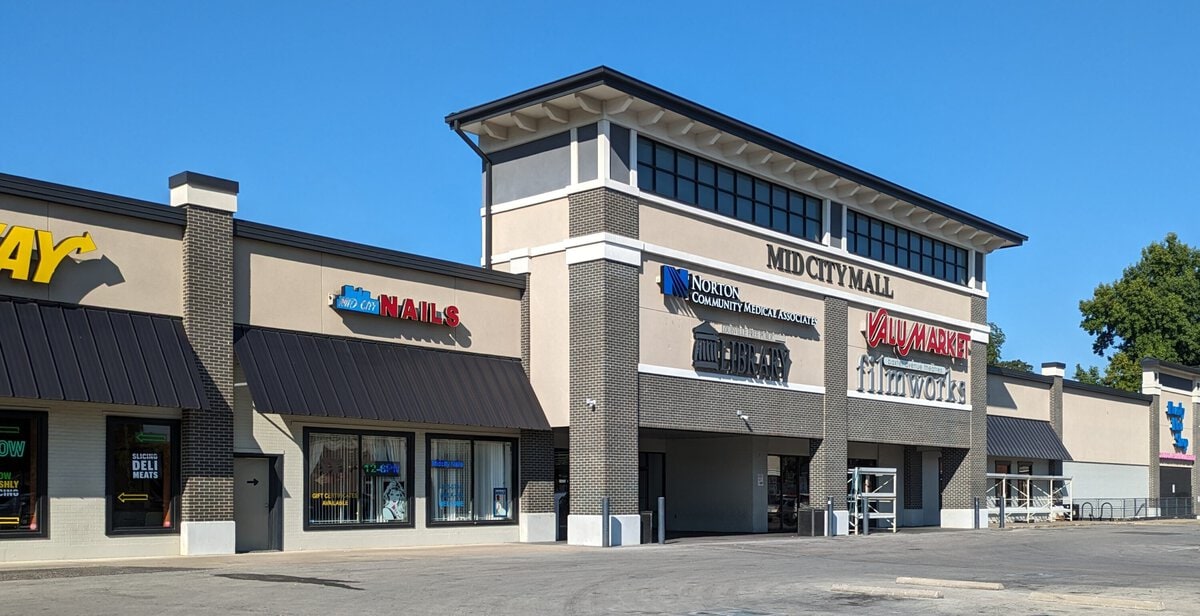
Mid City Mall opened as the second indoor mall-type center in Kentucky, and one of the most unusual, because it sat inside a dense, already-built urban corridor instead of out on a suburban tract beside a new expressway.
Its first tenants were arranged around daily life: two grocery stores, Winn-Dixie and A&P; the S. S. Kresge variety store; a Zayre discount store; Taylor Drugstore; Citizens Fidelity Bank; Ehrmann's Bakery; the Jewel Box jewelry counter; a beauty salon and a barber shop.
There was a bowling alley, Mid City Lanes, and a cocktail lounge called the Office Lounge.
Smaller shops filled in around them: a florist, a candy shop, a cafe, a shoe and card store. The enclosed interior held 198,000 square feet, or 180,000 by later count.
It was built for the prescription, the loaf of bread, and the haircut. It did not replace Bardstown Road's older storefronts.
It dropped an inward-facing block, with its own parking, into the middle of the corridor: built-in foot traffic, almost no room to grow.
How Mid City Mall Earned the Name "Skid-City"
A fire damaged part of the early tenant mix in 1964, and the first decade brought management disputes, tax and investor fights, and complaints about the building itself.
Guy E. McGaughey Jr., an attorney from Lawrenceville, Illinois, was tied to the early development and to its troubled entertainment operations.
The surrounding district had its own problems as suburban competition grew, and the enclosed format did nothing to shield it.
By the mid-1970s, the neighborhood had stopped waiting. A boycott began in 1975 over conditions, vacancies, and crime concerns.
The lenders foreclosed, and in 1977, the property went into receivership. Somewhere in those years, it picked up a name that stuck: "Skid-City," little more than a decade after it opened.
The Family That Decided to Keep It Open
The Metts family took over during the foreclosure and receivership of the late 1970s.
The plan was not to turn Mid City Mall into a regional mall; it was never going to be, but to keep it working: repairs, new leases, rent adjustments, small changes year after year.
Restaurants began appearing on pad sites around the parking fields in 1979, giving the property the street-facing edges it had lacked.
In 1987, the Back Door bar took over the old Office Lounge space and settled in as a neighborhood fixture, and comedy rooms in the Funny Farm and Comedy Caravan gave the mall a nightlife identity.
The Nearly New Shop moved into a basement-level space and stayed for decades. The car-oriented design caused its own trouble.
A traffic study found crash and turning problems at the Bardstown Road entrances, and in 1989, the curb cuts were reduced, and a signal was installed.
The Library and the Cinema Made It a Place to Stay
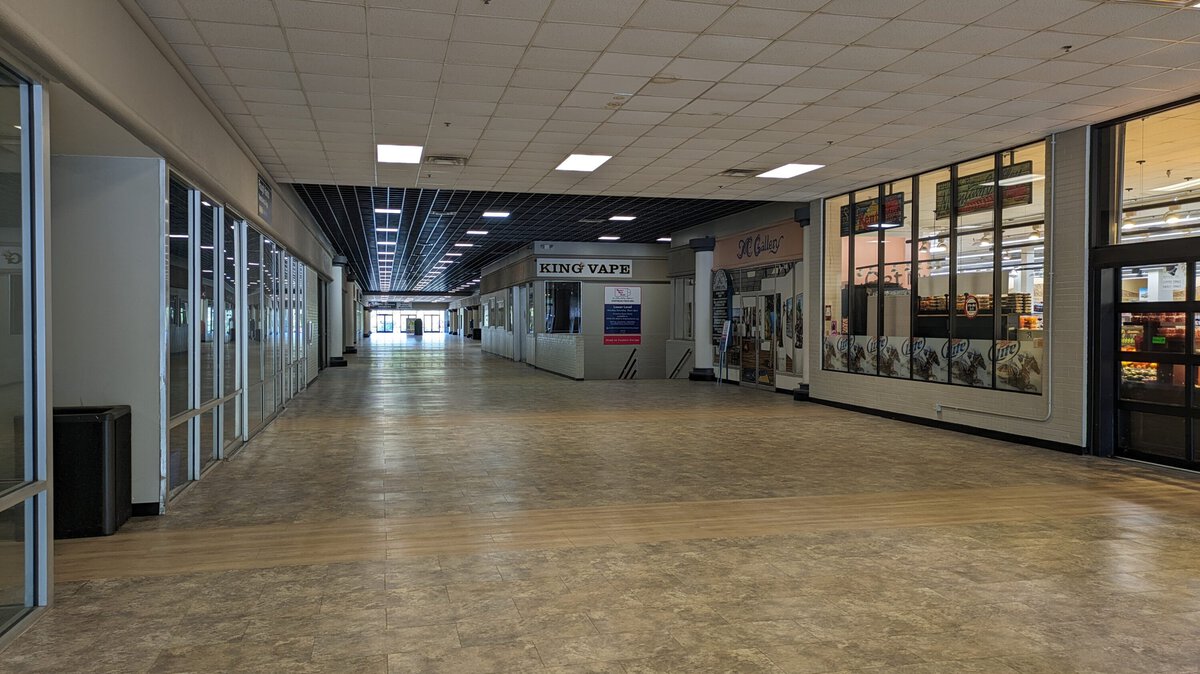
When Ames closed the store in the old Zayre anchor in 1990, the mall had a large empty box and a tired interior. A renovation in 1994 set up the two tenants that would define the place for the next three decades.
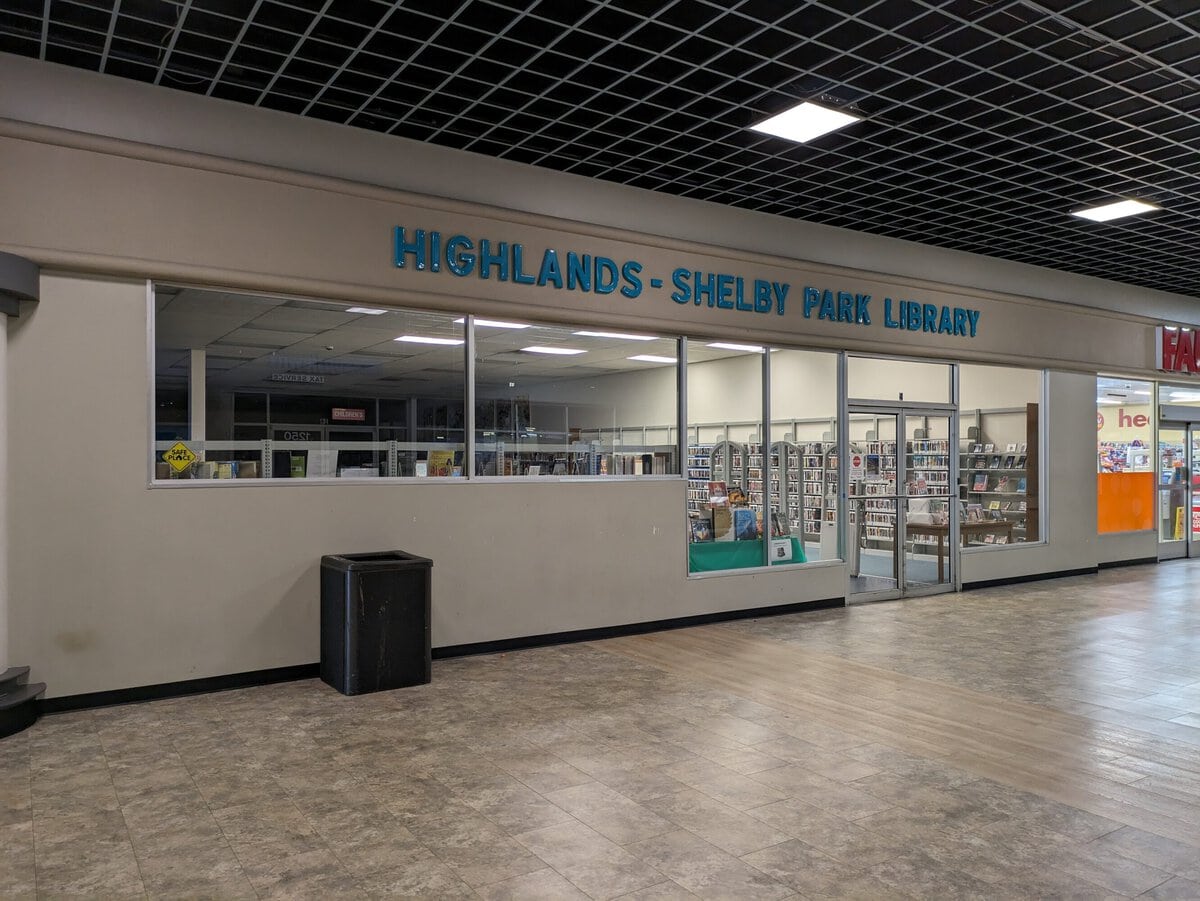
That year, the Highlands and Shelby Park library branches were combined and moved in as the Highlands-Shelby Park branch of the Louisville Free Public Library: a public reading room inside a shopping mall, with its own parking and bus access, serving neighborhoods from the Highlands and Germantown to Smoketown and Schnitzelburg.
It brought in students, families, job seekers, and older neighbors, and a Teen Outpost was added in 2001.
In 1996, Baxter Avenue Theatres opened in the former anchor space, a walkable cinema in the middle of the Highlands that ran mainstream films, independent releases, midnight shows, and festival programming, and sent evening and weekend crowds to the bars and restaurants nearby.
The Grocery Store People Could Walk To
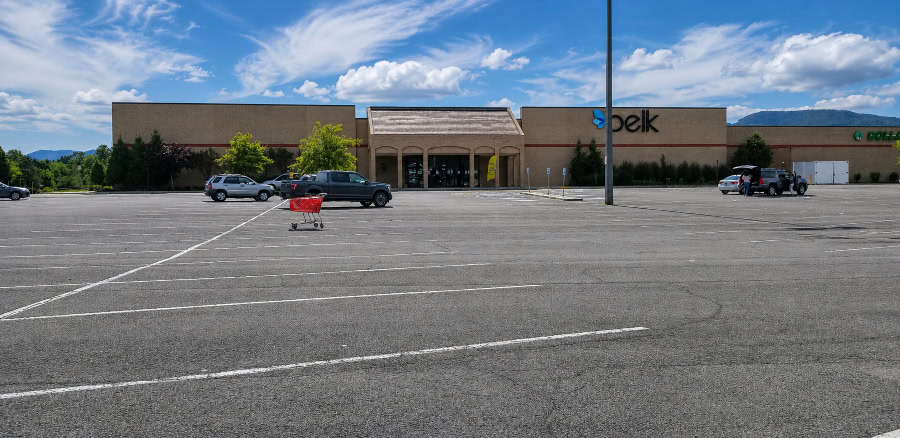
Winn-Dixie left the Louisville market in 2004, Buehler's held the space briefly, and ValuMarket arrived in 2005. Groceries had anchored the building from the first day, and this was the anchor that mattered most.
For residents without cars, for older neighbors, and for anyone who shopped on foot or by bus, ValuMarket was less a shopping option than a necessity, one of the few full supermarkets left in the immediate Highlands.
A facade and roof renovation worth $1 million in 2015 and 2016 was meant to strengthen the store's Bardstown Road presence, but asbestos in the roof pushed the work past schedule and hurt nearby tenants during the busy season.
On the property's quiet edge, the leftover Beechwood Avenue land finally found a purpose: neighbors formed Friends of Beechwood Park in 2015, and in January 2016, signed a 30-year lease at $1 a year, turning the old parking remnant into Beechwood Park.
One Closing After Another
The Jewel Box, there almost from the beginning, ended its long run in 2022. The Back Door bar closed in 2024.
That November, the whole property, 11.5 acres assessed at more than $11 million, went on the market as a redevelopment site.
A community petition gathered thousands of signatures to save the cinema, but Baxter Avenue Theatres screened its final films on December 31, 2025.
It had lost ground after the pandemic and the shift to streaming, and its operator pointed to the mall's uncertain future and to plans that left out a theater.
Its closing took a long-standing entertainment anchor off Bardstown Road, not just out of the mall.
ValuMarket would leave when its lease ran out in June 2026, ending more than two decades of grocery service under that banner.
The library held an extension only through June 28, 2026.
Mid City Market: What Replaces the Mall, and What Stays
In April 2026, a redevelopment branded Mid City Market won its approvals. This is not a renovation. It is a teardown.
The Board of Zoning Adjustment signed off 6-0 on April 20, and the Bardstown Road/Baxter Avenue overlay committee approved the design and the demolition 4-1 the next day.
Branch Properties of Atlanta, working with the family ownership, would clear the enclosed mall and put up five new buildings, anchored by a 56,000-square-foot grocery store, with four retail buildings, an office or library building, and a public green called Rosewood Park.
The design trades 232 parking spaces for 3,700 linear feet of raised sidewalk on a frontage that never had much, requires a dedicated walking path to the grocery store, and calls for a mural at the Baxter Avenue loading dock.
Required revisions also included brick-color changes and converting the former theater space into a rear exit for the new grocery store.
There is no housing in it, which became the plan's sharpest point of debate in a neighborhood that wanted a denser, mixed-use future on a site this central.
Heine Brothers Coffee and Raising Cane's keep their spots along Bardstown Road. Demolition was not expected before late 2026, with construction running 15 months after that.
What the Teardown Keeps
So the swimming pool was never built, and now the building that took its place will not be either.
What goes is the enclosed concourse, the cinema, the old grocery banner, the bowling-and-lounge mall that locals once called Skid-City and then quietly leaned on for more than sixty years.
What is promised to remain is what the mall actually became: a grocery store within walking distance, a library branch, small shops, and a patch of green where six houses once stood.
The plan sets aside a building for the library on the Beechwood Avenue side, though its permanent home was still unsettled as demolition approached.
The Highlands kept using Mid City Mall long after it stopped being fashionable.
Whether Mid City Market earns the same loyalty comes down to the test the mall kept passing: whether a walk to the store still ends in the same place.
Independent Publisher Notice
BestAttractions is an independent editorial publisher. We are not affiliated with, endorsed by, or acting on behalf of any location, business, property owner, manager, government agency, or organization described in this article. Comments posted on this page are not forwarded to, reviewed by, or acted upon by any entity mentioned in the article. For official inquiries, complaints, applications, bookings, or other requests, please contact the relevant entity directly through its official website or other verified channels.