
A vacant department store can finish a small mall.
Middlesboro Mall has seen three big rooms go empty and refilled them anyway.
The enclosed center sits on the main highway through Middlesboro, Kentucky, a city of fewer than 9,000 now near where three states meet at the Cumberland Gap.
Kmart left in 2002, and much of the box passed through Steve & Barry's before settling into Roses.
The theater went dark in the pandemic and reopened in 2021.
The JCPenney space sat empty close to four years, then a 50,000-square-foot craft store moved in.
The mall, the usual retail math would have written off, keeps doing the thing many struggling malls often cannot: it finds someone to take the big empty rooms.
How U.S. 25E put an enclosed mall in Middlesboro
By the early 1980s, U.S. Route 25E through Middlesboro had collected enough roadside retail to justify something bigger.
The corridor had been filling with stores since the late 1960s.
In 1983, David Hocker and Associates, an Owensboro developer, opened an enclosed, climate-controlled mall on North 12th Street and gave a city of about 12,000 people a single roof over a department store, a discount store, and a row of smaller shops.
A town that size does not usually get an enclosed mall on city population alone.
Middlesboro sits in Bell County near the Cumberland Gap, where Kentucky, Tennessee, and Virginia meet, and the building was meant to pull shoppers from mountain communities with few comparable retail options close by.
The mall opened to the public in October 1983.
The address was 905 North 12th Street, on the highway, with a parking field out front and more of the city's highway shopping spreading around it.
Middlesboro Mall opens with Belk, JCPenney, and Kmart
Three main anchors opened the mall, and each did a different job.
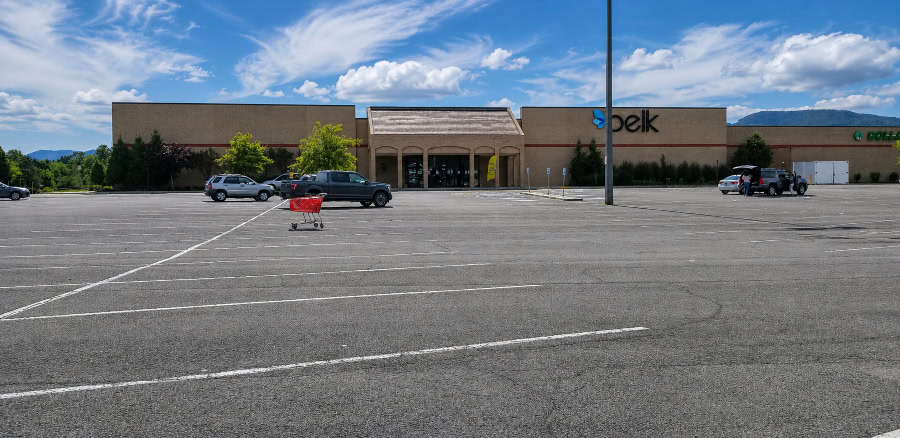
Belk ran the traditional department store.
JCPenney covered the national mid-market.
Kmart handled discount.
For a regional market, that meant a family could buy school clothes and Christmas gifts without leaving the building.
Between the anchors sat the smaller tenants that turned the place into more than three big stores with a hallway.
Those shops lived off the foot traffic the anchors pulled and the seasons that came with it: back-to-school in late summer, Christmas in December, ordinary shopping trips the rest of the year.
A movie theater opened during the mall's first stretch and was known as Cinema 4.
It made the mall an entertainment stop as well as a shopping one, and it would outlast its first several operators.
Sears arrives, and Middlesboro Mall hits its stride
Sears arrived in June 1987 with a 16,500-square-foot store, tiny beside a full-line Sears but scaled for a smaller market.
Two years later, in 1989, it added 5,300 more square feet.
Six years after the mall opened, it was still growing.
The building did civic work too.
A 1993 academic paper cited adult literacy classes inside Middlesboro Mall, an early sign the place was being used for more than shopping.
Later the Children's Reading Foundation of Appalachia used the property for Read Across America days, and the mall hosted family events like Malloween, Books with Santa, and a back-to-school fashion show.
For most of these years, the routine was ordinary and steady.
Weekends came and went. The anchors helped carry the holidays.
Most of it did not need to make news, which was the point of a mall like this one.
Kmart leaves in 2002, and the box won't stay empty
On June 1, 2002, Kmart closed. The store had carried number 9783 and the plain address 4 Middlesboro Mall.
Its closing came off a national Kmart list and gave the mall its first major anchor vacancy.
The box did not stay empty for good, though it took years to settle.
Steve & Barry's moved into the old Kmart in the mid-2000s and lasted only a few years before its own chain went under in the 2008 downturn.
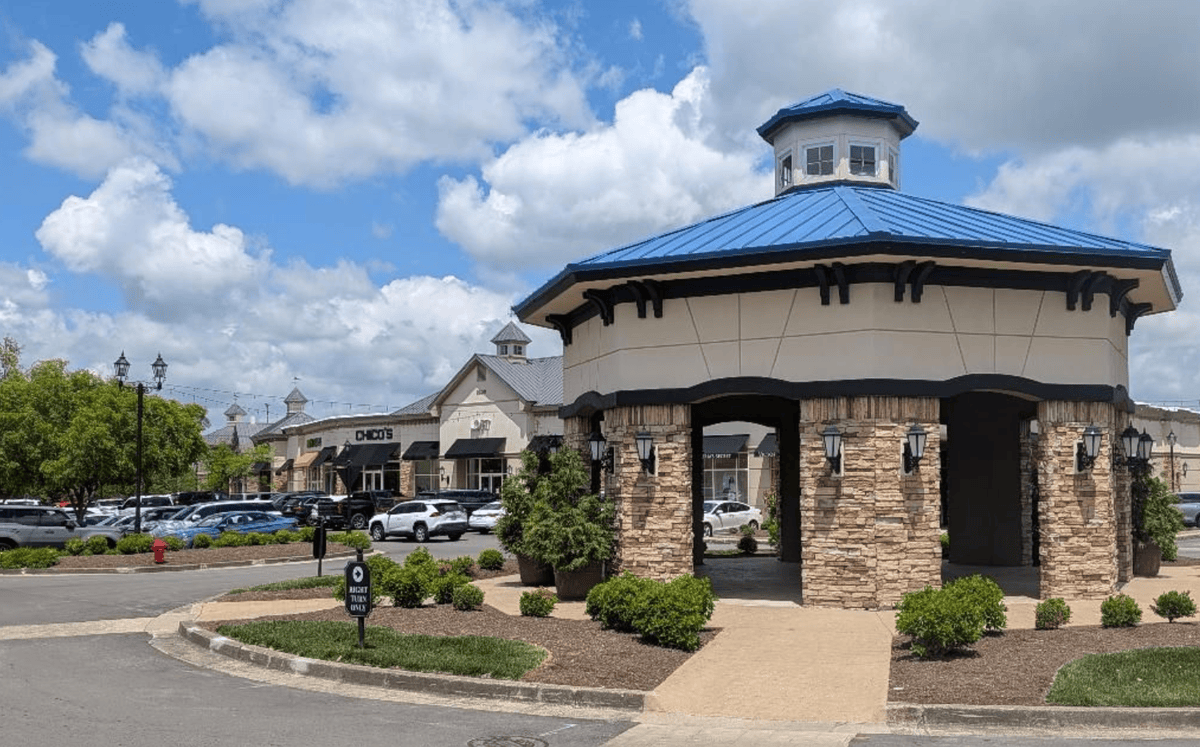
Roses opened there in 2010 and stayed. A discount store became a value-apparel store and then a discount store again.
After two national chains failed, a regional one eventually filled the box.
Sears moves out, and new owners take over in 2019
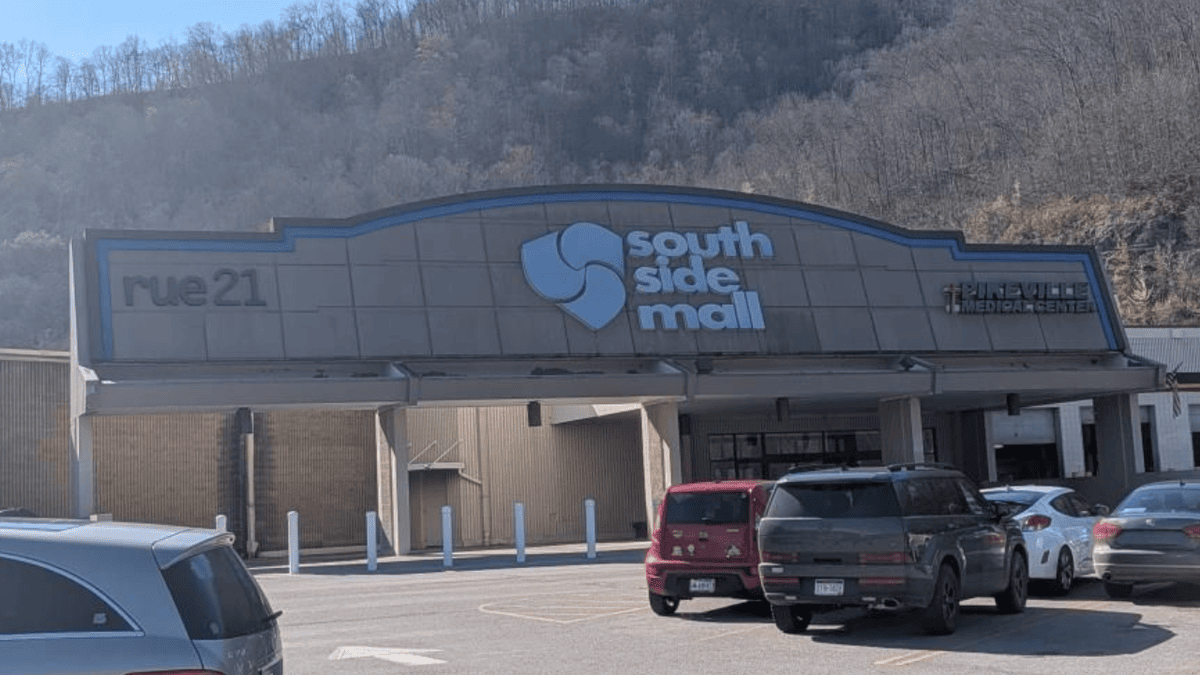
Sears left in November 2012 and moved to a new spot north on U.S. 25E, taking a national name out of the enclosed interior while keeping it on the same highway.
The mall had opened under David Hocker and Associates, passed to Ershig Properties in 2004, and in August 2019 it changed hands again.
The Monroe group bought Middlesboro Mall along with two other properties.
The buyer ran more than 80 properties across six states and favored smaller markets, the category Middlesboro fits.
The sale moved the local management too.
The mall manager, tied to the property for more than 36 years, stepped down to keep working with the former owner elsewhere, and the longtime office manager took over running the building.
2020 takes JCPenney and the movie theater
AMC, then the latest of the theater's several operators, closed it on March 16, 2020, and by that summer the closure was permanent.
The cinema had run under Carmike and then AMC, and the pandemic ended that run.
JCPenney went next.
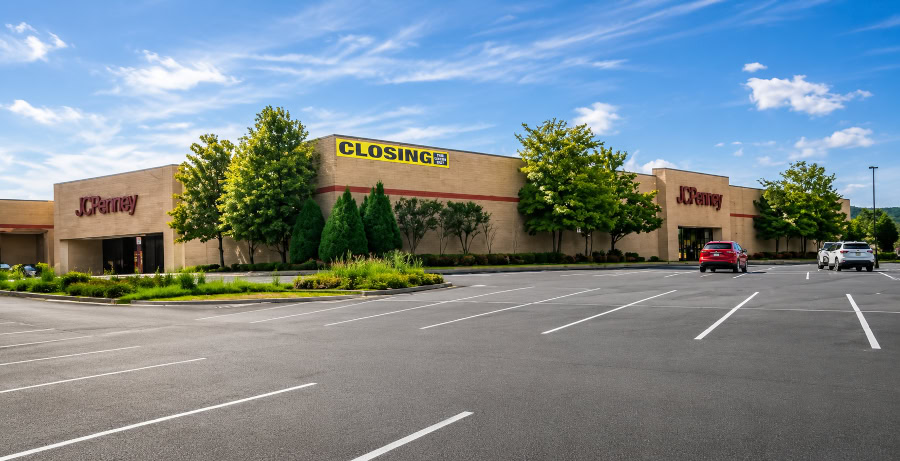
In June 2020, the Middlesboro store landed on a list of 154 JCPenney closures, one of six in Kentucky.
The store had been an original 1983 anchor, the place families had used for back-to-school and Christmas for 37 years, and its exit left a large anchor space empty.
The mall itself had reopened weeks earlier, on May 20, at 33 percent capacity, with extra cleaning on the doors and handles and several tenants still shut, JCPenney and Bath & Body Works among them.
Golden Ticket and Hobby Lobby refill the anchors
Golden Ticket Cinemas reopened the theater in July 2021 after promising reserved seats, new rockers, digital projection, Dolby 7.1 sound, a remodeled lobby, and a return of Discount Tuesday.
Four screens came back on. The mall kept a reason to visit that did not depend on selling clothes.
The JCPenney box took longer.
From its 2020 closing until 2024, it stayed empty, the kind of vacancy that can drag down a small mall's whole leasing pitch.
In January 2024, the mayor named the future tenant, and on Friday, May 10, 2024, Hobby Lobby opened a 50,000-square-foot store in the old JCPenney space, the chain's 21st in Kentucky.
Hobby Lobby reused the existing shell.
The mall had a working anchor where a dark box had sat, and a craft-and-fabric store gave shoppers a different reason to come back than Belk or Roses did.
Mall walkers, reading events, and a church keep it busy
People still walk the place.
In 2023, mid-morning to mid-afternoon, regulars made laps of the interior, a use that kept going after the retail thinned.
The reading foundation's events kept the property on the local calendar, and in 2013 mall management gave the group free office space after watching how much the community leaned on it.
On Thanksgiving in 2017, the mall opened at 2 p.m.
for its third straight holiday, with most stores set to open at 6 a.m.
on Black Friday and a few stores deciding to stay closed.
Locus Church meets at the mall address every week.
A shopping center built around Belk, JCPenney, and Kmart now also holds weekly gatherings, reading days, and indoor laps.
What's left at Middlesboro Mall, and what's for lease
Belk has been open at the mall for more than four decades, the one original anchor that never left.
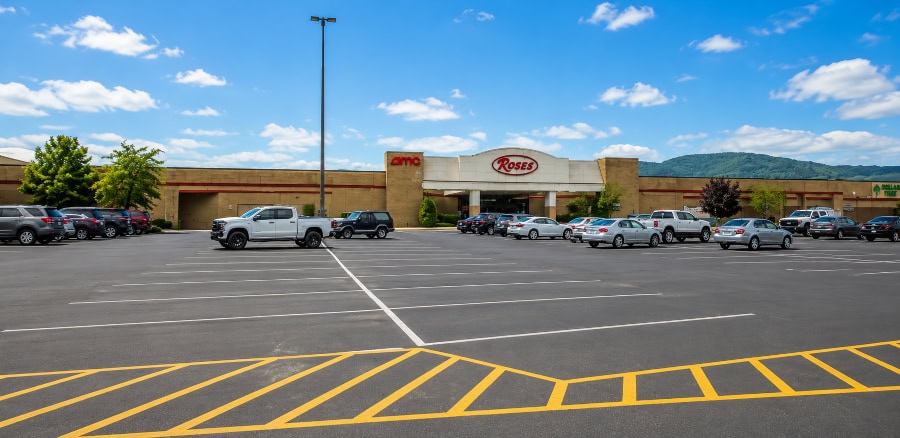
Around it: Roses in the old Kmart space, Hobby Lobby in the old JCPenney space, Golden Ticket in the old theater, and Hibbett Sports inline.
Kmart, Sears, JCPenney, and AMC are all gone, and the mall is still here.
It is not fully leased.
As of April 28, 2026, the property was marketed with 19 open retail spaces totaling 45,800 square feet, the smallest under 500 square feet and the largest past 6,000.
The big anchor boxes have tenants. The smaller storefronts are the harder problem now.
The listing puts the whole retail property at 398,500 square feet, larger than the 317,400 figure often used for the mall itself, a reminder that mall square footage changes with the listing and the measurement.
The 905 North 12th Street address still pulls drivers off a highway, counted at 9,400 vehicles a day, between a Walmart, a Kroger, and a row of restaurants.
As of 2026, the public-facing plan is leasing, not demolition or redevelopment.
People come for Belk and Hobby Lobby, for a movie, for laps before lunch, for church.
The walkers still show up at mid-morning, and the doors are still open.
Independent Publisher Notice
BestAttractions is an independent editorial publisher. We are not affiliated with, endorsed by, or acting on behalf of any location, business, property owner, manager, government agency, or organization described in this article. Comments posted on this page are not forwarded to, reviewed by, or acted upon by any entity mentioned in the article. For official inquiries, complaints, applications, bookings, or other requests, please contact the relevant entity directly through its official website or other verified channels.