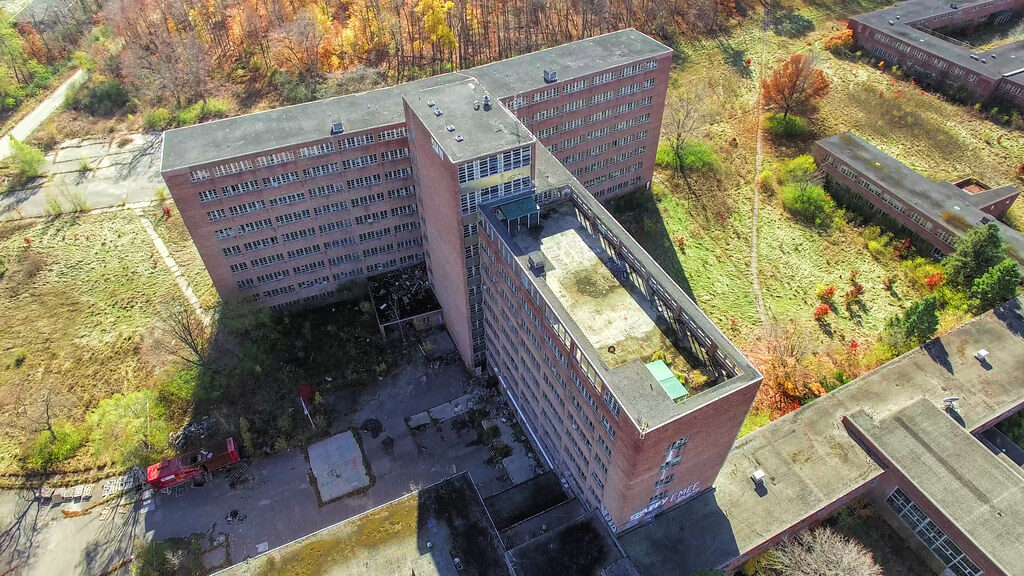
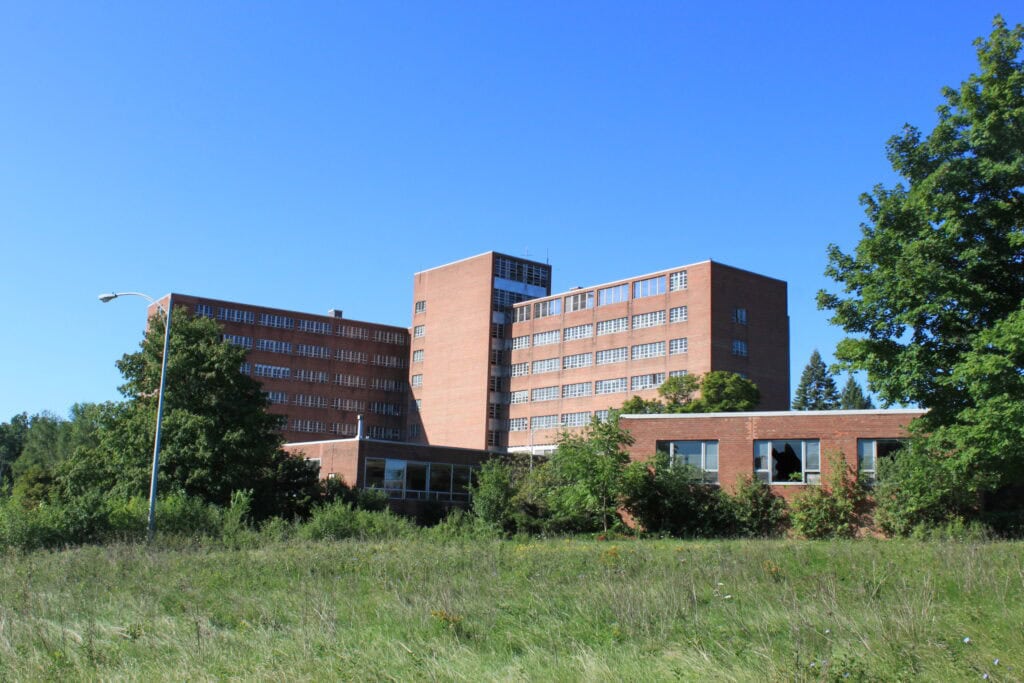
The main building at Northville Psychiatric Hospital stood nine stories tall in Michigan, with two more levels below ground.
From the outside, it looked imposing - about 250,000 square feet of brick and concrete, surrounded by smaller buildings, smokestacks, a water tower, and tunnels running under the property.
Inside, in the late 1980s, around 1,200 patients lived there on a typical day. The hospital had a bowling alley, a swimming pool, a ceramics kiln, and a 750-seat auditorium.
There was also a barbershop with licensed barbers employed by the hospital, and a snack bar that patients once operated themselves.
In one of the nearby buildings, workers packed parts that were sent to Ford Motor Company assembly lines.
The hospital covered 350 acres at the edge of Northville Township, Michigan, and operated for just over 50 years before the state closed it in 2003.
The nine-story tower was demolished in 2018, and the last group of smaller buildings was torn down in 2023.
Today, the land has been turned into Legacy Park, with more than 10 miles of hiking trails and 6 miles of mountain biking paths. One former hospital building still remains.
Northville Psychiatric Hospital Opened in 1952
Crowding at psychiatric hospitals in the Detroit metropolitan area led Michigan to build a new facility in Northville Township.
The hospital opened in 1952 and admitted adults with mental illness from its assigned service area. It operated as both a Medicaid and Medicare provider.
Over time, it appeared under different names - Northville Psychiatric Hospital, Northville State Hospital, and Northville Regional Psychiatric Hospital - depending on the agency and the period.
The campus was not one large ward building. It was a group of specialized structures.
The main hospital stood on the north side of the campus, with a powerhouse, a maintenance building, nurses' housing known as Building 72, and a laundry facility in Building 14 on the campus.
Underground utility tunnels linked the buildings. The layout was designed to be self-contained.
Housing, heat, work, and recreation were all provided within the grounds, so residents did not need to leave for daily needs.
Before 1954, children with severe emotional and behavioral disorders lived in a separate building on the same campus.
Local advocacy by the American Association of University Women helped push the state to create a dedicated children's facility.
Hawthorn Center opened on Haggerty Road in 1956.
A Small World Inside the Hospital Fence
Starting in 1976, Susan Parker worked at Northville Psychiatric Hospital and later oversaw the Activities and Recreation Building, which offered many facilities for patients.
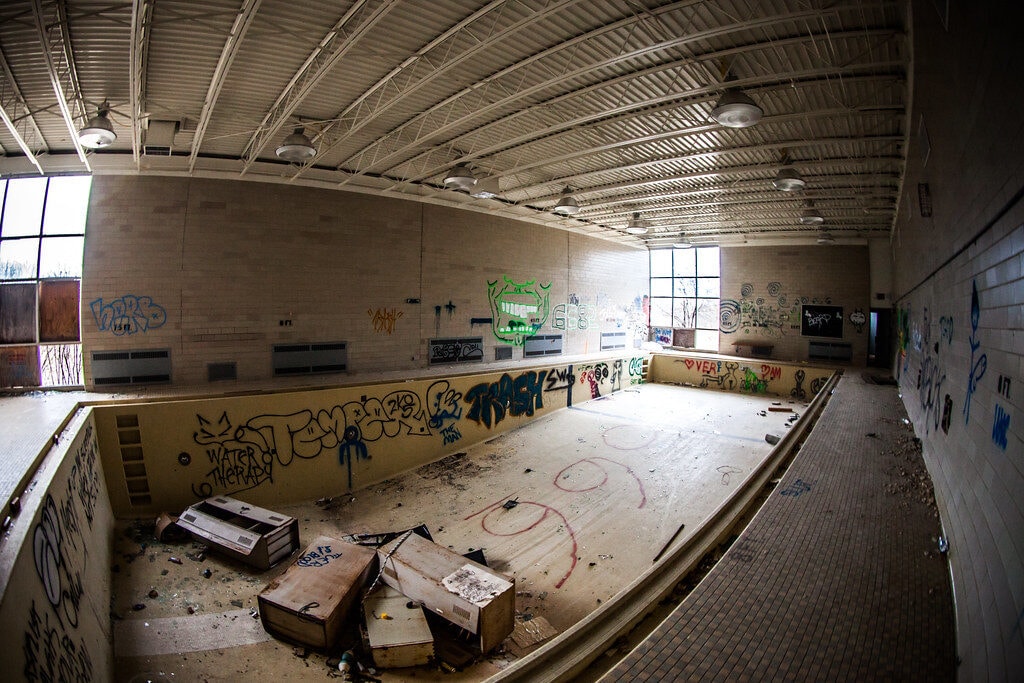
Inside were a ceramics room with a kiln, a music room with instruments, a large arts-and-crafts space, a bowling alley, a gym, a swimming pool, and a recreation room with ping-pong and pool tables.
The bowling alley needed regular repairs, so the hospital kept a mechanic under contract. Patients learned how to keep score.
Both the pool and the bowling alley were still operating near the hospital's closing year in 2003.
Parker also described classrooms near the gym and locker rooms beside the pool.
In A Building, there was a 750-seat auditorium with a chapel next to it, where movies were shown on a large screen. Patients cared for a courtyard garden.
The hospital had a dental office where a dentist handled exams, fillings, and extractions.
A beauty shop and barbershop were part of the Activity Therapy department, staffed by licensed cosmetologists and barbers employed by the hospital.
Another building was used for Work Therapy through outside contracts, including work with SprayCo and Digitron, which supplied parts to Ford Motor Company.
Patients did packaging work there. They were first paid by the piece and later earned minimum wage through the State of Michigan.
The work required a doctor's order and had to be voluntary under the Mental Health Code.
Young Adults and the Courtroom That Came to Them
Former administrator Tom Watkins pointed to a group of patients that rarely appears in official records.
These were young people, usually around seventeen or eighteen, who were too old for Hawthorn Center but too young to be placed with much older adult patients who had long-term conditions.
To meet their needs, the hospital set up dorm-style units called the "Young Adult Center," where patients could live in a setting closer to their age group.
At one time, patients who needed involuntary commitment hearings were taken by bus to the Detroit-Wayne County building.
Large groups filled several buses, waited for hours in crowded basement rooms, and then returned to the hospital.
That changed during Watkins' tenure. A judge, a stenographer, and a security officer began coming to Northville to hold the hearings on site.
Around the same time, the SEMTA transit line was extended from Livonia Mall to the hospital entrance, making it easier for families to visit using public transportation.
Susan Parker recalled that when she arrived in 1976, there were about 600 to 800 patients living at the hospital.
The number rose to around 1,200 in the late 1980s, then dropped as Michigan moved more psychiatric care into community settings.
Watkins said that during budget crises, services like social programs, occupational therapy, and other non-custodial care were usually the first to be cut, and that this happened repeatedly over different budget cycles.
The Announcement That Closed Northville
On November 18, 2002, the Michigan Department of Community Health announced that Northville Psychiatric Hospital would close.
It pointed to four reasons: fewer patients in the state mental health system, staff reductions caused by early retirements, the availability of community-based care, and the declining condition of the hospital buildings.
At that point, the hospital had 536 employees and 239 patients.
The director had already told executive staff in early November 2002, weeks before the public announcement. Morale dropped right away.
An early-retirement program forced many employees to make decisions about their future before they knew if they could transfer or if jobs would be open.
By May 16, 2003, every patient had either moved into a community placement or been transferred to another state psychiatric facility, mostly Walter P. Reuther Psychiatric Hospital in Westland.
The hospital spent $58.1 million in the 2001-02 fiscal year.
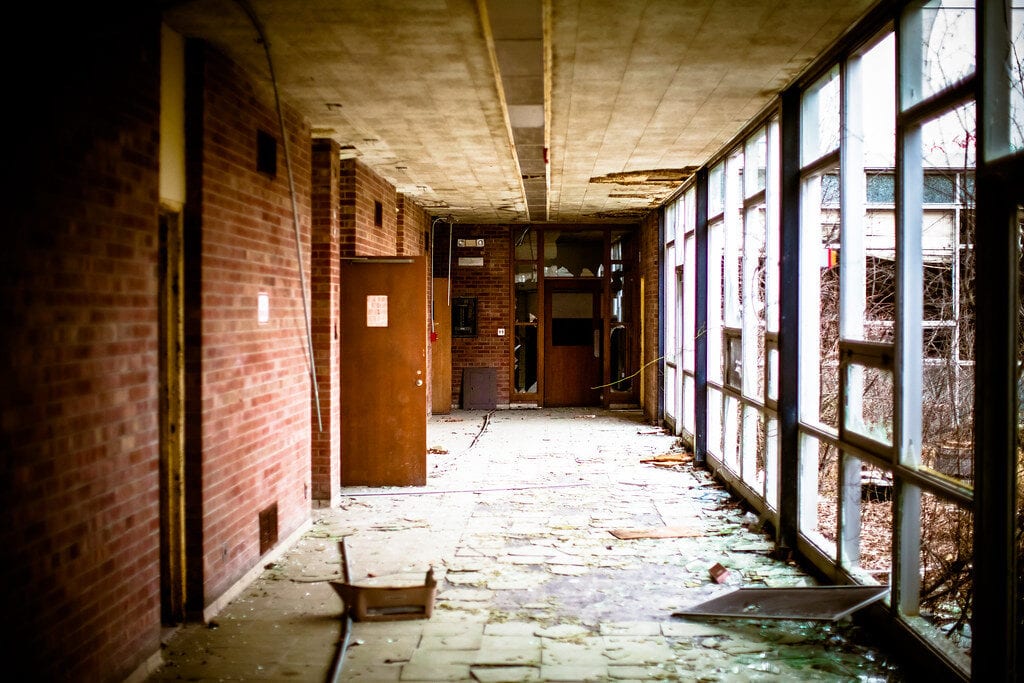
The state-run hospital closed in May 2003 after 51 years of operation.
What Auditors Found After the Doors Closed
In 2005, the Michigan Office of the Auditor General reviewed how the hospital had been run and how it closed. It found major problems.
Oversight of some daily operations was rated "not effective," and oversight of parts of the closure process was judged only "somewhat effective and efficient."
Staff did not start tagging and inventorying equipment and furnishings until March 3, 2003, more than three months after the closure was announced.
Over the next six months, they tagged more than 12,500 items, but never finished the job. Some areas, including the large maintenance shop, were left out entirely.
Because the inventory was incomplete, there was no reliable way to know whether some state property had been properly transferred or simply lost.
A project to install telephone and voice-mail systems was first estimated at $482,000, but it grew to $1.86 million after the hospital expanded the work to include data, voice, paging, and weather-alarm systems.
For $1.38 million of that work, no competitive bids were obtained.
The hospital did not have a working system to track non-controlled medications, which made up most of its drug spending - about $2.3 million in fiscal year 2001-02.
For controlled substances, one employee handled ordering, receiving, inventory, and reconciliation. Plans to return unused medications and recover vendor credits were mostly not carried out.
At least 31 patients who had been discharged before the hospital closed still had personal belongings at the facility that were never returned.
Twenty Buildings, One Vision, Two Decades of Demolition
Northville Township residents voted in 2009 to approve a millage for acquiring the former hospital site.
The township bought the 332-acre property from Schostak Brothers & Co. and REI Investment Group, Inc. for about $23.5 million.
REI Investment Group retained the 82-acre parcel at the southwest corner of Seven Mile and Haggerty roads for private development.
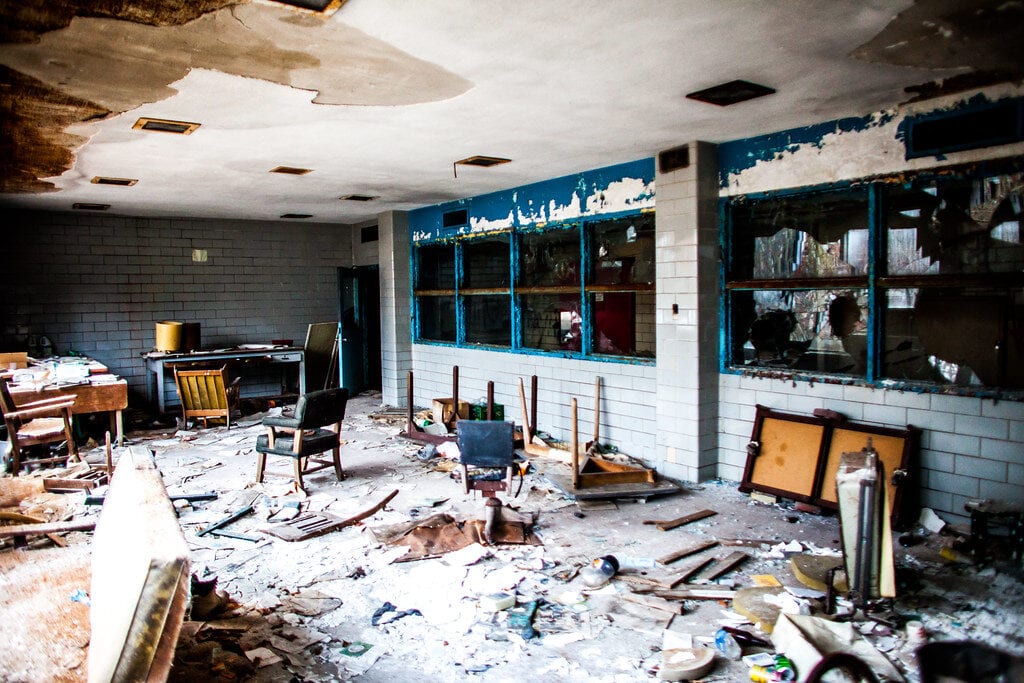
The 20 buildings still standing were deteriorating, and several contained asbestos. The powerhouse, maintenance building, and smokestacks came down in 2012.
Building 72, the nurses' quarters, followed in 2013. Remediation of the main hospital began in 2017, and the nine-story tower was demolished in 2018.
In October 2021, the township approved a $12 million bond to remove the remaining 11 structures.
In May 2022, it awarded a demolition contract of up to $8.9 million to Asbestos Abatement Incorporated of Lansing.
By 2023, the last 10 buildings were gone. Concrete and metal from the demolition were recycled into the new parking areas and site infrastructure.
One structure survived: Building 14, the former laundry facility, was retained for future reuse as a Parks and Recreation facility.
Legacy Park and the Award It Earned
On January 26, 2012, the Board of Trustees approved a master plan that about 3,000 residents had helped shape. It laid out a 30- to 50-year timeline.
The goal was trails, open land, and outdoor recreation that would be easy to maintain, not features that would need to be replaced in a few years.
Trail planning came around ten years later.
In November 2022, the township approved roughly 17.5 miles of non-motorized paths for hiking, walking, running, mountain biking, and nature exploration, with some paved sections for accessibility.
Phase I was done by 2024. Phases II and III were finished in 2025.
That same year, the Essential Services Complex opened on 15 of the park's 350 acres with a new Public Safety Headquarters, while the other 335 acres were reserved for recreation.
That spring, the township received a $40,000 SEMCOG grant for stormwater and green infrastructure planning.
In May 2025, the Michigan Chapter of the American Public Works Association named Legacy Park its 2025 Project of the Year.
Concrete from the demolished hospital buildings had been recycled into the parking areas, and metal had been recycled or scrapped.
Today, the site has more than 10 miles of hiking trails and 6 miles of mountain biking trails. Building 14, the old hospital laundry, is the only structure still standing, kept for future Parks and Recreation use.