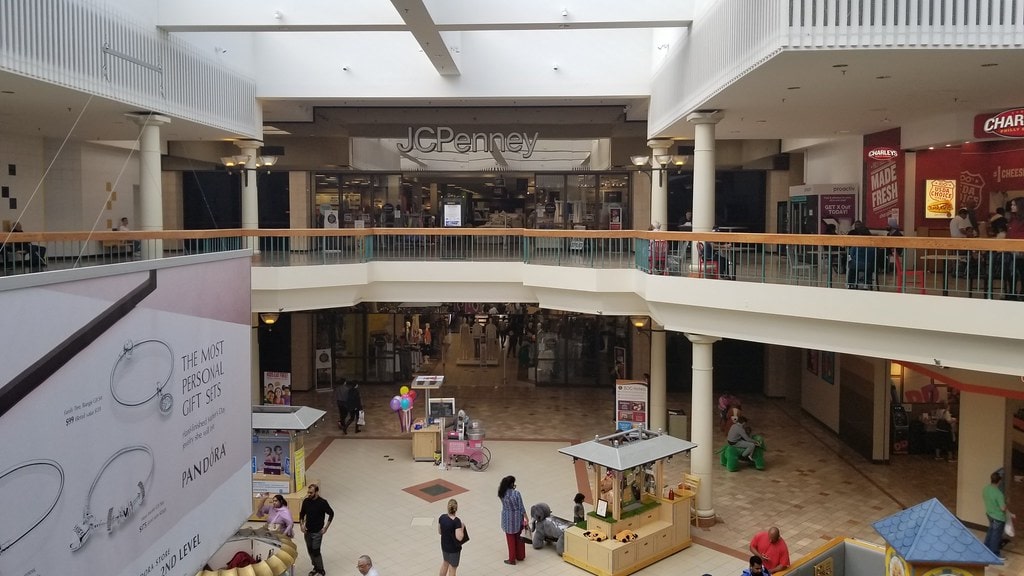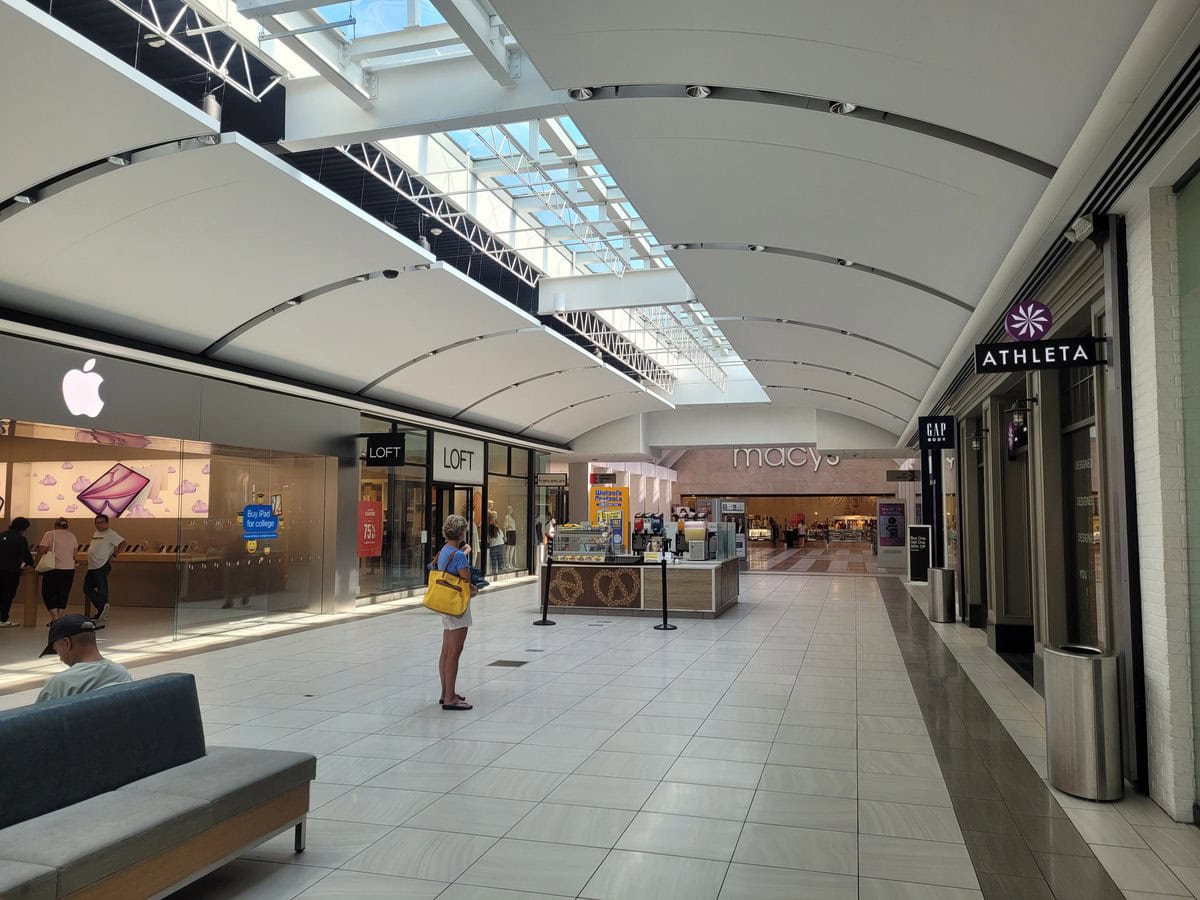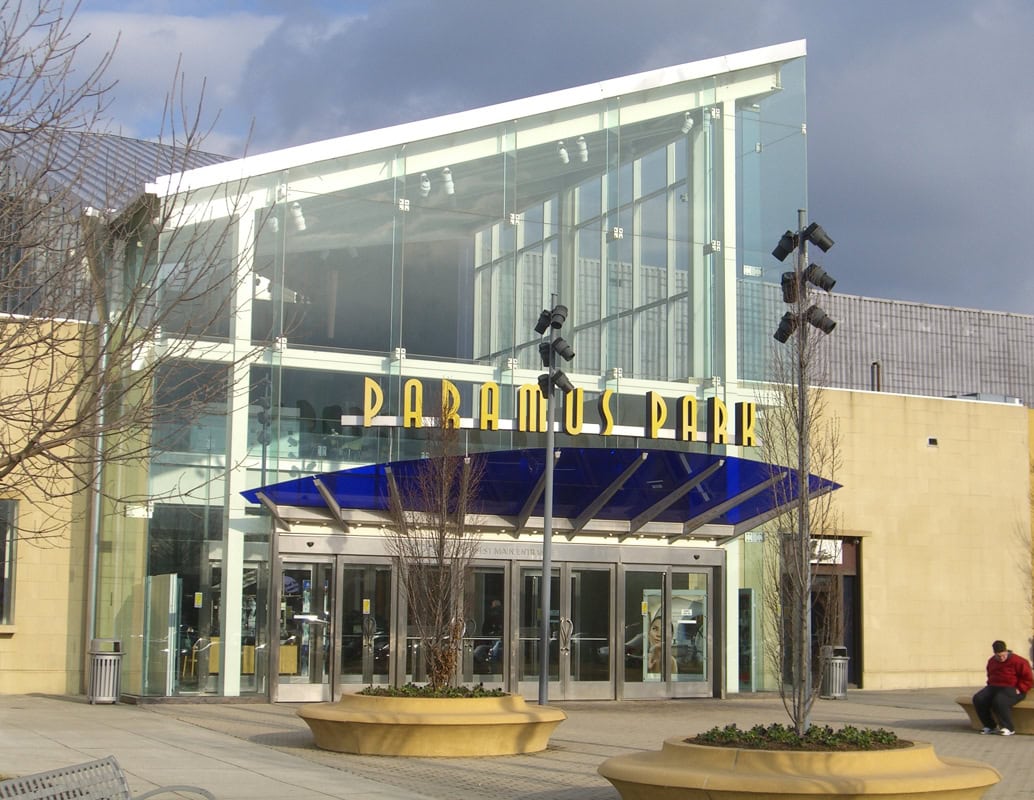
There's one thing you figure out fast when you move near Bergen Town Center: Sunday is a day off.
Bergen County's Blue Laws have been on the books for generations, and Paramus holds to them. The main stores - Target, Kohl's, Marshalls, Nordstrom Rack - are closed.
Parking lots that hold thousands of cars on other days sit almost entirely empty.
The other six days look completely different. More than 11 million people come through in an average year - something like 30,000 a day.
There are 85 stores spread across just over a million square feet on 34 acres along Route 4.
The tenant list runs from Whole Foods and Burlington to a veterinarian's office, a Samsung showroom, a bank branch, and a bakery. Lincoln Technical Institute runs a campus here, too.
What the building looks like now - a mix of old wings and newer additions, outdoor plazas and covered sections, a five-level parking garage - is the result of almost 70 years of change.
Bergen Town Center survived by changing, often drastically. The building carries the marks of every one of those rounds.
Bergen Mall's Story Starts in 1954
Alstores Realty, the real estate arm of Allied Stores, began assembling the Route 4 land in 1954.
The company leased about an acre from a neighboring landowner named Sadie Kelly that year, adding the parcel to the larger site under a 99-year agreement.
Construction was still years away, but the footprint was being locked down.
By January 1955, Allied was talking publicly about what it planned to build.
Bergen Mall - the name the center would carry for decades - was going to be the first of Allied's large regional shopping centers, scheduled to open by 1957.
Allied projected a trade area of 1,588,000 customers within a 40-minute drive, parking for 8,600 cars, 100 air-conditioned stores, a 500-seat auditorium, two six-story office buildings, restaurants, a children's ride area, an outdoor ice-skating rink, bowling alleys, and a carillon.
This was not a shopping mall. It was a small city. Allied was thinking about Route 4 the way city planners thought about downtowns - a place to spend most of the day, not just pick up groceries.
Not every feature on that 1955 list made it into the finished building. But the scale and the ambition both survived.
Opening Day and the Years That Followed
Bergen Mall opened on November 14, 1957. Dave Garroway, the host of NBC's Today, was there as master of ceremonies, which gives you a sense of how Allied treated the occasion.
Paramus, at the time, was still mostly farmland and early postwar development.
Bergen Mall was one of the projects that tipped the balance, turning Route 4 into the kind of corridor people drove to from across the county.
The original center was open-air. Shoppers walked between stores along outdoor paths, same as at most large shopping centers built in the 1950s.
That format worked for the era, but newer enclosed malls would eventually draw people away from it.
Bergen Mall's trade area was big enough to support multiple major stores. By the mid-1960s, the center was adding to its anchor lineup.
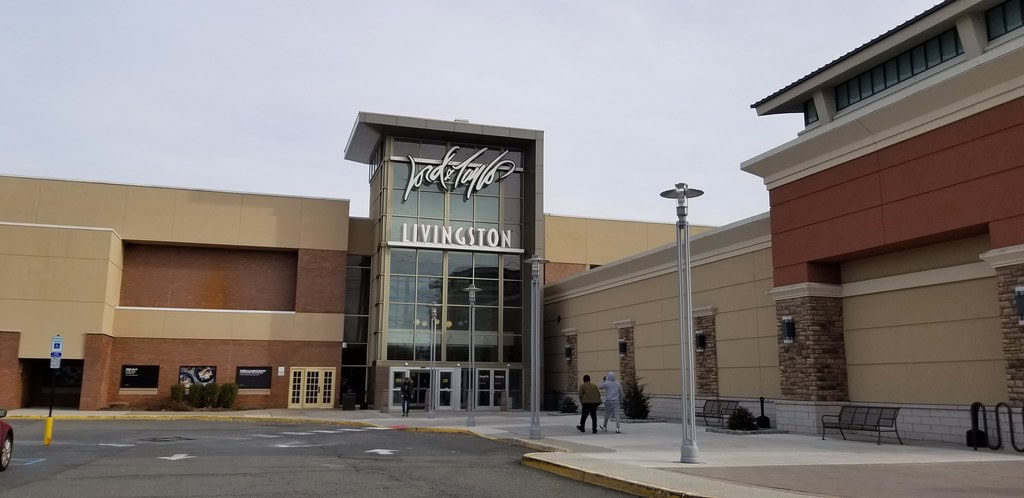
Ohrbach's, a department-store chain, announced its location at Bergen Mall, and the store opened there in 1967 - the chain's first suburban New Jersey address.
By the late 1960s, Bergen Mall offered enough major draws to make the trip feel like more than a quick errand.
A Roof Goes On, and the Mall Turns Inward
Bergen Mall needed an update in the early 1970s. Enclosed malls were drawing customers away from open-air shopping centers, and Bergen Mall was still open-air. The renovation cost $1.2 million.
The mall reopened as an enclosed center on September 16, 1973. Its rebuilt lower level included an Early American–style section called "Village Square."
Putting a roof over the mall did more than protect shoppers from bad weather.
After Bergen Mall became enclosed, people began using it more like other indoor public places. Walkers came in during the mornings, especially in winter.
Community groups also used the common areas for meetings and events.
By 1976, the Carmelite Chapel of St. Therese was operating on the lower promenade at Bergen Mall.
A religious congregation had placed a worship space inside a commercial building, only a short distance from store windows.
Chapels do not end up inside shopping malls for no reason.
The roof did more than just enclose Bergen Mall. It made the mall feel like a room. When a place feels like a room, people often find new ways to use it that no one expected.
Ownership Chaos and a Landmark Legal Battle
Bergen Mall was still enormous in the early 1990s - more than 1 million square feet of leasable space, over 100 tenants.
But the ownership structure behind it had been fracturing since the mid-1980s.
Allied Stores, Bergen Mall's original developer, was restructured in 1986 after Campeau Corporation took control of the parent company.
Alstores Realty, which had held the property since the beginning, was dissolved.
Bergen Mall's assets were divided into Bergen Mall I and Bergen Mall II, then recombined under a new arrangement called Bergen Mall Partnership.
Bergen Mall I went to Edward J. DeBartolo. Bergen Mall II transferred to Campeau Corporation (U.S.).
Separately, Bergen Mall had a role in how New Jersey courts eventually settled a bigger question about shopping malls and free speech.
Since 1984, the mall had been permitting issue-oriented leafletting in its common areas under a standing court order.
That established history came up in a 1994 New Jersey Supreme Court case that asked whether large enclosed malls had to allow certain forms of free expression.
Bergen Mall proved the policy could work without disrupting retail.
The ruling that came out of that case changed how New Jersey law treated free expression in large shopping malls.
Vornado Bought Bergen Mall and Rebuilt a Large Section
Vornado Realty Trust bought the property in December 2003 for $145 million. Vornado called it a 900,000-square-foot "fixer-upper" - 80 acres in Paramus, and the building was clearly losing ground.
The company wasn't buying an asset. It was buying a bet that a prime Route 4 location could support a major redevelopment.
By 2007, the plan was written down: demolish about 300,000 square feet of existing space, build roughly 500,000 square feet of new construction, and bring the total to about 1.1 million square feet.
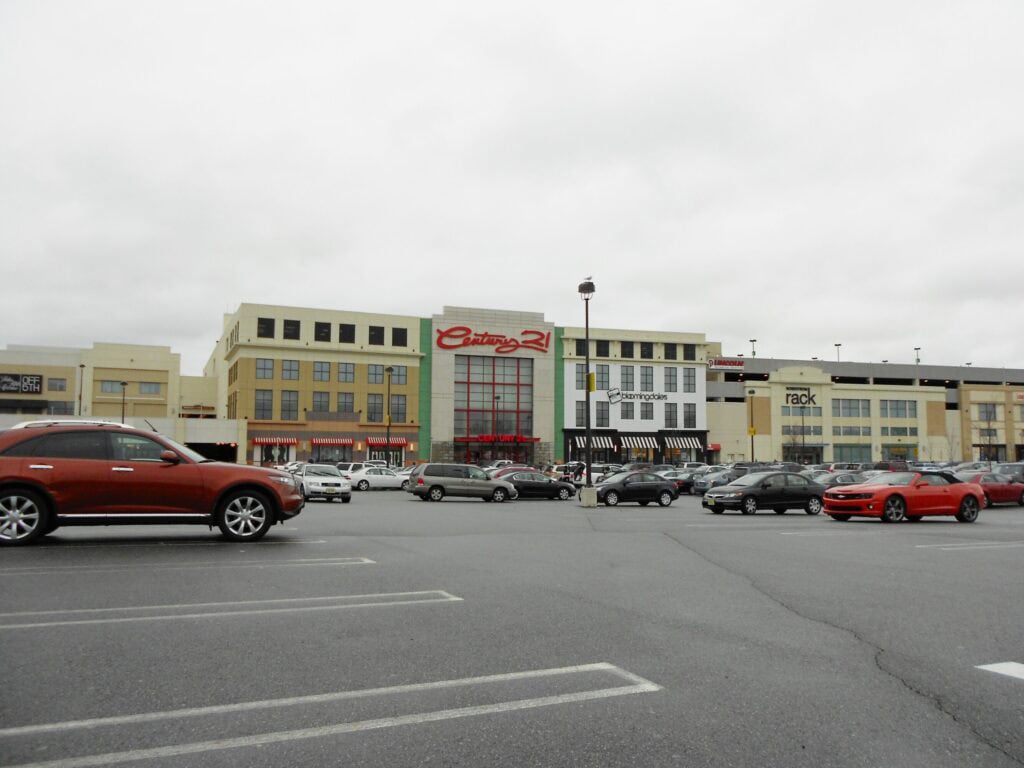
Century 21, Whole Foods, and Target had already signed on for 416,000 square feet of the new footprint.
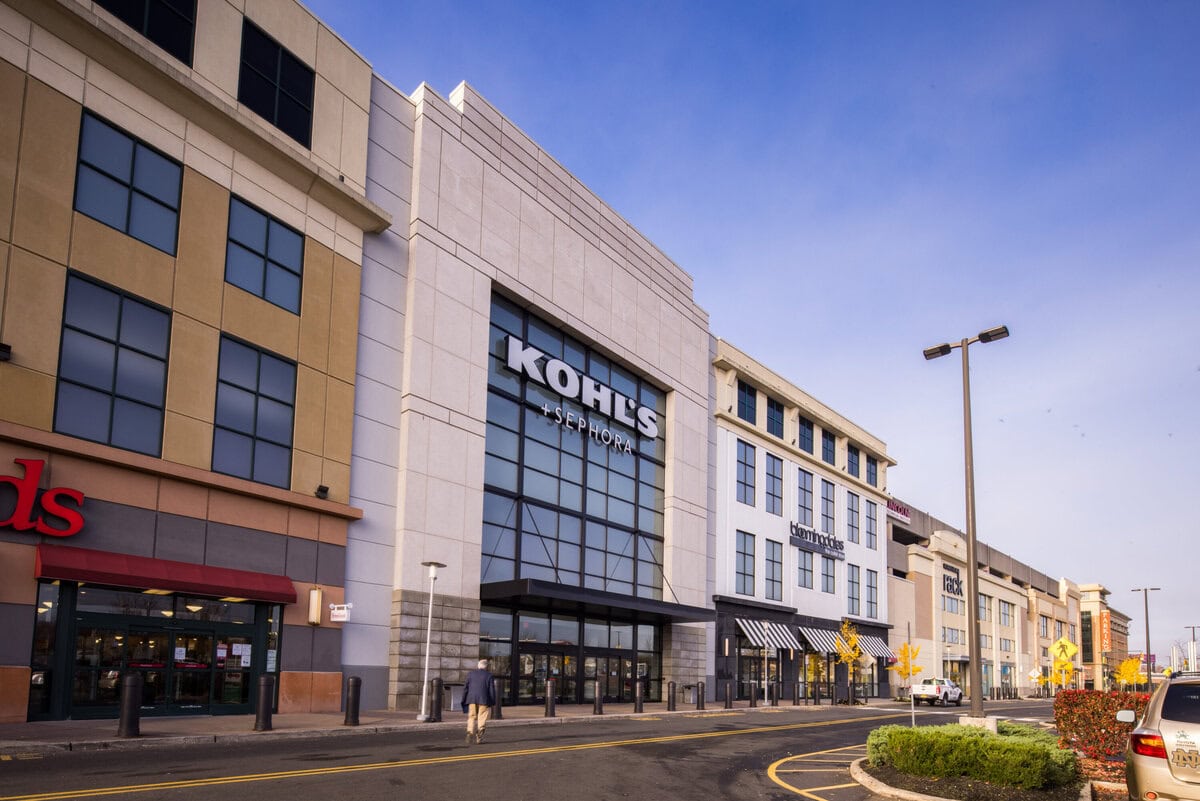
Work finished in 2009. A vacant anchor building was demolished entirely. The exterior was redesigned to add more variety - less uniform than the old enclosed-mall look.
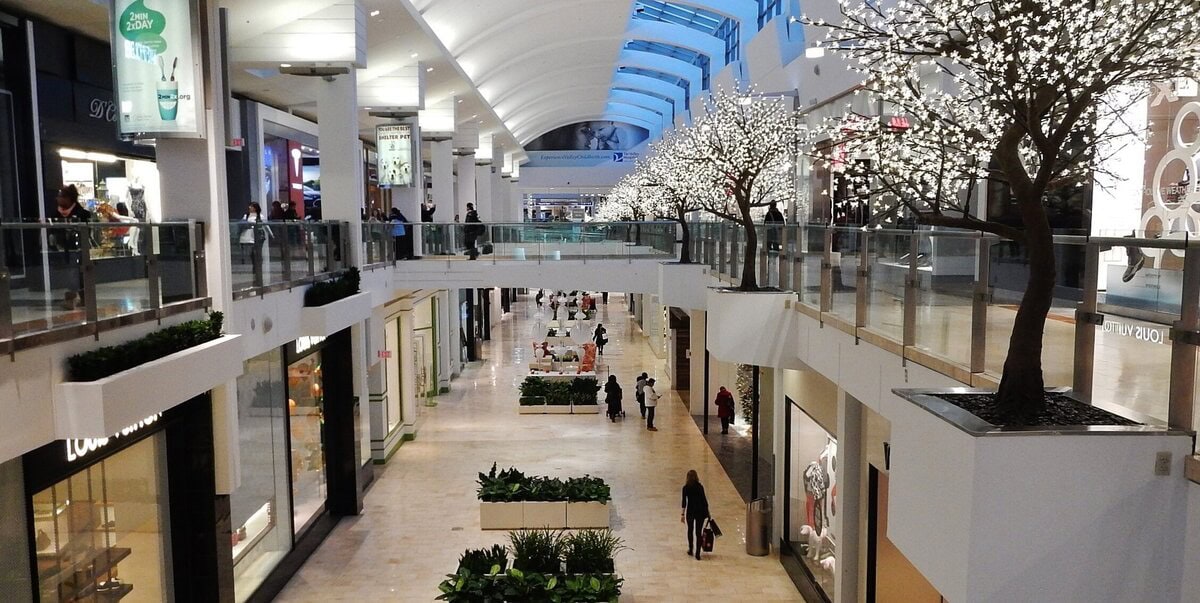
New entrance courts were built, a five-level parking garage was added, and a double-height concourse with skylights replaced older interior sections.
The center got a new name: Bergen Town Center.
Nordstrom Rack joined Century 21, Target, and Whole Foods as the primary anchors. Off-price retail, a grocery store, and a department-store outlet had replaced the traditional anchor model that had stopped working.
Bergen Mall - the name, the format, and part of the physical building - was gone.
Apartments, Restaurants, and What Comes Next
Urban Edge Properties took control of Bergen Town Center in January 2015, when it split off from Vornado and became its own retail-focused company.
Century 21 went bankrupt in 2020, and Kohl's later took over its 134,000-square-foot space.
Hackensack Meridian Health signed a 20-year lease for an 80,000-square-foot medical office building on an outparcel along Route 4.
Newer tenants include Bath & Body Works, Crumbl, First Watch, Tacoria, World Market, Ani Ramen, Teriyaki One, and Tatte Bakery & Cafe.
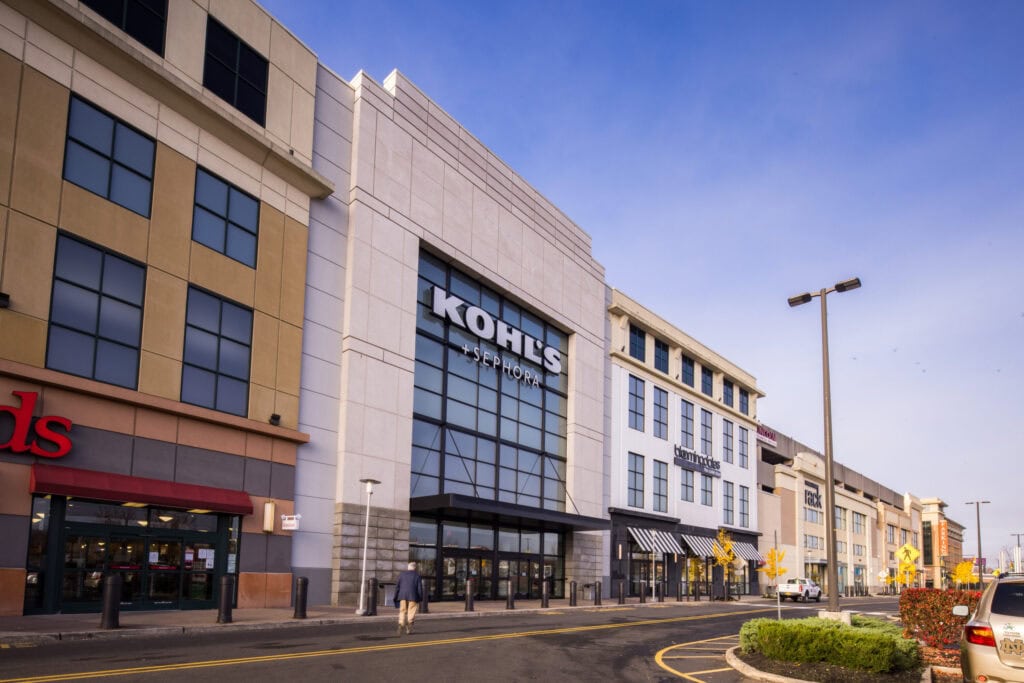
In August 2025, work finished on a major exterior update. The project added new wood siding and cladding, updated storefronts, refreshed wayfinding, and new plantings along the sidewalks.
A bigger change is happening in housing. In April 2025, Urban Edge sold part of the east side of the property for $25 million to a joint venture between Russo Development and KRE Group.
The redevelopment plan includes a two-phase apartment project with about 425 units and about 5,000 square feet of ground-floor retail space.
A new pedestrian path will connect it to the main shopping area.
Another project moved forward in early 2026. A new Tommy's Tavern & Tap building received planning board approval.
The building is planned at 15,000 square feet and will include a covered rooftop, three bars, and more than 400 seats.
Groundbreaking is planned for late spring 2026, and the restaurant is set to open in spring 2027.