
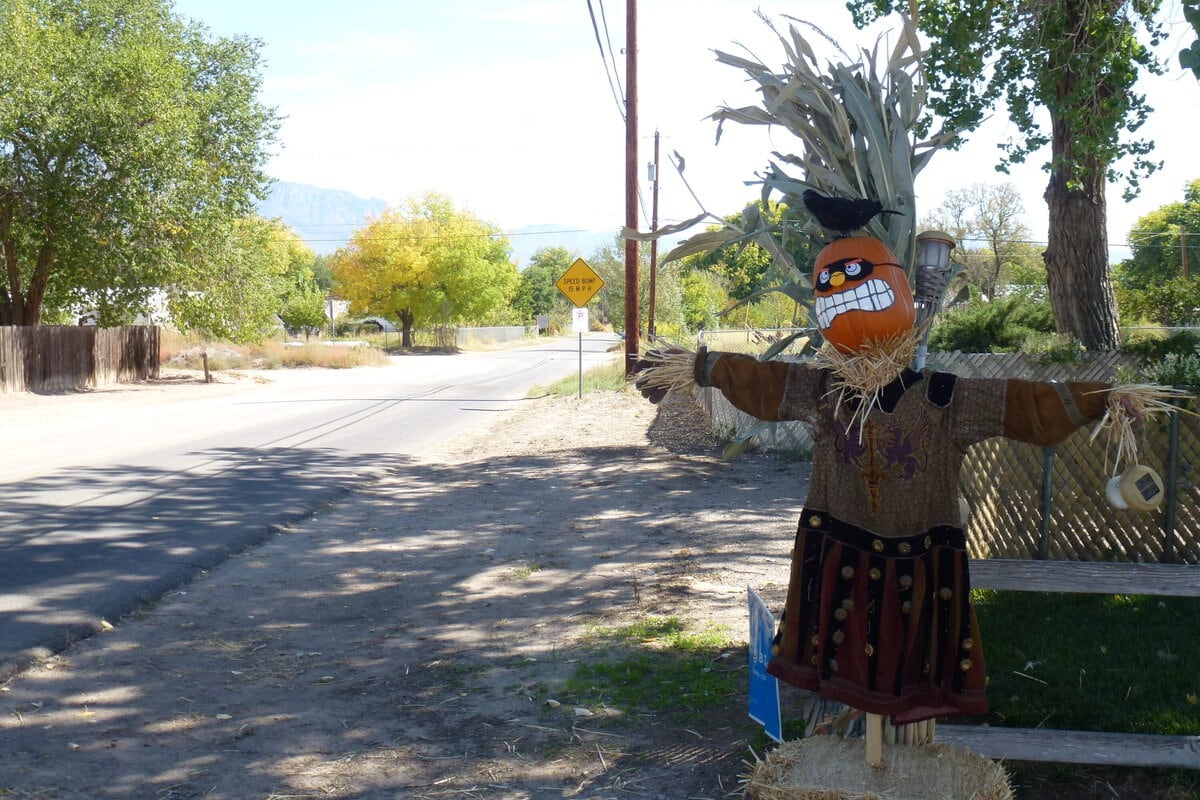
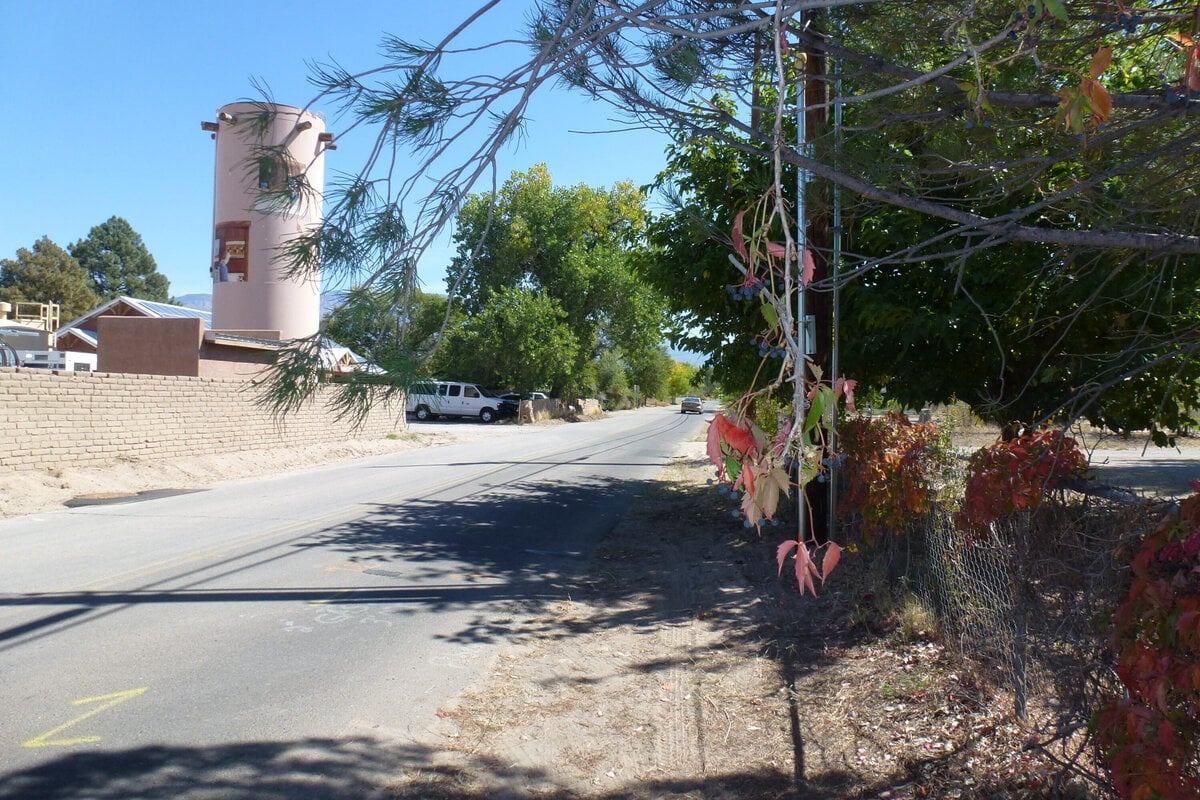
A rider reaches the pavement, waits for a pickup to pass, then turns onto a dirt shoulder beside an irrigation ditch.
Cottonwoods throw broken shade across the road.
Ten minutes away, the Albuquerque metro resumes its familiar spread of multilane streets, medical offices, subdivisions, and big stores.
This village has spent generations declining that map.
Its old acequia was dug in the early 1700s, agriculture still shapes local policy, and horses remain ordinary enough to influence how drivers behave.
About 8,500 people live here, almost exactly the number counted in 2020.
More than nine out of ten occupied homes belong to their residents, so newcomers enter a settled place.
The quiet is expensive.
An acre with a metro price
Buying here means paying for separation from the metro while remaining close enough to use it.
The typical home value reached about $703,000 in May 2026, more than twice New Mexico's statewide figure.
Detached custom houses dominate, including adobe homes, older ranch houses, horse properties, and newer builds often tucked behind walls or trees.
Inventory is thin enough to distort expectations.
One week may produce an irrigated property with a casita and mature cottonwoods; the next may offer only luxury houses or homes needing serious work.
Conventional apartments, townhouses, and entry-level condos barely shape the market.
A renter may find a guesthouse or privately offered unit, but there is little conventional apartment choice.
The purchase price is only the opening number.
Large lots can add fencing, tree work, irrigation upkeep, and sometimes barns.
An older adobe house can be beautiful while asking very specific questions about drainage, roofing, electrical work, and past additions.
Buyers who spend every available dollar at closing risk an unpleasant first year.
The statewide bargain stops at the driveway
New Mexico remained one of the less expensive states overall in early 2026, with a cost-of-living index of 89.9 against a national baseline of 100.
Housing, utilities, groceries, and transportation all remained below that baseline at the state level.
This village breaks the pattern through the cost of its homes.
Corrales has little retail of its own, so much everyday spending shifts into the surrounding metro.
Property ownership changes the equation.
Fire preparation, flood review, private utility systems, large trees, and acreage maintenance can produce bills a standard suburban budget never anticipated.
The median household income is about $102,000.
Even that income leaves a $700,000 purchase demanding.
The place works better for households bringing established equity, two solid incomes, or unusually low debt.
The jobs are mostly somewhere else
This is a residential village with a shallow local employment base.
Residents most commonly work in health care, professional and technical fields, or construction, but many jobs sit in Rio Rancho, Albuquerque, or elsewhere in the metro.
The average commute is about 29 minutes.
Remote work fits the setting better than car-free work.
Nearly 90 percent of households report broadband service, although coverage and speed still need checking at the exact address.
A home office overlooking an orchard sounds idyllic until a weak connection turns every video call into experimental theater.
Hospitals, government offices, laboratories, universities, technology employers, and service jobs give the surrounding region its economic depth.
The village itself offers little protection to someone who moves first and plans to find suitable work later.
A small school with an outsized role
The local public school serves kindergarten through eighth grade, keeping younger students in the village longer.
Its programs include arts and STEAM work, and the latest state profile reported 65 percent reading proficiency.
High-school placement depends on district boundaries and should be confirmed for the property.
Family life extends beyond the school gate.
The recreation area includes playing fields, a pool, and a skate park.
At the library, the calendar moves from story time and chess to technology help, book discussions, conversational Spanish, and a seed library.
Volunteers do visible work here rather than appearing only in a mission statement.
The age balance is older than many suburban buyers expect.
Residents 65 and over make up more than a third of the population, while children account for a much smaller share.
Families will find useful institutions and room to roam.
The pace is quieter than the youth-league and subdivision churn found in faster-growing parts of Rio Rancho.
Your errands cross the border
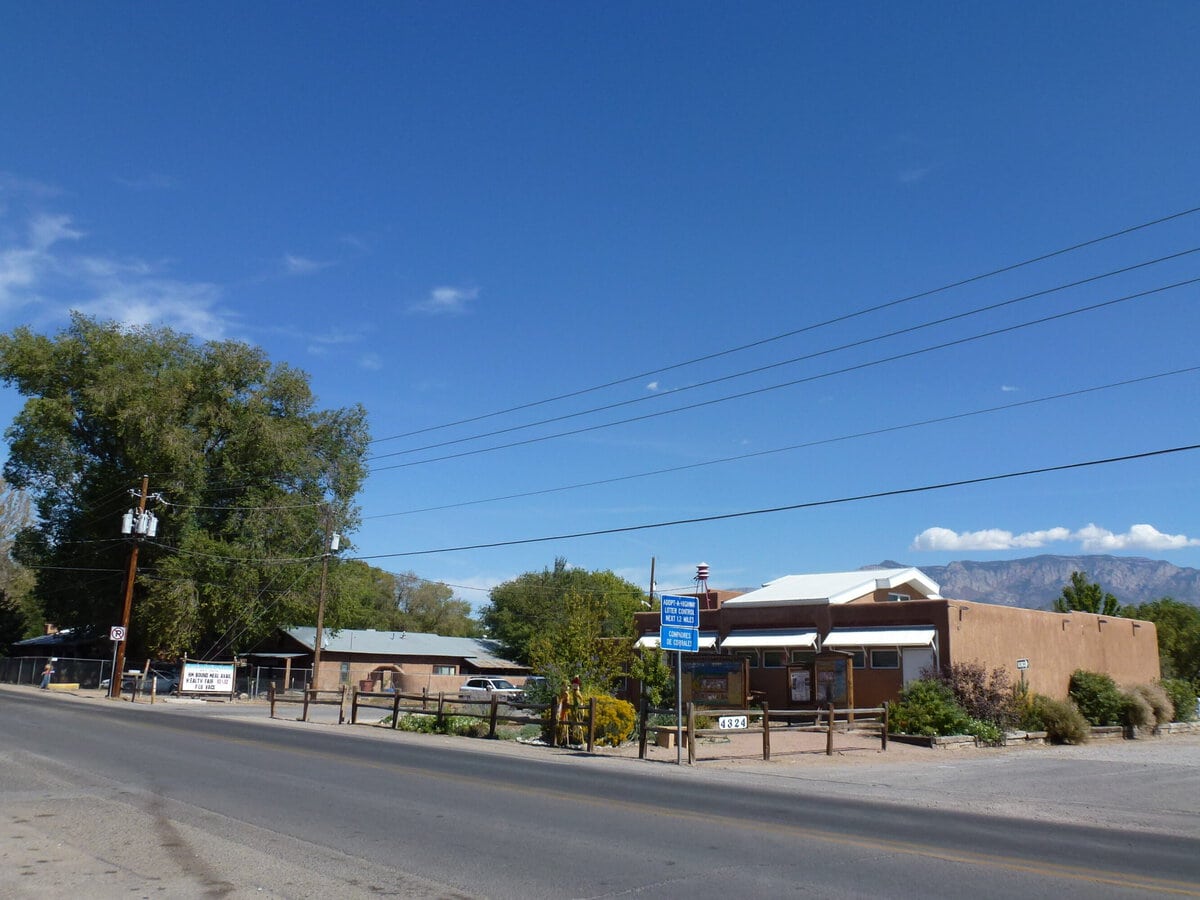
The village core can handle coffee, a meal, the post office, a gallery visit, or a farm stand.
Corrales has its own pharmacy.
A full grocery run, most specialist care, and most large purchases usually require driving outside the boundary.
Walk Score calls Corrales car-dependent, which captures the practical truth: the pretty road stops well short of a complete pedestrian network.
Rio Metro offers fare-free weekday door-to-door rides for residents age 60 and older and for adults with disabilities.
Most households still need at least one vehicle, and two working adults may find one car awkward once school, appointments, and commuting overlap.
There is no general hospital inside the village.
Presbyterian Rust Medical Center in Rio Rancho provides emergency and specialty care nearby, while Albuquerque adds larger medical networks.
Shade, dust, fire, and water
The bosque earns its reputation on an ordinary morning.
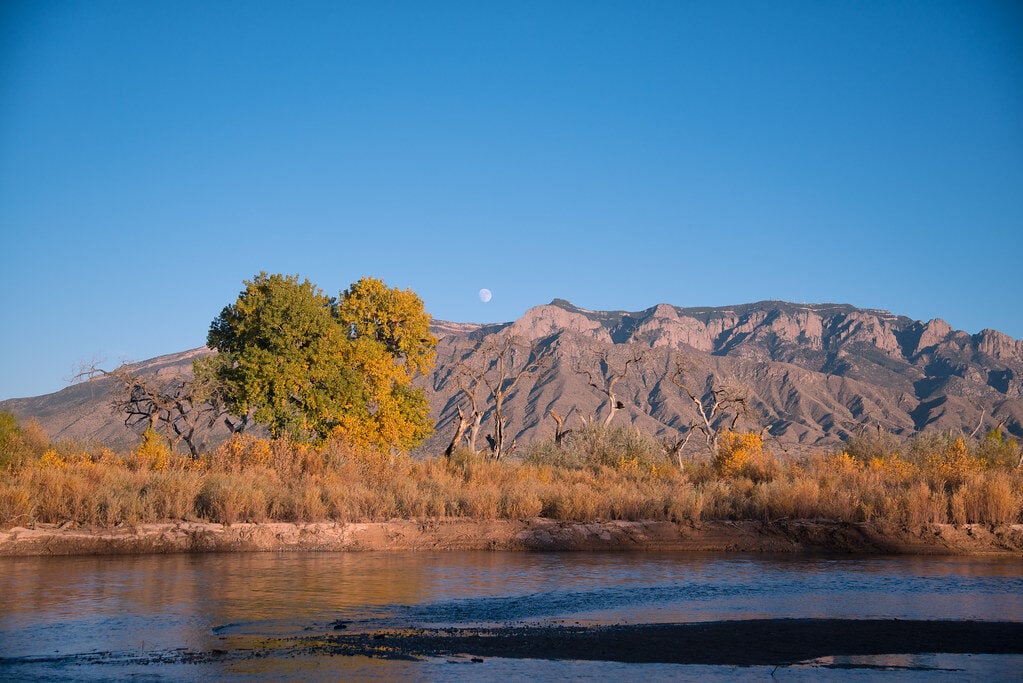
Primitive trails run between the levee and the Rio Grande, with room for walking, riding, cycling, photography, and birding.
The air cools under the cottonwoods, and road noise recedes fast.
Summer ownership is less romantic. Nearby Albuquerque's normal July high is about 92 degrees.
Direct sun remains punishing despite the low humidity.
Cooling equipment, shade, outdoor water use, and roof condition belong in the buying decision.
Monsoon storms can then drop water quickly onto hard soil and properties that looked perfectly dry during a showing.
Fire has become the sharper concern.
In March 2026, the village mayor warned that very little water was reaching the Clear Ditch, once considered a possible source during a bosque fire.
Statewide drought and severe fire conditions were declared on May 20.
The village increased patrols, removed dead wood, and kept the option of closing the preserve when danger rose.
Flood risk works lot by lot.
The village participates in the federal flood-insurance program and offers flood-zone certifications, while its planning office urges owners to maintain retention areas before monsoon season.
Standard homeowners insurance generally does not cover flood losses.
The crime numbers refuse to agree
One crime model reports 2.34 violent crimes and 3.99 property crimes per 1,000 residents.
On those figures, recorded property crime is well below national and state levels.
Another grades the village D overall and estimates 5.58 violent crimes and 20.8 property crimes per 1,000.
Both use modeled data rather than a simple village police table, and the population is small enough for a limited number of incidents to move rates sharply.
Buyers should check recent police activity around the address, especially vehicle break-ins and theft of trailers or equipment.
The property-crime estimates differ by more than fivefold.
Sunday morning holds the place together
The growers' market at 500 Jones Road runs on Sunday mornings from late April through November, with Wednesday markets during part of summer and fall.
It supports local farms and gives residents a regular place to buy chile, produce, flowers, bread, and seedlings while catching up beside the post office.
Art carries more weight here than nightlife.
The local arts district counts 25 supporting organizations and businesses, and the 2026 studio tour included 93 artists.
Concerts, Art in the Park, makers' events, and the Harvest Festival fill the calendar without turning the village into an evening entertainment district.
Restaurants and tasting rooms can cover dinner or a glass of local wine.
Late kitchens, clubs, and a dense bar scene belong to Albuquerque.
Anyone expecting a rural version of an urban restaurant neighborhood will run out of options quickly.
The inspection has to go beyond the house
A rural-looking property may carry its own small infrastructure department.
Current permit materials require permit applicants to identify water and sewer lines as well as wells and septic fields.
Before closing, test the well, inspect the septic system, verify irrigation rights, review permits for additions, and learn who maintains any private or shared road.
Drainage deserves a separate visit after rain.
Ask about ponding, past water entry, flood-zone status, culverts, and whether grading or fill has redirected runoff.
Walk the fence line.
Look above the roof for cottonwood limbs, then down at the irrigation ditch, animal areas, and signs of erosion.
Horse property adds fencing condition, trailer access, manure removal, flies, shade, and dependable water.
The village can still be a good buy, but only after an inspection built for rural property rather than a quarter-acre subdivision.
Who should buy here?
The place is Corrales, NM.
It fits established professionals, remote workers with verified internet, artists, horse owners, and households willing to trade walkability for land and privacy.
The strongest buyers can afford a $700,000-class purchase without emptying their reserves and will rely on Albuquerque or Rio Rancho for much of their medical care and shopping, for airport access, and often for work.
Keep looking if you need an inexpensive starter home, a broad rental market, reliable transit, low-maintenance ownership, or nightlife outside the front door.
The same cottonwoods, ditches, animals, and open ground that give the village its character also create chores, water questions, and real fire exposure.
My judgment is favorable, but narrow.
This is one of the Albuquerque area's most distinctive places to live because it has resisted becoming another subdivision.
The case works when a household wants acreage, accepts the drive, and can fund the upkeep without strain.
Without that margin, the village's charm turns into a demanding ownership schedule.
Horse-speed living is lovely only when your finances and patience can keep up.
On the map: Corrales, NM 87048

References
U.S. Census Bureau QuickFacts, Corrales village, New Mexico - https://www.census.gov/quickfacts/fact/table/corralesvillagenewmexico/PST045224
Zillow housing market and home values, Corrales - https://www.zillow.com/home-values/50435/corrales-nm/
Data USA demographic, employment, and commuting profile - https://datausa.io/profile/geo/corrales-nm
Village of Corrales parks and recreation facilities - https://www.corrales-nm.org/331/Parks-and-Facilities
Walk Score, Corrales transportation profile - https://www.walkscore.com/score/-87048
Rio Metro, Rio Rancho and Corrales Dial-a-Ride - https://www.riometro.org/243/Rio-Rancho-Corrales
Presbyterian Rust Medical Center - https://www.phs.org/rust-medical-center
Village of Corrales Bosque Preserve habitat management plan - https://www.corrales-nm.org/media/12406
National Weather Service Albuquerque climate report - https://forecast.weather.gov/product.php?issuedby=ABQ&product=CLI&site=NWS
Village of Corrales March 2026 fire and water warning - https://www.corrales-nm.org/community/page/mayors-message-march-13-2026
Village of Corrales flood-zone and monsoon guidance - https://www.corrales-nm.org/planning-zoning/page/message-about-monsoon-season-and-retention-ponding
NeighborhoodScout crime data - https://www.neighborhoodscout.com/nm/corrales/crime
CrimeGrade crime estimates and map - https://crimegrade.org/safest-places-in-corrales-nm/
Independent Publisher Notice
BestAttractions is an independent editorial publisher. We are not affiliated with, endorsed by, or acting on behalf of any location, business, property owner, manager, government agency, or organization described in this article. Comments posted on this page are not forwarded to, reviewed by, or acted upon by any entity mentioned in the article. For official inquiries, complaints, applications, bookings, or other requests, please contact the relevant entity directly through its official website or other verified channels.