
Graham has a downtown that can make the city look more walkable than everyday life actually is.
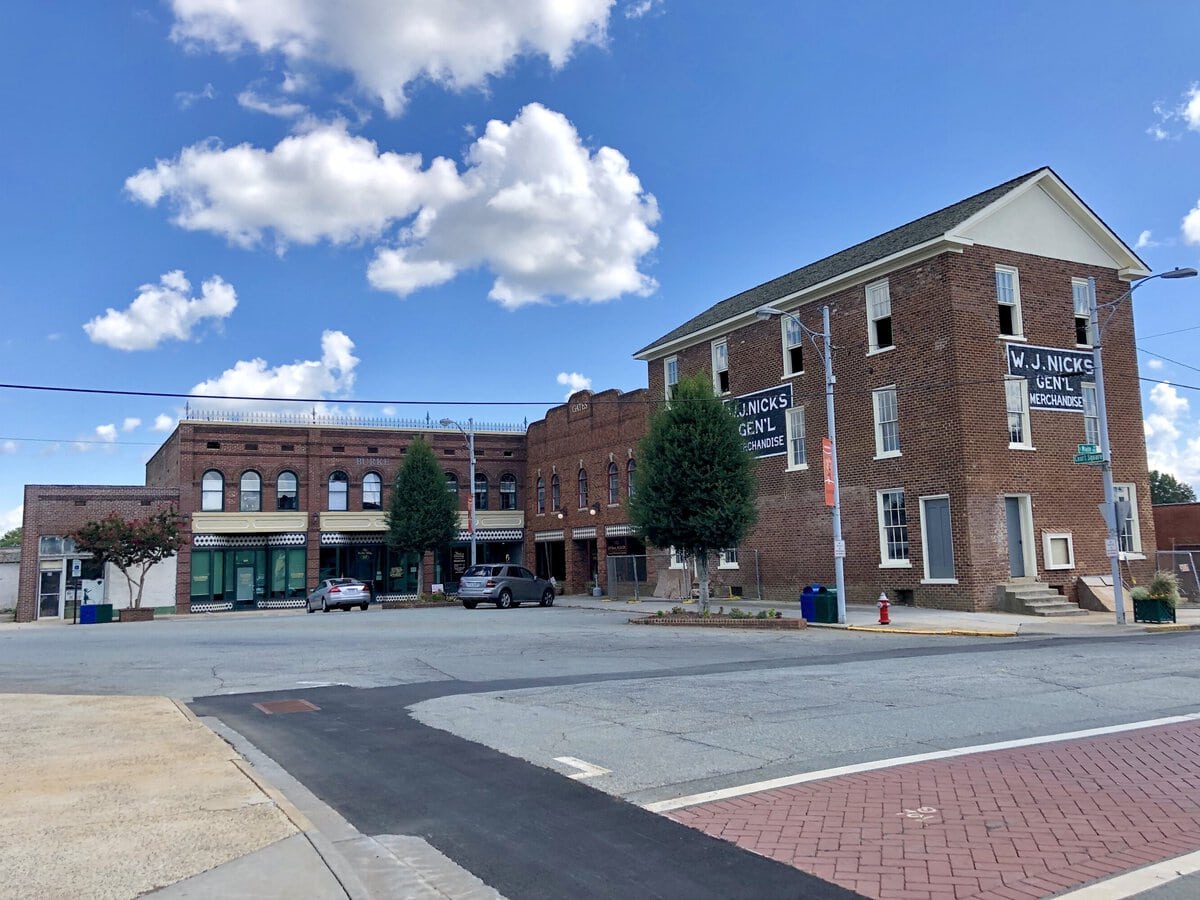
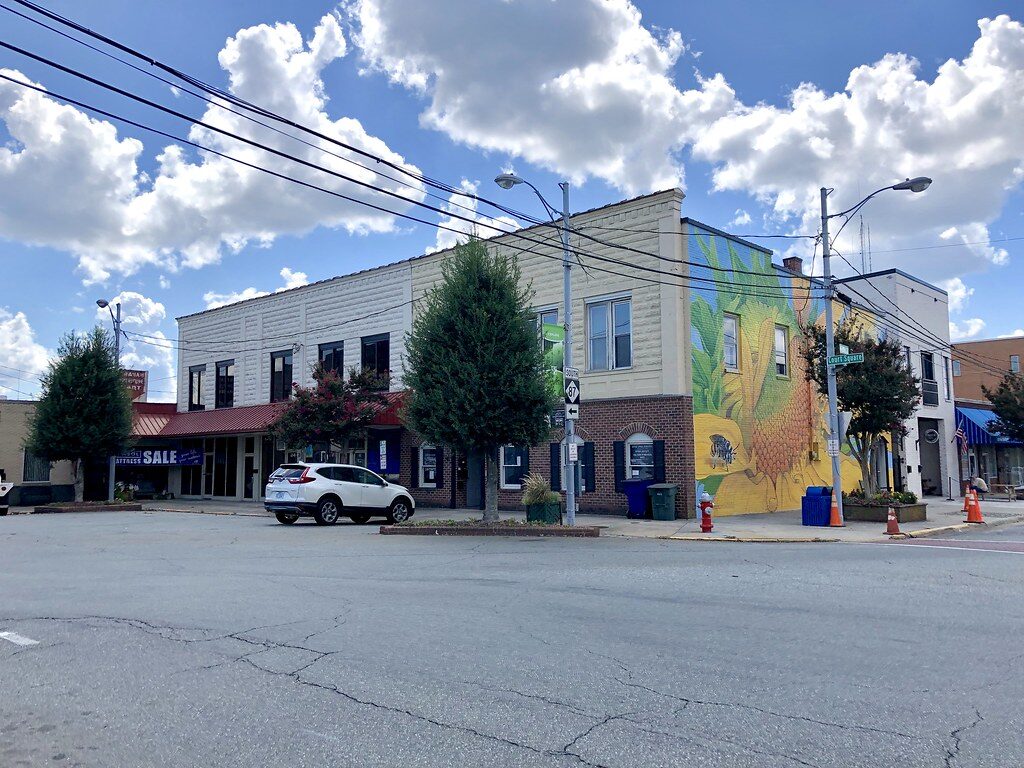
Around Court Square, the blocks are compact, sidewalks are wide, public parking is close, and several civic, cultural, dining, and social functions sit within a short walk.
The city even marks two downtown walking routes: a half-mile fitness route and a one-mile historic route. That is real walkability, but it is not the same thing as a walkable week. Once you are downtown, you can do quite a lot without moving the car.
Whether you can get through an ordinary day without needing the car depends on where you live, work, and how much of your routine extends into Burlington and the I-40/85 corridor.
Downtown works best as a park-once district
Court Square and the surrounding 100 blocks are small enough that one stop can turn into several.
City Hall is on South Main Street. The Graham Public Library shares a downtown parking area with City Hall.
County functions sit around the courthouse. The Graham Historical Museum is on West Elm Street.
The downtown district also has restaurants, shops, public art, and scheduled events.
None of those destinations requires a second drive once you are already in the core.
The city's parking system tells you almost as much as the sidewalks do.
Graham manages more than 300 on-street and more than 400 off-street spaces downtown. The pattern is clear: drive in, park once, then walk around.
A practical downtown trip might mean parking near Main or Elm, handling a city or library errand, getting lunch or coffee, then adding the one-mile historic walking route before heading home.
On an event evening, the same few blocks can absorb dinner, music, a festival, or time around Court Square without another car movement.
Close enough to reach those blocks on foot, downtown can become part of the routine itself.
Farther out, it is more likely to be a walkable destination reached by car.
The pedestrian map changes quickly outside the core
Graham's own pedestrian planning makes the boundary unusually clear.
The city adopted a new Pedestrian Plan in January 2025.
Its existing-conditions section says the pedestrian network is most complete in and around downtown and northwest of the core.
It also notes that sidewalks on South Main become intermittent outside downtown and that the network south of I-40/85 is sparser, with many sidewalks located inside residential developments rather than connected into a larger system.
The plan does not treat downtown as the problem. It treats the connections to downtown as unfinished work.
One priority project calls for sidewalk improvements on South Main near the civic campus, linking apartments with City Hall, the public library, and downtown.
Other projects aim to extend pedestrian connections farther south and east.
So the experience changes by address.
A home on the older street grid near Court Square may put a restaurant, library visit, event, or short walk within practical walking range.
A home south of the interstate can be geographically close to the same downtown while still producing a car-first routine because the continuous pedestrian network is weaker.
Distance alone does not answer the question. The continuous route does.
The rest of the week spreads along corridors
Downtown Graham has many functions, but it does not contain every recurring task.
The city's own planning documents point to South Main Street and West Harden Street as major commercial corridors, while I-40/85 sits immediately south of the historic core.
The center is compact, but errands are not necessarily centered there.
A weekday can easily involve a short downtown stop followed by a separate drive for groceries, a larger retail run, a medical appointment, school or recreation, or work.
Some of those trips stay inside Graham. Others merge into Burlington so gradually that the municipal boundary matters less than the corridor.
The usual "between the Triangle and the Triad" description misses the scale of ordinary life.
Raleigh, Durham, and Greensboro matter for major destinations, but Burlington is the more immediate extension of Graham's daily geography.
Public transit shows the same pattern.
Burlington's LINK Transit system serves the Alamance County offices and courthouse in Graham and Alamance Community College, with a Graham park-and-ride connection to the regional PART network.
LINK also reaches Burlington, Mebane, Haw River, Elon, and other parts of the county.
That gives Graham a real regional transit connection. It does not create a dense local bus grid inside Graham.
For a trip that matches the route and stops, LINK can replace a car trip.
For a chain such as home to grocery store to appointment, the limited number of Graham stops makes a car much easier.
Transit is useful, but it does not create a car-free local network.
Weekdays and weekends use downtown differently
On an ordinary weekday, downtown's strongest advantage is concentration.
You can park once, combine several small tasks, and add a meal, coffee, short walk, or library stop without driving between each one.
After work and on weekends, downtown becomes more important when something is scheduled.
Graham runs events around Court Square and nearby streets through much of the year, with recurring concerts and seasonal events on the 2026 calendar.
The city's downtown program specifically treats the area as a destination for entertainment and community gatherings.
On those nights, the center is not merely a collection of historic storefronts. It becomes the place people intentionally go.
But an event calendar is different from having a broad entertainment district available every night.
When the plan is not tied to a Graham event, the social map widens.
Burlington adds another downtown, larger recreation programming, regular concert series, and the city-operated Paramount Theater, which Burlington says hosts more than 200 nights of productions in a typical year.
Graham residents do not have to leave town for a good evening, but the number of choices expands quickly once Burlington is treated as part of the same practical region.
The result is a split rhythm.
Downtown Graham can feel surprisingly active on the right Thursday, Friday, or festival weekend, then offer fewer reasons for a special trip when no event is scheduled.
Regional life fills the gaps.
Which Graham feels most downtown-centered?
The answer is not simply "downtown versus suburbs." The pedestrian plan suggests a more useful three-part test.
Near Court Square and the older street grid, walking can replace some local trips because the sidewalks and destinations already overlap.
This is the part of Graham where downtown can function as a genuine extension of home.
In the neighborhoods just beyond that core, downtown may still be close, but the trip becomes more sensitive to sidewalk continuity, crossings, and the road you have to use.
A two-minute drive and a comfortable walk once parked can be more realistic than walking the whole trip.
South of I-40/85, the city's own plan describes a thinner pedestrian network.
Here the interstate and major roads are more likely to organize the week.
Downtown can still be a frequent destination, but it is less likely to control the whole routine.
Do not ask only whether Graham has a walkable downtown. Ask whether your actual week fits inside it.
Can you reach Court Square from home on a continuous, comfortable pedestrian route? Can two or three recurring errands be combined once you are there?
Are your job, groceries, healthcare, fitness, and social plans mostly in Graham, or do they regularly pull you toward Burlington?
And when you go downtown, are you going because it naturally sits on your route, or because you chose it as a destination?
Those answers tell you more than a citywide walkability score.
Graham's downtown is real, but it is not the whole city
Graham does have a genuine pedestrian core.
The city has marked walking routes, concentrated civic and cultural destinations, substantial public parking, and an event calendar that can make Court Square the social center of an evening.
The limit is how far that pattern extends. Outside the historic core, the pedestrian network is less complete, especially toward and south of I-40/85.
Ordinary errands spread along commercial corridors and into the Burlington-Graham area.
For many residents, the normal pattern is to drive to a compact place, walk once there, then use the car again when the week moves beyond that pocket.
That is the useful distinction for living in Graham: a walkable downtown can improve daily life without making daily life walkable.
Sources and further reading
- City of Graham - Official city website and current municipal calendar.
- Downtown Parking - City of Graham parking locations and capacity.
- Places to Walk in Graham - City walking routes, parks, and downtown route distances.
- Future Plans - City planning documents, including the Pedestrian Plan adopted in 2025.
- Graham Pedestrian Plan Final Report - Existing sidewalk conditions, network gaps, and priority projects.
- Experience Downtown Graham - Downtown events and public-space programming.
- Transportation - City of Burlington overview of LINK Transit service, including Graham.
- Downtown Burlington - City of Burlington information on downtown events, businesses, and the Paramount Theater.
Independent Publisher Notice
BestAttractions is an independent editorial publisher. We are not affiliated with, endorsed by, or acting on behalf of any location, business, property owner, manager, government agency, or organization described in this article. Comments posted on this page are not forwarded to, reviewed by, or acted upon by any entity mentioned in the article. For official inquiries, complaints, applications, bookings, or other requests, please contact the relevant entity directly through its official website or other verified channels.