
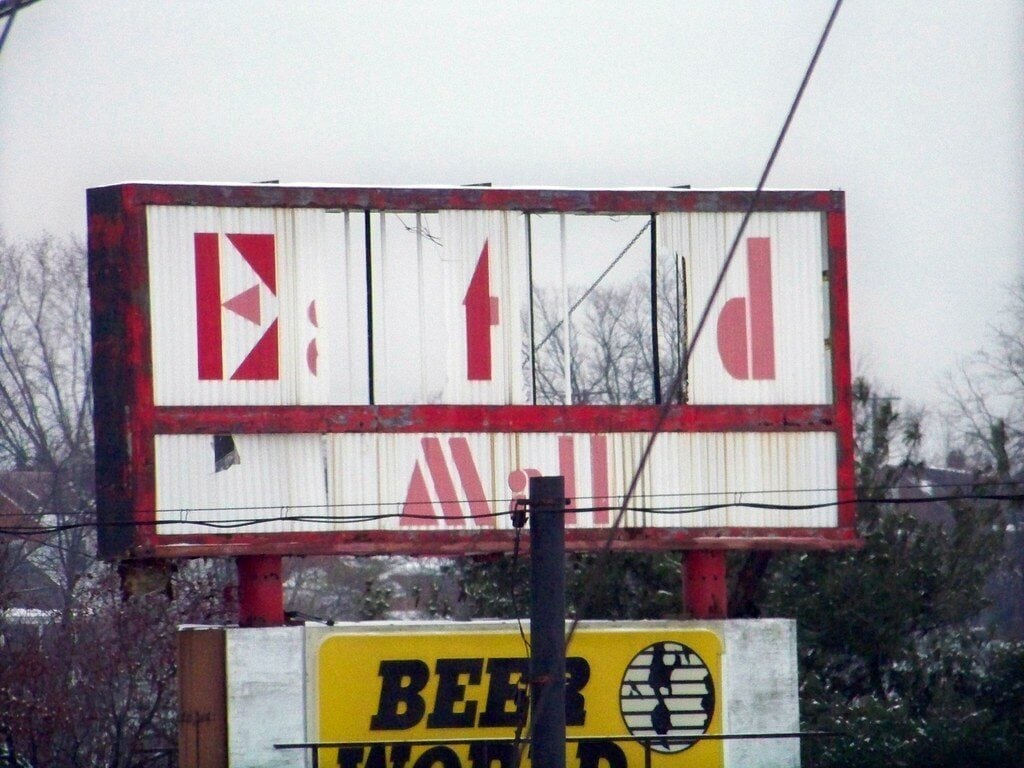
Whitehall Mall, now operating as Whitehall Plaza, is an open-air shopping center in Whitehall Township near Allentown, set in the heart of Pennsylvania's Lehigh Valley in Lehigh County.
The property sits on MacArthur Road, also known as Pennsylvania Route 145, near Grape Street and just off U.S. Route 22, directly opposite the much larger Lehigh Valley Mall.
It serves Whitehall Township, Allentown, South Bethlehem, and other Lehigh Valley communities with a working mix of retail, dining, services, fitness, recreation, and everyday convenience uses.
The center opened on September 26, 1966, as Pennsylvania's first enclosed mall outside Philadelphia, lost that form to changing retail, and is now being rebuilt around what comes next.
Whitehall Mall Opened Before the Paint Was Dry in 1966
The Plaza Theater opened while the rest of Whitehall Mall was still unfinished. On July 8, 1966, people came to see "The Glass Bottom Boat" as construction continued behind temporary coverings.
The first public room in the new shopping center was a movie theater, not a department store.
The site sat north of Allentown in Whitehall Township, along MacArthur Road near Grape Street and close to U.S. Route 22.
The area was still partly rural when Donnelly & Suess Properties, Inc. planned the project in January 1963. The land cost $125,000.
Sears signed a lease agreement on March 16, 1964. That early commitment gave the project a national anchor before the building existed.
Louis Collacocco of Philadelphia designed the mall as a fully enclosed shopping center. The plan included department stores, a supermarket, restaurants, offices, community space, smaller shops, and the theater.
Groundbreaking took place in 1965 with a five-handled shovel. The fully enclosed Whitehall Mall opened on September 26, 1966, with 52 stores.
Whitehall Mall Made MacArthur Road a Shopping Address
The theater brought people to the site first. Zollinger-Harned showed how large the mall's appeal could be.
The department store opened on August 15, 1966, and about 25,000 shoppers showed up. Traffic backed up around the new center before the full mall had even opened.
When the full mall opened, it included Sears, Zollinger-Harned, Woolworth's, Weis Markets, Percy Brown's Cafeteria, and the Plaza Theater.
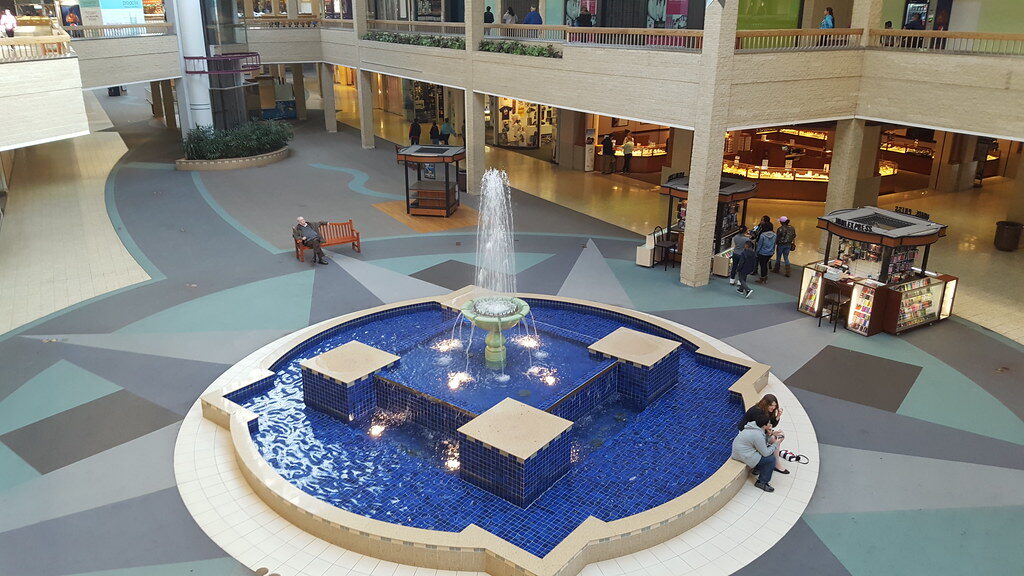
The building offered air conditioning, heat, fountains, plantings, and indoor walkways protected from the weather. Free parking made the trip easier than going downtown to shop.
The mix of tenants gave people reasons to come for regular needs as well as curiosity. Weis Markets handled groceries.
Percy Brown's Cafeteria gave families a place to eat, and Woolworth's used about 44,000 square feet for five-and-dime retail.
The Plaza Theater helped keep the property active after regular store hours.
Most of the building had one floor, with offices and community space on a smaller upper level. Fifty-two stores. One roof. Free parking. Downtown Allentown suddenly had competition.
Early Events Gave the Mall a Social Life Beyond Stores
In 1968, Whitehall Mall had a slide that was more than four stories tall and about 193 feet long. People remembered it because it was not part of ordinary shopping.
Someone could come for Woolworth's, Weis Markets, or lunch at Percy Brown's Cafeteria and still leave talking about the slide.
The mall already felt different from Allentown's older shopping streets. It had fountains, plants, decorative lighting, heat, air conditioning, and indoor walkways.
Shoppers could go from one store to another without dealing with traffic or the weather.
In 1974, Circus Vargas brought about 4,000 people to the parking lot. A crowd that size needed open space, parking, and a place people already recognized. Whitehall Mall had all three on MacArthur Road.
Those events made the property feel like a store, a gathering place, and a weekend attraction at the same time.
The Plaza Theater gave people another reason to visit after regular shopping hours. By 1974, Whitehall Mall was not only a place where people bought things.
It was a place where people came together.
Lehigh Valley Mall Put the Older Center Under Pressure
The events, fountains, and early crowds worked until a larger rival changed the balance on the same road. Lehigh Valley Mall opened across MacArthur Road on October 6, 1976.
It had about one million square feet, around 130 stores, and opened with Bamberger's and JCPenney as anchors.
John Wanamaker followed as another anchor in 1978.
Whitehall Mall stayed open, but its position changed. Lehigh Valley Mall drew more upscale traffic and more youth-oriented shoppers.
Whitehall Mall depended more on established anchors, value-focused stores, local tenants, and convenience uses.
Ownership shifted during the same period. Kravco became involved in 1977 after acquiring an interest in the property. Kravco was also central to the development of Lehigh Valley Mall.
The older center still had room to grow. A 1973 expansion added space, and Clover opened an approximately 82,000-square-foot discount department store in 1982.
The Clover project added a new anchor, a connecting mall corridor, and smaller inline spaces.
Whitehall Mall reached its largest enclosed form in the early 1980s.
Department Store Changes Left Big Spaces to Reuse
The competition across MacArthur Road exposed a harder problem inside Whitehall Mall. The old department store lineup was not built to last forever.
Zollinger-Harned struggled in the 1970s. The chain was sold in 1977 and entered bankruptcy soon afterward.
H. Leh & Co., better known as Leh's, took over the Whitehall Mall space and kept a local department store presence in the building.
Leh's later weakened as older department store retail lost ground. Its remaining stores closed in 1996. What had been Leh's was partly reused by Gallery Furniture and later became part of other redevelopment work.
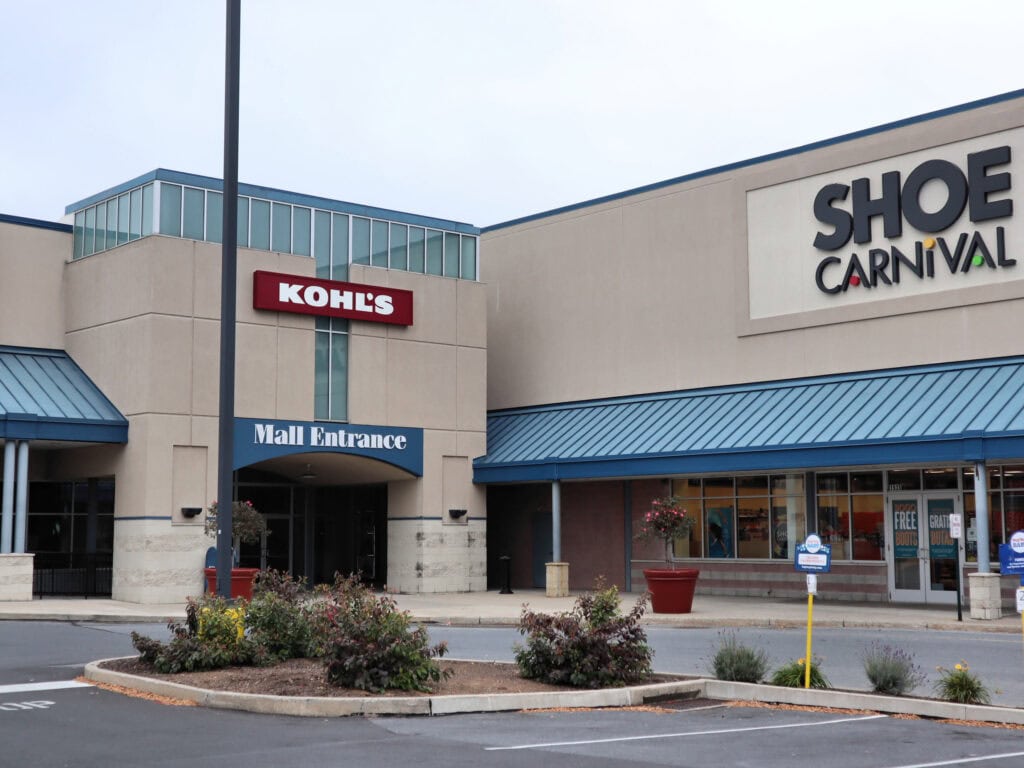
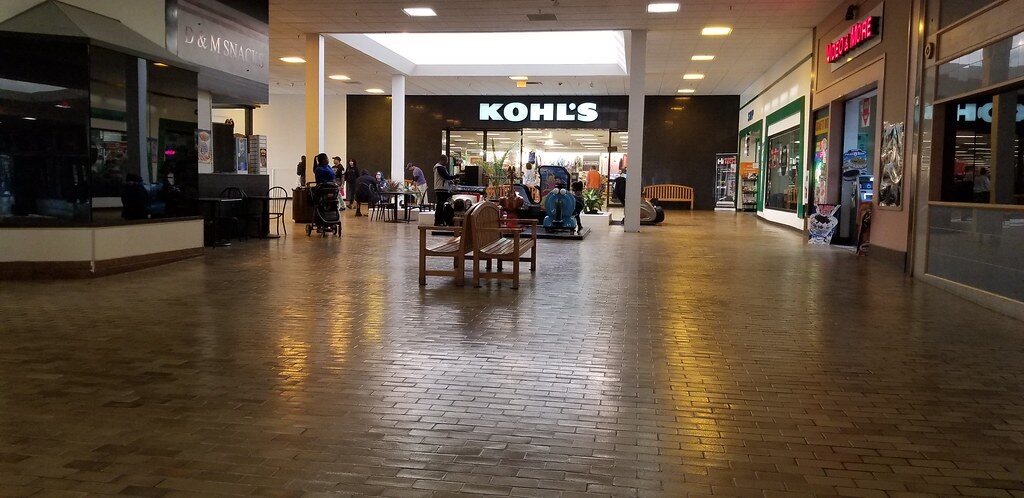
The same two-year stretch changed the mall's anchor map again. Clover closed in 1996 as the chain disappeared, and Kohl's opened in the old Clover footprint in April 1997.
Woolworth's lasted until the national chain shut down its remaining stores in 1997, while Weis Markets expanded during the 1998 redevelopment period before later leaving the center.
Sears was the survivor, outlasting the other original anchors by decades and remaining open until February 2020.
The 1998 De-Malling Turned Corridors Into Storefronts
With anchors gone, weakened, or replaced, the enclosed corridor itself became part of the problem. The main indoor passage between Sears and the old Zollinger-Harned and Leh's side came down in 1998.
A renovation of about $15 million changed much of the center into an open-air, power-center-style property.
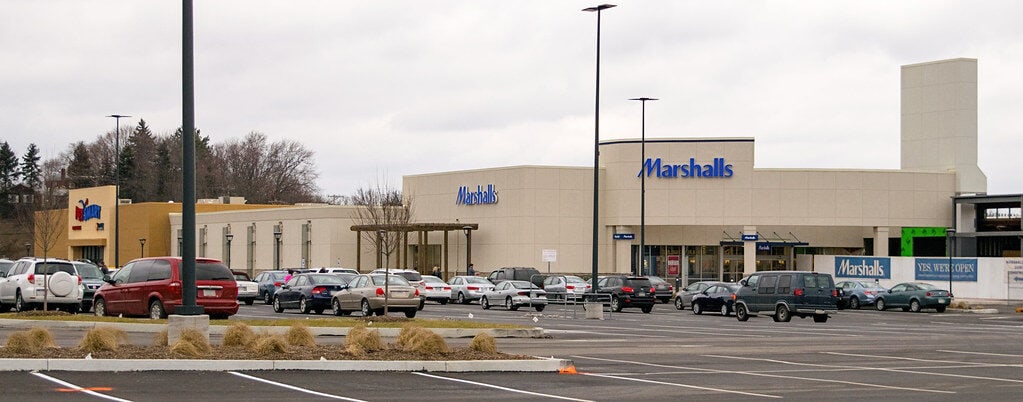
New exterior-facing retail buildings replaced parts of the enclosed layout. Existing spaces were reworked for larger stores.
Michaels and Borders became part of the changed property. Space once tied to Leh's was divided for furniture and other large-format uses.
Sears stayed in place.
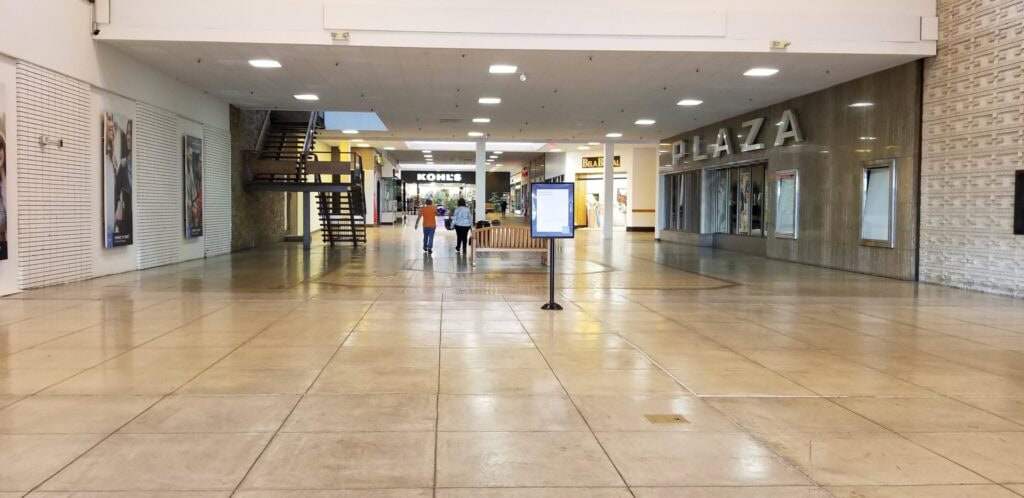
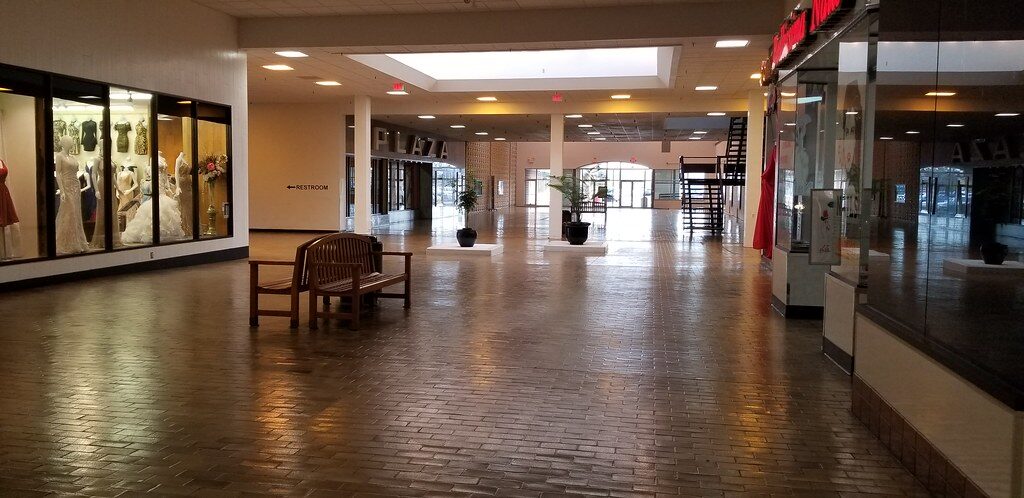
A smaller interior section remained. Customers could still reach Kohl's from the front parking area through an indoor passage. A small group of inline tenants continued to use the preserved space.
The result was not a clean break from the past. Whitehall Mall became a hybrid of old anchors, open-air storefronts, large-format stores, and one surviving interior remnant.
The 1998 redevelopment ended the property's life as a conventional enclosed regional mall.
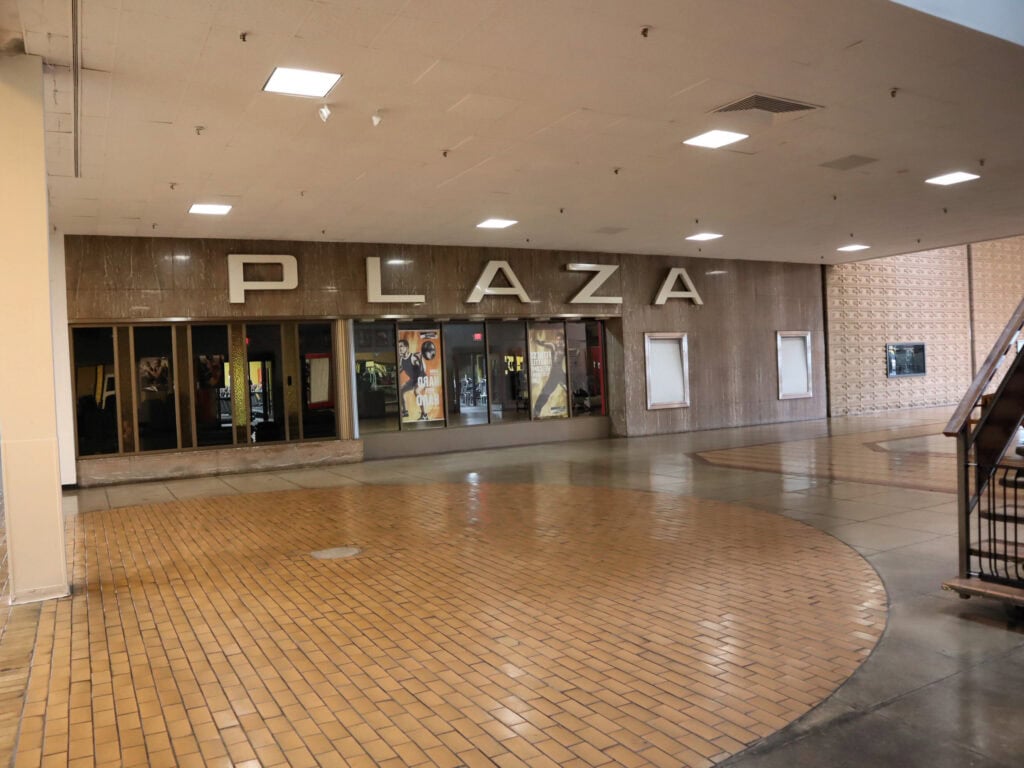
The Plaza Theater Became a Gym, Then a Climbing Space
After the corridors changed, the old theater space began its own afterlife.
The Plaza Theater had opened before the mall, became the Plaza Twin in 1979, and spent its later years under operators including Budco, AMC, and Roxy.
It shifted to second-run and third-run films before closing in 1999.
The building did not disappear. Its interior was gutted and joined with the adjacent retail space. Gold's Gym opened there in 2005 and turned the theater area into a major fitness use.
The reuse matched the property's new direction. Whitehall Mall was no longer built around small shops and enclosed-mall foot traffic.
Its value came from road visibility, large spaces, parking, and tenants that gave visitors a specific reason to come.
Raymour & Flanigan relocated to the mall property in 2012.
PREIT sold its 50 percent interest in the property in 2014, and Washington Prime Group became the main public-facing owner and operator connected with the center.
PA Fitness later occupied the old Gold's Gym space and closed in January 2022.
Sears Closed, and the Anchor Land Changed Again
PA Fitness was another reuse of an older space, but Sears was different. Its store was the last major thread tying Whitehall Mall to its 1966 opening lineup.
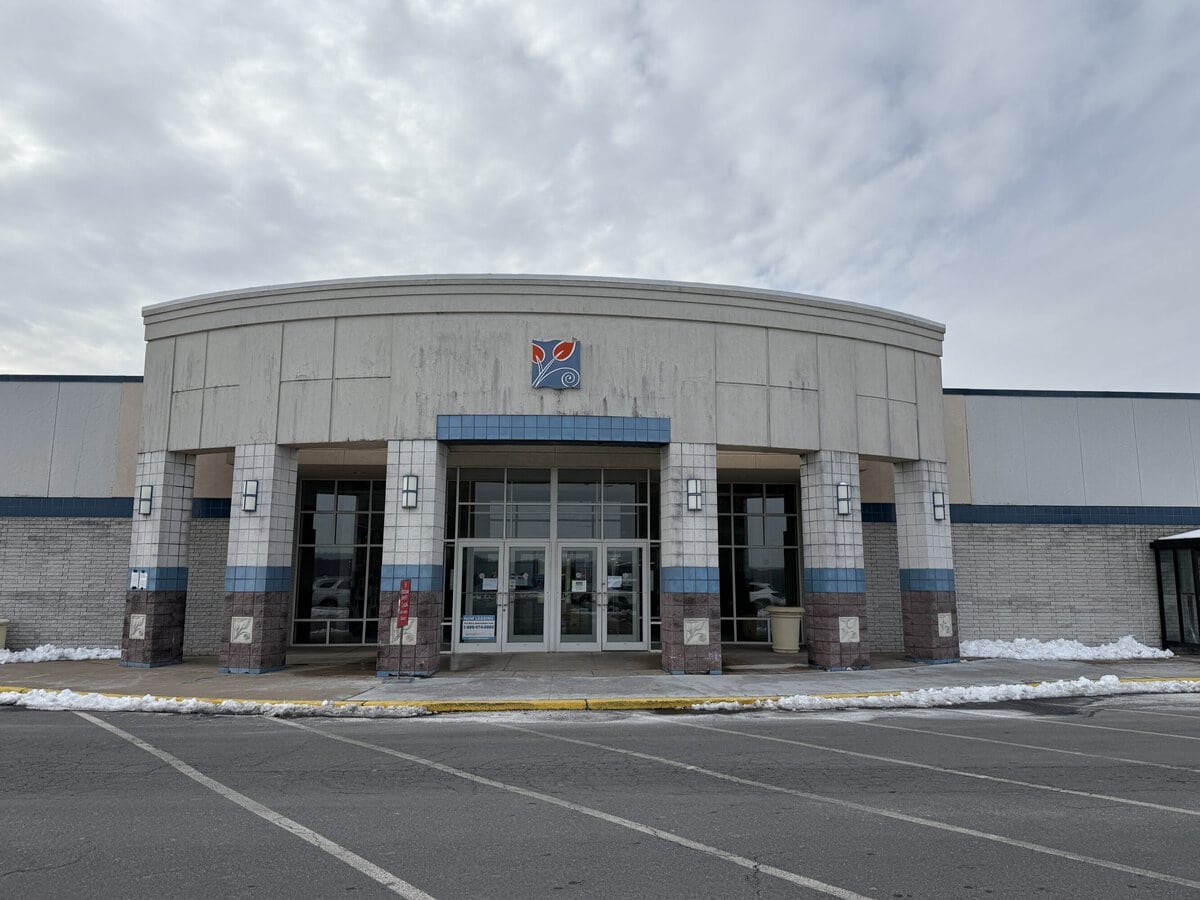
Sears closed in February 2020 after more than five decades at Whitehall Mall. The closing left a large vacancy on one of the most visible parts of the property.
The building Sears left behind, along with the Sears Auto Center, became the focus of redevelopment.
Plans in 2023 called for demolition, subdivision, improved visibility, landscaping, sidewalks, and new pad-site development.
Buy Buy Baby and Harmon closed in July 2023, followed by Bed Bath & Beyond in August. The Old Country Buffet building was demolished in September 2023 and replaced by parking.
Floor & Decor opened at 1259 Whitehall Mall on December 21, 2023.
The warehouse-format flooring and home-improvement store took over part of the Sears property. A department store site became a home-improvement anchor.
Whitehall Plaza Still Reuses the Same Retail Ground
By the 2020s, every major closing had created another redevelopment problem. The Sears Auto Center was the next part to change.
The empty auto-service building was replaced with a roughly 6,000-square-foot Wawa convenience store and gas station near MacArthur Road and Mickley Road.
The plan had 16 fuel stations, front and rear entrances, and 24-hour operation. Whitehall Township approved it in 2024. Wawa opened in March 2026.
In April 2026, Mishorim acquired ownership rights in Whitehall Plaza through a 50 percent partnership with a local U.S. partner. The deal was about $18 million.
The Gravity Vault opened at 1951 Whitehall Mall in 2025. It uses space in the same reuse chain that started with the Plaza Theater and later went through Gold's Gym and PA Fitness.
The climbing gym has roped climbing, bouldering, belay stations, a lead wall, a speed wall, training space, party rooms, and lounge areas.
Whitehall Plaza now runs as an open-air shopping center with a small remaining interior section. The site covers 365,000 square feet on 44.8 acres and has 1,966 parking spaces.
Late-2025 materials listed occupancy at 65 percent, with 126,000 square feet vacant and a weighted average lease term of about 7 years.
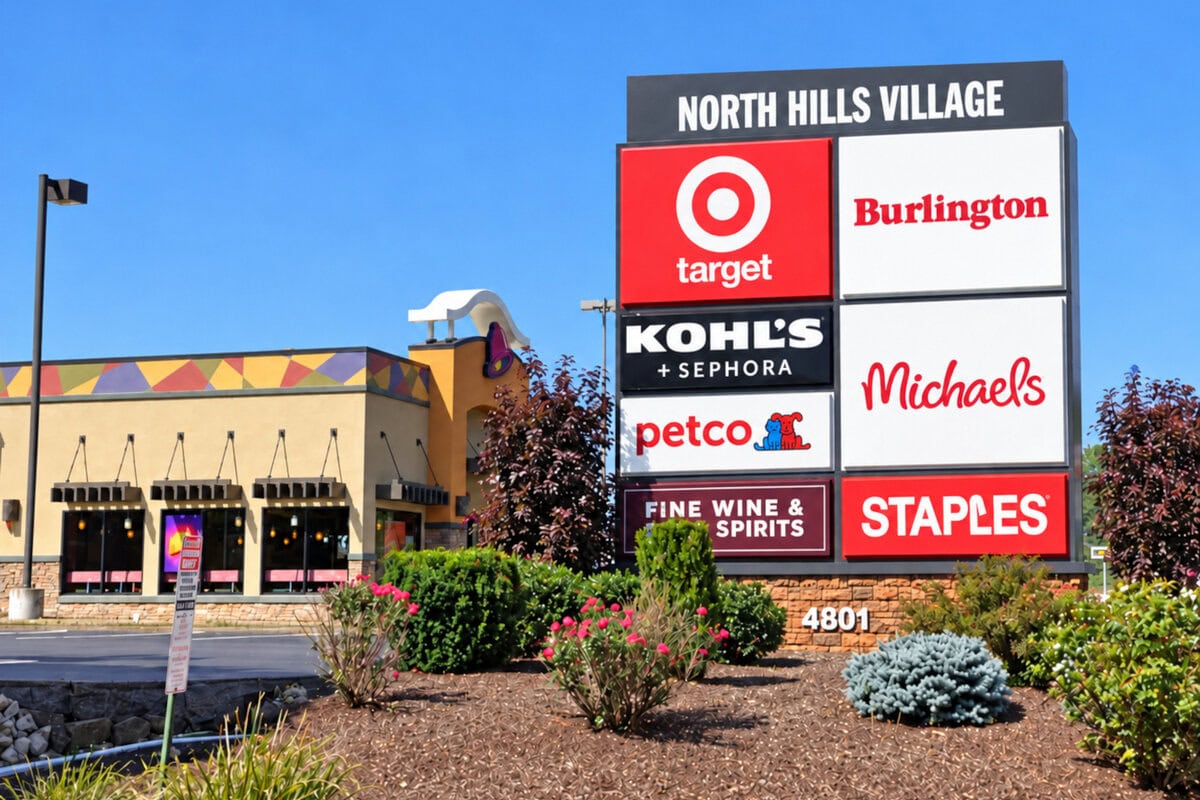
Current and recent tenants include Kohl's, Five Below, Floor & Decor, Mission BBQ, Buffalo Wild Wings, Shoe Carnival, Lane Bryant, Raymour & Flanigan, The Gravity Vault, and Wawa.
The mix does not bring back the old enclosed mall. It relies on big-box retail, food, services, convenience, and recreation.
The question in Whitehall is not whether the old mall can come back. The question is whether a 1966 retail site can keep reusing the same ground.
Whitehall Mall opened before the paint was dry. Nearly 60 years later, Whitehall Plaza is still changing around what shoppers use now.
Notable Milestones
1963 - Donnelly & Suess Properties, Inc. planned a new shopping center in rural Whitehall Township.
1964 - Sears signed a lease agreement for the future mall site.
1965 - Groundbreaking took place with a five-handled shovel.
July 8, 1966 - Plaza Theater opened with "The Glass Bottom Boat."
August 15, 1966 - Zollinger-Harned opened and drew about 25,000 shoppers.
September 26, 1966 - Whitehall Mall fully opened with 52 stores.
1973 - The mall expanded.
October 6, 1976 - Lehigh Valley Mall opened across MacArthur Road.
1979 - Plaza Theater added a second screen and became Plaza Twin.
1982 - Clover opened in an approximately 82,000-square-foot addition.
1996 - Leh's and Clover closed.
April 1997 - Kohl's opened in the former Clover space.
1997 - Woolworth's closed during the national chain shutdown.
1998 - Whitehall Mall was largely converted into an open-air shopping center.
June 13, 1999 - Plaza Twin closed.
2005 - Gold's Gym opened in the former theater and adjacent space.
2012 - Raymour & Flanigan relocated to the mall property.
2014 - PREIT sold its 50 percent interest in the property.
February 2020 - Sears closed after more than five decades at the mall.
January 2022 - PA Fitness closed in the former Gold's Gym space.
July 2023 - Buy Buy Baby and Harmon closed.
August 2023 - Bed Bath & Beyond closed.
September 2023 - The former Old Country Buffet building was demolished.
December 21, 2023 - Floor & Decor opened in the former Sears area.
2024 - Whitehall Township approved plans for Wawa on the former Sears Auto Center site.
2025 - The Gravity Vault opened in the former fitness and theater area.
March 2026 - Wawa opened at the former Sears Auto Center site.
Independent Publisher Notice
BestAttractions is an independent editorial publisher. We are not affiliated with, endorsed by, or acting on behalf of any location, business, property owner, manager, government agency, or organization described in this article.
Comments posted on this page are not forwarded to, reviewed by, or acted upon by any entity mentioned in the article.
For official inquiries, complaints, applications, bookings, or other requests, please contact the relevant entity directly through its official website or other verified channels.
I enjoyed your tour of the Whitehall Mall. In your commentary, the pronunciation of Leh’s should sound like Lays. Some of the other stores were Spencer Gifts, Orange Julius (kiosk in the middle), KBee Toy Store, Habband (a men’s clothing store).
Thanks for the memories.
I love the nostalgia in your comment—it’s great to hear about what made Whitehall Mall unique. Thanks for sharing your memories!
Loved the Whitehall Mall. Went to my first movie at the Plaza Theatre. I remember the giant bird cages they had in the center of the mall and also the fountains that turned color. My first job was Woolworth first in the restaurant and then the snack bar. From there, I worked at Donuts Galore and my mom worked at Rea & Derick drug store which had a luncheonette attached. Always had something going on in that mall. I loved the orange Julius, too. Really miss those days!
Malls used to be more than just stores. They were where people worked, where they spent weekends, where they met up with friends. Whitehall had all of that. And for those who remember, it's impossible not to miss.
Remember it it like it was yesterday we lived in Lansford and my mom and Dad used to bring us to the Mall a lot. I loved it around Christmas time Woolworth’s had a huge toy area in the mall along with trains. It’s sad these days are gone but the memories will always be there!
It's sad that those days are gone, but at least you got to live them. Woolworth's, the trains, the way Christmas felt back then—it's a time and place that can't be recreated.