
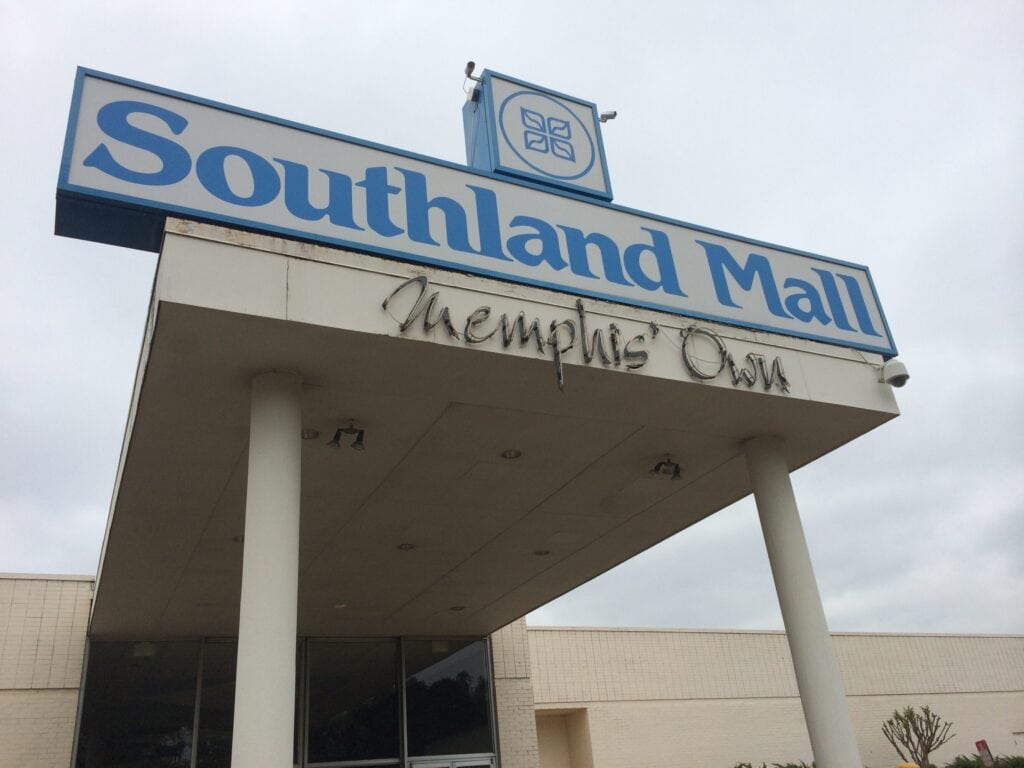
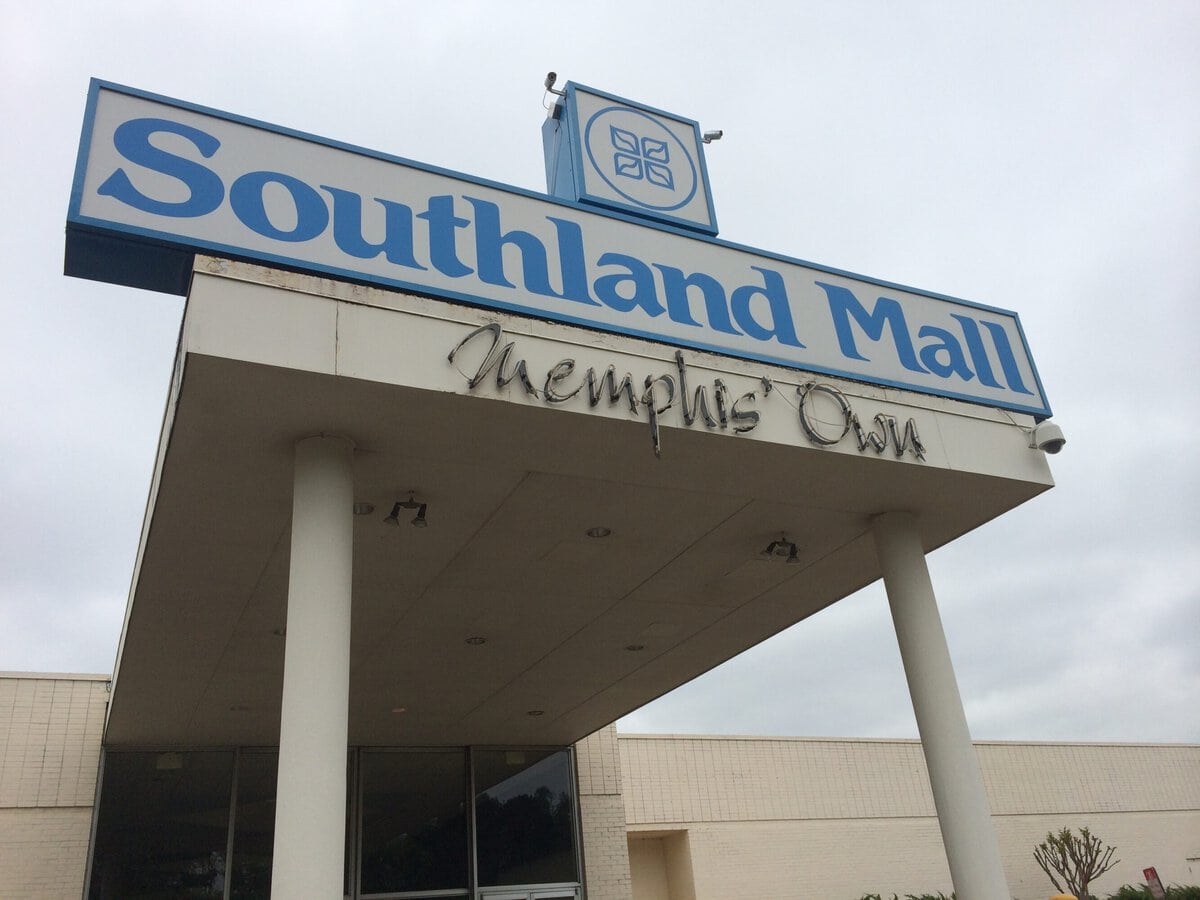
Southland Mall is a regional shopping center in the Whitehaven neighborhood of South Memphis, Tennessee, within Shelby County.
Positioned at the intersection of Elvis Presley Boulevard and East Shelby Drive, approximately 12 miles south of downtown Memphis, the mall sits along one of the area's primary commercial corridors.
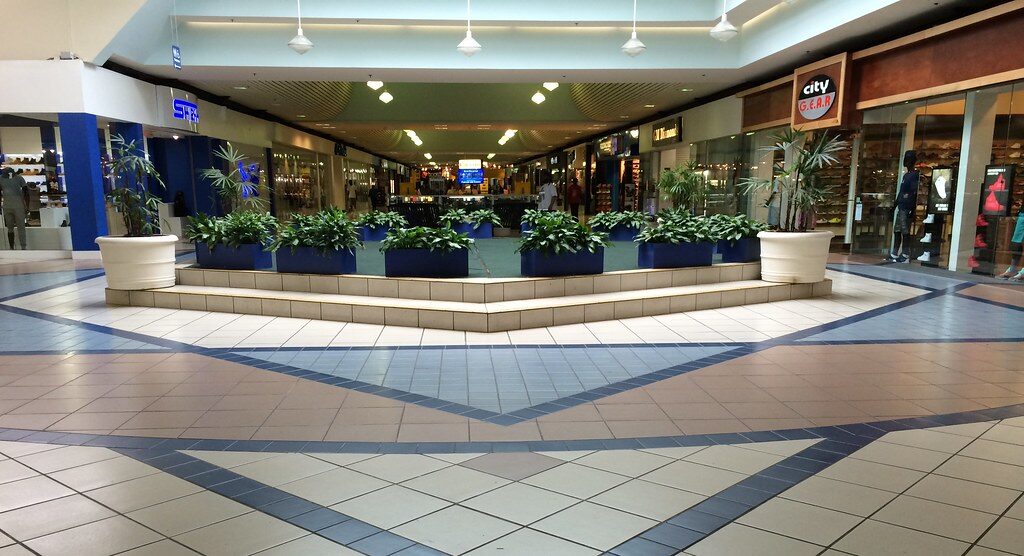
The center serves as the primary retail and service hub for the Whitehaven community and surrounding south Memphis trade areas, with tenants including Citi Trends, City Gear, and a Shelby County Health Department clinic.
Opened on August 15, 1966, Southland holds the distinction of being Memphis's first enclosed mall and one of the earliest fully enclosed shopping centers in the Mid-South region.
Southland Mall Opens to a Three-Hour Traffic Jam in 1966
The day Southland Mall opened, U.S. 51 ground to a halt. August 15, 1966, and the traffic backed up for three hours on the road that would later be renamed Elvis Presley Boulevard.
Memphis had never seen anything quite like what the Joseph Meyerhoff Corporation of Baltimore and Connecticut General Life Insurance Company had built on a 48.5-acre parcel about 12 miles south of downtown: 51 stores, free parking for 4,000 cars, and a single climate-controlled corridor stretching 850 feet end to end.
The temperature inside was always 72 degrees. In August in Memphis, that alone was a reason to go. Local press called it "The Showplace of the Mid-South."
Goldsmith's, the Memphis department-store chain, anchored one end in what was the company's second suburban branch location. Sears anchored the other.
Between them stretched F.W. Woolworth, Walgreen Drug, Levy's, Spencer Gifts, Waldenbooks, Radio Shack, Piccadilly Cafeteria, Baker's Shoes, Casual Corner, Lerner Shops, Perel and Lowenstein jewelers, a First National Bank outparcel, a delicatessen, and a full Sears Auto Center.
Instead of a food court, diners spread across Piccadilly, the Southland Delicatessen, and the Gridiron Restaurant.
At the center court stood Beverly Pepper's "Strands of Mirror," a stainless-steel Constructivist sculpture: 18 feet high, 14 feet wide, 9,000 pounds.
The developers paid $30,000 for it and had it featured in a trade magazine before installation. Ground had been broken on June 2, 1965, and the finished complex held about 478,700 leasable square feet.
Whitehaven's Growth and the Making of Southland Mall
The site had older roots than a 1960s suburban mall might suggest. David Carnes, an early Black property owner and blacksmith, worked at a shop on the land that became the mall and bought nearby property in 1918.
The Whitehaven area surrounding the future site was still largely rural in 1950, with a recorded population of 1,811. By 1960, that number had reached 13,894.
That roughly eightfold increase in a single decade is what made a full-scale regional enclosed shopping center not just possible but commercially obvious by 1964, when plans for a "glass-topped shopping center" were first announced in March of that year.
Herbert H. Johnson Associates of Miami, along with Memphis firms Eason, Anthony, McKinnie, and Cox and Roy P. Harrover, designed a single-level complex built specifically for the sprawling, car-dependent suburb Whitehaven had become.
The project cost was set at $5 million. Whitehaven was still an independent community when construction started in June 1965.
It was annexed into Memphis on January 1, 1970, and the road running beside the mall was renamed Elvis Presley Boulevard shortly after.
By then, Southland had already been open for more than three years and was the established commercial heart of the area.
Mall's Early Years and the Civil Rights Era in Memphis
Southland opened at a time when Memphis was in the middle of the civil rights movement, and the mall was part of that reality.
In 1968, people filed employment-discrimination complaints against the Lerner Shop at Southland Mall. A separate complaint accused Sears at Southland of treating a Black customer rudely.
These incidents reflect wider problems with discrimination in Memphis retail, and they show that the mall was directly involved in the tensions of the period, not removed from them.
The mall's main stores followed the typical department-store structure of the mid-1960s. Goldsmith's was the well-known local upscale store, while Sears served the broader, mass market.
Dining options were spread out rather than grouped together and included Piccadilly Cafeteria, the Southland Delicatessen, and Gridiron Restaurant.
In the center court, a sculpture by Beverly Pepper signaled the kind of place the developers wanted Southland to be.
They aimed to create more than a row of shops under one roof. They wanted a place where people would choose to spend an afternoon.
Southland Mall Expands and Renovates From the 1970s Into the 1990s
Both anchors grew substantially in the 1970s. Goldsmith's expanded to 148,000 square feet and held a grand reopening on August 12, 1972.
Sears was later enlarged to 172,000 square feet. After those additions, the mall proper covered about 553,700 leasable square feet and held more than 60 stores and services.
A first major facelift began in October 1981 and finished in April 1982 at a cost of $600,000. Workers refurbished the interior and north facade and rebuilt the entrances.
The renovation removed "Strands of Mirror." The 18-foot, 9,000-pound Pepper sculpture did not survive the update and was effectively discarded.
A second major remodel followed in 1993.
The sloping concourse floor was leveled, recessed seating was removed, new lighting and Italian tile flooring were installed, kiosks were added, and a new center-mall fountain replaced the earlier arrangement.
Woolworth closed in 1994, though that space briefly reopened as a J.G. McCrory in July 2000.
By the time Wolfchase Galleria opened in 1997, and the Memphis mall market became crowded, Southland was veteran enough to stay open while the Mall of Memphis failed entirely.
New Owners, a Rebirth Claim, and a Mall with Divided Ownership
Goldsmith's at Southland became Goldsmith's-Macy's on August 1, 2003, and was fully rebranded as Macy's on March 6, 2005.
The mall itself was sold in January 2004 to a joint venture of Whichard Real Estate and B.V. Belk Properties.
A renovation ran from February through July 2004, adding landscaping, repainting the exterior, and reconfiguring the main entrance.
By 2006, owner B.V. Belk Jr. said management had worked hard over the prior two years.
A weeklong 40th-anniversary celebration featured community events, live performances, mall walkers, and recognition for 40-year tenants, including Macy's, Sears, and Piccadilly.
A 2007 transaction split the property further: more than 220,000 square feet of the inline mall sold to a New York investor, while Sears and Macy's were excluded from that deal.
Occupancy at the time was 74 percent excluding anchors and 90 percent including them, with nine of 76 bays vacant.
That gap between the anchor-inclusive and anchor-exclusive figures was not unusual for a mall of Southland's generation.
However, it showed how heavily the center still depended on its two original cornerstones.
Southland Mall Loses Its Anchors and a Roof Collapse
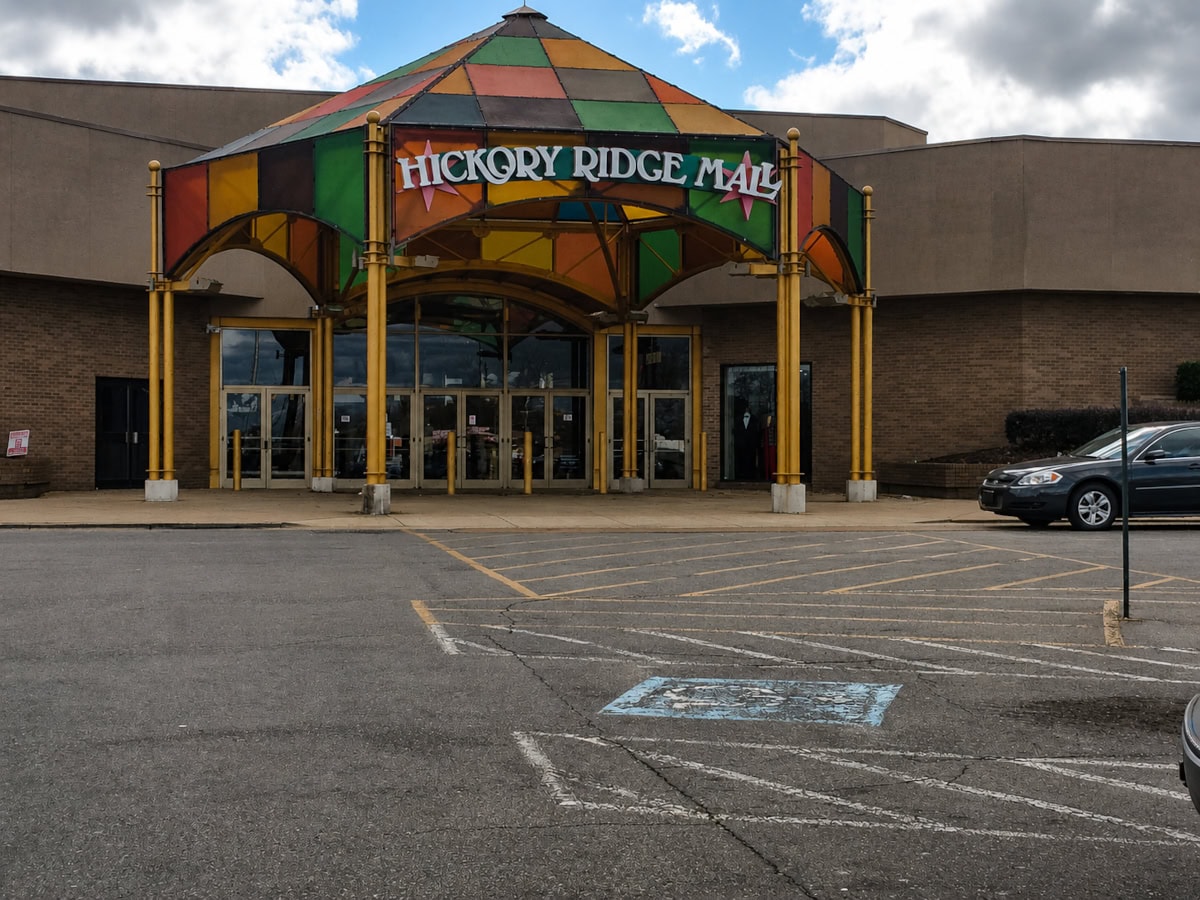
On September 11, 2014, part of the roof collapsed after heavy rain left standing water on top of the aging building. The main section of the mall was evacuated and temporarily closed.
Sears and Macy's stayed open. The incident made public what declining foot traffic had only implied: the building had serious physical-maintenance problems.
Macy's announced in January 2015 that the Southland store would close in early spring and went dark in March 2015. The owner defaulted on its loan, and the in-line-store section was auctioned in March 2016.
Michael Rixter died in 2018 after sixteen years as general manager; he had steered Southland through the Macy's loss while keeping Sears as an anchor and adding tenants, including an optometrist, specialty retailers, and the Shelby County Health Department.
The inline section was sold to a joint venture of Namdar Realty Group and Mason Asset Management in December 2018. Sears was announced for closure in late 2018 and had closed by March 2019.
The two anchors that had defined the mall since the day traffic backed up on U.S. 51 in August 1966 were both gone within five years of each other.
What Replaced Sears: Storage, Starbucks, AutoZone, and a New Clinic Site
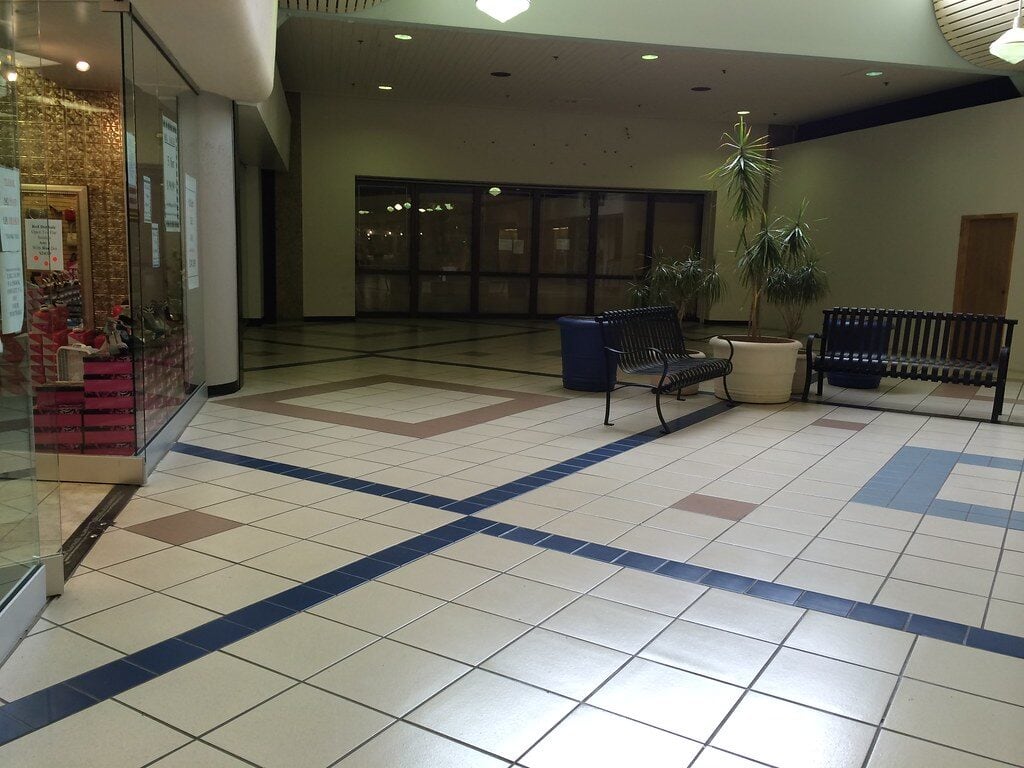
Global Storage Partners acquired the former Sears property on November 23, 2020.
The site covered 14.3 acres at 1200 Southland Mall and included about 162,000 square feet between the old Sears building and the Sears Auto Center.
The developer subdivided the land into five parcels. The main Sears building became a 105,000-square-foot indoor climate-controlled self-storage facility with 1,358 units, operated by Public Storage.
The conversion required major work on sewage, HVAC, electrical, plumbing, and roofing systems, along with demolition and hazardous-material removal.
Parcel 2, the former Sears Auto Center site, was redeveloped for Starbucks and AutoZone.
Parcel 3 was designated for Guthrie's Chicken and a car wash. Parcels 4 and 5 were sold to Shelby County for a county health clinic.
Public Storage opened in October 2022. Starbucks and AutoZone followed in early 2023.
The developer's stated reasoning was direct: the single-corridor mall format no longer matched what shoppers wanted, but the land itself still had value because of high traffic at the Elvis Presley Boulevard and Shelby Drive intersection.
Whitehaven Still Gathers in the Parking Lot
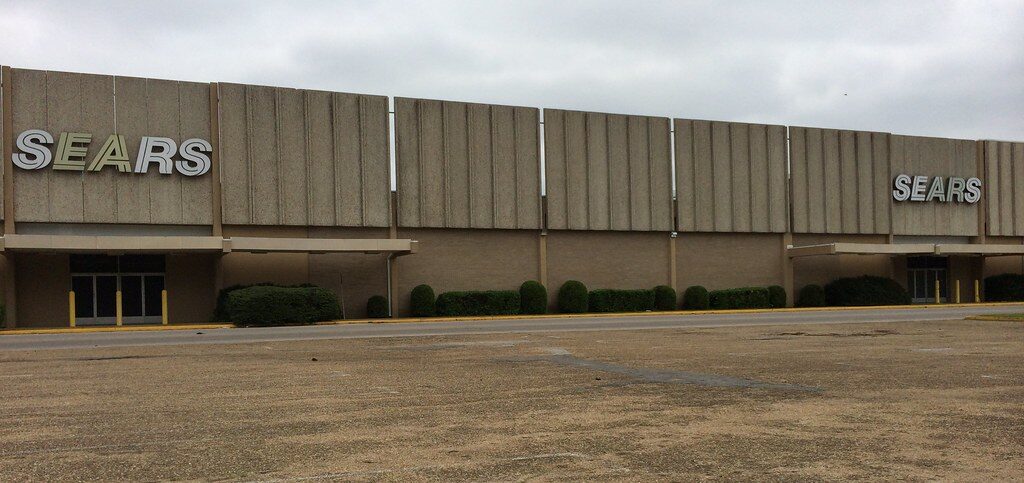
On a July 2022 afternoon, only about two dozen cars were scattered across a lot built to hold 4,000.
Namdar Realty Group reported the inline section at 216,300 square feet, which is less than half of the original 478,700 square feet at opening.
Over two decades, anchor stores and outparcels were sold off, reducing the size and unity of the property.
The 40-foot Christmas tree outside Southland Mall went dark in 2017 and remained that way for five years. In 2022, the community started raising funds to replace it.
The tree returned, and its lighting ceremony took place for two consecutive years, promoted as a revived tradition.
The Whitehaven Heritage Fest took place in the parking lot in June 2023.
In September 2023, supporters of redevelopment in Whitehaven publicly argued that the mall could once again be the center of the neighborhood.
In 2025, the 'Taste the Nation' food event during I Love Whitehaven Week was scheduled at Southland Mall.
As of April 2026, the mall website showed The Barber Shop, Dollar Tree, Citi Trends, City Gear, Coin Cloud, CTM/Kiddie Rides, Curvaceous Stylez by Nikki and Lori, Curves Apparel, SHOE SHOW, Shiver Station, Silkish Hair & Day Spa, a clinic run by the Shelby County Health Department, and others.
When it opened, the mall caused traffic backups on U.S. 51 that lasted three hours. It now lists multiple retail tenants and a county health clinic, but activity in the parking lot exceeded that inside the building.
Independent Publisher Notice
BestAttractions is an independent editorial publisher. We are not affiliated with, endorsed by, or acting on behalf of any location, business, property owner, manager, government agency, or organization described in this article. Comments posted on this page are not forwarded to, reviewed by, or acted upon by any entity mentioned in the article. For official inquiries, complaints, applications, bookings, or other requests, please contact the relevant entity directly through its official website or other verified channels.
very much liked your story, please keep in touch on what your next story you will cover. Thank You...D Kasper
Thank you for the feedback! I'm glad to hear that you enjoyed the story. Your continued interest in updates is inspiring.
Thank you for writing about the Southland Mall. I was there with my mom and my siblings the day it opened. It was such a "big deal" because we, in our little town of Memphis, had never seen anything like it. We always went as a family to see the Christmas tree lighting and to do our Christmas shopping. The teenagers use to hang out there on the weekends and there was no trouble, because we knew better. Ah yes, brings back such good memories. Thank you again.
Your recollections of Southland Mall offer such a warm snapshot of the past. Thank you for sharing these special memories.