Tennessee State Prison, stone and silence
Tennessee State Prison is on Cockrill Bend near the Cumberland River, about six miles west of downtown Nashville.
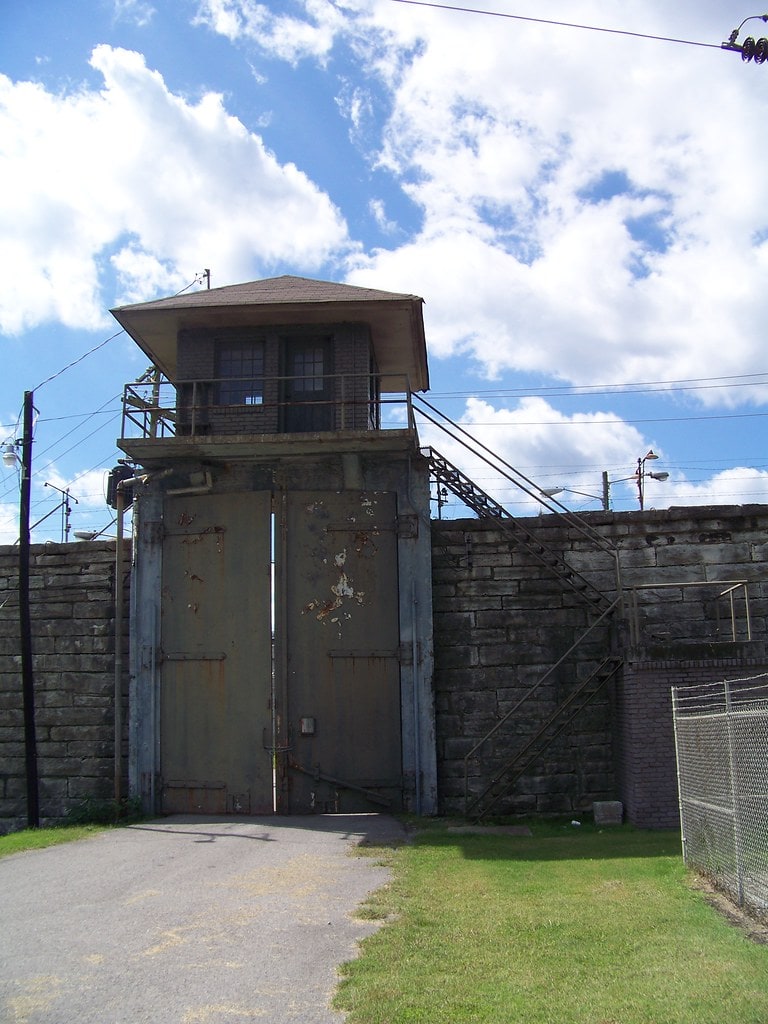
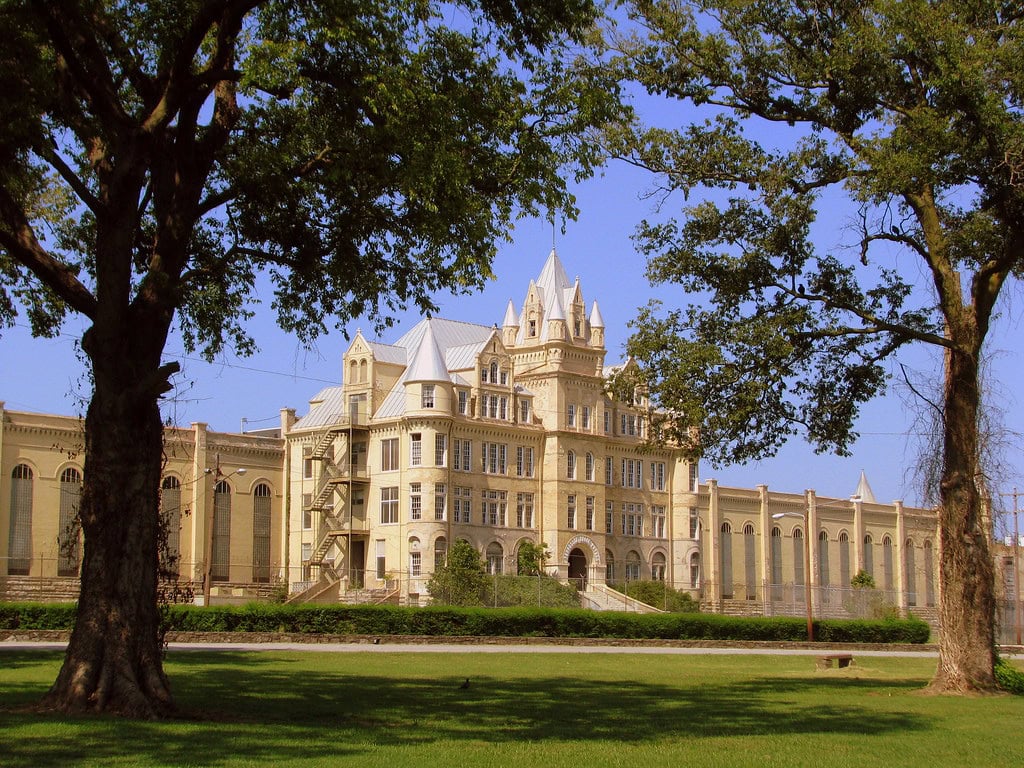
From the road, you first notice the stone, then the building takes shape: a main building in the Gothic Revival style with walls made by hand, towers, round turrets, and lines along the roof.
It was built to look permanent and hard to cross. That look is why it picked up the nickname "The Castle." The prison opened in 1898 and closed in 1992. After it shut down, the building stood but slipped year by year.
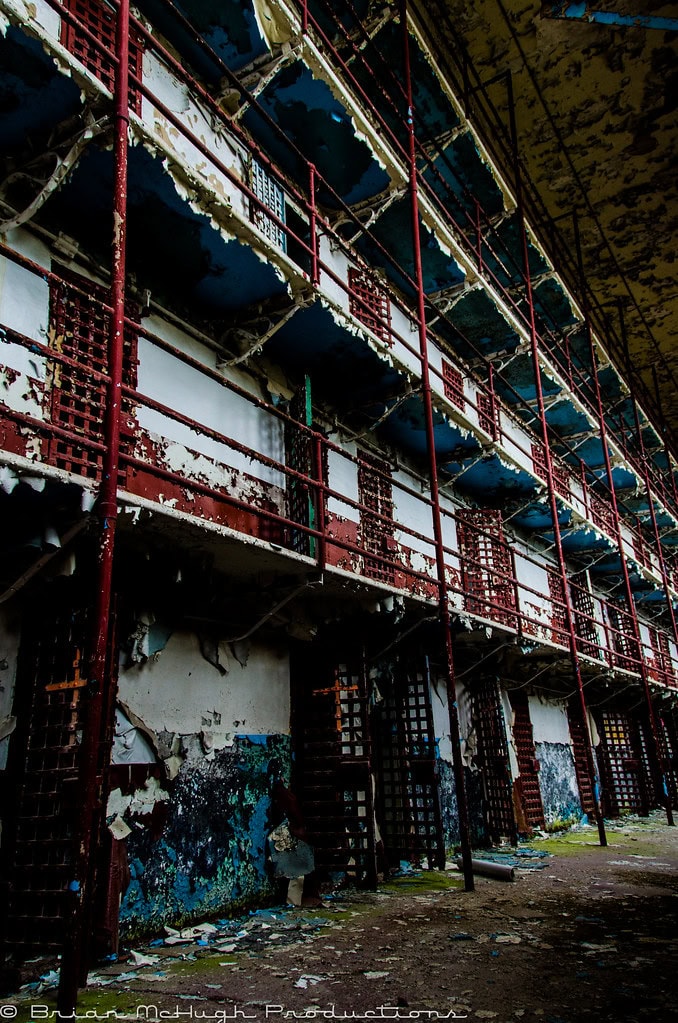
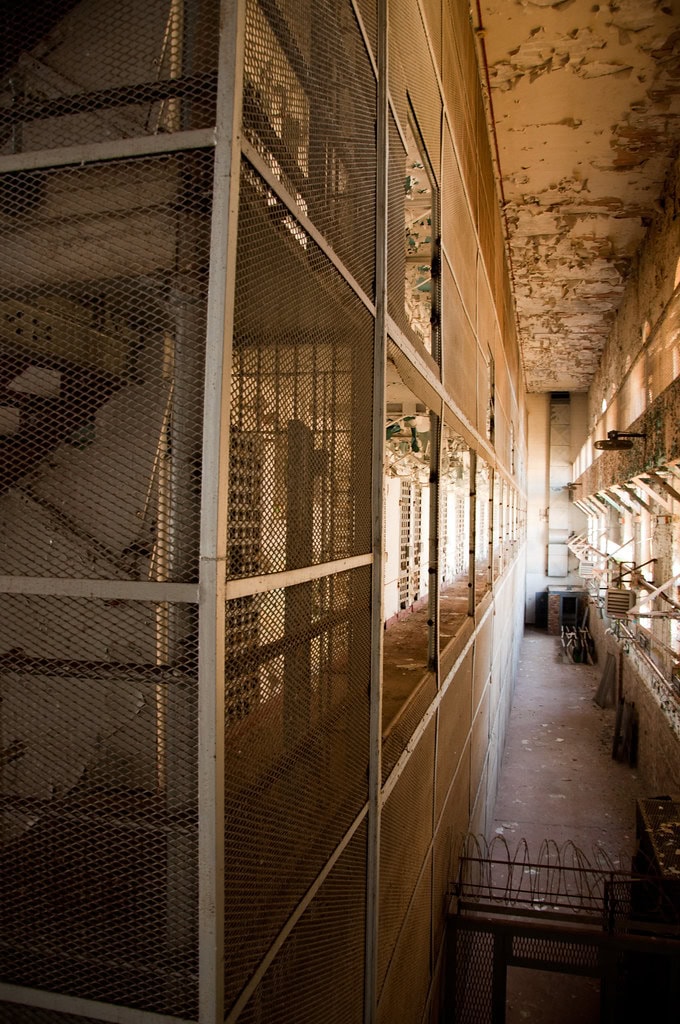
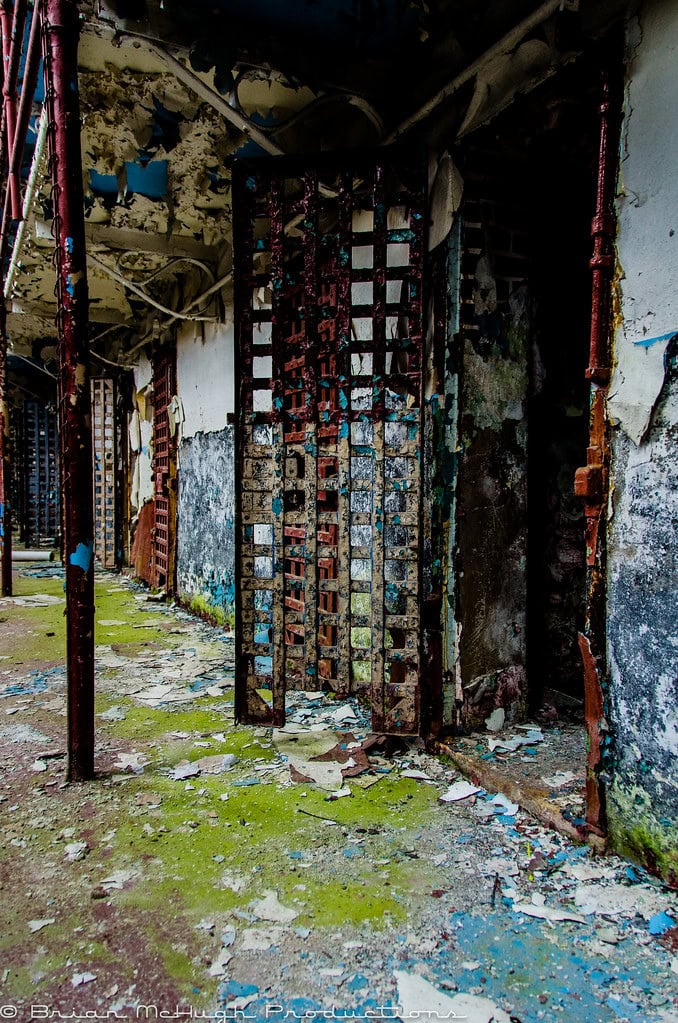
Paint lifted and peeled. Bars and metal fittings rusted. Pieces of wall and interior surfaces loosened, cracked, and fell away. Asbestos contamination restricted access, and in 2011 the interior was declared off-limits.
On March 3, 2020, an EF3 tornado hit the site and tore into the structure. About forty yards of wall were taken out on the right wing.
As of 2026, the prison is still closed to the public. Trespassing is prohibited, and access remains restricted.
Church Street opens in 1831, crowded fast
Tennessee's first serious move toward a state penitentiary came in 1813, when a state Senate committee recommended building one using public subscription funds.
The idea was accepted sooner than the details. The state argued for years over where the prison should stand.
In 1829, the General Assembly appropriated $25,000 and chose a site on Church Street in Nashville. Work began in April 1830.
Governor William Carroll dedicated the completed prison on January 1, 1831.
The place opened with 200 cells and the basic buildings needed to keep it running: a warden's dwelling, a storehouse, a hospital, and other structures.
It adopted the New York's Auburn Penitentiary system of discipline, but its layout and limestone construction were inspired by a prison in Wethersfield, Connecticut.
The first male inmate was registered in 1831. The first female inmate followed in 1840. The population rose quickly and the prison filled.
By 1853, overcrowding was severe enough that the legislature approved 32 additional cells.
After further construction in 1858, capacity increased to 352 beds. The extra space helped on paper, but the crowding continued.
Labor turns the prison into a business
Inside the penitentiary, the day was built around work. Tennessee expected prisoners to pay back part of the cost of keeping them by doing physical labor, and the schedule followed that expectation.
Accounts describe shifts that could run up to 16 hours a day. Food was limited. The sleeping quarters were unheated and unventilated.
The Auburn system dictated how the place functioned. Prisoners worked side by side in workshops during the day under enforced silence, then were locked into solitary cells at night.
Communication was prohibited.
By the 1840s, the labor was not confined to the prison grounds. Inmates were employed in the construction of Nashville's state capitol building.
At the same time, Tennessee contracted with private companies to operate factories inside the prison walls using convict labor.
The output was sold, and the workforce came from the prison population.
As these programs grew, the prison became more focused on making money and started to compete with workers outside the prison.
Over time, the people in prison changed a lot. Before the Civil War, Black inmates were about 5 percent of the prison population.
By 1869, Black inmates made up about 62 percent. In 1868, all female prisoners in Tennessee were African American women.
Civil War occupation and the rise of convict leasing
In 1862, the Union Army took over the Tennessee State Penitentiary and turned it into a military prison.
Under occupation, the prison population tripled, and conditions deteriorated. The Occupation Government leased convicts to the federal government to help repay mounting debts.
Among the prisoners held during that period was Mark R. Cockrill, a Confederate sympathizer whose West Nashville property would later be purchased for the new prison's site.
After the war, Tennessee formalized the logic.
In 1866, the state adopted convict leasing, renting prisoners to private businesses that assumed responsibility for housing, feeding, and clothing them in exchange for labor rights.
In July 1866, Tennessee first leased convicts to furniture manufacturers.
In 1884, the Tennessee Coal and Iron Company leased the entire state penitentiary for $101,000 a year.
Later, it was granted authority to sublease prisoners to other companies. The company used 60 percent of prisoners as miners and subleased the remainder.
The contracts were written to keep business risk low. Lessees were not liable for escapes, sickness, loss of prisoner, fire, or any other casualty.
The phrase that followed did not bother with euphemism: "one dies, get another." Between 1877 and 1879, Tennessee's prison population reached 67 percent African American.
The practice ended on January 1, 1896, in the wake of the Coal Creek War of 1891, during which free coal miners attacked prison stockades and freed about 40 prisoners.
Cockrill Bend builds the Castle in 1898
By the late 19th century, the Church Street prison was dangerously overcrowded and short on beds, medical care, and sanitation.
In 1893, after convict leasing collapsed, Tennessee voted to build a new penitentiary in Nashville with enough cells and workshops to employ all inmates.
The site selection process became contentious, with claims of "irregularities," before officials chose about 1,200 acres at Cockrill Bend along the Cumberland River.
The new facility was designed as a controlled enclosure. It rose behind rock walls about 20 feet high and 3 feet thick.
Inside the walls were 800 small cells designed for single occupancy, along with an administration building, a hospital, factories, a warehouse, and a working farm.
The plan also required a separate system for younger offenders, intended to isolate them from older prisoners. A women's wing was placed on the northwest corner of the grounds, and women worked the farm.
For the first time, legislation provided a separate building for female prisoners staffed with matrons, after decades in which women had been supervised by male guards.
A women's wing had opened in 1892 at the old prison, but overcrowding soon forced men and women to be housed together there.
The prison opened on February 12, 1898. Built largely by convict labor, it was overseen by Enoch Guy Elliott, who had been made chief warden of the old prison and used mostly prison labor to construct the new one.
Construction costs exceeded $500,000, not including the land. On opening day, the prison admitted 1,403 prisoners, and overcrowding began immediately.
Escapes, fires, and riots inside the walls
On August 4, 1902, sixteen prisoners blew out the end of one wing during an escape attempt. Guards shot and killed one inmate.
Two of the escapees were never recaptured. In 1904, inmates seized control of the segregated White wing.
They held hostages for 18 hours before surrendering. In 1907, prisoners commandeered a switch engine and drove it through a prison gate.
The pattern continued in later decades. In 1938, inmates staged a mass escape. Several serious fires broke out over time, including one that destroyed the main dining room.
Riots occurred in 1975 and again in 1985. On July 1, 1985, a 14-hour riot began at Turney Center after guards denied dinner to 30 inmates who refused new striped uniforms.
The unrest spread to the Tennessee State Prison, where inmates on a playing field stripped and burned their uniforms.
Tactical units entered the Turney Center compound at 7:42 a.m. They met little resistance after inmates threw knives and other weapons from windows.
By 9 p.m., officials declared the rioting ended across four prisons, including Tennessee State Prison in Nashville.
Old Sparky, 125 executions, and James Earl Ray
Between 1916 and 1960, Tennessee executed 125 inmates at Tennessee State Prison using the electric chair.
The state constructed the chair from the gallows that had been used before hangings were abolished in 1913. It became known as "Old Sparky." The execution procedure followed a fixed sequence.
The chair delivered 1,750 volts for 20 seconds, paused for 15 seconds, then resumed for another 15 seconds.
Executions later moved to Riverbend Maximum Security Institution in Nashville.
Riverbend opened in 1989 and now houses Tennessee's male death row inmates and the execution chamber. In 1989, the state also built a new electric chair.
The new chair retained the old wooden back legs.
The prison also held inmate with national notoriety. James Earl Ray, the assassin of Dr. Martin Luther King Jr., was transferred to Tennessee State Prison in July 1972.
The move was carried out by armed convoy after Governor Winfield Dunn ordered Brushy Mountain closed rather than recognize a guards' union.
Ray returned to Brushy Mountain when it reopened in August 1976. He later served time at Tennessee State Prison and at Riverbend.
Closed, filmed, tornado-damaged, still restricted
Riverbend opened in 1989, partly to relieve an aging prison that was deteriorating and had already seen serious riots.
Tennessee State Prison closed permanently in June 1992. A federal court later issued a permanent injunction in the Grubbs v.
Bradley case that prohibits the state from ever again housing inmates there.
After closure, the Castle became a set. It appeared in Ernest Goes to Jail, and later served productions including The Green Mile and Walk the Line.
Music videos used it too: Eric Church filmed "Lightning" and "Homeboy" there, Cage the Elephant filmed "Cold Cold Cold," and Pillar filmed "Bring Me Down." Before the closure, Johnny Cash recorded the 1974 live album A Concert Behind Prison Walls there with special guests Linda Ronstadt, Roy Clark, and Foster Brooks.
Celebrity Paranormal Project filmed there for its third episode, "The First Warden," and the first season finale, "Dead Men Walking," calling it "The Walls Maximum Security Prison".
Asbestos kept the main entry off-limits for years and pushed filming toward exterior shots.
Historic Nashville listed the prison among its endangered "Nashville Nine" properties in 2011. Then, the March 3, 2020, EF3 tornado tore out about forty yards of wall on the right wing.
Rumors still drift about restoration and a museum, but no formal plan has materialized. Trespassing remains prohibited, and the front door has stayed padlocked.