
A weekday morning here runs on three schedules. Parents steer toward public schools.
More than 21,500 university students cross a hilltop campus or log into classes from elsewhere.
Employees of the state correctional system report to an administrative headquarters and several nearby facilities.
These worlds do not occupy separate corners of the map.
They meet at traffic lights, lunch counters, pharmacies, ball fields, and grocery aisles.
That overlap gives the place its peculiar energy.
It feels larger than a small East Texas town at 8 a.m., quieter after dinner, and highly dependent on whether your car starts.
Life here can be affordable, rooted, and unexpectedly interesting.
It can also feel isolated, institutionally heavy, and limited the moment you need something the town does not provide.
A Tuesday In East Texas
The official population is about 49,100, but that figure does not describe 49,100 conventional small-city households.
There are fewer than 16,000 households.
The university reports more than 21,500 students across its campuses and online programs.
The state correctional system maintains its headquarters here, along with multiple facilities in the surrounding area.
The denominator is unusual before anyone starts calculating averages.
Students arrive, graduate, and move on. State employees build long careers.
Families connected to schools, healthcare, courts, retail, government, and the university settle into a more permanent rhythm.
About 21% of residents speak a language other than English at home, and the population is more varied than the image of an old courthouse town might suggest.
The academic calendar can make parts of town feel less crowded in summer.
Parking becomes easier in some campus-facing areas.
Then August returns with apartment move-ins, parents unloading cars, and another wave of students learning which streets become slow between classes.
The permanent town never disappears. It is simply easier to see when the semester loosens its grip.
The Town Has Three Centers
The local map makes more sense once you stop searching for a single downtown core.
The university is one center.
It supplies classrooms, performances, sports, public events, healthcare training, and thousands of residents who might otherwise live in a much larger city.
Its academic reach is substantial for a community of this size: more than 170 fields of study delivered through nine schools and colleges.
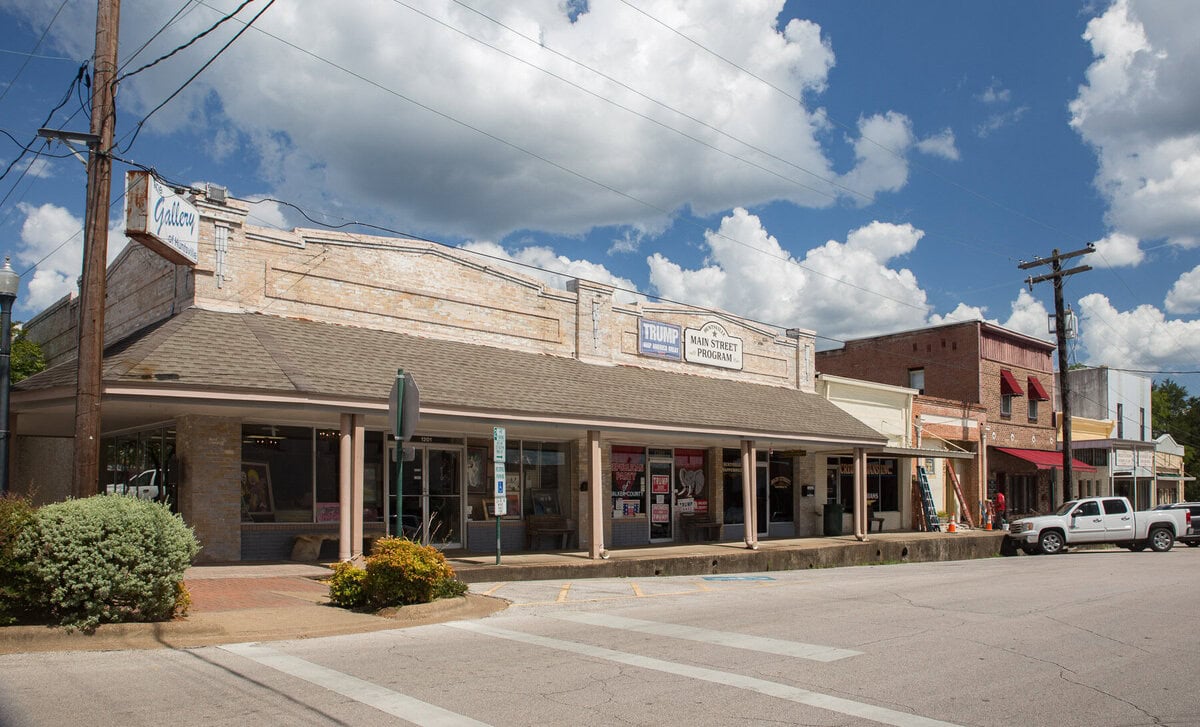
Downtown is another center, though not a large one.
A person can eat breakfast at Cafe Texan or Donut Wheel, browse Fabric Carousel or Bluebonnet Square Antique Mall, stop at the library, and cross paths with courthouse employees before noon.
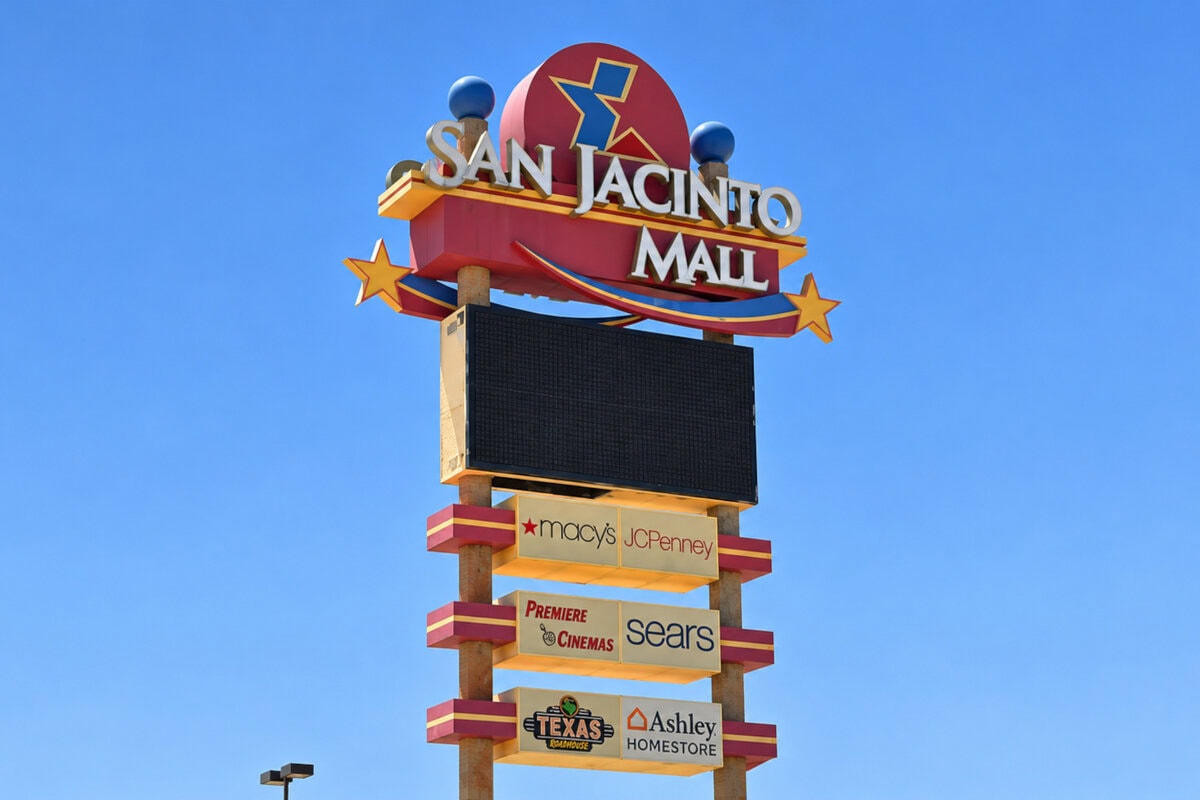
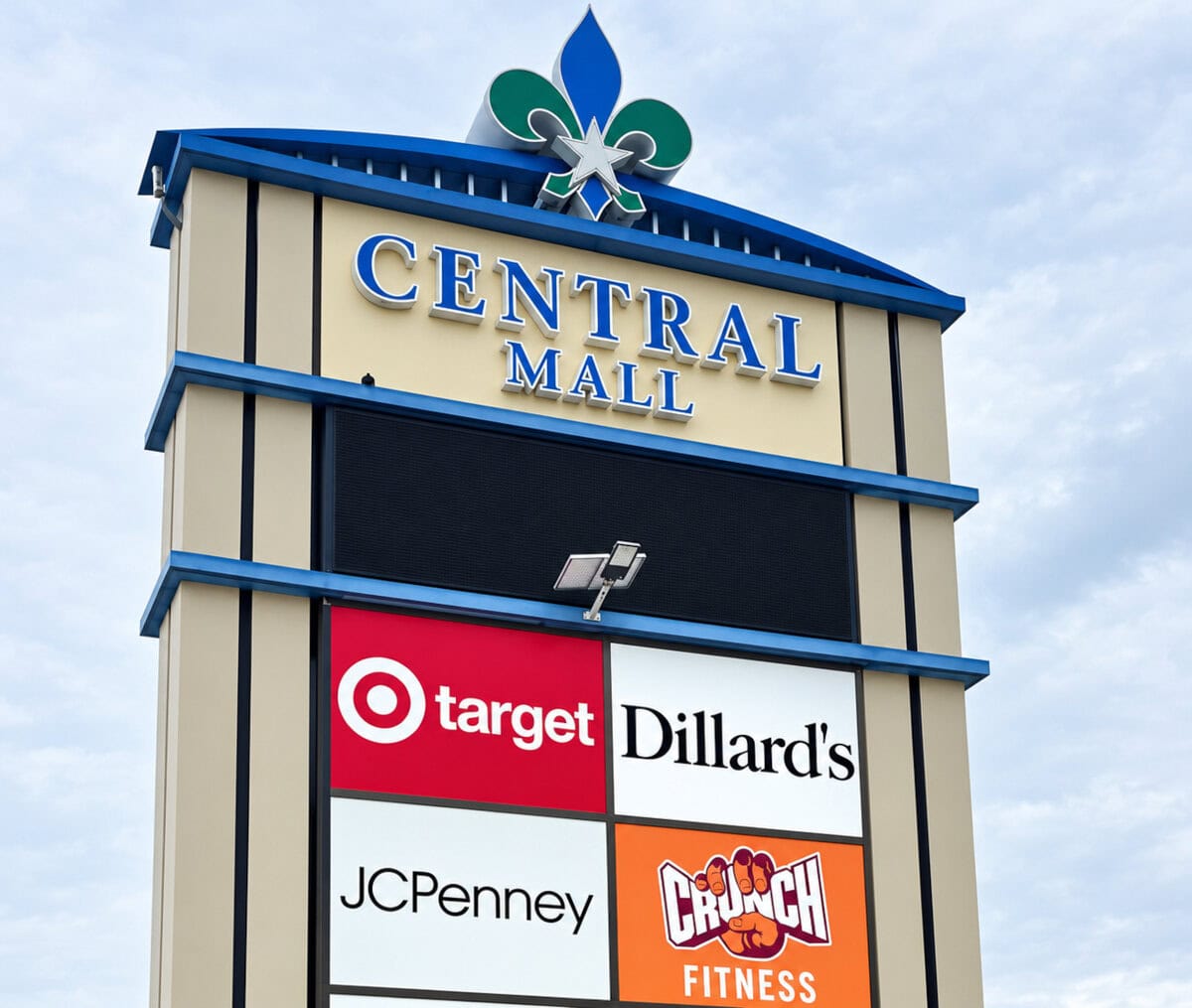
The storefront mix is modest, but it gives residents somewhere to go that is not a highway shopping center.
The third center is the interstate.
It carries regional travel, freight, chain retail, and the constant pull of Houston.
The metropolitan area is roughly 65 miles south.
That is close enough for an airport run, specialist appointment, or major shopping day, but too far to function as an effortless extension of the neighborhood.
Between these centers sits something few American towns place so visibly in ordinary life: a correctional unit established in 1849 near downtown.
Its official directory lists 446 employees and identifies the facility as a regional release site.
Corrections is not an industry hidden beyond the county line.
It has an address on 12th Street.
A Car Is The Price Of Admission
A student living beside campus may be able to compress classes, food, exercise, and social life into a relatively small area.
Most other residents drive.
The Census Bureau reports a mean commute of 23.4 minutes, but commute time captures only one part of the dependence.
Grocery shopping, school activities, parks, work shifts, and medical appointments frequently require separate trips.
For many households, the larger burden is not severe congestion.
It is the number of times someone must get back into the car.
The regional transit district currently provides shared curb-to-curb demand-response service within Walker County from 6 a.m. to 6 p.m. Monday through Friday, subject to time and space availability.
Its published fixed-route city list does not include this town.
That makes transit useful for planned trips, including work, shopping, and medical appointments.
It is not a substitute for frequent urban bus service.
For a two-worker household, one vehicle can become a daily scheduling exercise.
Teenagers without access to a car may have limited independent mobility.
Older residents who expect to stop driving eventually should study transportation arrangements before that day arrives.
The individual trips are often short. There are simply a lot of them.
Housing Is More Ordinary Than The Population
Renting is not a temporary edge case here.
It is a central part of local life.
Only 41.1% of occupied homes are owner-occupied.
That rental-heavy balance fits a city shaped by students, young workers, institutional employees, and households whose plans may last a semester, a contract, or a career.
Location changes the experience.
Living close to campus can reduce driving and keep university facilities within reach.
It may also place you in an area where leases, parking pressure, and neighboring households follow the academic calendar.
Moving outward usually brings more separation and a quieter residential routine, but every errand becomes more dependent on a vehicle.
The current price signal remains below what many movers encounter in larger Texas metros.
Zillow's June 2026 page reported a typical home value of $261,246 and a Zillow Observed Rent Index figure of $1,324.
There is an important limitation: Zillow states that specific data for the location are unavailable and that the displayed figures represent the surrounding area.
These numbers offer a regional anchor, not a promise for a particular street, apartment, or house.
The apparent affordability also does not end with a mortgage or lease.
A second vehicle, summer electricity, insurance, repairs, and repeated regional trips can consume part of the difference.
What Families Notice After Enrollment
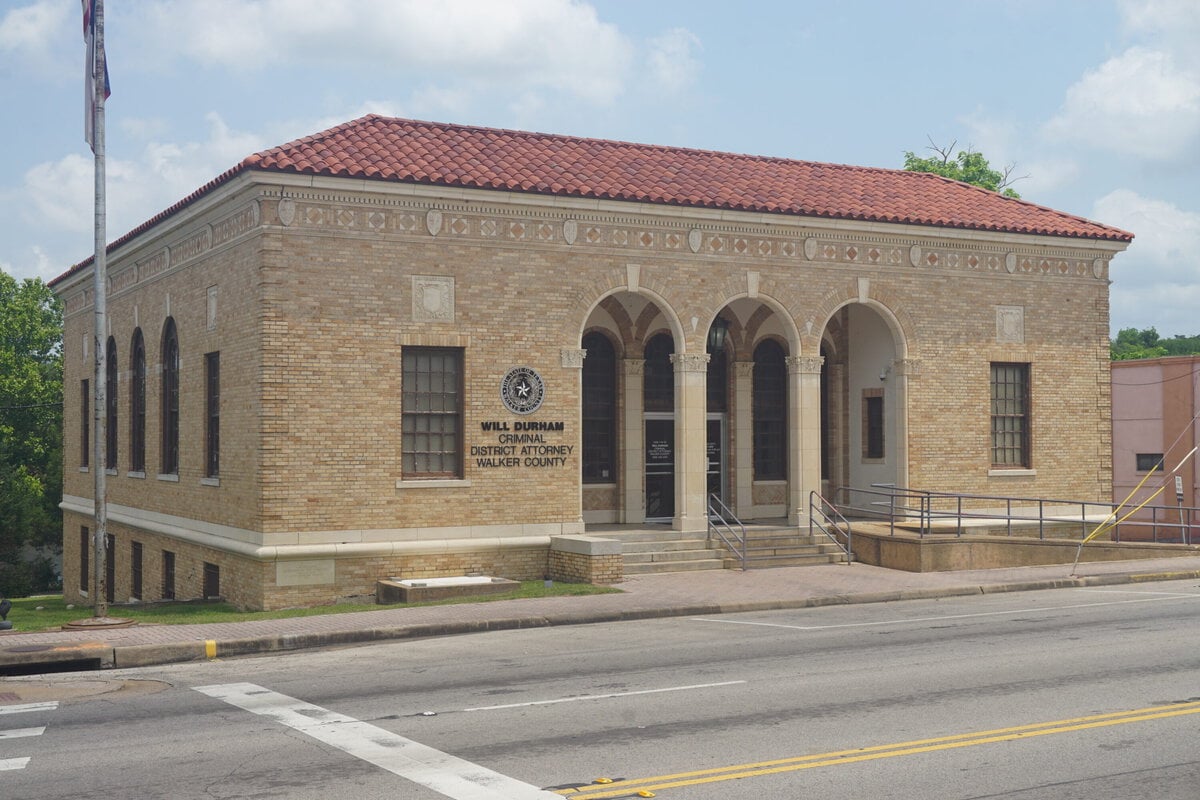
The public-school conversation cannot be reduced to a single citywide label.
The local district is an open, regular PK-12 system with nine schools.
Families should investigate the assigned campus, transportation, programs, and current attendance boundaries for the exact address they are considering.
A district total does not tell you what an individual child's weekday will look like.
The public library performs more community work than its scale might suggest.
Its July 2026 programming included children's coding, chess, bilingual story time, ESL sessions, fiber arts, job-search help, teen activities, book groups, STEM events, and local-history programming.
This is the sort of institution that matters after the novelty of moving has worn off.
It is free, recurring, and usable by children, teenagers, working adults, and retirees without requiring a long drive or a special occasion.
Parks fill another part of the week.
Eastham-Thomason Park, Emancipation Park, and Kate Barr Ross Memorial Park support sports, neighborhood recreation, and family gatherings.
These are functional spaces rather than grand attractions: fields for practice, room for a walk, and somewhere to spend another hour outside before dinner.
Healthcare begins locally.
The current federal Medicare inpatient provider directory lists Huntsville Memorial Hospital at 110 Memorial Hospital Drive.
That local presence matters. It does not mean every specialist or complex treatment is available nearby.
Anyone managing a recurring medical condition should check the actual provider network, insurance participation, and travel requirements before moving.
Saturday Opens Into The Pines
The strongest argument for staying close on the weekend is not nightlife.
It is the landscape.
A national forest spreads across more than 163,000 acres in this part of East Texas.
Its multiple-use system offers 85 miles of designated trails for hiking, biking, horses, and registered off-highway vehicles.
The trails can close when soil moisture creates a risk of damage.
The Forest Service tells visitors to check current status with the ranger office before leaving.
That small habit becomes part of outdoor life here: shoes by the door, water in the car, and one phone call before the drive.
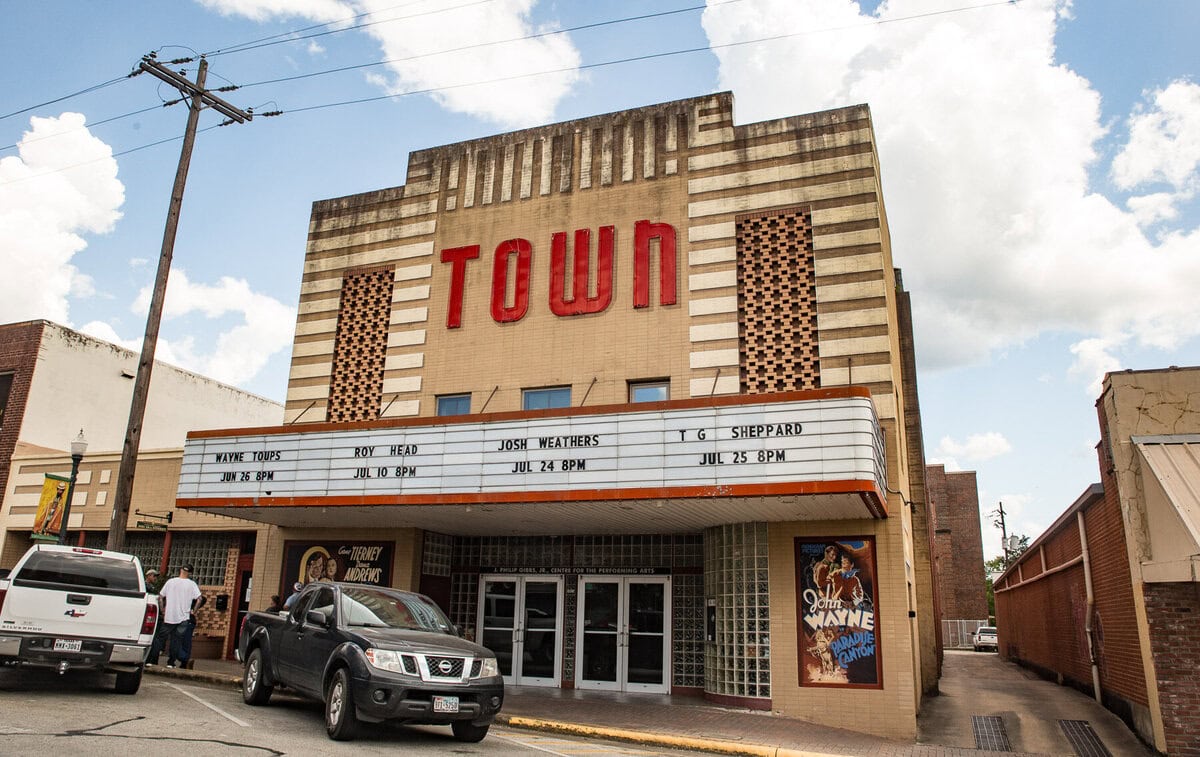
Closer to town, weekends may revolve around a park, youth sports, a university performance, library programming, or a few hours downtown.
Fair-on-the-Square, Wine Down Shop Small, the Main Street Music Series, and the Christmas Fair periodically fill streets that are much quieter on an ordinary afternoon.
This is not a destination where every Saturday reveals a new entertainment district.
The reward is repetition. You learn which trail suits a humid morning.
Children return to the same fields. The person behind the counter begins to recognize you.
A university event or downtown festival feels important because the calendar is not overcrowded.
People who need constant novelty may find the place narrow.
People who value familiarity may find that the repetition is exactly the point.
The Friction Arrives By Month Three
Summer is not background scenery.
The National Weather Service maintains a local climate page using observations from the municipal airport northwest of town.
Heat and humidity shape when people exercise, how long children stay outside, and how hard an air conditioner works through the afternoon.
Thunderstorms can overturn outdoor plans quickly.
Winter freezes are less frequent, but even a short one can disrupt roads, pipes, schools, and routines in a region built primarily for heat.
Then there is the driving. At first, a 10- or 15-minute trip feels easy.
Over time, the accumulation becomes clearer: groceries, school, work, practice, pharmacy, another forgotten item, then home.
The town is not defined by punishing commute traffic.
It is defined by how often ordinary life sends you back onto the road.
The university brings education, performances, sports, and a younger population.
It also brings turnover. Neighbors graduate. Student-oriented businesses move with the academic year.
Certain blocks feel different between June and September.
The correctional system supplies stable public employment, but its presence is impossible to edit out of the city's identity.
Some people treat it as ordinary civic geography.
Others remain uncomfortable with the number and visibility of nearby facilities.
Entertainment has a ceiling.
Downtown has independent businesses and recurring events, but it is not a dense restaurant or nightlife district.
Commercial flights, advanced shopping, and many specialist services require leaving town.
Street-level safety also resists a one-number verdict.
Campus-facing rentals, highway commercial areas, older central blocks, subdivisions, and rural edges do not function in identical ways.
The unusual population structure makes broad citywide comparisons especially blunt.
The useful question is not whether the entire town is "safe" or "unsafe."
It is how a specific street works after dark, during the semester, and on a normal weekday.
The Texas Answer
The place is Huntsville, Texas.
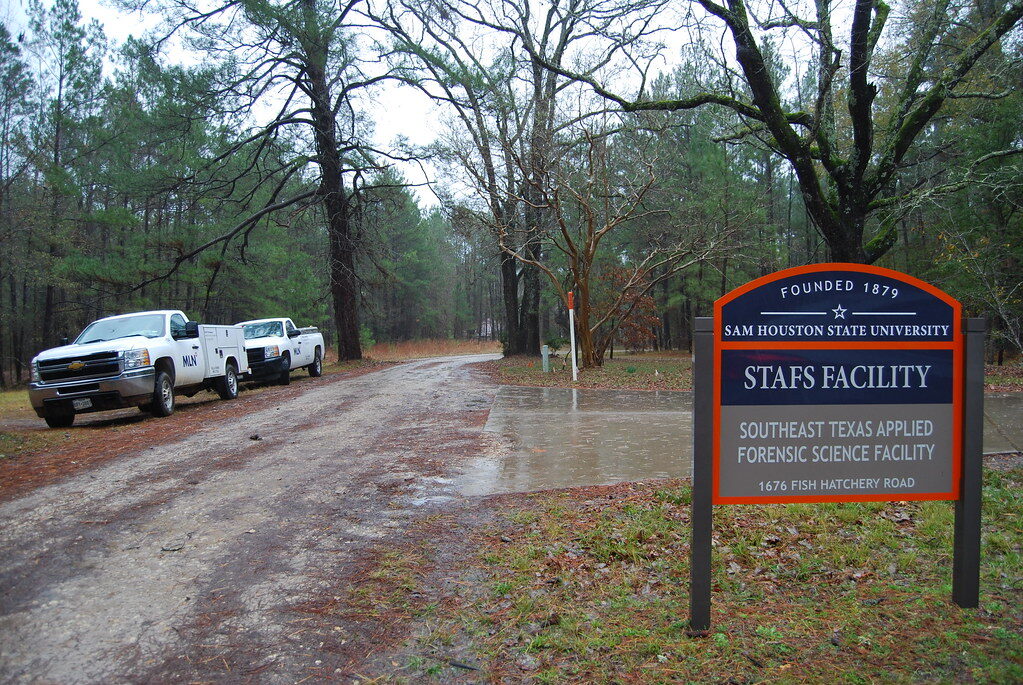
The name brings the clues together: Sam Houston State University on the hill, the Huntsville Unit near downtown, Huntsville State Park beside the forest, Huntsville Public Library on 13th Street, and Huntsville ISD carrying much of the family calendar.
It fits people who want a smaller East Texas life without giving up a university, a hospital, public institutions, and quick access to forests and trails.
It works especially well for households connected to education, corrections, courts, healthcare, government, or regional services.
Renters and buyers priced out of larger Texas metros may find more room in the budget, though transportation and cooling costs take back part of the advantage.
The trade-offs are plain.
You must be comfortable driving.
You must tolerate heat, a limited entertainment menu, and the visible presence of the correctional system.
Houston is available, but not close enough to repair every local limitation without consuming a large part of the day.
Someone seeking frequent transit, dense walkability, major-city culture, or a broad specialist network may become frustrated quickly.
Huntsville is not simply a college town, a prison town, a county seat, a highway stop, or a gateway to the Piney Woods.
It is all of them at once.
The three clocks never fully synchronize.
That is the inconvenience - and the character.
References
Housing data source: Zillow Home Value Index and Zillow Observed Rent Index, June 2026.
Data Provided by Zillow Group.
Zillow, Huntsville, TX Housing Market, housing data through June 30, 2026.
U.S. Census Bureau, QuickFacts: Huntsville City, Texas, 2025 population estimate and 2020-2024 household data.
Sam Houston State University, Academics, current enrollment scale and academic structure.
Texas Department of Criminal Justice, Huntsville Unit, location, establishment date, staffing, and operational role.
Texas Department of Criminal Justice, TDCJ to Rename Three Facilities, administrative headquarters location.
Brazos Transit District, Demand and Response Service Area, Walker County service coverage.
Brazos Transit District, General Time Schedules, current Walker County operating window.
Brazos Transit District, Schedules and Maps by City, current fixed-route locations.
National Center for Education Statistics, District Detail for Huntsville ISD, 2025-2026 directory information and 2024-2025 district data.
Centers for Medicare and Medicaid Services, Huntsville Memorial Hospital, current Medicare inpatient provider record.
National Weather Service, Climate - Huntsville, Texas, municipal airport observation source.
U.S. Forest Service, Sam Houston National Forest, forest setting and recreation information.
U.S. Forest Service, Sam Houston Multiple-Use Trails, trail mileage, permitted uses, and closure conditions.
City of Huntsville, Discover Main Street, downtown character and annual events.
City of Huntsville, Shop Small in Downtown Huntsville, current downtown shopping directory.
City of Huntsville, Eat and Drink Local in Downtown Huntsville, current downtown dining directory.
City of Huntsville, Huntsville Public Library, current services and 2026 programming.
City of Huntsville, City Parks, municipal parks and recreation facilities.
City of Huntsville, Huntsville Municipal Airport, regional location and access.
Independent Publisher Notice
BestAttractions is an independent editorial publisher. We are not affiliated with, endorsed by, or acting on behalf of any location, business, property owner, manager, government agency, or organization described in this article. Comments posted on this page are not forwarded to, reviewed by, or acted upon by any entity mentioned in the article. For official inquiries, complaints, applications, bookings, or other requests, please contact the relevant entity directly through its official website or other verified channels.