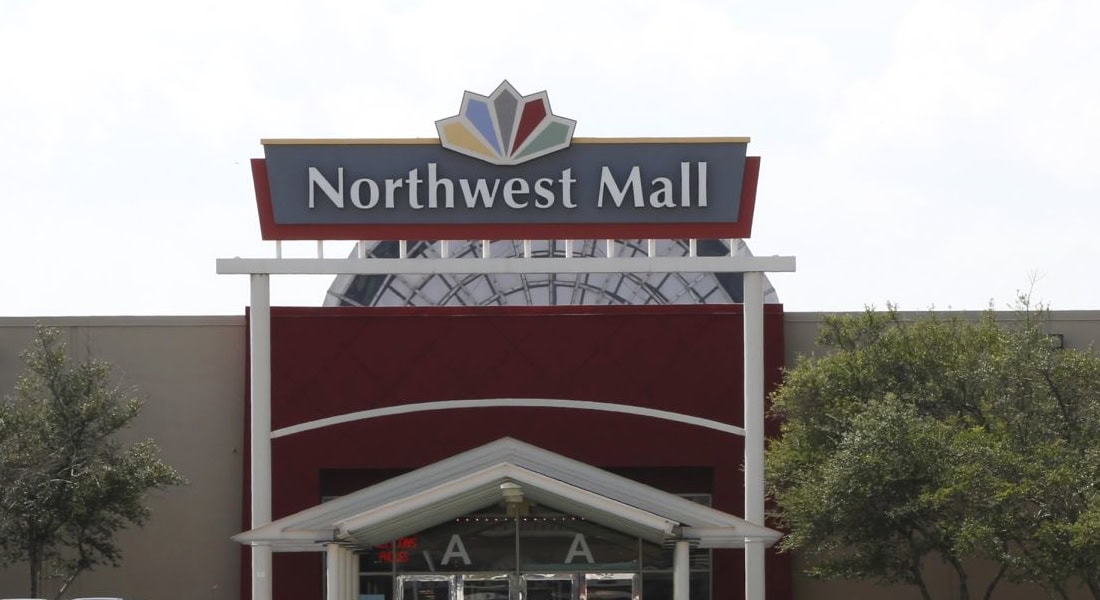
Northwest Mall opened on October 24, 1968, at the junction of U.S. 290 and Loop 610. A Harris County judge, Houston's mayor pro tem, a Presbyterian minister, and the John H. Reagan Senior High School Band were there for the opening ceremony.
By then, a crowd had already filled the parking lot and was standing outside waiting to get in. Foley's anchored one end, J.C. Penney the other, with Battelstein's and Palais Royal as smaller anchors in between.
The inline stores ran the mid-century chain formula: GNC, Lane Bryant, Spencer Gifts, Farrell's Ice Cream Parlour, Margo's La Mode, F.W. Woolworth.
Piccadilly Cafeteria opened at address 402 inside the mall that same year and would hold it for thirty years.
Before the end of 1969, a four-screen AMC movie theater opened on the property, making it one of AMC's first locations in Houston.
This gave the complex movies, along with places to eat and shop.
By 1970, finding a parking spot in that lot could take a while and test your patience. On Houston's northwest side, it quickly became a big shopping destination.
How Northwest Mall Came to Northwest Houston
Northwest Mall and Almeda Mall - on the south side of Houston - were built from essentially the same floor plans. The developer designed both projects at the same time and considered them near-twins.
Both were intended as enclosed regional malls serving their own part of the city, and both were considered forward-looking for the Houston market when they opened.
Foley's unlocked its doors on July 31, 1967, more than a year before the rest of the mall was ready.
The anchor store opened first, and the smaller tenants followed when the enclosed mall was complete. The formal dedication of the full mall came on October 24, 1968.
Northwest Mall was built for practical, everyday shopping.
The northwest side of Houston in the late 1960s was full of families in new subdivisions who needed a reliable place nearby to shop, and the mall was designed to serve that role.
A Decade of Expansion and Renovations
Foley's expanded from roughly 209,600 square feet to about 298,800 square feet in the early 1970s - nearly 90,000 additional square feet added to the anchor.
The rest of the mall stayed busy through most of that decade and into the early 1980s, a decade-plus of steady traffic at 290 and 610.
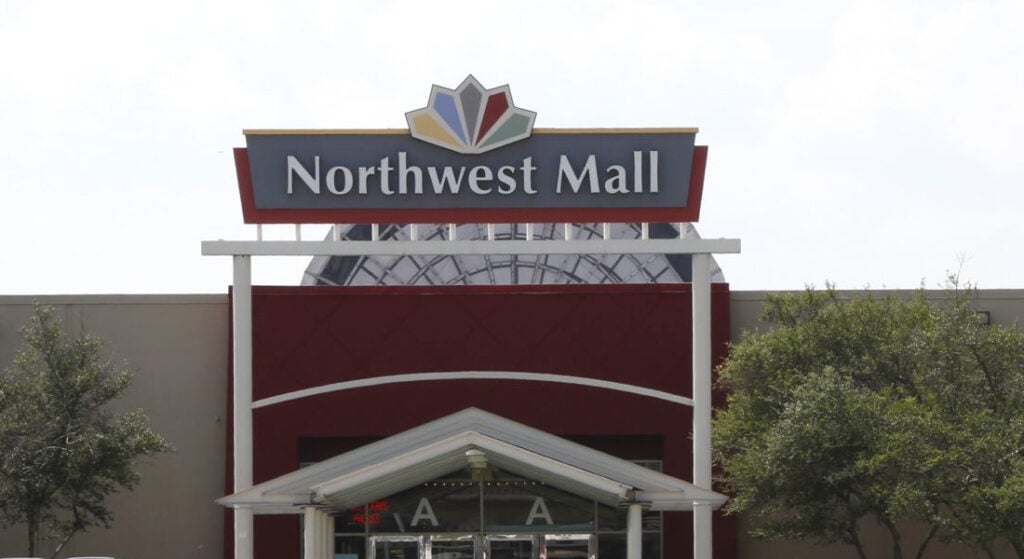
By 1990, the property received a more visible update. An 11-bay food court was installed in the center court, and the exterior entrances were rebuilt. The renovation was a visible investment in the property.
Around the same time, tenants were cycling faster than in earlier years. Battelstein's had been replaced by Bealls, which closed in February 1989.
BizMart opened in June 1990 and was gone by January 1991. Woolworth - a charter tenant since opening day in 1968 - closed its Northwest Mall location in December 1993.
Keeping the same names above the storefronts became harder each year.
The Location First Helped the Mall, Then Became a Problem
In 1968, the northwest edge of Houston was lined with new subdivisions, and the people living there needed a nearby place to shop.
By the 1990s, the city had spread much farther out. The mall was no longer at the suburban edge.
It stood in an established close-in neighborhood just outside Loop 610, where new suburban growth was no longer bringing customers through the doors.
National chain stores had come because the site once had the advantage of an edge-of-town location. They began to leave after that advantage disappeared.
Independent retailers took over the empty spaces, but they usually had shorter leases and less dependable customer traffic.
Then, freeway construction around the U.S. 290, I-10, and Loop 610 interchange cut into the east parking area and made the mall harder to reach from the south.
The property changed owners twice in ten years. Northwest Mall was sold by The Rouse Company to Glimcher Realty Trust in 1997.
Glimcher sold the Northwest Mall to Houston-based Levcor in October 2007. Levcor created plans for a mixed-use redevelopment that would replace most of the enclosed mall.
But freeway construction had already taken part of the site, and the redevelopment did not move ahead.
JCPenney Left, and Then Macy's Eight Years On
JCPenney closed in 2000, leaving one of the mall's two original anchor spaces empty. The store area sat unused for about a decade.
It became a large, quiet space at one end of the building, with no clear replacement in sight.
Foley's had anchored the other end since 1968. In 2006, the chain became Macy's in a company rebranding. The renamed store stayed open for two more years, then closed in 2008.
Hurricane Ike was given as the reason. Within eight years, both original anchor stores were gone, and neither space had a new tenant ready to move in.
By September 2014, the mall's vacancy rate stood at more than one-third. Palais Royal still occupied its original junior anchor location. Other tenants were still there.
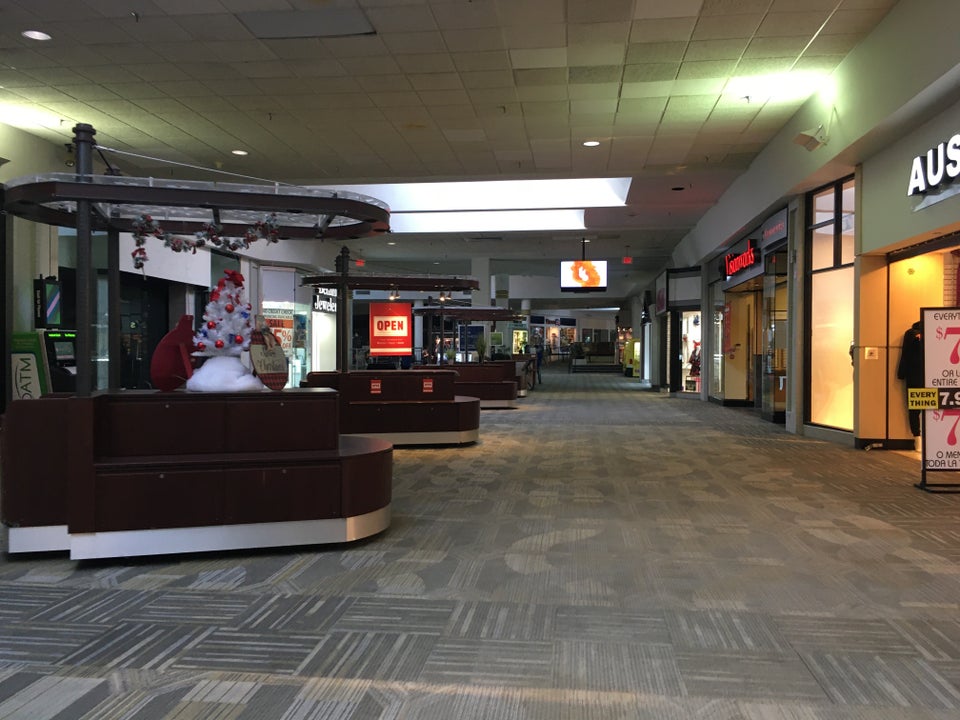
But the corridors that once were filled with weekend crowds had gone quiet, and the parking lot that had frustrated drivers in the 1970s had plenty of open spaces.
Fast-food restaurants around the edges of the property still brought in some cars, but the enclosed mall had been losing customers for years.
The Last Tenants Stayed as the Rest of the Mall Emptied Out
Thompson's Antique Center moved into the former JCPenney space after freeway right-of-way acquisition forced it out of its earlier location on Old Katy Road.
An antique center inside a former department store was an unusual match, but Thompson's brought in some foot traffic at a time when the rest of the mall did not.
By 2021, it was the only retailer anywhere on the property with a storefront open to the public.
The Southern Apache Museum opened inside the mall in January 2012, then held a public grand opening on March 10 that same year.
The museum served as both an educational space and a gathering place for Native people in Houston. It used space inside the struggling mall.
Mall management told the museum to leave by May 31, 2017, even as some other tenants remained open.
After that, the organization later moved to a virtual format while it searched for a permanent home.
Palais Royal also remained open during this period. Customers walking through the store could look through interior windows into the mall corridors beyond.
Merchandise and cash registers stood in the foreground. The dead mall sat just behind them.
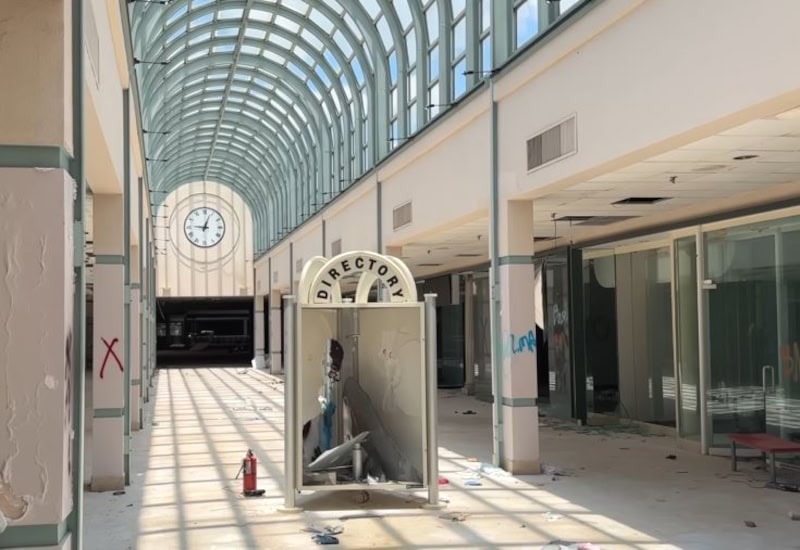
How the Mall Shut Down, One Door at a Time
The interior closure was set for March 31, 2017, and some shop owners only heard about it in mid-March. That left them roughly two weeks to clear out merchandise and vacate.
Tenants with exterior-access storefronts - Palais Royal, Thompson's Antique Center, the College of Healthcare Professions, Post Oak Club, and Chapa - were told they could stay.
Everyone with an interior-only location was out.
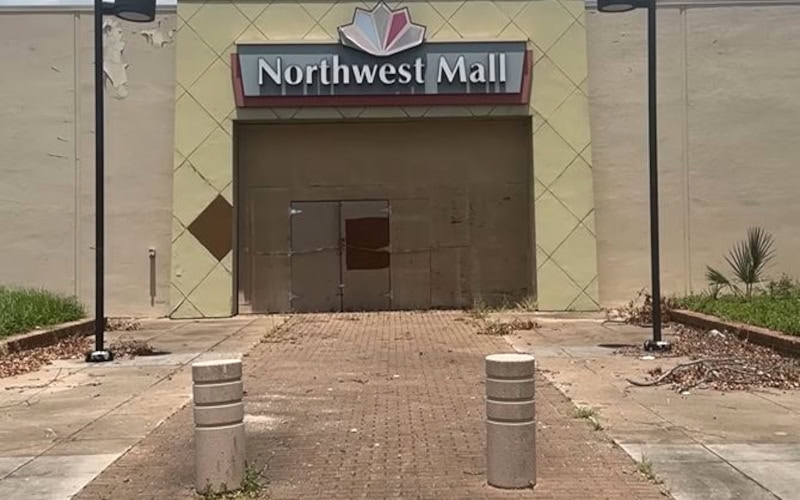
The building was sealed in stages over the following year. Exterior doors were walled off by May 2017.
Thompson's interior connection to the mall corridor was blocked to keep construction dust away from the antiques. Food court furniture was gone by December 2017.
By July 2018, the old main entrance was covered over, and most of the exterior tenant signs had come down.
Palais Royal closed in 2019. Thompson's Antique Center held on until December 31, 2021, giving vendors limited notice.
The College of Healthcare Professions was also winding down around that time. By early 2022, the property was nearly empty.
What Texas Central Has Planned for the Property
On February 5, 2018, Texas Central selected the Northwest Mall site as its preferred Houston terminal for a proposed Dallas-Houston high-speed rail line.
The plan called for a multi-level station on 45 acres. The site was eight miles from downtown and 1.5 miles from the Northwest Transit Center.
The complex was also planned with retail, restaurants, and parking access. The property remained in transportation planning documents for years.
A 2023 regional project list still included a METRO Uptown BRT extension to a stop labeled "Northwest Mall/Proposed Texas Central HSR Terminal," with a projected timeline of 2027-2030.
In April 2024, the Houston Chronicle still identified the mall site as the Houston endpoint of the rail project.
Then several major developments came close together in 2025. In April, the Trump administration ended a $63.9 million federal planning grant for the project.
That same month, the Texas House Transportation Committee voted to subpoena Texas Central records after company representatives did not answer lawmakers' questions about the project's financing and management structure.
In August 2025, the lead investor said the Houston station site had been acquired, but construction financing still had not been assembled.
As of March 2026, the rail line is unbuilt, the station is unbuilt, and the former mall at 290 and 610 sits vacant.
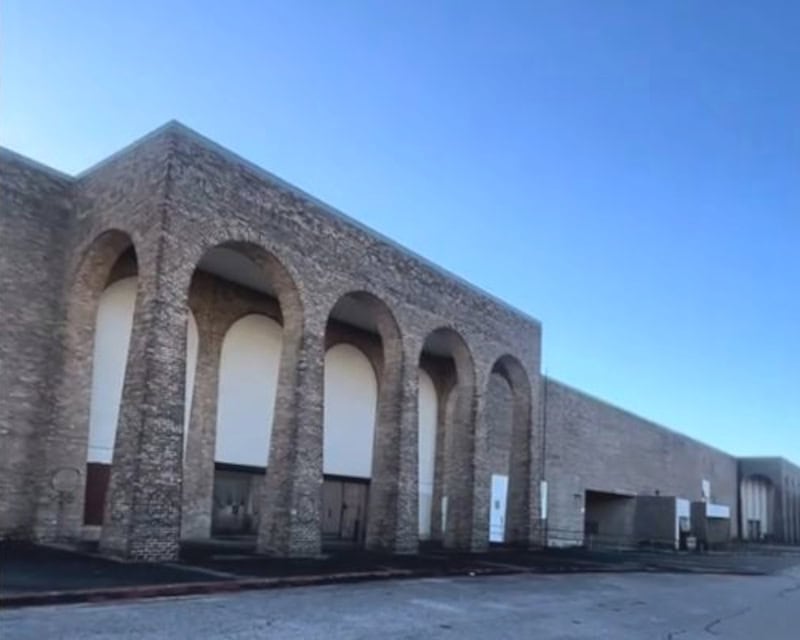
Northwest Mall
Shopping mall in Houston, TX
Address: 9500 Hempstead Road, Houston, TX 77092
Opened: October 24, 1968
Closed: March 31, 2017
Developer: The Rouse Company
Owner: Levcor, Inc.
Floor area: 794,092 sq ft