
Spokane Valley became known for apple orchards because irrigation turned dry land into productive orchard ground, railroads made commercial shipping viable, and developers sold the region as prime fruit country.
From the early 1900s through the 1920s, the Valley ranked among Washington's major apple-producing districts, with orchard-lined roads and an economy built entirely around the fruit.
Irrigation infrastructure: Water delivery systems transformed semi-arid land into commercially viable orchard property, making large-scale apple growing possible.
Land development model: Real estate and irrigation companies sold small orchard tracts to settlers, planting trees and marketing apples as a path to prosperity.
Railroad access: Rail connections to distant markets made commercial apple shipping practical and allowed the Valley to compete as a major fruit district.
Apple Way corridor: The main road through the Valley was named for the orchards lining it for miles, publicly defining the region's identity.
Production scale: Over a million apple trees on 12,000 acres put Spokane Valley among Washington's largest apple-growing areas during the industry's peak years.
Public promotion: The National Apple Show, held in Spokane from 1908 to 1917, reinforced the Valley's reputation as a regional fruit center.
Otis Orchards community: A named settlement built its entire identity around fruit growing, preserving the apple legacy in the landscape itself.
How Irrigation Turned Spokane Valley Into Orchard Country
The Spokane Valley sits in a broad, gravelly river valley between Spokane and the Idaho border.
The soil and climate could support fruit trees, but reliable water delivery was the deciding factor.
Beginning in the 1890s, irrigation projects redirected water from the Spokane River and nearby lakes through ditches, flumes, canals, and pumping systems.
The most important of these was the Corbin Ditch, a 54-mile system carrying water from the Post Falls area to Valley farms and orchards.
Without controlled delivery, the land was difficult to cultivate commercially.
Once irrigation companies could promise water rights and distribution, dry acreage became marketable orchard property.
The orchards were not planted simply because people liked apples - they were central to a land-development strategy that turned open ground into small farms and sold settlers a path to income.
The Orchard Tract Development Model That Sold the Valley
The apple boom was also a real estate boom. Irrigation companies and land developers cleared land, planted apple trees, and sold five-acre and ten-acre orchard tracts to buyers.
New apple trees took years to become productive, so developers promised to cultivate trees until they reached bearing age, giving buyers time to establish themselves.
While trees matured, settlers planted alfalfa, vegetables, berries, melons, potatoes, onions, tomatoes, and cauliflower between the rows.
These truck crops generated income during the waiting period. Apples remained the prestige crop and the one most associated with the Valley's boom years.
The model was risky in practice, but the story it told - irrigated land, managed orchards, future prosperity - made Spokane Valley famous as fruit country before a single large harvest had been taken.
Railroad Access That Made Commercial Apple Shipping Possible
Apples are perishable, bulky, and heavy. A successful orchard district needed a way to move fruit efficiently to packing houses, cold-storage warehouses, and distant markets.
The Northern Pacific line passed through the Valley in the early 1880s, and other rail lines followed. Electric rail service linked Valley communities with Spokane and Liberty Lake.
Communities, including Otis Orchards and East Farms, grew directly around rail access, irrigation availability, and orchard promotion.
Packing houses and warehouses developed near rail lines because fruit had to be sorted, packed, stored, and shipped without delay.
Rail connections also made it easier for land speculators to sell orchard tracts to buyers arriving by train.
Without railroads, the Valley could have had local farms. With them, it became a commercial apple district.
Apple Way: The Road That Named the Valley's Identity
The main road from Spokane toward Coeur d'Alene was known as Apple Way - later written as Appleway - because apple trees lined it for mile after mile.
Orchards stretched along the entire route, and in spring, the Valley became known for long views of apple blossoms. The name reflected what travelers actually saw.
In May, sightseers came specifically to look over the Valley from higher ground and take in the expanse of blossoms.
The road eventually became part of the modern Sprague Avenue corridor.
Appleway survives in local place names, including Appleway Boulevard and Appleway Trail, a recreational path built along the old Milwaukee Railroad right-of-way, with its first section completed in 2015.
Even where orchards are gone, the name keeps the older landscape visible.
The Scale of Apple Production That Defined a Region
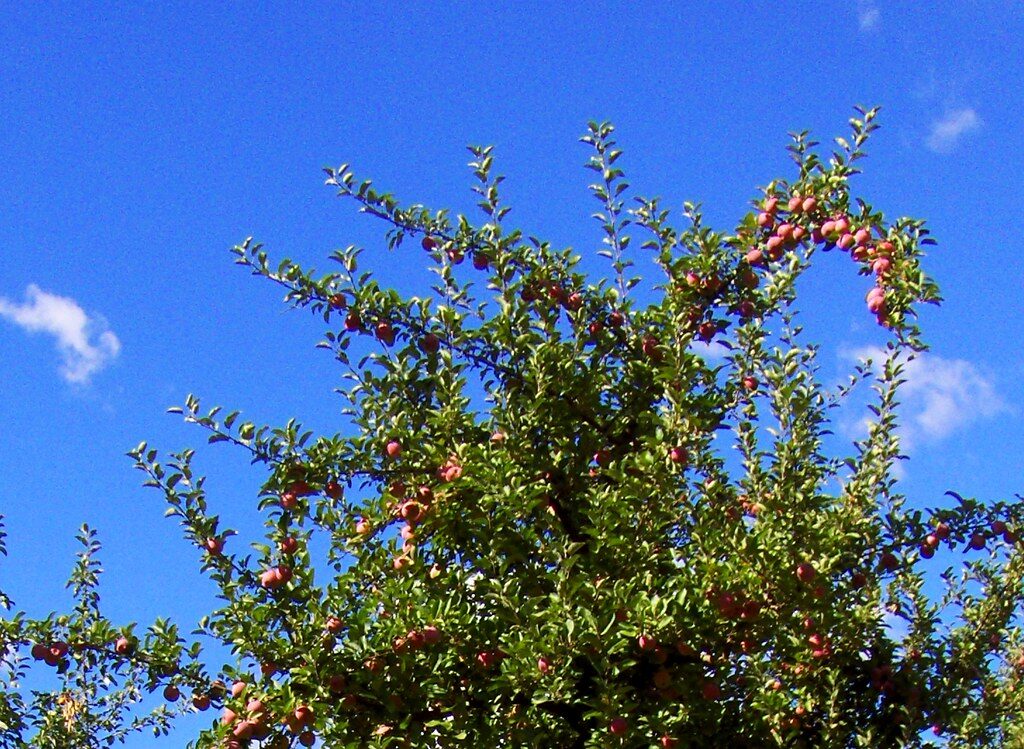
By the early 1920s, Spokane Valley held more than a million apple trees.
One horticultural count recorded approximately 1.1 million trees on 12,000 acres; another historical figure puts the number above 1.6 million trees by 1922.
The Valley ranked among Washington's largest apple-producing areas, surpassed only by the Wenatchee-Yakima region.
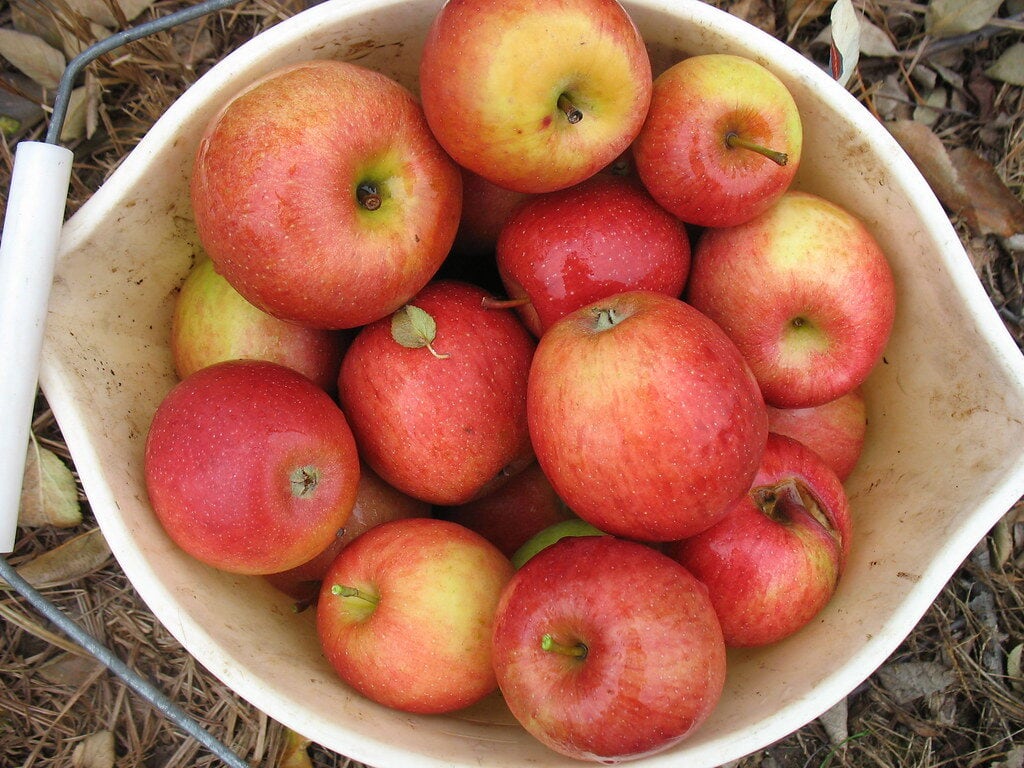
Main varieties included Jonathan, Wagner, Rome Beauty, Yellow Newton, Winter Snow, Delicious, Red June, and Winter Banana.
Packing houses and cold-storage warehouses along rail lines processed and shipped the crop.
In Opportunity, a large apple-packing shed stood near the Spokane and Inland Empire Railroad tracks at 108 S. Union Road, one of several major packing operations from that period.
The apple economy meant land sales, irrigation systems, seasonal harvest labor, branded box labels, and town development - not just rows of trees.
How the National Apple Show Put Spokane on the Fruit Map
From 1908 to 1917, Spokane hosted the National Apple Show, a major agricultural exhibition and marketing event. Some years drew extremely large crowds, with displays involving enormous quantities of apples.
Spokane promoted itself as a major fruit center and apple-distribution hub, and the show gave growers a public platform.
The Valley also held local apple shows. In 1923, the Spokane Valley Chamber of Commerce organized what was described as its largest Valley Apple Show to date.
By then, however, the industry was already under pressure from competition and falling prices.
The shows demonstrate the confidence of the apple boom. Apples were not simply a crop - they were a civic brand.
Otis Orchards: A Community Built Around the Apple Industry
Otis Orchards began as a railroad stop called Otis. The name Otis Orchards came into use as the area was promoted for fruit growing, and the post office officially adopted the name in 1912.
Irrigation water reached the area through a canal from Newman Lake and through the Corbin system. Apple is growing shaped work schedules, school calendars, and community life.
In the 1930s, thinners earned roughly 25 to 45 cents per hour; box makers averaged about 65 cents per hour.
During harvest, schoolchildren were released for approximately three weeks to help with picking.
The Otis Orchards Apple Company used the "Double O" label, one of the old apple box brands associated with the area. Native workers also participated in the harvest and worked in nearby bean fields.
Other Factors That Shaped the Valley's Apple Reputation
Several forces reinforced the apple identity without fitting neatly into the main reasons. A severe frost in November 1955 eliminated more than 80 percent of the Valley's apple trees in a single cold spell.
An apple leaf roller infestation earlier in the century had already damaged a significant portion of Spokane-area orchards.
Residential and commercial development in the 1960s and 1970s replaced much of what remained.
By then, the Wenatchee and Yakima districts had become the center of Washington's commercial apple industry, producing bright, polished varieties that dominated the market.
Small surviving orchards continued producing fruit long after the commercial era faded - one old South Best Road orchard of less than two acres still held roughly 150 aging trees capable of yielding several tons of apples in a good year.
Spokane Valley's apple-orchard reputation is grounded in a specific historical period when irrigation infrastructure, real estate development, rail access, and large-scale planting turned the Valley into one of Washington's major fruit districts.
The evidence is layered into road names, community names, packing-house sites, irrigation remnants, and the memory of more than a million apple trees lining a road once known simply as Apple Way.
Independent Publisher Notice
BestAttractions is an independent editorial publisher. We are not affiliated with, endorsed by, or acting on behalf of any location, business, property owner, manager, government agency, or organization described in this article. Comments posted on this page are not forwarded to, reviewed by, or acted upon by any entity mentioned in the article. For official inquiries, complaints, applications, bookings, or other requests, please contact the relevant entity directly through its official website or other verified channels.