
South Hill Mall was built to be a department-store destination. That was the logic behind the site, the anchors, the T-shaped corridors, the parking fields. By the mid-2020s, only one of its department stores was left.
The mall opened in Puyallup, Washington, in 1988, developed by an Ohio company that Target had recruited to build shopping centers in the Pacific Northwest.
Within three years, it was expanding. Within two decades, it was replacing anchors faster than it was adding them. Mervyn's closed. Gottschalks closed. Sears closed. Macy's, which had arrived as The Bon Marche, closed in March 2025.
Those closures left behind boxes that found different answers: JCPenney, Dick's Sporting Goods, Round1 Bowling, New Level 360 Sports Complex, Goldfish Swim School, Discount Collection.
The mall that was supposed to run on department stores is still running. The department stores are mostly not part of that story anymore.
South Hill Mall and the Retail Frontier That Built It
The commercial district along South Meridian in Puyallup did not look like much before 1988.
South Hill had been farming and residential land for most of its history, with retail slowly migrating south from downtown Puyallup as suburban neighborhoods spread across the plateau.
Willows Shopping Center opened near 112th and Meridian in the early 1970s and marked an early shift.
But there was no full regional-mall draw, no department-store-anchored enclosed mall, nothing comparable to pull shoppers from across Pierce County to this stretch of arterial road.
That changed when Target asked the Cafaro Company, a Youngstown, Ohio-based mall developer, to build shopping centers in the Pacific Northwest.
Cafaro opened a West Coast office in Washington state in 1987 and broke ground on South Hill Mall at the junction of State Route 512 and Meridian in October of that year.
SR-512 connected South Hill westward toward Tacoma and Interstate 5, and Meridian was the north-south spine of the fast-growing South Hill corridor.
The project was sized as a regional mall from the start, designed to draw from a trade area covering much of eastern and southern Pierce County.
Construction ran from late 1987 into 1988. The first retailers opened in July 1988, with a broader opening in the fall of that year.
Opening Day and the Mall That South Hill Had Been Waiting For
South Hill Mall held its formal grand opening on May 12, 1989.
The mall had been operating in stages for several months before that, since the previous summer, and shoppers from across South Hill had already formed early impressions of the place.
Its original anchors were Target, Mervyn's, and Lamonts, with specialty retailers, restaurants, and services filling the interior corridors between them.
At opening, the mall was approximately 500,000 square feet: a single-level enclosed center with large surface parking and interior corridors connecting the three anchors.
Target served as the general-merchandise anchor. Mervyn's and Lamonts provided department-store shopping for apparel and household goods.
Among the early food tenants, Old Country Buffet quickly became one of the strongest-performing locations in its chain.
Traffic and sales turned strong almost immediately. By 1991, barely three years in, customer volume had risen sharply enough that Cafaro was moving toward a major expansion.
Target was performing among the best stores in its district. South Hill had been underserved as a retail destination, and the mall had filled a gap that a large suburban population had been generating for years.
Shoppers were coming not just from South Hill neighborhoods but from communities across southeast Pierce County. Three anchors and 500,000 square feet were not going to be enough.
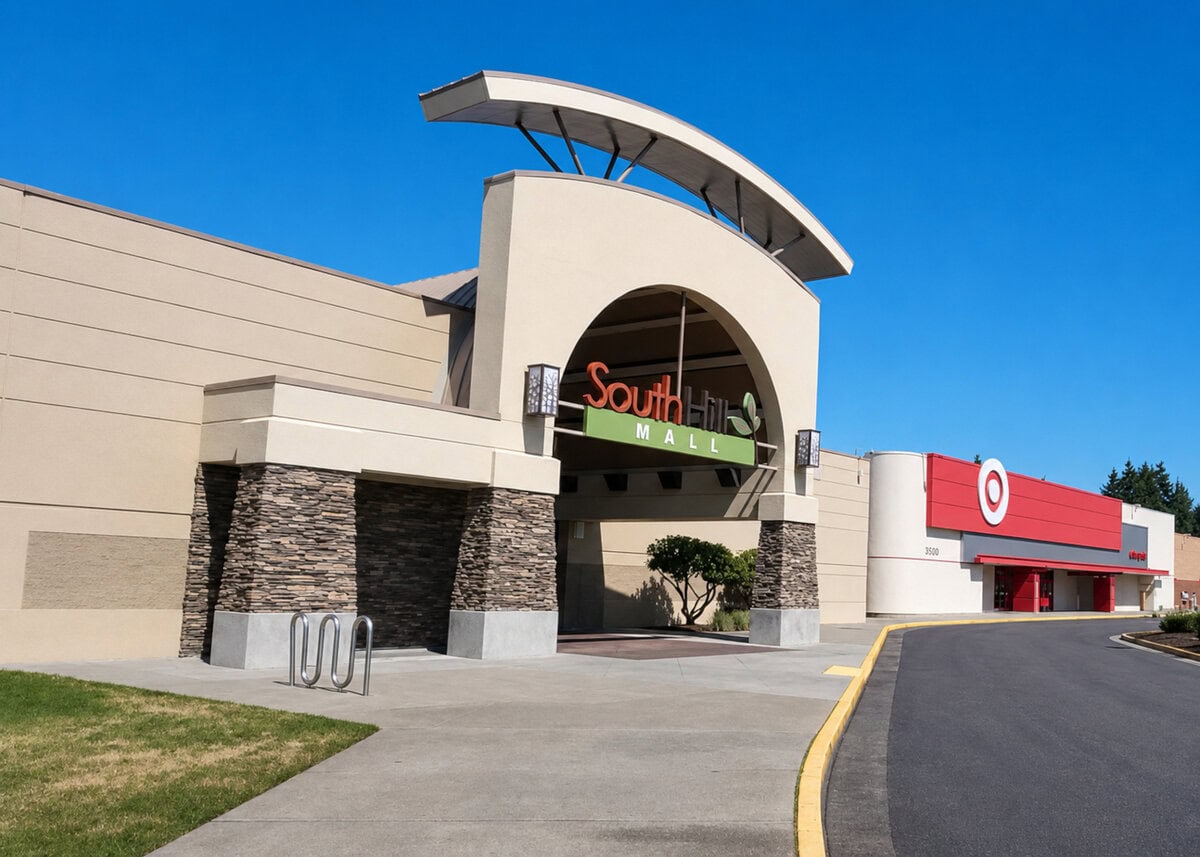
South Hill Mall's Expansion Into a Full Regional Center
In July 1991, Cafaro announced a $50 million expansion that would nearly double the mall's size.
The plan added Sears and JCPenney as department-store anchors, with The Bon Marche also under consideration, and added more than 400,000 square feet of new retail space.
Clearing and grading began behind the existing mall near 98th Avenue East. Part of the expansion area sat in unincorporated Pierce County that Puyallup expected to annex, which tied the project to local permitting.
The expansion reshaped the mall into a T-plan and made it a full regional center. JCPenney and Sears became central anchors.
The Bon Marche joined as the third major department-store addition. Together they put five department stores under one roof, where there had been two.
Act III opened a six-screen theater at the mall on August 30, 1996. The theater later operated under Regal.
Beyond the mall's walls, the expansion accelerated commercial development along Meridian and 39th Avenue SW.
Big-box stores, restaurants, and service businesses clustered around the mall as South Hill became one of the region's primary commercial destinations.
Don DeSalvo was Cafaro's director of West Coast development during this period, and Herb Brooks served as the mall's general manager.
The expansion they oversaw transformed a newer suburban center into a property that would define South Hill's commercial geography for the next two decades.
The Department-Store Era and Its Gradual Unraveling
The 1990s were the high-water mark for South Hill Mall as a traditional department-store destination. JCPenney, Sears, The Bon Marche, Mervyn's, and Lamonts all operated there at the same time.
That lineup reflected a retail model that would prove fragile once national chains began consolidating, contracting, and collapsing.
The unraveling took about twenty years.
Lamonts became Gottschalks in 2000. The Bon Marche began dual branding as Bon-Macy's in 2003 and became Macy's outright in 2005 as Federated Department Stores merged its regional names under a single national brand.
Gottschalks closed the South Hill Mall store in the mid-2000s, and the space was divided between Circuit City and Linens 'n Things, two chains that did not survive the decade.
Mervyn's closed in 2006 when the chain exited Washington entirely.
The former space became part of an unusual JCPenney arrangement: the chain moved its women's departments into the former Mervyn's location while keeping its other departments in its existing anchor space, splitting itself across two storefronts.
Spaces were getting harder to fill with traditional tenants, and workarounds like this one were starting to appear.
By 2009, Cafaro undertook a multimillion-dollar renovation starting with the food court, updating the mall's interiors after years of anchor churn.
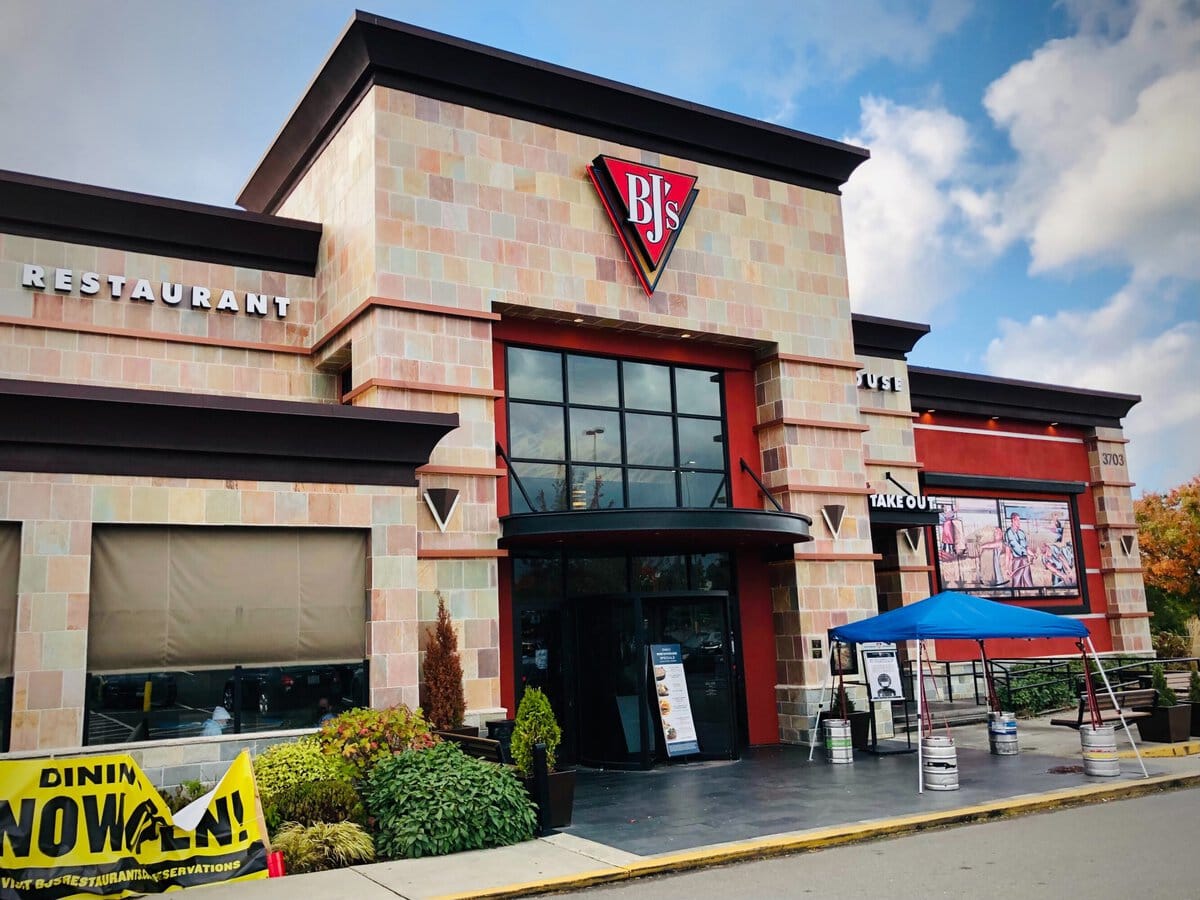
Dick's Sporting Goods and the Pivot Toward Big-Box Retail
Dick's Sporting Goods opened at South Hill Mall in April 2010, taking over the spaces once occupied by Circuit City and Linens 'n Things.
It was Dick's first store in Washington state, coming to a mall that had been dealing with empty main stores for several years.
The opening brought a big sporting goods store into a spot that had seen two national chains close before.
The arrival of Dick's was part of a national pattern. Specialty big-box retailers and off-price apparel outlets were increasingly filling the space that traditional department stores had vacated.
They brought consistent traffic and required less management infrastructure. For a mall that had already lost Lamonts, Mervyn's, and Gottschalks, adding a well-performing big-box tenant was a practical improvement.
The 2009 food court renovation and the Dick's opening in 2010 arrived at a moment when the mall's identity was changing.
The department-store cluster that had defined it through the 1990s was thinning.
Sears and Macy's still anchored the mall, and JCPenney continued from its split-store arrangement, but the tenant mix was broadening toward sporting goods, value retail, services, and entertainment.
Bath & Body Works, Old Navy, H&M, and DSW were part of that shift.
The mall was still fully enclosed and operating as a conventional regional center, but its category composition had moved away from the 1990s department-store model.
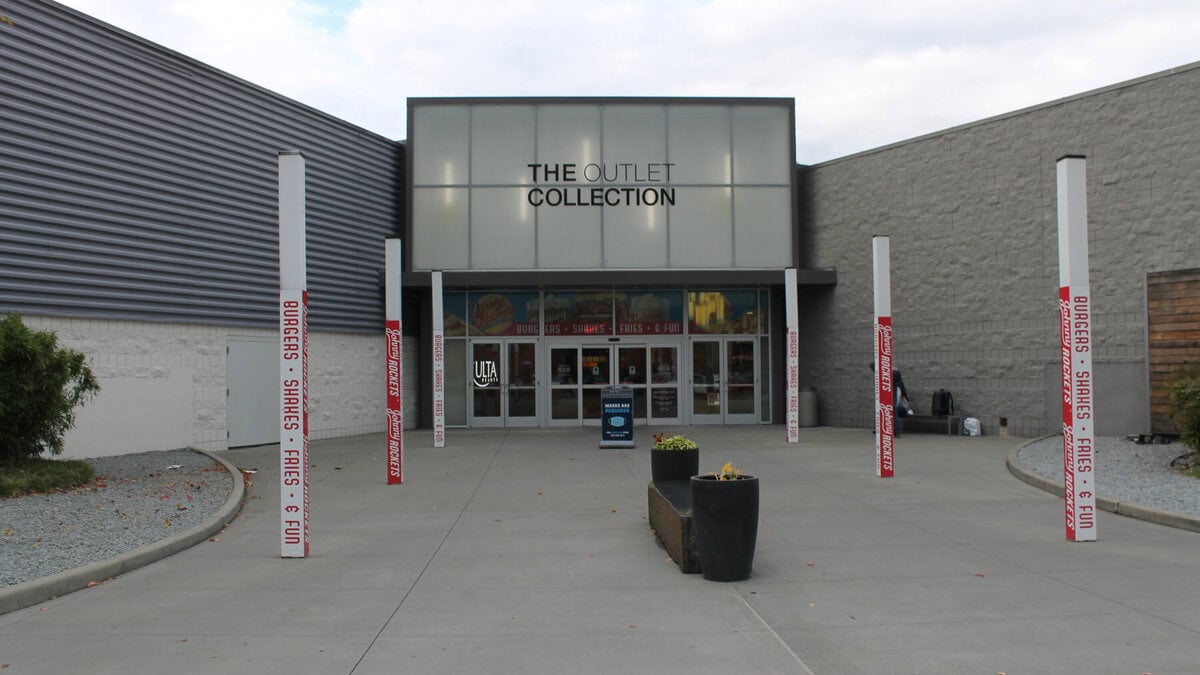
Sears Closes and the Remaking of a Massive Anchor Space
Sears filed for Chapter 11 bankruptcy in October 2018 and listed its South Hill Mall store among locations scheduled to close.
The liquidation ran through the end of 2018. What it left was one of the largest single anchor spaces in the mall, dating to the early-to-mid 1990s expansion.
Empty anchor spaces are the central problem of the post-department-store mall era.
They are too large for most specialty retailers and too prominent to remain dark. Cafaro subdivided the space into entertainment, athletics, and instructional uses.
Round1 Bowling & Arcade moved in. New Level 360 Sports Complex took nearly 36,000 square feet, building out a youth athletic training space with a full baseball infield, batting cages, a gym, and coaching areas.
Goldfish Swim School occupied another portion.
That combination replaced a department store that had sold appliances, tools, tires, and clothing. The physical transformation required specialized flooring, pool infrastructure, and sports equipment.
The space still needed to draw people regularly, and the new tenants did, even if the people coming were youth sports families rather than appliance shoppers.
JCPenney filed for bankruptcy in 2020, but its South Hill Mall location continued to operate. Rue21 closed its store in 2024 after the chain entered bankruptcy and shut all U.S. locations.
Macy's Closes and the Quick Backfill That Followed
Macy's included its South Hill Mall store on a January 2025 list of 66 closures under a plan the company called its "Bold New Chapter." The South Hill Mall location was one of three Washington stores named, alongside Kitsap Mall and a Redmond furniture store.
Clearance sales began in January and ran roughly eight to twelve weeks. The store closed in March 2025.
The former Macy's space was 114,400 square feet across two stories on the west side of the mall.
It was the mall's last traditional legacy anchor from the original Bon Marche line, and its closure ended a tenure stretching back to the early-to-mid 1990s expansion.
Discount Collection was announced as the replacement tenant, scheduled to open June 1, 2025, in the full former Macy's footprint.
Barnes & Noble opened in September 2025 in more than 19,000 square feet near JCPenney and DSW, in the former Super Jump Party Zone space.
Other smaller openings surrounded the same period: an Xfinity by Comcast store near Target in 2025, then Pandora and MINISO near the Dick's Sporting Goods Court in spring 2026.
The pace of new openings in 2025 and early 2026 was faster than the years of anchor attrition that had preceded it.
Hotel, Food Hall, and What South Hill Mall Has Become
Homewood Suites by Hilton opened on the north side of the complex on August 19, 2025, in a five-story building across from Regal Cinemas.
The hotel has 109 units, suite kitchens, an indoor pool, and meeting space.
It gave the complex something it had never had: overnight guests and a direct connection to visitors using the Washington State Fairgrounds area.
The largest project still underway in spring 2026 is the South Hill Asian Center and Hong Kong Market in the former Toys R Us building at 3551 Ninth St., along 94th Avenue East.
The project divides more than 31,000 square feet between an international food supermarket and a food court with eight vendor spaces.
Five were confirmed as of March 2026: Asia XPress, Mr. Dim Sum, Natalie's Sugarcane and Dessert, Pho J, and an unnamed Korean-food vendor.
A summer 2026 opening was projected.
The mall that Cafaro opened in 1988 with three anchors in 500,000 square feet now occupies roughly 1.1 million square feet.
Its current tenants include Target, JCPenney, Dick's Sporting Goods, DSW, Old Navy, H&M, Round1, Regal, Barnes & Noble, Discount Collection, New Level 360, Goldfish Swim School, and a 109-unit hotel.
The department-store era is over. What replaced it is still drawing people to the intersection of SR-512 and Meridian.
Independent Publisher Notice
BestAttractions is an independent editorial publisher. We are not affiliated with, endorsed by, or acting on behalf of any location, business, property owner, manager, government agency, or organization described in this article. Comments posted on this page are not forwarded to, reviewed by, or acted upon by any entity mentioned in the article. For official inquiries, complaints, applications, bookings, or other requests, please contact the relevant entity directly through its official website or other verified channels.