
Kenilworth Lodge opens as Sebring maps a new town
George Eugene Sebring built Kenilworth Lodge in 1916 as the main hotel for the town he was planning in central Florida. Sebring came from a pottery manufacturing family in Ohio.
In 1887, he and his brothers founded the Sebring Brothers pottery company in East Liverpool, Ohio. In 1898, the brothers bought 2,000 acres in Mahoning County to expand.
By 1900, the operation had moved to a new factory town they created and named Sebring, Ohio.
By 1903, the business ran four plants: the Oliver China Works, the Sebring Pottery Company, the French China Works, and the China Works.
It employed about 1,200 workers.
It ran 24 ware kilns and 24 decorating kilns and was recognized as the largest pottery manufacturer in the United States.
In 1911, while fishing in central Florida, Sebring found a high area surrounded by lakes and pine trees. He bought thousands of acres.
In 1912, he started planning a new town with a circular center and streets that spread out like spokes. This design was inspired by Heliopolis, the ancient "city of the sun."
The State of Florida chartered the city in 1913. The design became known as the "City on the Circle." Kenilworth Lodge opened as the town's principal place for visitors to stay.
Bonfoey & Elliott designed Kenilworth Lodge in 1916
George Eugene Sebring hired the Tampa firm Bonfoey & Elliott to design Kenilworth Lodge. The partnership of B. Clayton Bonfoey and M. Leo Elliott was formally established in 1907.
The firm's work in Florida included major civic buildings such as Centro Asturiano de Tampa and Tampa City Hall.
They designed the hotel in the Mediterranean Revival style.
The design used arched windows and openings, stuccoed exterior walls, wrought-iron detailing, and textured finishes associated with Moorish, Spanish Colonial, Mission, and Italian traditions.
The approach also fit Florida's building conditions and favored materials that reduced reliance on lumber.
Local contractor B. A. Cope constructed the building in 1916. The original form was a three-story central block with two short wings.
The hotel was built as a prominent structure in the new town and was intended to serve as its primary lodging for visitors.

1922 expansion, rooms, golf, and lakefront
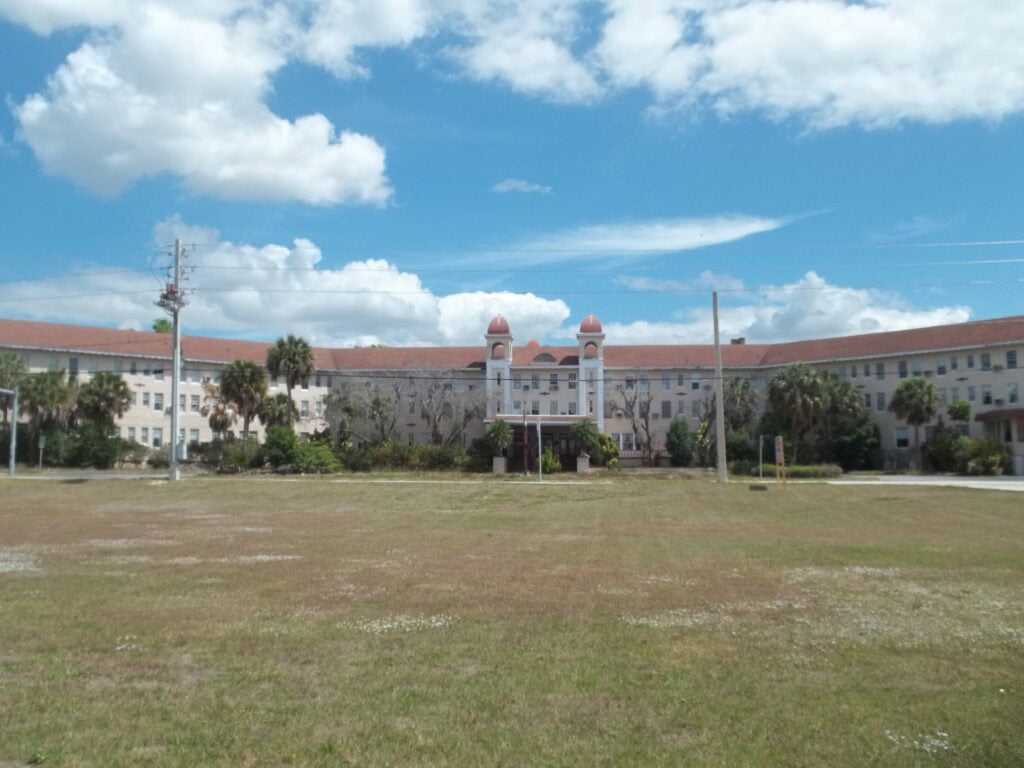
In 1922, Kenilworth Lodge was enlarged when its two wings were extended to their current lengths. The expansion gave the building the longer, balanced layout that defined its historic form.
With the additions, the hotel encompassed about 57,500 square feet and contained 82 rooms. It operated as more than a rooming house.
The lodge included a restaurant and retail and personal-service spaces, including a gift shop, a barbershop, and a beauty parlor, so guests could handle meals and routine needs without leaving the property.
The grounds were laid out as a resort setting. The lodge's amenities included an 18-hole championship golf course and an orange grove.
Terraced lawns stepped down toward a lakefront beach, using the site's ridge and water edge as part of the experience.
The lodge also offered modern building services for the period, including electricity, plumbing, and climate control.
The combination of lodging, on-site services, and outdoor amenities positioned the Kenilworth as Sebring's primary hotel for winter visitors and prospective settlers.
Boom-time buyers and the governors arrive
In 1923, George Eugene Sebring sold Kenilworth Lodge to a New York syndicate led by John Connelly, an experienced hotelier.
The sale came as Florida's 1920s land boom was building. New subdivisions were being laid out across the state, and lots were resold quickly.
In 1924, Florida approved a constitutional amendment prohibiting state income and inheritance taxes.
By December 1924, an estimated 20,000 people were arriving in Florida each day. Bank deposits increased, and property values rose.
In November 1924, Sebring hosted an annual convention of governors, and Kenilworth Lodge served as the main hotel for the gathering.
Accounts from the time described about twenty governors staying two days at the lodge, accompanied by Florida Governor Cary A. Hardee, who served from 1921 to 1925.
The event brought national attention to the inland town and placed the lodge at the center of its most visible week of the decade.
A million-dollar sale ends in a 1927 bankruptcy
In 1925, Kenilworth Lodge was sold for $1,000,000 to Vincent Hall and George Kline. Hall was a West Palm Beach real estate developer.
The pair moved to expand their holdings in Sebring. They also purchased the Nan-Ces-O-Wee Hotel and promoted plans for a large resort development called Lakewood Terrace.
During the same boom period, they backed the construction of Harder Hall on the shore of Little Lake Jackson. Harder Hall was a Spanish Colonial Revival hotel designed by architect William Manly King.
The project was tied to Biltmore interests and associated with Schultze & Weaver, the firm connected to the Biltmore Hotel in Coral Gables.
Harder Hall opened in January 1928 with a six-course dinner attended by more than 250 guests.
The expansion push did not last. In June 1927, Hall and Kline's corporation declared bankruptcy, and its properties were put up for auction.
Kenilworth Lodge was purchased by local businessman David Turtle. He operated the hotel through the Great Depression.
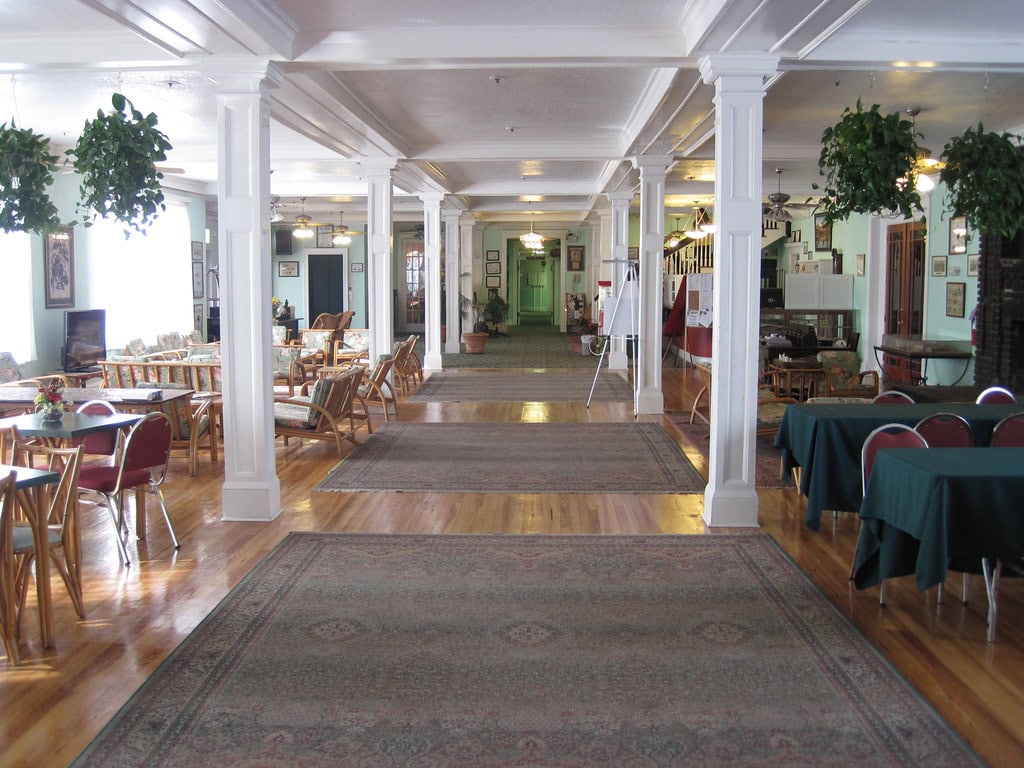
Cabaret addition and later motor inn changes
After World War II, a cabaret was added to the back side of Kenilworth Lodge's central block.
The building's original plan stayed in place, but the rear gained a dedicated entertainment space that changed how guests used the property at night.
In 1972, Thomas Wohl, a businessman from Hollywood, Florida, bought the property. During his ownership, parcels were sold off over time, including the golf course.
As the land was reduced, the lodge moved away from the earlier resort format that tied the hotel to its grounds.
In this period, it operated as Kenilworth Village Lodge & Motor Inn.
A restaurant was later built along the south wing and connected to the hotel by a walkway. The restaurant functioned as an attached component rather than part of the original building.
In 1995, the restaurant was sold, and the physical connections to the main hotel were sealed, leaving the restaurant separated from the lodge.
The hotel building remained, while the site around it continued to be broken into smaller pieces.
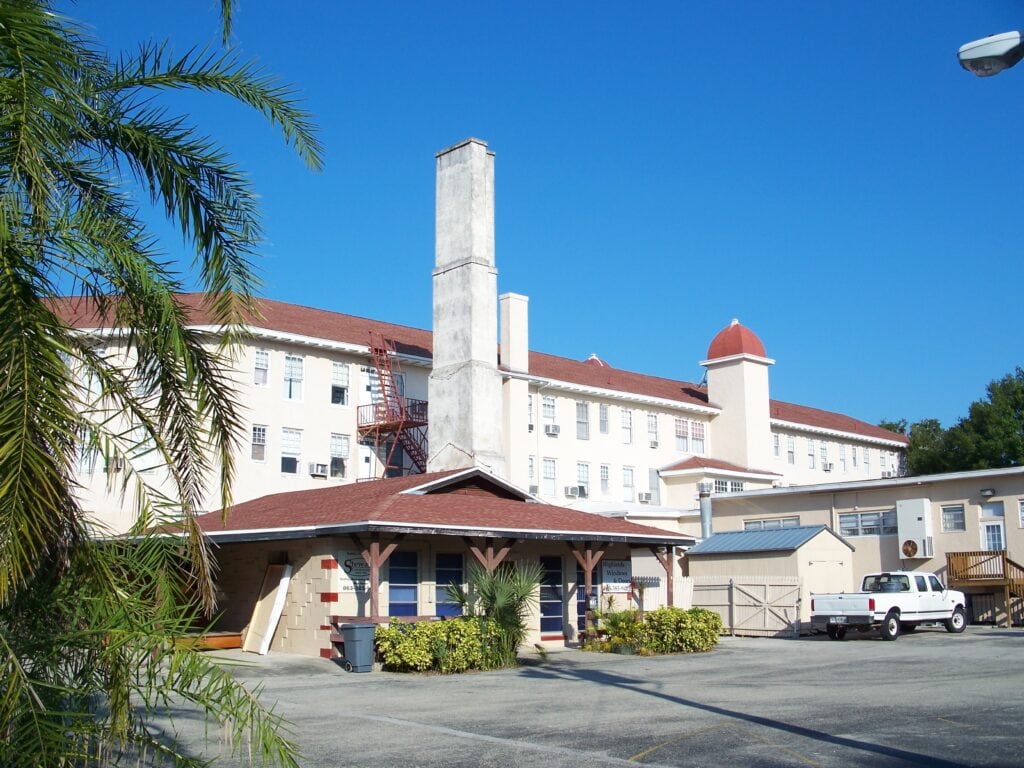
The Stewarts restore, then 2009 unravels it
Mark and Madge Stewart bought the Kenilworth in 1996 with a familiarity most owners never get. They had been employed by the Wohl family beginning in 1985, so the place was already part of their working lives.
Under their ownership, they began an ambitious project to restore and modernize the hotel into a viable contemporary hospitality business, trying to make an early 20th-century building compete in a late 20th-century market.
The effort ran into the 2009 Great Recession. Tourism softened, financing tightened, operating costs climbed, and the simple difficulty of rehabilitating an old structure became harder to carry.
The Stewarts sought investors. In 2009, Monier Rahall and Robert Mueller became involved, and the relationship later turned into a long dispute.
In a detailed complaint filed years later, Mark Stewart alleged Rahall self-dealt with the goal of obtaining full ownership, while Mueller breached fiduciary duties through mismanagement and corporate waste.
Stewart also alleged he was ejected from management and terminated.
In 2014, TD Bank sued over two loans it said were in default and sought foreclosure under two mortgage agreements.
The litigation stretched for years, consuming time the building did not have. The foreclosure cases were dismissed in 2024.
Kenilworth Lodge is condemned and remains closed
On May 10, 2016, a fire at Kenilworth Lodge prompted a follow-up city inspection on May 12, during which inspectors documented multiple fire-code violations, especially problems with the sprinkler system, as well as exit doors that would not open, malfunctioning emergency lights, and exposed wiring, among other issues.
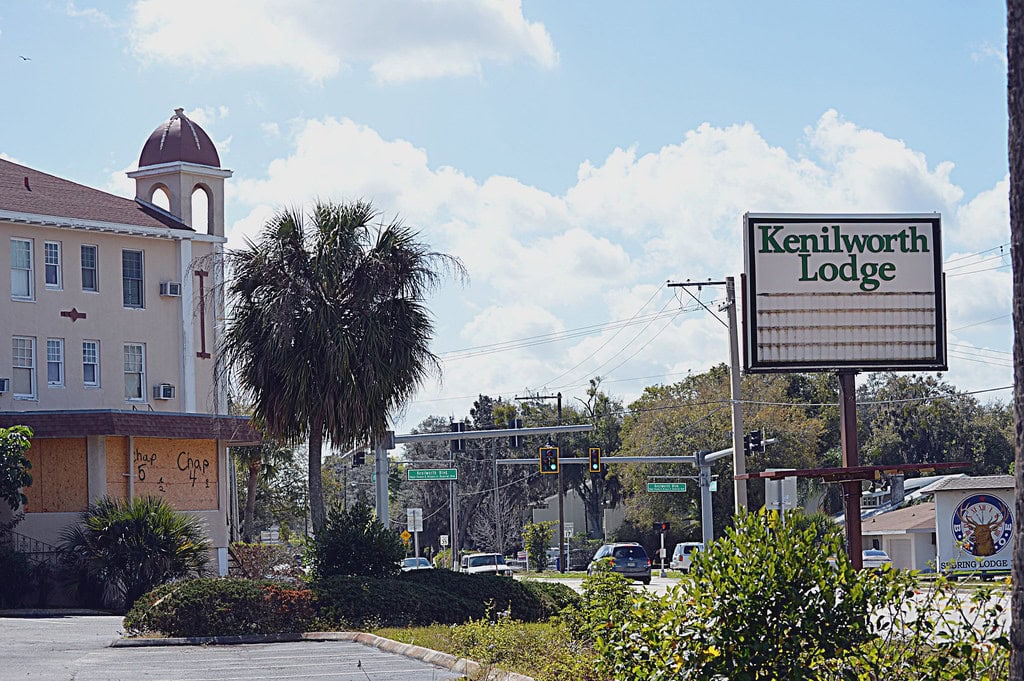
In August 2016, the City of Sebring condemned the hotel and declared it unfit for occupancy.
The building was boarded up. It had stayed closed since, and the condition continued to decline. Reports later described vandals getting inside and causing additional damage.
In June 2021, police arrested a 25-year-old man after a trespassing report and posted his mugshot online.
In August 2021, police issued another warning about increased trespassing at the lodge, including visits by people described as ghost hunters.
The attention was tied to local stories that George Parker, a former manager, died in the hotel during the 1950s.
Kenilworth Lodge was added to the National Register of Historic Places on June 15, 2000, and it remains listed in local and state historic inventories.
In April 2024, Sebring's Community Redevelopment Agency discussed a development incentive agenda item related to the lodge and heard Monier Rahall describe renovation efforts.
Ownership disputes and court cases into 2025
By 2024, Kenilworth Lodge was still closed.
A parcel record from February 2024 showed a quitclaim deed with a listed price of $713,000 and placed the hotel under the Kenilworth Lodge Trust, with Monier Rahall acting as trustee.
The dispute moved through the Highlands County court system through 2024 and into 2025.
The arguments centered on control of the hotel and responsibility for decisions made during the long shutdown.
In October 2025, part of the case was dismissed, but a second, related lawsuit continued.
At the site itself, activity was limited. In 2024, crews began cleaning up the structure, removing debris, and painting over graffiti left by trespassers.
The grounds were also cleaned up and landscaped, and new signs identifying the building as a historic property were installed.
The goal is to restore the lodge as a luxury resort, with plans focused on preserving and restoring its historic elements rather than gutting it into a modern hotel, but as of 2025, the project had no set completion date.
The building likely stayed closed. Reopening will depend on resolving ownership issues, getting funding, and finishing the work needed to meet current codes.

I would so love to see the Kenilworth reopen. my husband and I have fond memories there. a beautiful place for sure.
Your comment is touching. The reopening of the Kenilworth Lodge would surely resonate with many others who share your nostalgia.