
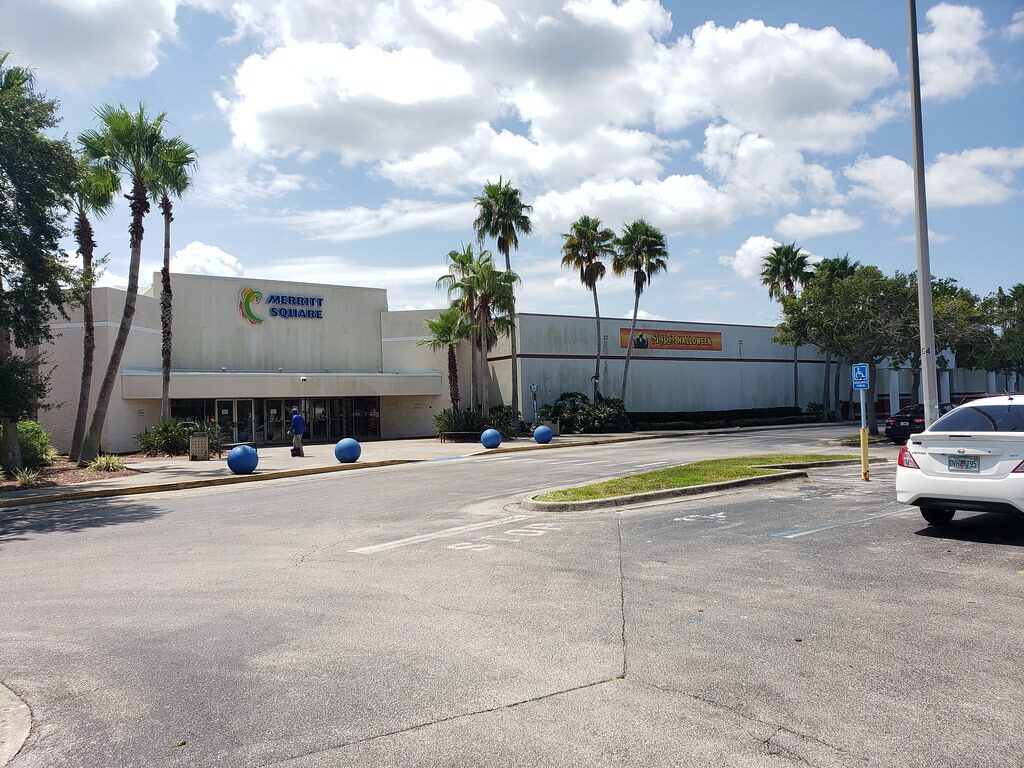
When Merritt Square Mall opened in 1970, it was Brevard County's biggest new retail bet.
It was an air-conditioned box on filled marsh at 777 East Merritt Island Causeway that would grow to 70 stores, shops, and businesses.
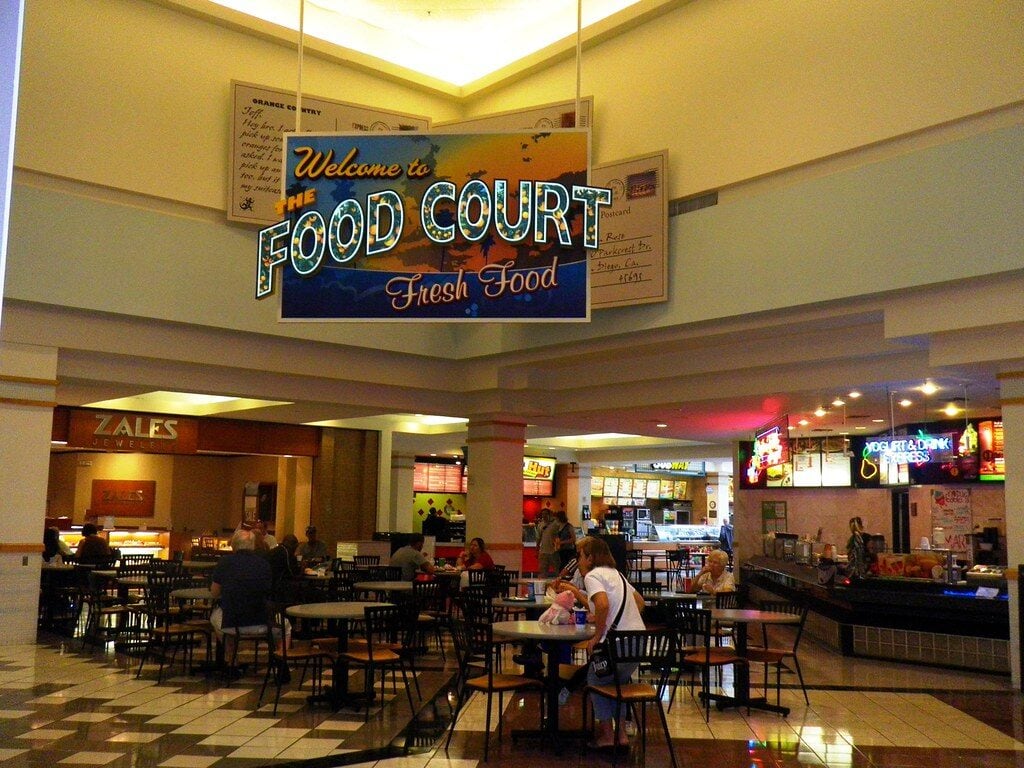
It had its own power plant, a 20-foot waterfall in the middle, three department stores, and a cafeteria with a 375-seat dining room.
Anchors came and went. Jordan Marsh became Burdines, which became Macy's. Ivey's became Dillard's.
Sears arrived in 1989 and closed in 2021. The cinema went from six screens to 16.
The mall sold for $64.4 million in 2005 and half that in 2016.
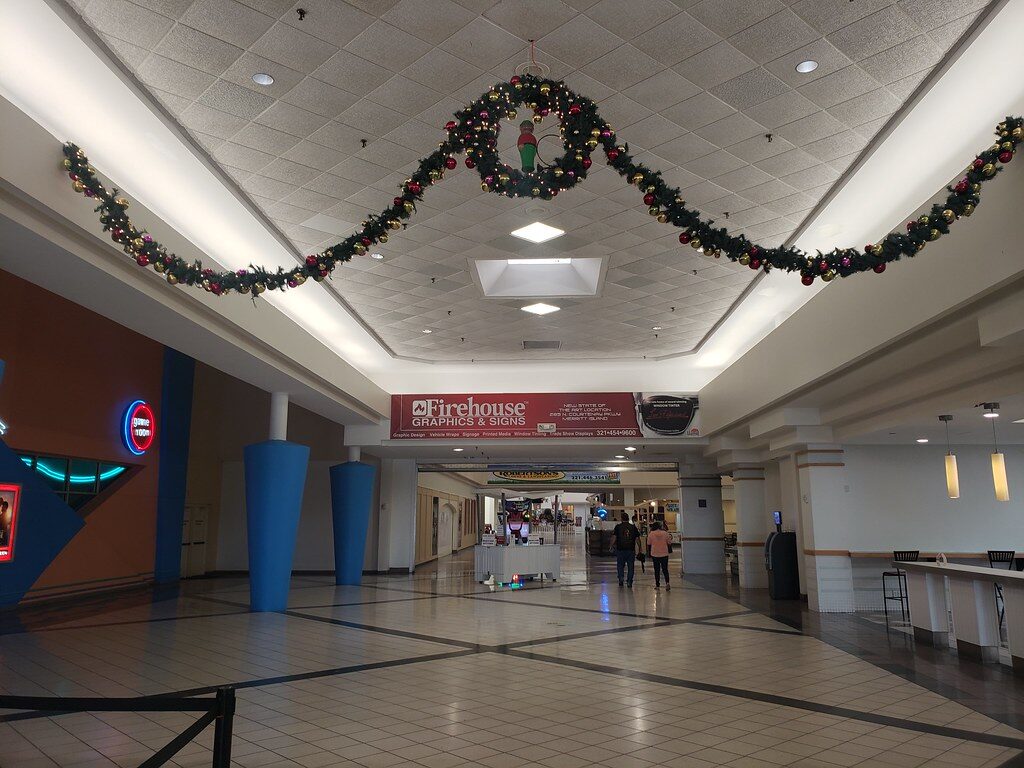
Now planners pitch apartments and an outdoor district, a hospital rises across the road, and the 1970 mall is still deciding what it is.
Merritt Square Mall opened on a filled marsh in 1970
Before the doors opened in 1970, the developer had commissioned a 20-foot waterfall for the middle of the mall.
It weighed 2,000 pounds, sat in an elevated pool lined with Virginia black slate, and pushed 500 gallons of water through its pipes on a loop. Florida artist J.G. Taylor made it.
Maurice Alpert, the Jacksonville developer behind the project, wanted a work of art waiting for shoppers.
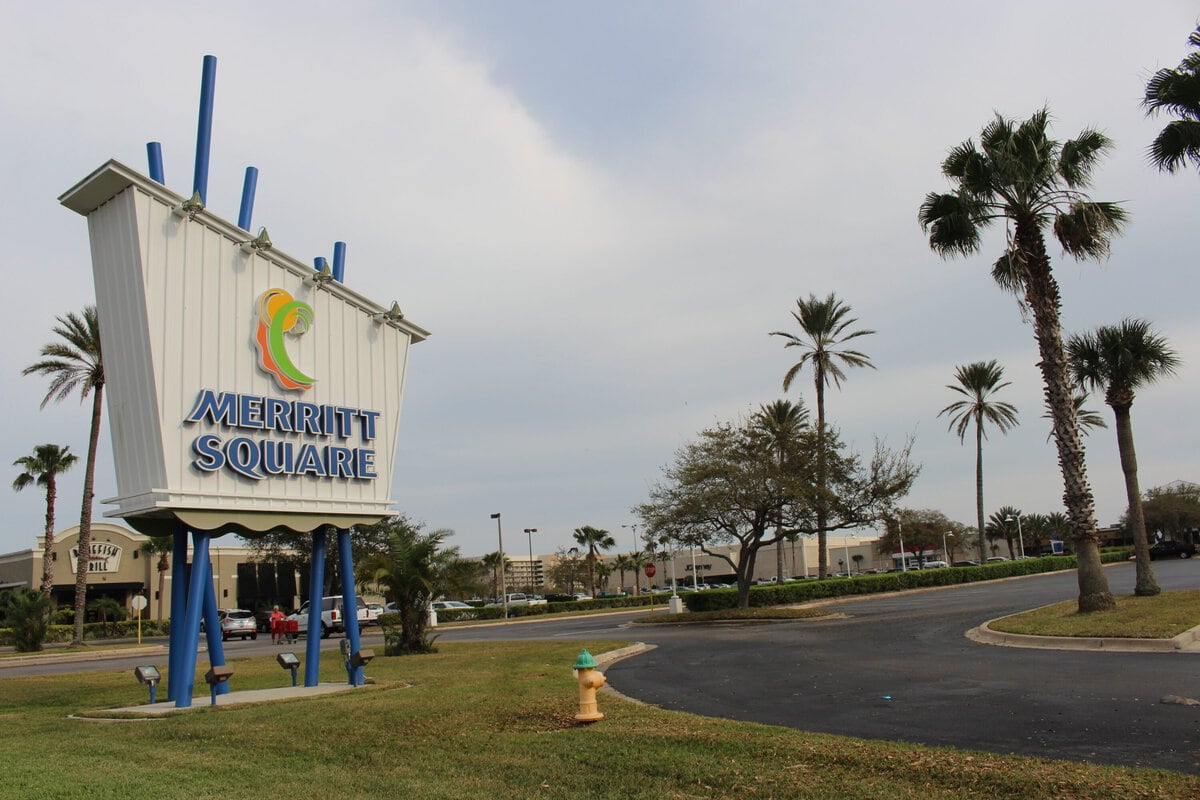
The waterfall sat inside Merritt Square Mall, at 777 East Merritt Island Causeway in Merritt Island, Brevard County, Florida.
It opened July 9, 1970, as one of Brevard County's big enclosed shopping malls, on the State Road 520 corridor that runs across the island between the mainland and the beaches.
The ground it stood on had been marsh.
Crews filled the low coastal site with dredged sand before construction, the usual method on Merritt Island then.
On top of that fill went more than 810,000 square feet of air-conditioned mall: parking for 2,600 cars, a cafeteria, a six-screen cinema, and eventually 70 stores, shops, and businesses.
This was the Space Coast in 1970, growing fast on Kennedy Space Center work.
The mall was built big on purpose, a single indoor place to pull shoppers from across central Brevard.
And it was built so it wouldn't have to trust the power grid.
Why Merritt Square Mall ran its own power plant
The mall made its own electricity.
Gas-fueled generator sets fed the building, and a control room kept staff on them around the clock.
By 2001, the plant had grown to seven Waukesha generator sets and 5.8 megawatts of capacity, enough to carry the mall's full load with at least one engine held in reserve.
The smart part was the heat.
Waste heat off the generators ran absorption chillers that made chilled water for the air-conditioning, one of the big costs of running an enclosed building in Florida.
A 550-ton Trane absorption chiller went in in 1986, and a Trane Horizon absorption chiller followed in 2000. The reason was practical.
When the mall was planned, getting enough bulk electricity to a developing island corridor was complicated, so the owners solved it themselves and kept the equipment current for decades.
A lot of the machinery came down to one Florida problem: keeping a big building cold.
What that building held was worth the trouble.
Jordan Marsh, Ivey's, and JCPenney anchored the early years
Three department stores anchored the mall's first year: Jordan Marsh, the Florida arm of a Boston chain; Ivey's; and JCPenney. McCrory's took space too.
Piccadilly Cafeteria ran a 375-seat dining room that became one of the mall's steady meal spots.
For Merritt Island, Cocoa, Cocoa Beach, Cape Canaveral, and Rockledge, this was the indoor option.
Climate control mattered in Florida heat and afternoon rain, and the mall put shopping, a cafeteria meal, and a movie together on the main road between the mainland and the ocean.
Jordan Marsh and McCrory's opened that October.
The six-screen cinema, later run as AMC Merritt Square 6, joined the mall that fall.
Two of the three anchors would lose their names. JCPenney stayed JCPenney.
How the original anchors became Macy's and Dillard's
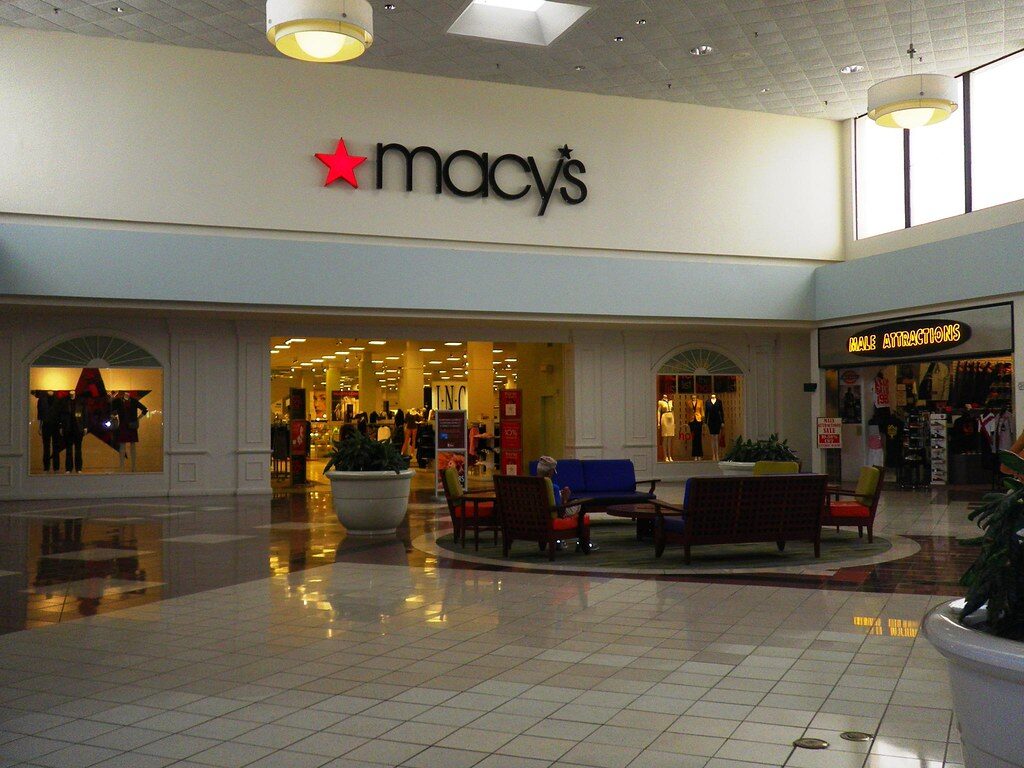
Jordan Marsh became Burdines in 1991, then Macy's in 2005, as the parent company folded its regional names into one. Ivey's turned into Dillard's.
JCPenney never changed, and at 141,500 square feet over two floors, it still holds the largest anchor space in the mall. The fourth anchor came later.
A mid-1980s renovation added 60,000 square feet of retail space, and Sears opened in 1989 after moving over from an older store in Rockledge.
Four department stores now pulled against each other, and Merritt Square sat at its strongest as central Brevard's main place to shop.
The lineage still shows in the floor plan.
Macy's runs 120,000 square feet on two levels, with a Backstage off-price section upstairs.
Dillard's holds 95,700 square feet on one level.
Owning that strength got expensive. The money tells the next part.
A $64.4 million mall that sold for half that price
The money told the story more plainly than the storefronts did.
John Hancock, the insurance company that owned the mall, sold it to Bayview Malls in December 2002 for $32.7 million.
Within three years, the price had nearly doubled: in 2005, Bayview sold it to Thor entities for $64.4 million.
Then it fell. Glimcher Realty Trust took over in 2007, treating it as 804,000 square feet of leasable space.
After a 2015 merger, it became part of WP Glimcher, and in 2016 the debt caught up.
A foreclosure judgment of $47.3 million was entered, and the property went to auction that May.
Nobody bid. The lender took it back in June 2016.
Later that year it sold for $33 million to Namdar Realty Group and Mason Asset Management, half what it had fetched 11 years earlier.
At that price, the mall was still 95.7 percent leased. Half the price, and nearly full.
Through all the ownership turnover, one part of the building kept reinventing itself to stay open.
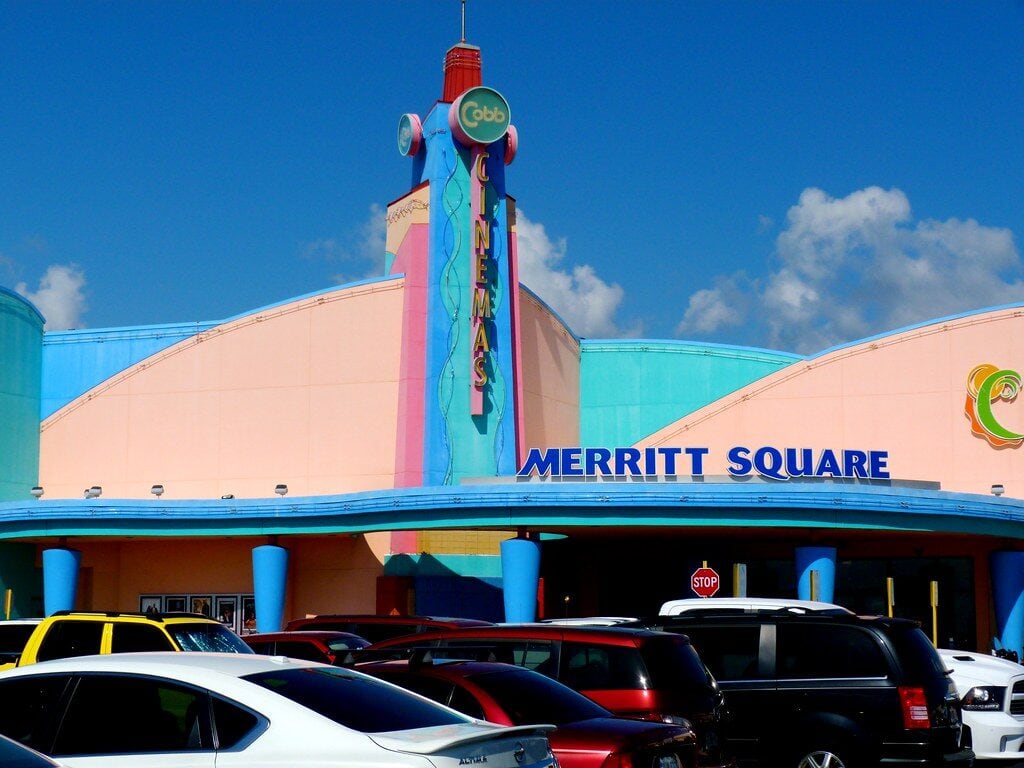
The cinema that kept reinventing itself
The movie theater outlasted almost everything.
The original six-screen theater opened in 1970 and lasted until the old site was cleared for Cobb's rebuild.
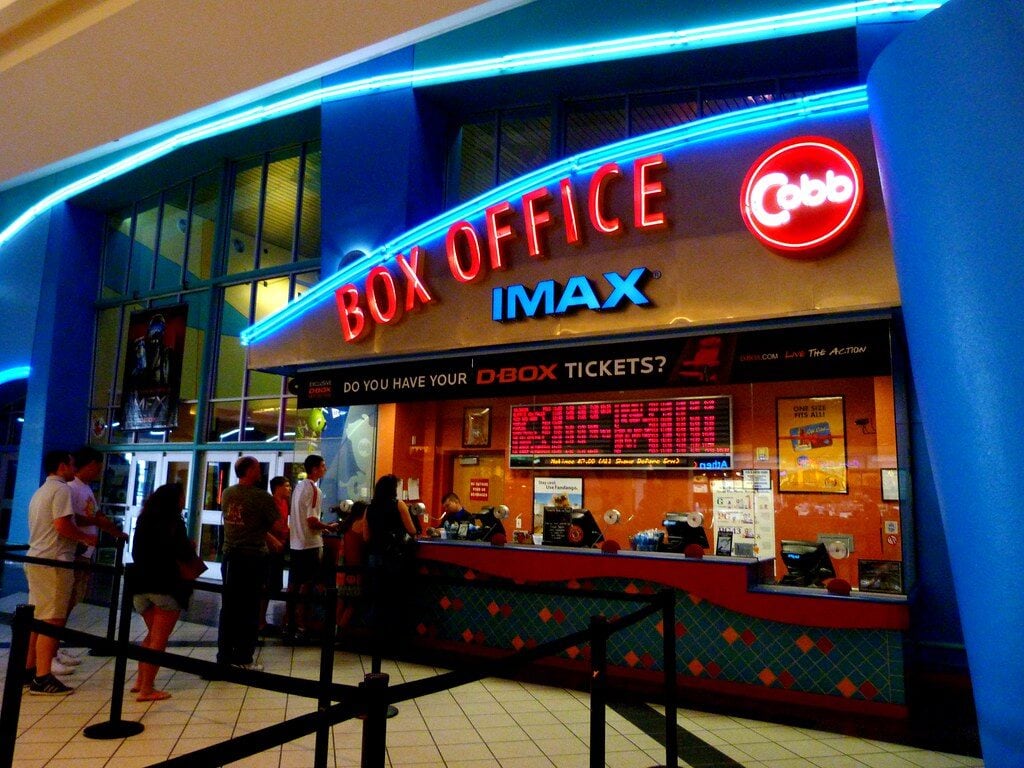
Then a 16-screen multiplex opened in 2004 on the old theater site, run by Cobb Theatres, with the stadium seating audiences wanted by then.
IMAX and D-Box motion seats went in by 2011.
The operators kept changing. CMX took over the Cobb screens in 2017, then closed the theater in January 2025.
Weeks later, GQT stepped in, and by March the lights had come back up under a new name: GQT Merritt Square 16 IMAX, 16 screens, 65,500 square feet.
Each handoff could have left a dark box at the end of the mall. None did.
That made the cinema the exception. Elsewhere, the empty spaces were adding up.
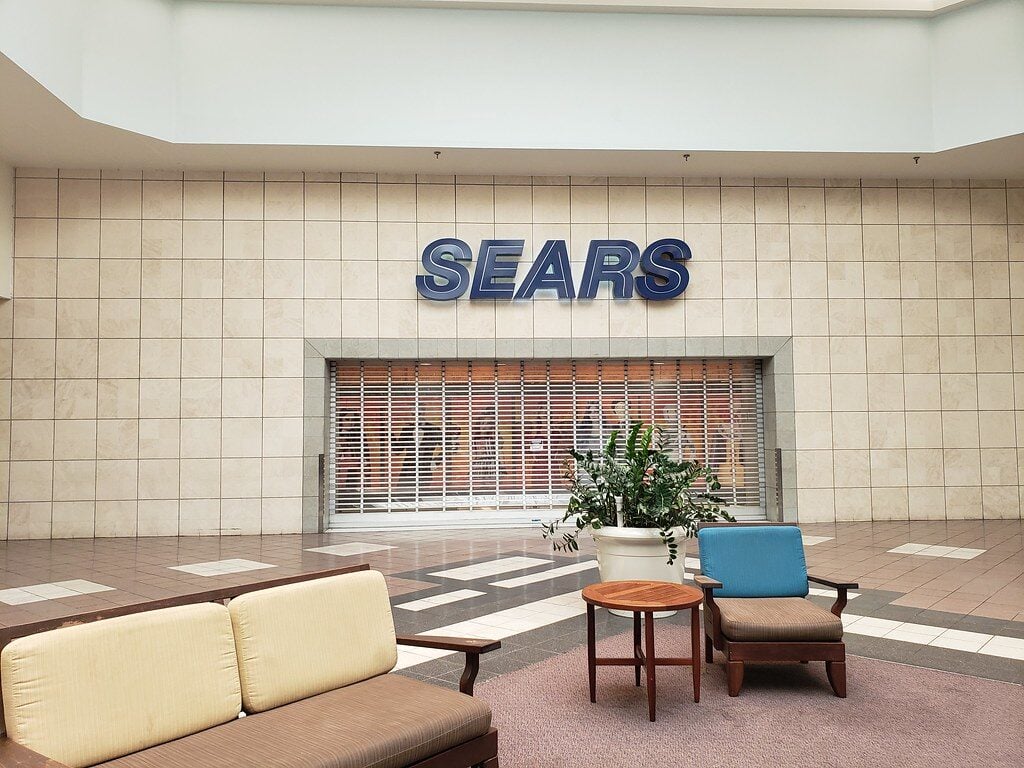
The empty Sears box nobody has refilled
Sears was the anchor nobody had replaced.
It opened in 1989 and closed in spring 2021, leaving 120,000 square feet of empty department store at one corner of the property.
On the current site plan, the box is marked as a separate parcel, "not owned," and redevelopment materials float it as a spot for apartments.
A traditional department store that size has few takers now.
It wasn't the only large space to turn over.
Department stores were closing nationwide, shoppers were buying online and at newer open-air centers like The Avenue Viera, and the format was aging.
Sports Authority moved in in 2013 and was gone by 2016 when the chain liquidated.
Ollie's Bargain Outlet, an off-price store, took that space in 2018 and still runs it at 29,200 square feet.
By 2026, the mall was marketing 104,300 square feet of available retail, from a 100-square-foot kiosk spot up to the 17,100-square-foot store Books-A-Million was leaving.
The list is a roll of former tenants: a Bath & Body Works, an Auntie Anne's, an AT&T, an old ice cream shop.
The mall stayed open, with plenty of room left to fill.
The most interesting construction nearby was happening across the street.
A hospital, an amphitheater, and the mall's next life
Across State Road 520, Health First broke ground in March 2024 on a new Cape Canaveral Hospital campus: a 268,000-square-foot hospital with 120 inpatient beds, six operating rooms, and a 92,000-square-foot medical office building, due to open in early 2027.
Nearby, the public amphitheater at Veterans Memorial Park opened in April 2026, with tiered lawn seating for 2,350 and room for more than 5,000, including adjacent park areas.
That activity changed the conversation around the mall site.
It sits on an 82-acre tract on State Road 520, the primary east-west road across the island, with 33,500 vehicles passing daily, in a corridor the local redevelopment agency has worked on since 1988.
In 2025, a consultant presented a concept for turning the property into an outdoor, mixed-use district with housing, shops, and new streets.
It's a concept, not an approved plan, and the agency doesn't own the mall.
For now, the mall is still a mall. Macy's, JCPenney, Dillard's, and Ollie's are open. GQT is showing movies.
People still pull off the causeway into the parking fields and walk in to shop the stores that are left.
Independent Publisher Notice
BestAttractions is an independent editorial publisher. We are not affiliated with, endorsed by, or acting on behalf of any location, business, property owner, manager, government agency, or organization described in this article. Comments posted on this page are not forwarded to, reviewed by, or acted upon by any entity mentioned in the article. For official inquiries, complaints, applications, bookings, or other requests, please contact the relevant entity directly through its official website or other verified channels.
I know a Big Wig Manager at Texas Roadhouse and there is/was talk of them
Opening in the Sears space.
Where that is now I don’t know but that would certainly be terrific for M.I
That would be fantastic! I haven't seen any updates about Texas Roadhouse moving into the Sears space, but I agree it would be a great addition.
I worked at Walgreens restaurant that was right in the main court yard the use to have all sorts of events there it was fantastic times working at the mall
Your time at the mall sounds memorable! It's stories like yours that keep the spirit of Merritt Square alive.
While reading this very well written article I couldn’t help but notice the ads for online shopping. Ironically, these companies are the real reason that the mall has become irrelevant.
You're right about the impact of online shopping. Still, there's nothing like the experience of walking through the mall.
Spencer, have you even been to this mall? Have you even drove by it? If so, have you noticed that the entire parking lot is empty? As in no customers. I was there a month or so ago and there was a damn Petting Zoo in there! A week later it was gone. Half of the place is Vacant. And if by some slim chance you actually went in Macy's or Dillard's. You would not have mentioned Customer Service! There is no such thing! The closest thing I saw was a lady Security Guard who didn't speak English?
So I'm thinking the Woke crowd will eventually just turn the place into a Homeless Camp.
Sorry to step on your dreams.
I share your concern about the mall's emptiness. But let's not write it off just yet. There could be new plans in store.
hi everyone my NAME is DAVE the COLORING ARTIST I could bring art work to help MERRITT island square mall just text me I could do big art EXHIBIT
Bringing art to the mall is a great suggestion, Dave! It could add so much character and draw visitors.
I used to love going to the Merrit Square Malll. Now, I only go at Christmas time because there’s a Christmas ornament kiosk that I shop at every year. My main reason for not going anymore is because they shut down their Customer Service kiosk, where you could rent a scooter. I can’t walk the mall anymore and renting the scooter was a godsend. Bring that service back and I’ll be back.
Thank you for sharing your experience. It’s unfortunate that the Customer Service kiosk was shut down. I can understand how renting a scooter made your visits enjoyable. Hopefully, they’ll consider bringing back this valuable service.
This mall is a joke. There are only 2 places left open in the food court. Sears has closed, Books a Million moved across the street, Bath and Body works move over by TJ Max. They should just close this place it is a useless DUMP
Two food court spots left is rough. Once a mall gets that empty, people stop seeing it as a place to go and start seeing it as a place to avoid.
Couple of ideas that may not have been thought of. Some may be more of a city state plan. Also I’m new to the area so never been inside….
- Inside go carts - party town
- Food pantry
- Convert a few stores into small single room apartments w kitchen and bathroom for homeless and those hit hard by economy.
-indoor walking trail
- Live/learn in one place - basic skills or high-tech.
- Local university (Eastern?) if they have a medical program then convert some stores to rental apartments (my kids were in 5/5’s in Tampa) and they can walk to the hospital internship.
**. I think there is enough space to keep many people separated when necessary.
- Put in a small sheriffs office to keep the peace. Actually could be an interesting training center for them.
- Parts of the parking lot can be rented out to truck drivers who need a place to park over night or a store a boat or RV…
- farmers market - you can even do it inside. See a movie and bring home fresh tomatoes for sauce or honey.
- inside summer camp (people or animals) look to NJ, PA and NY for examples and a new market for some of those camps to come into.
- Maybe take part of parking lot and put in grass (a lot of grass).
- People are building small and custom homes inside warehouses and stables why not an empty mall?
- Inside surf pool - water park.
Can some of the roof be opened up?
I have a ton more but not sure I wasted my time already??
My two cents.
The indoor-recreation ones aren't far-fetched. Around the country, big empty anchor stores have become go-kart tracks, climbing gyms, arcades, that sort of thing, because they're large open boxes with parking and their own access. Merritt Square already leans this way: it has a 16-screen GQT Movies inside. The former Sears, around 119,800 square feet, is the natural spot for an indoor track or a party venue if anyone wanted to build it.
What a joke this space has become. You can pin the blame on the developer who has no vision and a lazy planning commission in Merritt Island. I travel around the country and many malls like MI have been torn down and repurposed into modern outdoor mixed use properties with a city square appearance, restaurants, modern apartment complexes, and open space. Right now 520 and Courtney looks like a tired and unimaginative bunch of retail shops. There is still enough money in this town to turn this area around.
Some of it is already creeping in. The old Sears box has been marketed as a multifamily redevelopment site. One anchor at a time is a slow way to change a mall, but empty anchors often drive these conversions.
hate to burst your bubble but Titusville had 2 indoor malls before 1970. Searstown Mall (1966) and the miracle city mall which opened in 1968.
Good catch. You're right.
If we're counting Titusville's Searstown and Miracle City, Merritt Square wasn't Brevard County's first indoor mall. I've corrected the wording so it doesn't make that claim.