
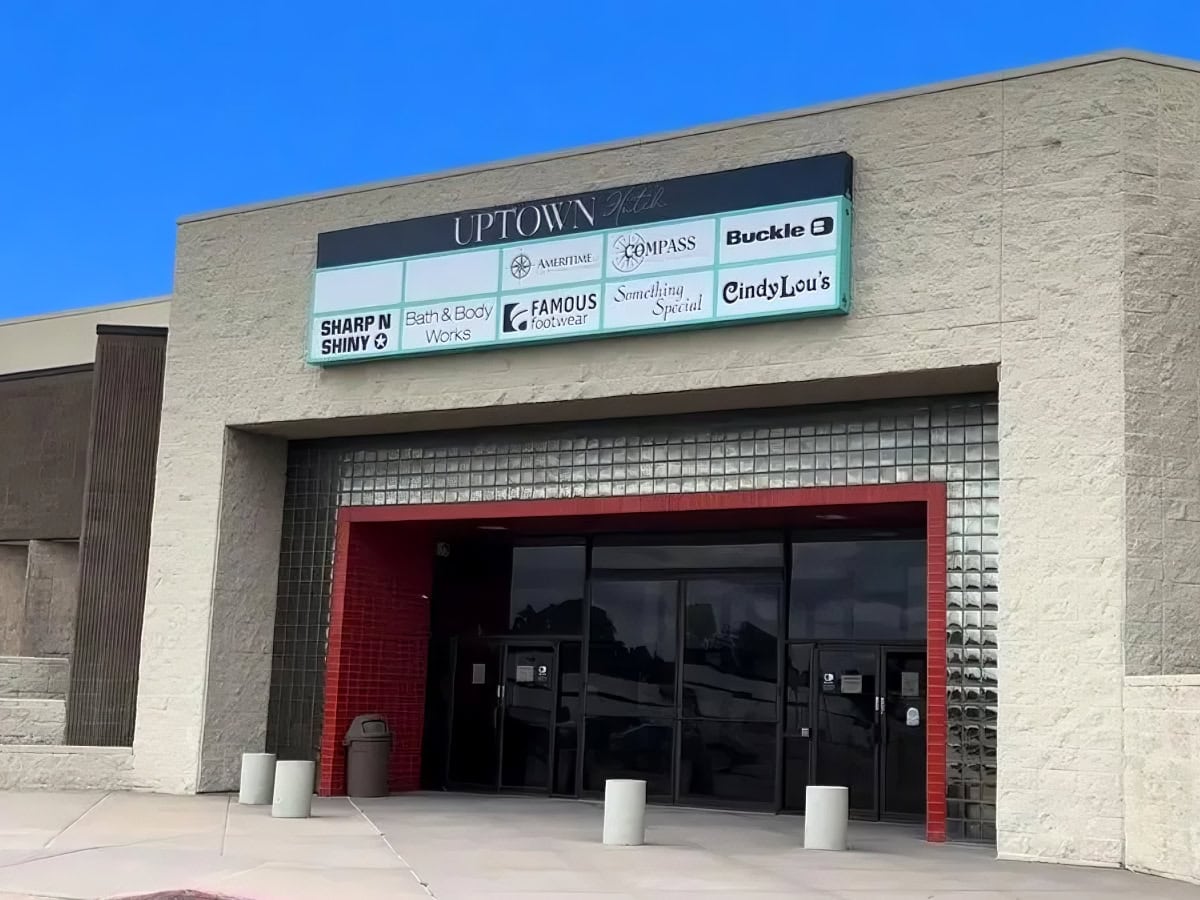
Leavenworth Plaza is a former enclosed shopping mall at 3400 S. 4th Street in Leavenworth, Kansas, built in 1967 and largely gone today.
It opened with three anchors: J.C. Penney, Montgomery Ward, and a Safeway grocery.
Wards became Sears. ALCO became a six-screen theater.
A 1999 court was already treating the place as a 30-year-old mall with minimal improvements, before the Plaza's worst losses arrived.
Then Penney closed, Sears left, the theater went dark, and in 2013 the enclosed interior shut for good.
Demolition gutted the inside in 2015.
One tenant held on longest: Westlake Ace Hardware, which finally wound down around early 2025.
The two fiberglass bears that sat in the concourse outlasted the building and now live in a museum downtown.
Now there's a STAR bond plan to turn the 20-acre site into something new, and as of 2026, it's still all study and no shovel.
The bears in the concourse
When Leavenworth Plaza opened in 1967 at 3400 S. 4th Street, the city got an enclosed place to shop, south of downtown, off the highway, all under one roof.
Inside, near the middle, sat two fiberglass bears.
Kids treated them like mall furniture.
Shoppers walked past them on the way to J.C. Penney or Montgomery Ward or the Safeway grocery.
The bears didn't do anything. They just stood there in the common area while the mall filled in around them.
Three anchors, a concourse, smaller shops along the walkway, and a parking field big enough to swallow the building.
Standard issue for a 1960s town mall.
Kansas City developer Copaken, White & Blitt built it on the Fourth Street corridor, the road that ties Fort Leavenworth to downtown to the Kansas City metro.
The bears would outlast almost all of it.
A grocery run and a department-store trip, same parking lot
The opening anchor mix was the safe one for a mid-sized town.
J.C. Penney handled soft goods. Montgomery Ward brought a second national department-store name.
And Safeway gave the place something the other two couldn't: a reason to come every week.
You don't buy a winter coat on Tuesday. You do buy milk.
The grocery brought the daily traffic that kept the corridor moving, while the department stores caught the bigger, slower trips.
Around the anchors, smaller tenants leased in.
One of them was a shop called Rosalie's, with its own 1967 build-out plans drawn for Space B-3 by architect Joseph J. Oshiver.
Tenant work was still going on the year the doors opened.
So the basic shape was set. Now it just had to fill.
The fourth anchor arrives
Five years in, the mall added a store it didn't open with.
Duckwall-ALCO came in 1972, a general-merchandise box that pushed the lineup past its original three anchors.
More square footage, more reasons to park.
By the early 1980s, the tenant list had picked up the small service businesses that malls collected back then, a consumer-finance office, a thrift lender, the kind of tenant nobody drives out specifically to visit but everybody passes.
For a while, this was simply the place.
A 220,000-square-foot retail property, with national names and a supermarket and a row of specialty shops.
Then the names started changing.
When the sign changed, but the store stayed
In 1987, Montgomery Ward left its anchor space. Sears moved in.
The use didn't change. Still a department store, still pulling the same kind of traffic, still the size of an anchor.
The sign out front read differently, and that was about it.
This was the gentle kind of turnover, the kind a mall survives.
One national name swaps for another, the lights stay on, the parking lot stays full.
Nobody panics when Sears replaces Wards.
The damaging changes were still years off.
For now the Plaza had four working anchors, one of them a grocery, and the bears were still in the middle of it.
What it didn't have yet was a movie theater.
ALCO becomes a six-screen
In 1993, Dickinson Theatres took the old ALCO space and turned it into Plaza 6.
Six screens, carved out of a former discount store, dropped right into the mall.
Now the Plaza had a night use.
You could come after dinner, after the stores closed, and the building still had a reason to be open.
The bears ended up near the coming-attraction poster boxes, which is a fitting place for two fiberglass animals nobody could quite explain.
For 17 years it worked. The theater gave the interior an evening pulse it wouldn't have had on retail alone.
By 1998, a Pizza Hut in the same center was already showing what the slow version of decline looked like.
A restaurant leaves, and a court takes a hard look
The Pizza Hut had been at the Plaza since 1987, run by an operator called L.A.G. Enterprises.
The lease got amended, extended, pushed out to a 1995 to 2000 term.
Then on May 29, 1998, the tenant gave written notice: ceasing business, leaving the space, ending the lease early.
The owner, Leavenworth Plaza Associates LP, did what owners do.
Sent a default notice that July, terminated possession, filed suit in August seeking $7,800, then amended in October to ask for $15,500.
A 1999 hearing awarded the owner $12,500 for three months of rent and other unpaid obligations.
But the court stopped there. It refused to award January 1999 rent, because the owner hadn't tried hard enough to re-lease the space.
And the reason it gave is the part worth sitting with: the judge described the Plaza as a 30-year-old property with minimal improvements, and said using a new-mall leasing playbook didn't match what this space actually was.
In 1999, a courtroom said out loud that the mall was old and tired.
The biggest anchor losses were still ahead.
The anchors go dark
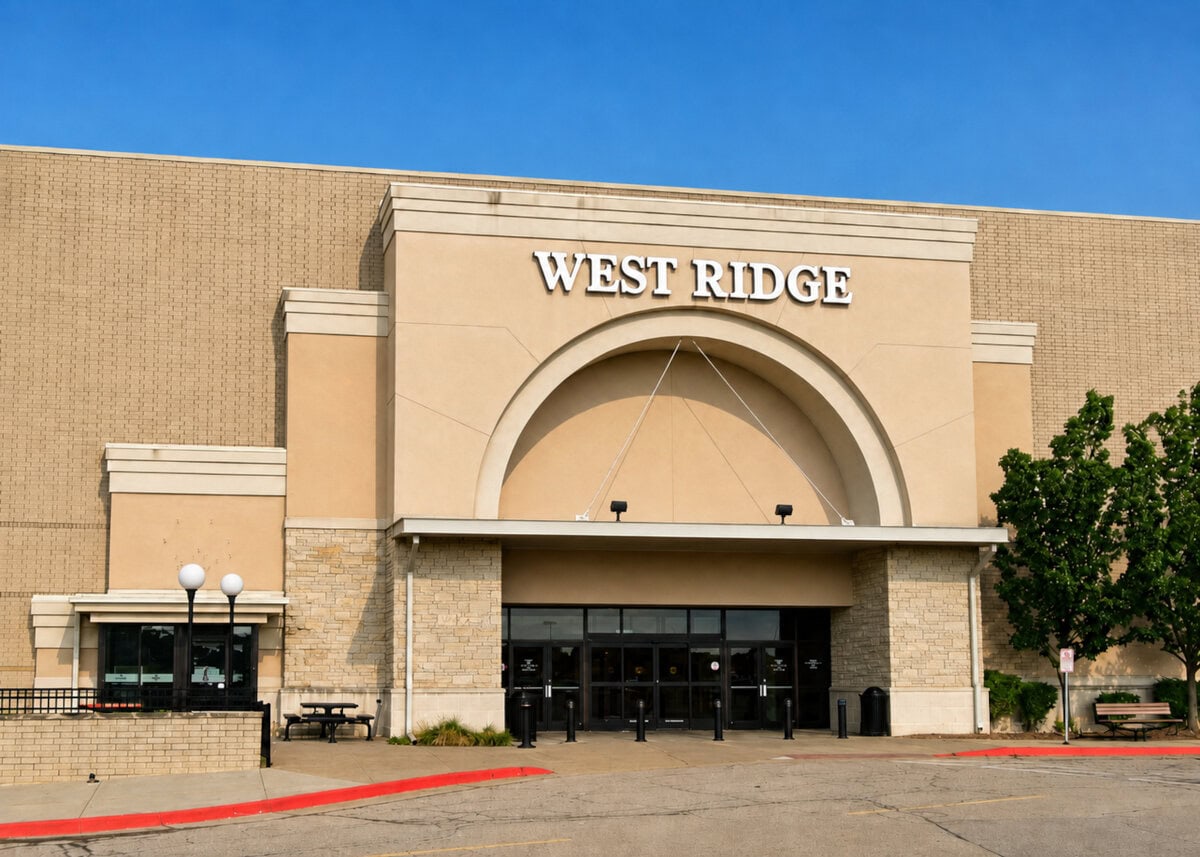
J.C. Penney closed in 2003. One of the three original 1967 anchors, gone, its space left sitting in a mall that was already running thin.
Then Sears left the old Montgomery Ward spot.
The exact date is hard to pin down, which tells you something about how much attention the closing got.
By the time anyone went looking, the Sears building was just empty and had been for a while.
Safeway's grocery run had ended earlier, and Westlake Ace Hardware took over that end of the building.
The hardware store would turn out to be the survivor of the whole thing.
The theater was the last big draw left. And in 2010, it switched off too.
The last show on a Thursday
Plaza 6 closed on August 26, 2010, after 17 years.
The shows advertised for the next day, August 27, were canceled.
That was the evening pulse gone. No more after-dinner crowd, no more reason to drive over once the stores had locked up.
By 2013, the inside of the mall had thinned to almost nothing: Ace Hardware, GNC, Curves, RadioShack, and Cato.
That year the enclosed interior closed for good.
The shared concourse, the part that made it a mall instead of a strip of stores, shut down.
The bears got out before the lights did.
When the interior closed, they were moved to the First City Museum at 743 Delaware Street, where they still are.
The two fiberglass animals that had watched Wards become Sears, watched ALCO become a theater, watched Penney go dark, outlived the building they sat in.
What was left was a problem nobody had solved.
A wrecking crew inside, a hardware store outside
Interior demolition began in November 2015.
That ended any fantasy of just reopening the old concourse. The inside came out.
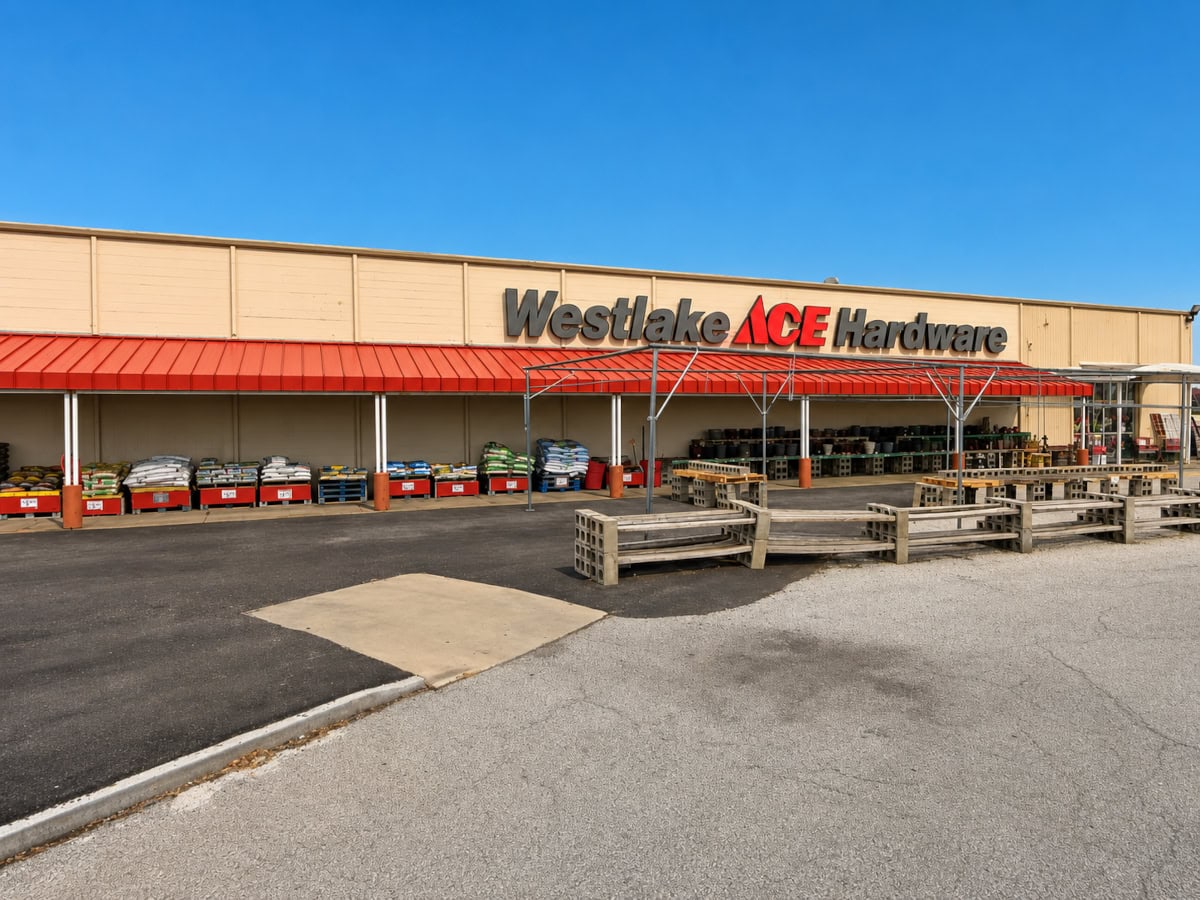
Westlake Ace Hardware kept operating at 3400 S. 4th Street the whole time, its own entrance, its own customers, apart from what was happening to the rest of the structure.
A live store attached to a mall being gutted.
The corridor around it had moved on without the Plaza.
Price Chopper, Walgreens, a string of highway businesses, and the south-side pull of Walmart and Dillons had made the area a second retail center for Leavenworth.
The mall had helped start the shift. Now it sat on the corridor as the blank spot.
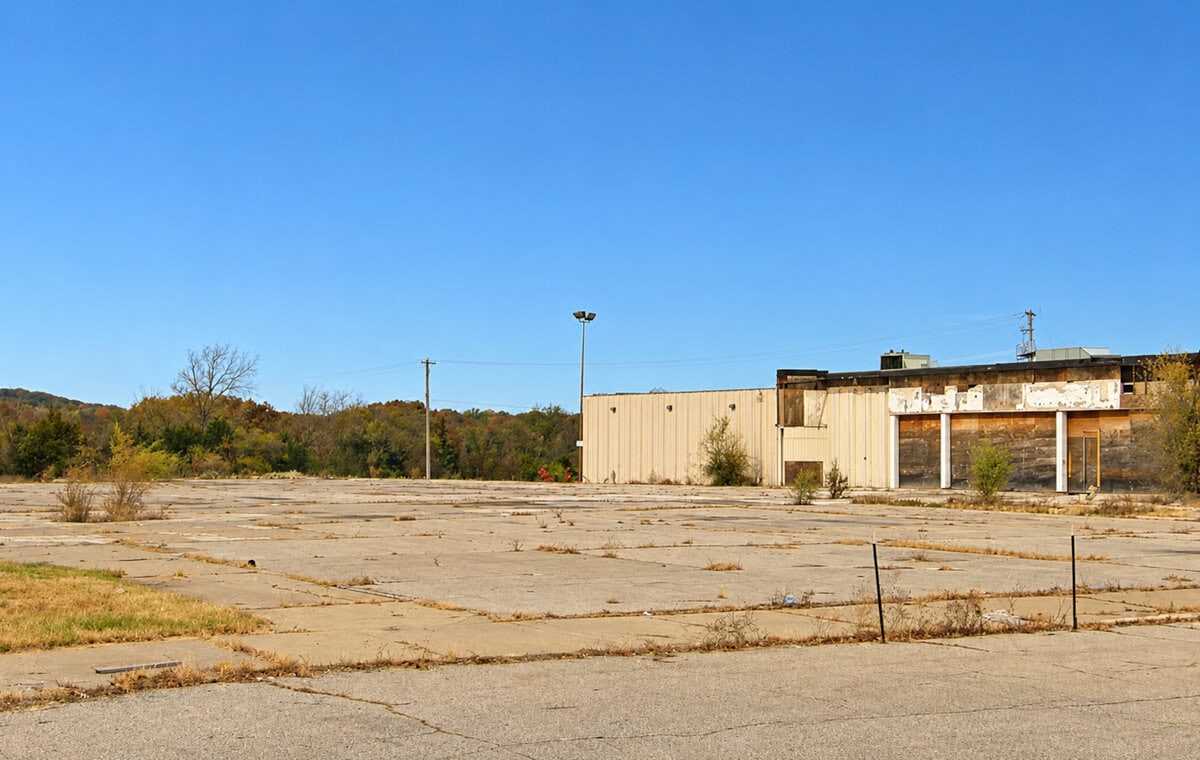
And the old Sears box wouldn't go away.
Years of meetings about an empty store
In September 2019, a Planning Commission member asked a simple question: was anything happening with the old Sears building?
The answer was no.
City staff said they'd met with an Omaha developer a couple of times over the past few years, and nothing had come of it.
No project, no plan, just the same empty anchor and the same conversations about it.
That's the state the property sat in through the early 2020s.
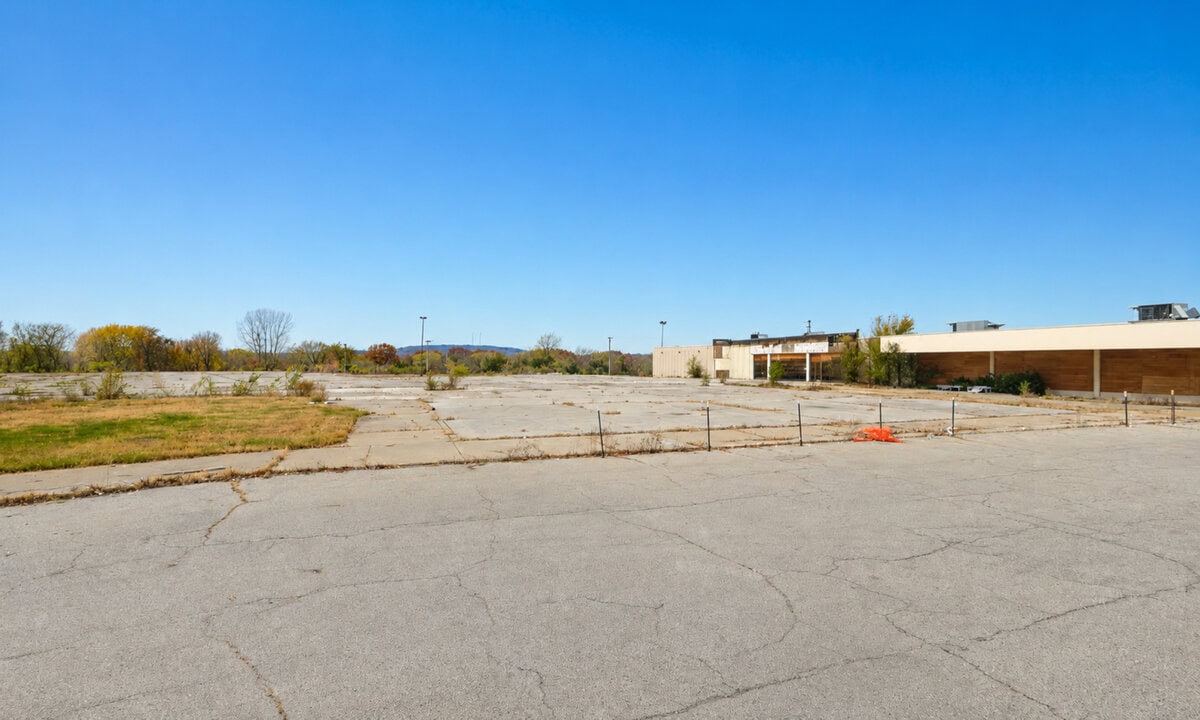
A vacant former mall, one working hardware store, a parking lot big enough for Wreaths Across America event parking for Leavenworth National Cemetery, with a polite note asking drivers to leave the Ace Hardware spaces alone.
A 220,000-square-foot retail center had become a parking lot with a hardware store attached.
The land was the asset now. Somebody just had to figure out what to do with it.
A 20-acre STAR bond pitch
In November 2025, the city made its move.
On November 12, the City Commission voted 5-0 to approve Resolution B-2411, kicking off state review for a STAR bond redevelopment of the old Plaza.
STAR bonds are a Kansas tool that lets sales tax generated inside a district pay back the cost of building it, aimed at tourism-style projects.
The developer, Leavenworth Destination Development, LLC, pitched the former mall as a 20-acre gateway site: restaurants, retail, entertainment, a hotel, maybe museums, maybe housing.
The proposed district reached past the mall itself to include Abeles Field and Ray Miller Park nearby.
The catch, raised in public comment that December, was that the plan listed a lot of maybes and no actual tenants.
One local business owner called the process risky and asked for a town hall.
No letters of intent were expected until after the bonds were approved, which is a backward-feeling order from the outside.
What stands on the old site now
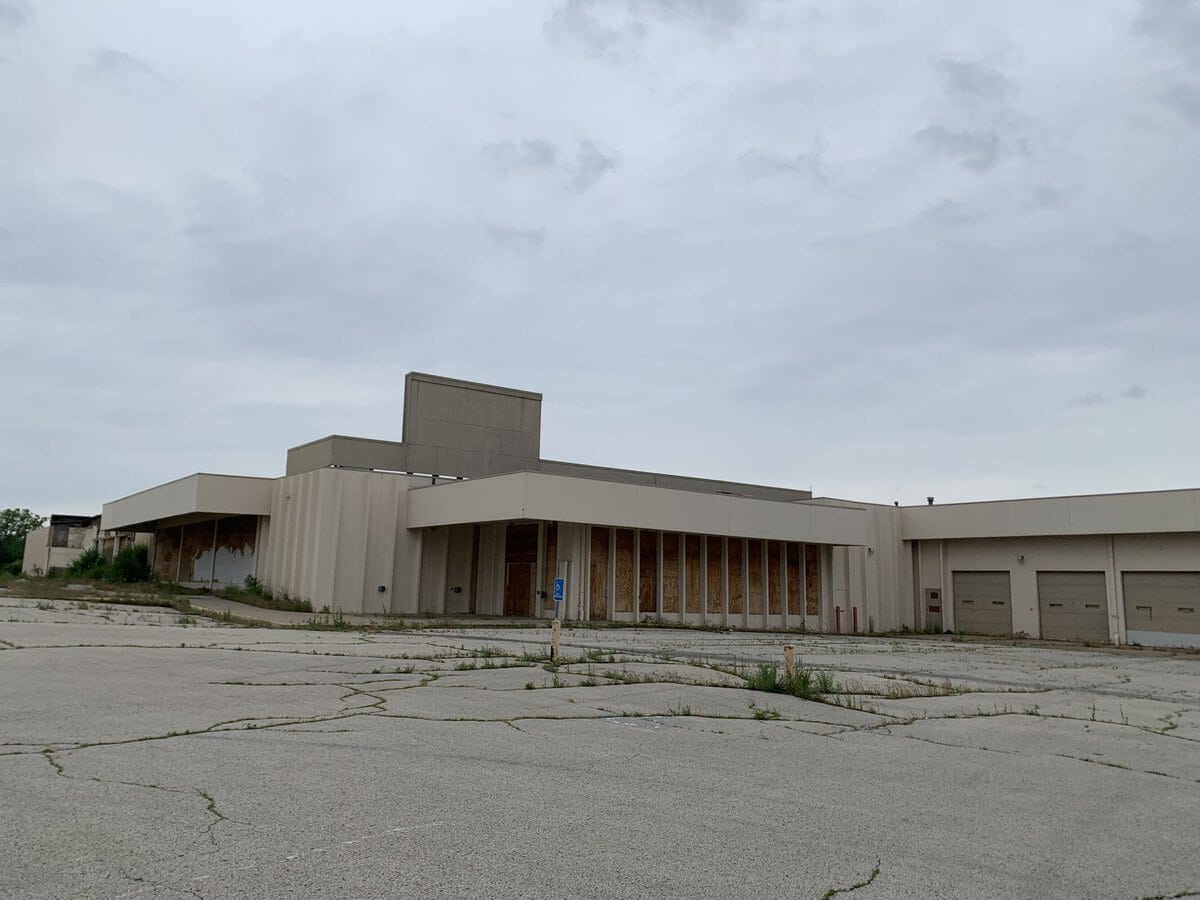
As of June 2026, the Plaza is still a former mall, with the future version stuck in paperwork.
Westlake Ace Hardware is gone from 3400 S. 4th Street, after holding on there for years.
The parking lot still gets used for cemetery-event parking.
And the redevelopment is still paperwork: on February 25, 2026, Kansas Commerce confirmed it had received the Leavenworth application, alongside one from Salina, and had engaged a study to count how many visitors the project might actually draw.
In April, the Commission approved up to $70,000 for an independent revenue study, with the developer footing the bill.
No tenants signed. No bonds issued. No shovel in the ground.
The bears are still at the museum on Delaware Street.
The hardware store is gone.
And the 20 acres where a town used to do its shopping are waiting to find out whether it gets a second life or just another few years of meetings.
Independent Publisher Notice
BestAttractions is an independent editorial publisher. We are not affiliated with, endorsed by, or acting on behalf of any location, business, property owner, manager, government agency, or organization described in this article. Comments posted on this page are not forwarded to, reviewed by, or acted upon by any entity mentioned in the article. For official inquiries, complaints, applications, bookings, or other requests, please contact the relevant entity directly through its official website or other verified channels.