Shreve City opens in stages
Ground was broken for Shreve City Shopping Center in Shreveport, Louisiana, in November 1958, and the center held its first opening in June 1959.
It was suburban shopping of the postwar kind: a large cluster of stores on Shreveport-Barksdale Highway, laid out for people who arrived by car. Shreve City kept building after it opened.
Construction started up again in March 1961, and by the time a formal dedication brought a round of ribbon-cuttings that October, the center's first stores had been trading for more than two years.
Its builders added to it in phases, and each new phase went up around stores that were already open for business.
The additions ran through the rest of the 1960s and into the next decade. A new Woolco store opened at Shreve City in 1965.
In 1966 the Shreve City Cinema arrived, and the center's name went onto a movie theater.
In October 1970 Dillard's opened a location at Shreve City, joining the Woolco and the cinema, and the center that had started with a groundbreaking in 1958 had a department store of its own.
The layout changed again after those early phases, as Shreve City turned to big-box retail.
The center carries the name it opened under and is still a place to shop, with its stores arranged now as a power center, a shopping center built around big retailers.
Walmart, Burlington, Citi Trends, and Dollar Tree are among its tenants, and space in the center is offered for lease to new ones.
Lakeside opens with 13 stores in the open air
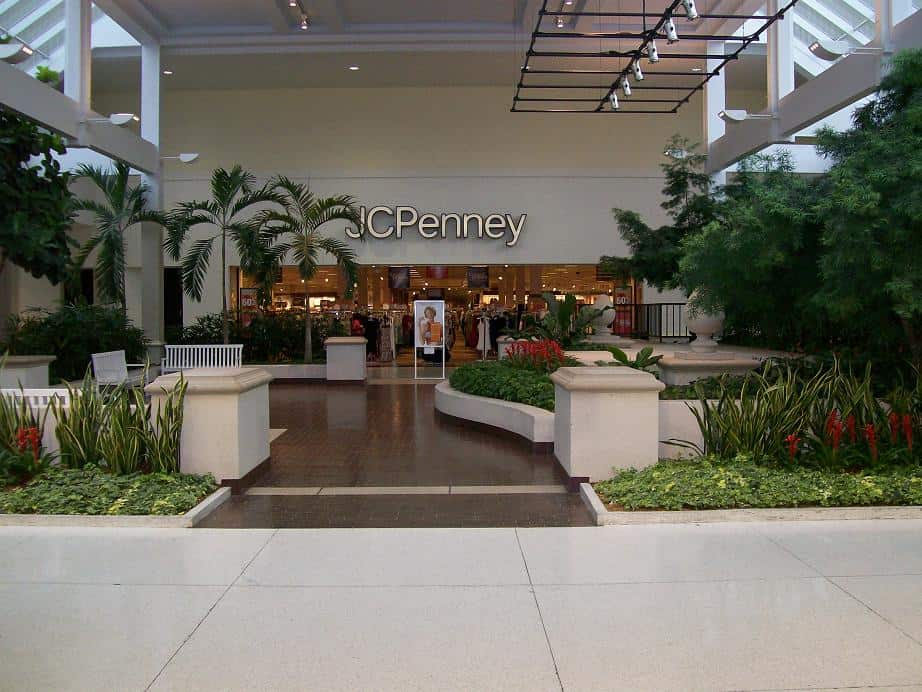
Lakeside Shopping Center opened in Metairie, Louisiana, in 1960 as an outdoor center: 13 tenants on 50 acres beside Veterans Memorial Boulevard, with JCPenney among the first stores.
The boulevard was still new.
With Lakeside on it, shoppers in suburban Jefferson Parish had a big place to go outside the department-store blocks of downtown New Orleans.
The open-air plan did not last.
Lakeside was later enclosed, and as demand for suburban shopping grew, it was expanded and its anchors were reshuffled: the department-store buildings were enlarged, and more room was made for parking.
The modest center of 13 tenants became a regional mall organized around its anchors.
Those anchors held. D.H. Holmes became Dillard's after the chain was acquired in 1989, and JCPenney stayed through every remodel.
In 2007 and 2008 two parking garages went up, and in 2008 Macy's moved in.
Later work brought a Cheesecake Factory, a new entrance, and a remodeled food court, and a plan followed to update the common areas.
The department stores stayed put while the shops and corridors between them kept changing.
Lakeside is an enclosed mall, and in 2026 it was adding stores. Coach opened in the Dillard's wing in March 2026.
Aritzia was set to open in a main-mall space of about 9,200 square feet later that year, Gorjana and Clarks were announced, and Foot Locker planned to grow by about 70 percent by moving into the Zumiez space next door.
The center that opened with 13 tenants now has three department stores: Macy's, Dillard's, and JCPenney.

Bon Marche trades its stores for offices
Bon Marche Mall opened in Baton Rouge, Louisiana, in 1960 on Florida Boulevard, as the city spread outward in the years after the war.
Baton Rouge already had smaller shopping centers from the 1950s.
Bon Marche was bigger, it was part of the city's move to suburban shopping along Florida Boulevard, and its stores faced the open air.
The roof came later.
An expansion enclosed the center and enlarged it, and Bon Marche grew into a major mall in the years when department stores were moving away from the middle of the city toward its edges.
Then the department stores went, and the enclosed shopping went with them.
The large building on Florida Boulevard was turned into offices and technology space, and by 2018 it had a new name, the Bon Carré Business Center, with about 725,000 square feet of offices.
That year it was in foreclosure after a loan default, and a property manager was appointed to run it while the proceedings went on.
In December 2020 a South Carolina company, EdgePWR, bought it.
Its tenants at the time included Blue Cross and Blue Shield of Louisiana, government offices, and private companies.
By 2025 the property was also known as the Bon Carré technology park, and some of its space was used for data centers.
In May 2025 DartPoints, a company that already occupied part of the park, bought that section, about 89,000 square feet, for $9.4 million.
A piece of the old mall belonged to the company working inside it.
Oakwood reopens three of its four wings
Oakwood Center opened in 1966, when a wave of shopping-center building reached the West Bank.
It went up at the Westbank Expressway and Terry Parkway in the Terrytown area of Louisiana, where it has a Gretna mailing address, and it gave the suburbs across the river from New Orleans a large retail complex with direct access from the expressway.
That was a different market from Lakeside's on the east bank.
Over the years Oakwood's list of anchors changed as the national department-store business changed.
After Hurricane Katrina damaged Oakwood in 2005, the main mall closed that September for a reconstruction that ran into 2007.
Shoppers returned in October to a heavily rebuilt enclosed center, but one of its four wings was still out of use.
Bringing that wing back took a new tenant.
The Jefferson Parish Economic Development Commission announced that Dick's Sporting Goods would open in the fourth wing, with construction planned for January 2013.
It was a rebuilding of shop space the storm had taken out of use, planned for the one section of the mall still closed after the 2007 reopening.
Oakwood is an enclosed mall, open on regular hours, on a site whose history as a shopping center goes back to 1966.
Dillard's and JCPenney anchor it, along with apparel and sporting-goods stores, and it has a food court and a play area for children.
Its doors open an hour before the stores do, to let mall walkers in.

Southland brings 14 stores to Houma
Southland Mall opened in Houma, Louisiana, in February 1969 on West Park Avenue, in the area known as Bayou Cane.
Sizeler Management, a developer based in New Orleans, built it for shoppers in Terrebonne, Lafourche, and the communities around them.
Until then those shoppers had gone downtown or made the longer drive to New Orleans.
The mall was meant to bring the shopping of those parishes together in one place, and it opened during years of oil and gas growth in the Houma area.
The first building held 14 stores.
Sears, F.W. Woolworth, Winn-Dixie, and a drugstore were among them, and Southland Cinema was part of the complex.
D.H. Holmes came in 1970, adding a Louisiana department store to the national chains already there.
Shoppers from several parishes now had those stores together in one place.
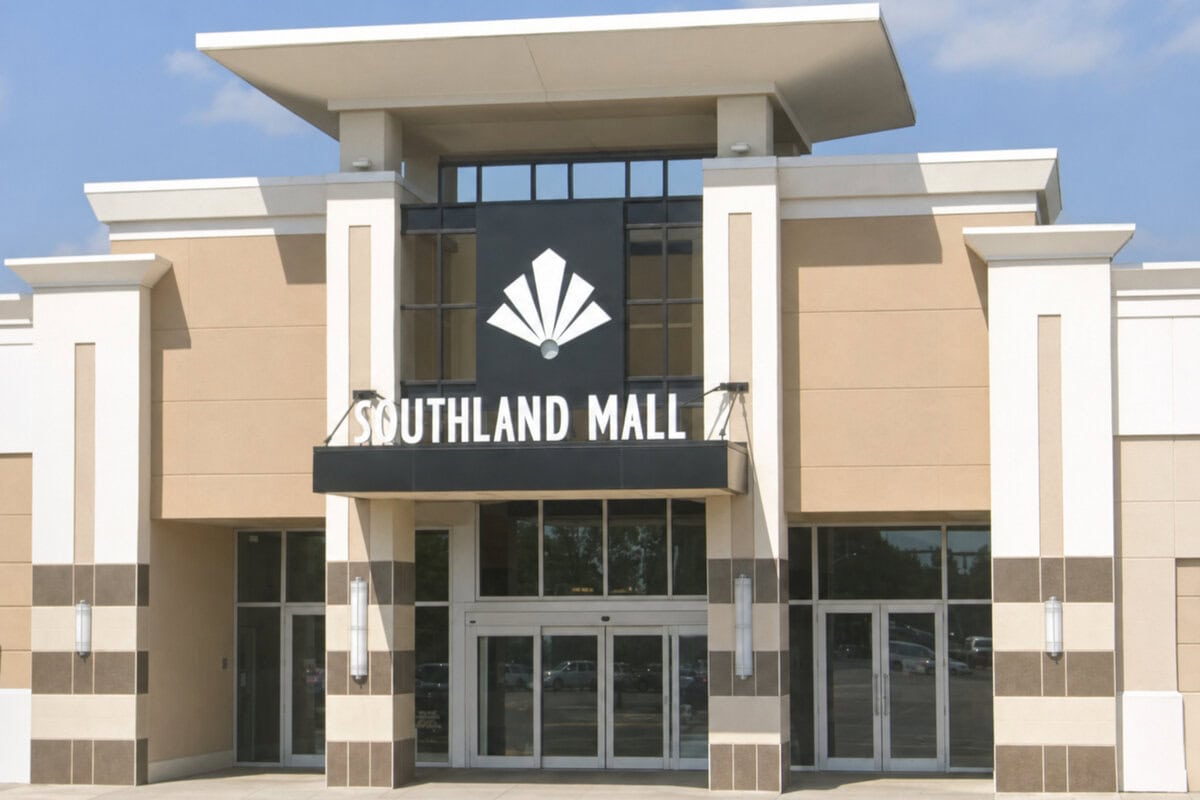
Southland did not stay at 14 stores for long.
Ten more leases followed in 1970, and the next big expansion came in 1981, when a new wing brought JCPenney and space for dozens of specialty stores.
The mall was much larger than the building that had opened in 1969.
A remodel in 1994 changed the center again, old section and new wing together.
Southland is still an enclosed mall, open on regular hours.
Its department stores are Dillard's and JCPenney, the second of them there since the 1981 wing, and Lynn's Interiors is among the other tenants.
The building keeps the larger regional shape that wing gave it.
Northgate turns into The Hub
Northgate Mall opened in Lafayette, Louisiana, in August 1969 as an early indoor regional mall serving the north side of the city.
Its land came from the Billeaud Development Company, near the spot where Interstates 10 and 49 would later meet.
Northgate was enclosed from its first day.
By the 2020s the mall had a great deal of empty space and an aging building. In 2023, less than half of its rentable space was occupied.
In December 2025 the owner laid out a plan to remake Northgate in phases under a new name, The Hub.
The plan covered what had been put off: deferred maintenance, the roof, the lighting, and the outside of the building, with some of the existing shop spaces rearranged.
Rooftop entertainment, housing, and new small shops were ideas for later phases, each depending on money and leases.
The plan was to keep the property commercial while replacing the old mall's common areas in steps.
Public money came into the picture in October 2026.
The board of the Northway Economic Development District approved in principle up to $1.25 million for exterior and site work that would cost $4.9 million in all.
The district would repay the work only after it was finished and checked, and its staff were sent to negotiate an agreement that has to come back to the board for its own vote.
Until that vote, the public share is not binding, and the repositioning of the old mall as The Hub goes on in phases.
Clearview's enclosed mall comes down
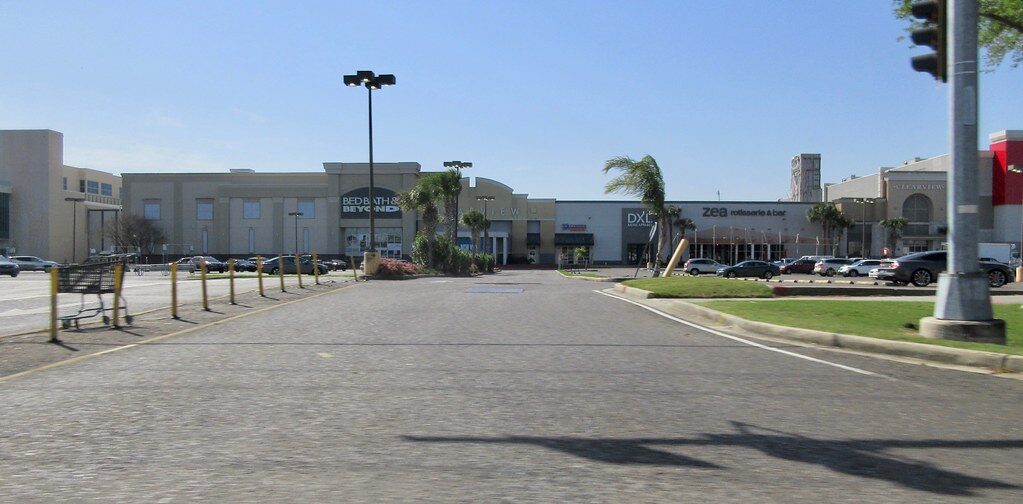
Clearview was enclosed from the start when it opened in Metairie, Louisiana, in the 1960s. Sears and Maison Blanche were its two anchors.
It came out of the same suburban shopping development in Jefferson Parish that had produced Lakeside.
Over the decades both anchors were replaced. Target moved into the Maison Blanche site, and the old Sears became an Ochsner medical center.
The A&G Cafeteria site was cleared for a food court with a movie theater upstairs.
Apartments and new outparcel businesses went up on the property.
In December 2019 the owners announced a $100 million plan to rebuild Clearview for mixed use, and the property later took the name Clearview City Center.
By 2025 the plan was far enough along that Zea, a restaurant that had been at the mall for years, had to move before the old building came down.
Its new standalone restaurant opened in June 2026.
Target, the cinema, and the Ochsner center remain open while crews work on the enclosed section between them.
Demolition was under way by July 2026, and by August there was a gap between the old mall entrance and Target.
The owner plans small shops in the open air on the cleared ground, with the first quarter of 2028 as the target.
In 1960 Lakeside and Bon Marche opened with their stores in the open air, and both were later put under a roof.
Clearview is going the other way: the shops planned for its cleared ground are meant to face the open air, and its enclosed mall has already been cut open.
Independent Publisher Notice
BestAttractions is an independent editorial publisher. We are not affiliated with, endorsed by, or acting on behalf of any location, business, property owner, manager, government agency, or organization described in this article. Comments posted on this page are not forwarded to, reviewed by, or acted upon by any entity mentioned in the article. For official inquiries, complaints, applications, bookings, or other requests, please contact the relevant entity directly through its official website or other verified channels.