
Dublin has a local center built around streets, storefronts and public spaces on both sides of the Scioto River.
Historic Dublin sits on one side. Bridge Park brings apartments, offices, restaurants, services and public space to the other. The Dublin Link lets people cross between them on foot or by bike.
That setup can change ordinary routines: coffee without starting the car, dinner after a river walk, or a short trip across the bridge.
But it does not shape every part of Dublin in the same way. For some residents, downtown becomes part of an ordinary weekday. For others, it remains a very good destination that still begins with a drive.
Dublin's planning documents describe the Bridge Street District as the city's most urban, mixed-use and walkable area.
They also describe a broader development pattern built around larger, separated land uses and auto-oriented retail.
Living in Dublin can therefore mean two quite different relationships with the same downtown.
Two ordinary Tuesdays in the same city
Imagine two households that both like Bridge Park.
The first starts the day close enough to downtown that walking or biking can be easier than driving for a short trip.
On a normal weekday, someone can cross the Dublin Link for coffee, dinner, Riverside Crossing Park or food at North Market Bridge Park.
A few recurring trips can make the district part of the weekly rhythm.
The second household starts from a conventional residential area several miles away. It may have a nearby park and access to Dublin's path system.
Bridge Park is still easy to enjoy, but visiting it becomes an intentional outing: drive to the district, park, then walk.
Neither routine is a lesser version of Dublin. One folds the center into small, repeatable movements during the week.
The other combines a residential suburban pattern with periodic trips to the same restaurants, riverfront and events.
The useful question is not whether Dublin technically has a walkable downtown.
It is how often that downtown enters daily life without requiring a separate plan.
The Dublin Link solves one specific problem
The Dublin Link is the physical connection that lets Historic Dublin and Bridge Park function as one larger center.
The 760-foot pedestrian and bicycle bridge opened in 2020 and connects the two sides of the Scioto.
Someone already in Historic Dublin can walk to Bridge Park for dinner.
Someone in Bridge Park can cross to the older commercial streets and riverfront without getting into a car.
The bridge changes how people move once they are close to the core.
Its practical effect fades as the trip to the bridge gets longer or harder.
A neighborhood may look close to the Dublin Link on a map, yet the experience depends on the route. Is there a continuous sidewalk or shared-use path?
How many large-road crossings are involved? Does the trip still feel natural after dark or in winter?
Dublin has more than 150 miles of recreation paths.
Its planning work also calls for filling missing pedestrian links and improving access between neighborhoods and activity areas.
A large path network can make recreation and cycling easier citywide, while treating downtown as an everyday pedestrian destination remains much more local.
Which trips can downtown actually absorb?
Bridge Park works best for trips that a mixed-use district can handle.
Its current mix includes restaurants, shops, offices, entertainment venues, hotels, green spaces and North Market Bridge Park.
Historic Dublin adds another cluster of restaurants, shops and services across the river.
That can compress several activities into one place. Coffee can lead into a walk. Dinner can be followed by the riverfront.
A workout, meal and casual errand can sometimes happen without moving the car between each stop.
But downtown does not erase the larger suburban geography around it.
Many ordinary trips still point elsewhere: a larger grocery run, school drop-off, a medical appointment, a big-box purchase, a commute to another part of the Columbus area or a youth sports schedule.
Dublin's Community Plan notes that much of the city's retail has historically been auto-oriented.
This is why "walkable" is too broad a label for the whole city. Near the core, walking and biking can replace a meaningful set of short trips.
Farther out, the same downtown may improve evenings and weekends without changing the basic transportation pattern of the week.
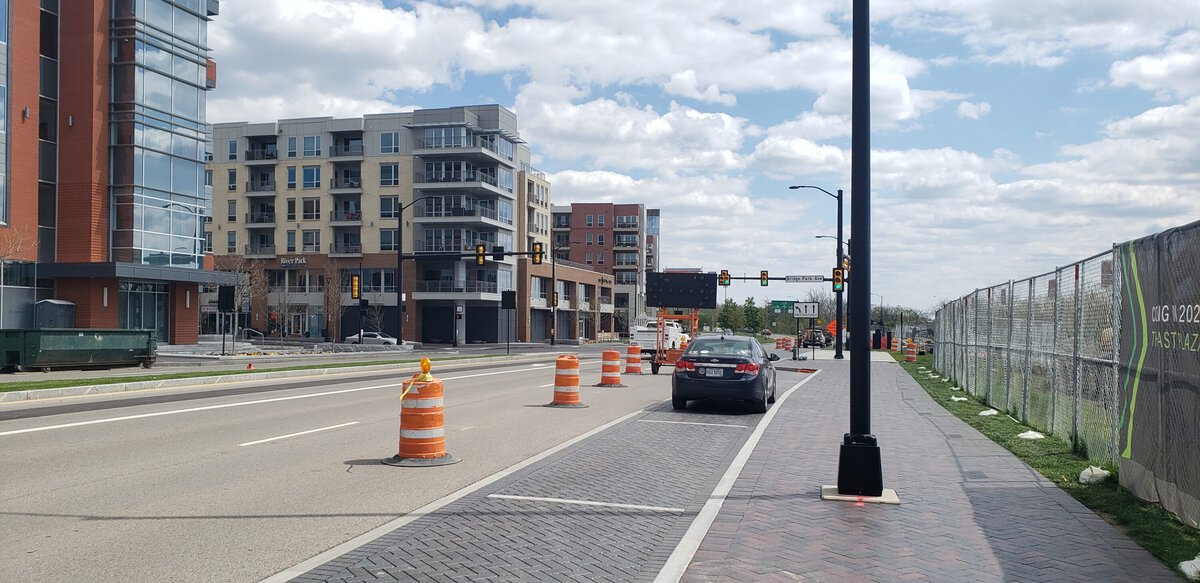
A good downtown can still be a place you drive to
Current parking policy offers a useful check on how the district functions.
Dublin manages garages, curb loading areas and on-street time limits in its downtown districts.
In 2026, the city adjusted parking limits on High Street, Longshore Street and nearby streets to improve turnover and manage demand.
The center serves two roles at once: a neighborhood-scale environment for people who can arrive on foot or by bike, and a drive-to destination for many others.
That second role still matters.
If someone drives to Bridge Park twice a week for dinner, coffee, a market or a river walk, downtown is part of that person's life.
It simply functions differently from a center encountered on foot while doing something else.
Two downtown visits a week equal roughly 104 visits a year. Three equal about 156.
If those trips happen naturally on foot or by bike, the center can shape the texture of the week.
If each visit requires a deliberate drive, the same district acts more like a recurring destination.
The point is not to calculate a score. It is to notice whether downtown produces spontaneous behavior or scheduled behavior.
A Tuesday tests downtown better than a Saturday
Bridge Park is easy to appreciate on a Saturday. Dinner, markets, riverfront space and events make the district an obvious leisure destination.
A Saturday proves that the district works as a place to spend free time. It says less about how deeply it is woven into ordinary life.
Tuesday is a better test.
Does someone walk there for coffee before work? Cross the Dublin Link because it shortens an evening route?
Meet a friend for dinner without thinking much about parking?
Use Riverside Crossing Park as part of a normal walk rather than as the purpose of an outing?
Repeated yes answers mean the center is functioning as everyday geography.
If the district appears mainly for Friday dinner, a farmers market or an occasional event, it functions more as a strong citywide amenity.
Both patterns are real Dublin. What changes is not the quality of downtown, but its role.
What ordinary life looks like on each side of the contrast
The downtown-centered version of Dublin has more opportunities for chaining activities together.
A walk can include coffee, the river, a meal and the crossing between Historic Dublin and Bridge Park.
The Dublin Link makes the two sides feel less like separate destinations once a person is already there.
Residential Dublin produces a different kind of convenience.
Parks, neighborhood streets and the wider path network may matter more often than Main Street or Bridge Park.
Trips can begin by bike or on foot without pointing toward downtown at all.
At the same time, errands spread across the city and the broader Columbus area make driving a normal part of the routine.
Even residents who use Bridge Park regularly may live mostly in this second geography.
They can value downtown highly without organizing the rest of the week around it.
That is the more interesting contrast than "walkable versus not walkable."
Dublin combines a concentrated pedestrian center with a much larger suburban system.
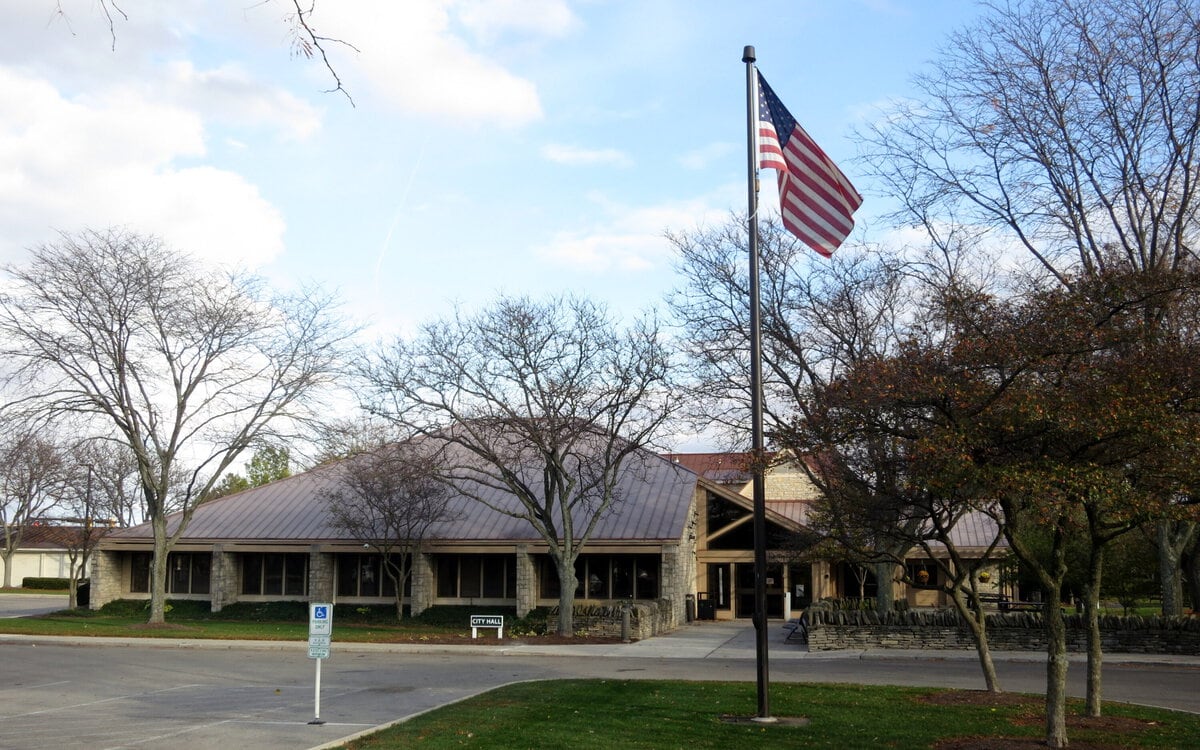
When does downtown become part of the week?
A useful way to understand Dublin is to watch what happens without planning a special outing.
If dinner plans default to Bridge Park because it is easy, downtown is part of the week.
If the Dublin Link becomes a habitual route rather than an attraction, downtown is part of the week.
If Riverside Crossing Park is where an evening walk naturally goes, downtown is part of the week.
If those places are saved for weekends, visitors or specific events, they play a different role.
They may still make Dublin more interesting and give residents a stronger local destination than many suburbs have.
But they do not necessarily reduce the importance of the car or change where most daily tasks happen.
Season and weather matter too. A route that feels effortless on a mild evening may be less attractive in winter darkness or bad weather.
The test is not whether a trip can be walked once. It is whether the route stays appealing often enough to become a habit.
Dublin's downtown matters by frequency, not reputation
Dublin has a mixed-use district, a historic center and a pedestrian bridge that allows the two sides of the Scioto to work together.
The city has planned the Bridge Street area around a more walkable development pattern than much of the surrounding suburban fabric.
What makes Dublin unusual is not simply that these pieces exist.
It is that they create the possibility of two different suburban routines within the same city.
In one, Historic Dublin, Bridge Park, the riverfront and the Dublin Link enter the week in small increments: a walk, coffee, dinner, a crossing, a short errand.
In the other, those same places remain regular destinations inside a more conventional car-oriented pattern of daily life.
A downtown visited occasionally is an amenity.
A downtown crossed, walked through or used several times a week becomes part of the resident's mental map of home.
That is the real test of living in Dublin: not whether the city has a walkable center, but how much of ordinary life actually happens there.

Sources and further resources
- City of Dublin: The Dublin Link
- City of Dublin Community Plan: Future Land Use
- City of Dublin Community Plan: Key Planning Issues
- City of Dublin: Biking and Hiking
- City of Dublin: Downtown Parking
- Bridge Park: About the District
- Bridge Park: Directory
Independent Publisher Notice
BestAttractions is an independent editorial publisher. We are not affiliated with, endorsed by, or acting on behalf of any location, business, property owner, manager, government agency, or organization described in this article.
Comments posted on this page are not forwarded to, reviewed by, or acted upon by any entity mentioned in the article.
For official inquiries, complaints, applications, bookings, or other requests, please contact the relevant entity directly through its official website or other verified channels.