In late December 1893, hundreds of people traveled by train and barge to a remote farm in South Fayette Township. The journey took less than eight hours. Forty invalids rode in baggage cars.
Over 200 mental patients followed in waves through February 1894. They came from Pittsburgh's overcrowded poorhouse along the Monongahela River to a new facility that would become Mayview State Hospital.
The complex stood on 243 acres purchased from the George Neal Farm for about $62,000. The construction cost $500,000.
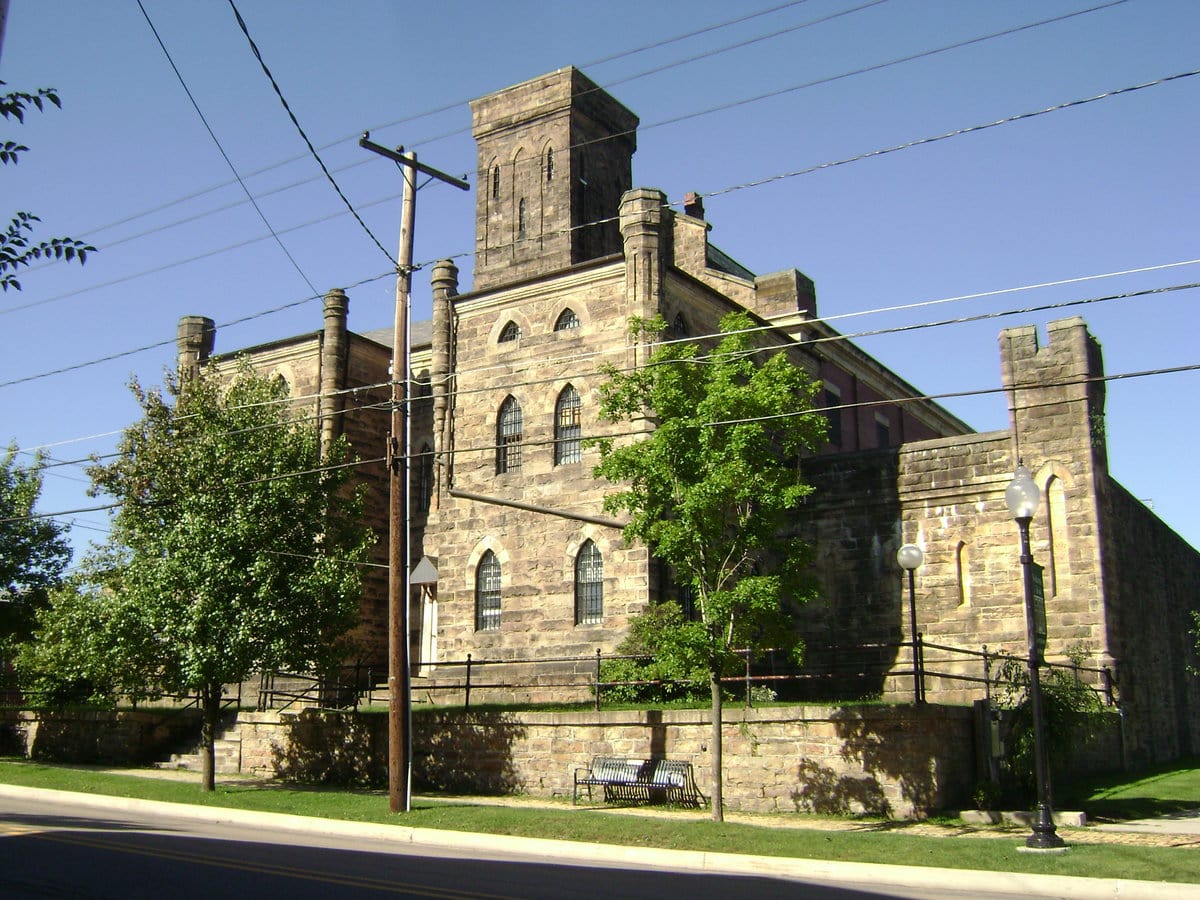
The facility took its name from Marshalsea, the London debtors' prison where Charles Dickens' father served time. About 340 inmates lived there in the 1890s.
Pittsburgh's First Poorhouse to Institution
The first poorhouse in Pittsburgh opened in 1804 in a small building on Virgin Alley near Wood Street. It could house about five people.
Pittsburgh followed English Colonial law, so helping the poor was a local responsibility. City officials collected taxes to provide relief in the form of cash, clothing, and coal.
The rules were harsh. Children under 16 could be indentured to work for others. Aid recipients wore a red or purple "P" on their right sleeves. They could not leave their districts.
The 1804 building could not handle recession demands. A new facility opened in 1818 in Allegheny, holding 30 residents.
By 1820, Pittsburgh's population reached 7,200. More people and economic downturns in 1837 and 1857 led to more poverty.
In 1846, overseers planned a new almshouse for 300 people on 102.5 acres in Mifflin Township along the Monongahela River.
A three-story brick building cost $42,000. Residents moved by barge in 1852.
By 1860, Pittsburgh had 49,000 residents. In 1870, 59 people with mental illnesses lived with other residents without being separated into groups.
A dedicated insane building was erected in 1879 for 150 people at a cost of $47,700. Medical care improved slowly. By 1884, separate superintendents were appointed. Overcrowding plagued the late 1880s.
Marshalsea Poor Farm Rises from Industrial Turmoil
In 1890, Carnegie Steel Company bought the Homestead site for $450,000.
Pittsburgh was allowed to remain there for three more years, but the deal effectively forced the city to find a new location for its poorhouse and the mentally ill.
Officials chose the George Neal Farm in South Fayette Townships near the Washington County line.
The Pennsylvania Board approved the site in 1892, construction began that year, and the transfer took place on December 21, 1893.
The new institution had up-to-date features for the time, like electric lights and hot-air heating, but the care was still simple.
There was no physician assigned specifically to the mentally ill until 1899.
During this time, the place was kept going by strict rules and daily habits: men worked outside on the grounds and farm, while women worked in the laundry.
Staffing reflected the institution's scale and expectations. Attendants lived in the buildings, about one for every ten patients, and male attendants earned $22.50 a month.
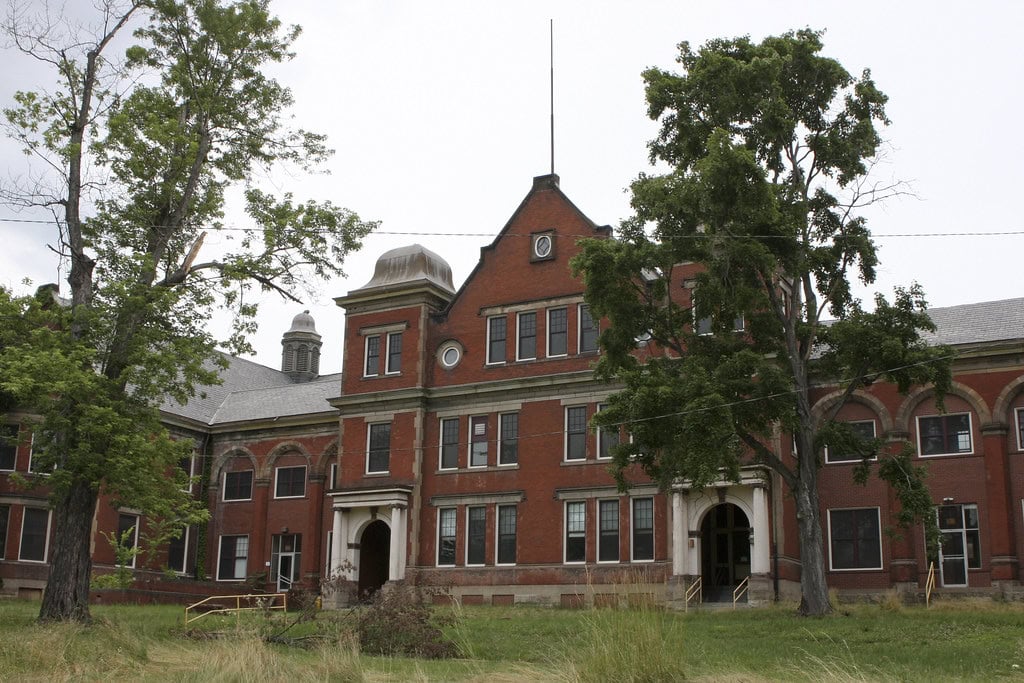
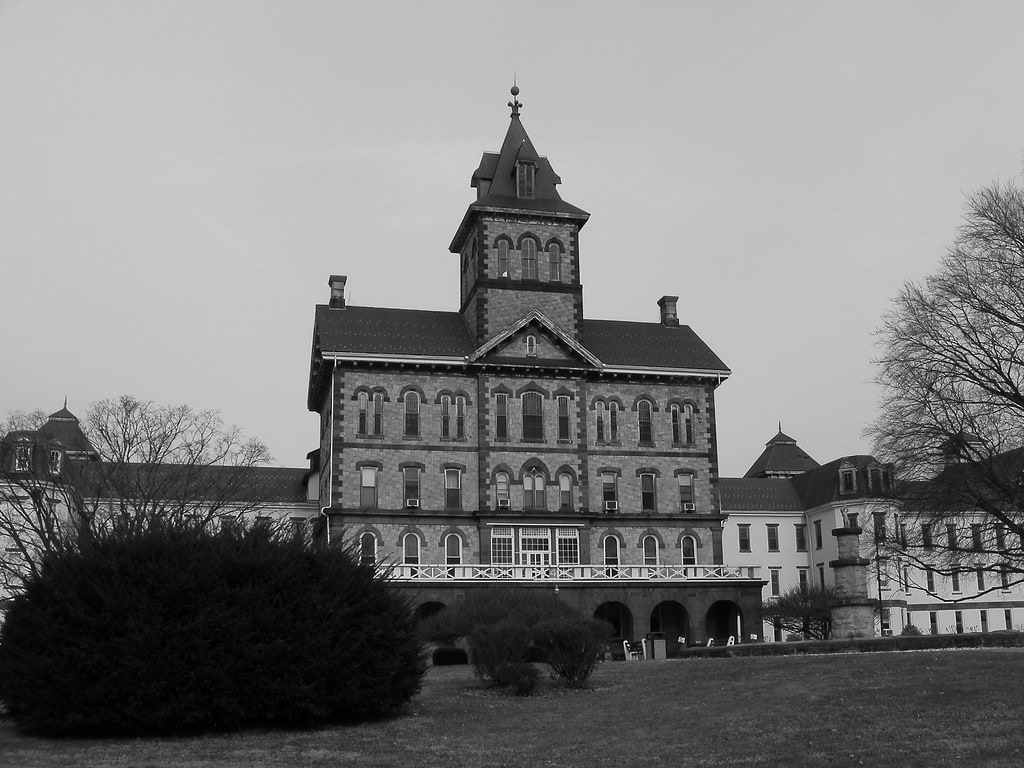
The building's design kept people separated and under control. The main building had different wings for men and women who were poor, with a dining area in the middle.
The mental health buildings were three stories, divided into single rooms and sitting areas.
For patients labeled violent or "untidy," there were 34 rooms for men and 34 for women, built with cement floors and corridors designed to be flushed with water.
A utility building and power plant sat apart from the main structures.
Early 1900s Growth and Modernization
South 2 buildings were constructed in 1902 and occupied in December 1903. Forty male and forty female convalescents were transferred there.
The buildings had heating, ventilation, an artesian well 103 feet deep, iron beds, and oak furniture.
A tuberculosis camp sat at the hilltop near the Temple Centers. In 1911, a shack was built for male tuberculosis cases.
A major setback hit the campus on the night of July 31, 1907, when an overheated boiler in the laundry and bakehouse area sparked a fire that swept through the Poor Farm and Asylum annex housing about 900 patients.
Attendants moved patients out on their cots as the fire burned for about three hours, with many patients injured during the panic.
A heavy downpour helped bring it under control by about 1 am, and property losses were estimated at $75,000 to $100,000.
In 1913, Dr. G.S. Llewelyn became the first superintendent devoted solely to mental patients.
The Poor Farm was appropriated for mental patient use that same year. A nursing school was established in 1915, marking a shift toward professional care.
Construction began on the North 2 buildings that year. The name changed in 1916 to Pittsburgh City Home and Hospital at Mayview, reflecting its dual purpose.
Patients from Claremont transferred when Allegheny City merged with Pittsburgh in 1907.
A coal mine opened on the property in 1917 to provide fuel for heating. Physical Therapy began in 1922. The Occupational Therapy and Social Service Departments started in 1923.
New buildings were dedicated in 1929. By 1934, Mayview State Hospital held 4,200 patients with 450 staff, a dramatic increase from earlier decades.
Pennsylvania Takes Control at Peak Years
The Commonwealth of Pennsylvania took over the hospital on June 1, 1941, with 3,200 patients. The Full State Care Act of 1938 required the state to take over all institutions for the mentally ill.
The state controlled the mental health section while Pittsburgh administered the indigent section.
Treatment methods expanded to include electro-shock therapy, insulin treatments, metrazol with curare, cabinet fever, malaria, methedrine, narcosis, and analysis.
Medical services included a dispensary, dental clinic, and specialists in multiple fields.
By June 1967, Mayview's census was reported around 3,785 patients with roughly 1,200 staff.
Later, patients were moved from Farview (planned 1973), Woodville (1982), and Dixmont (1984). An observation unit created in 1946 later served as the forensic center by 1974.
Mayview State Hospital became a virtual town with police, fire services, a church, a hospital, ball fields, a swimming pool, and employee housing. However the population began declining in the 1970s.
A 900-Acre Farm Sustains the Community
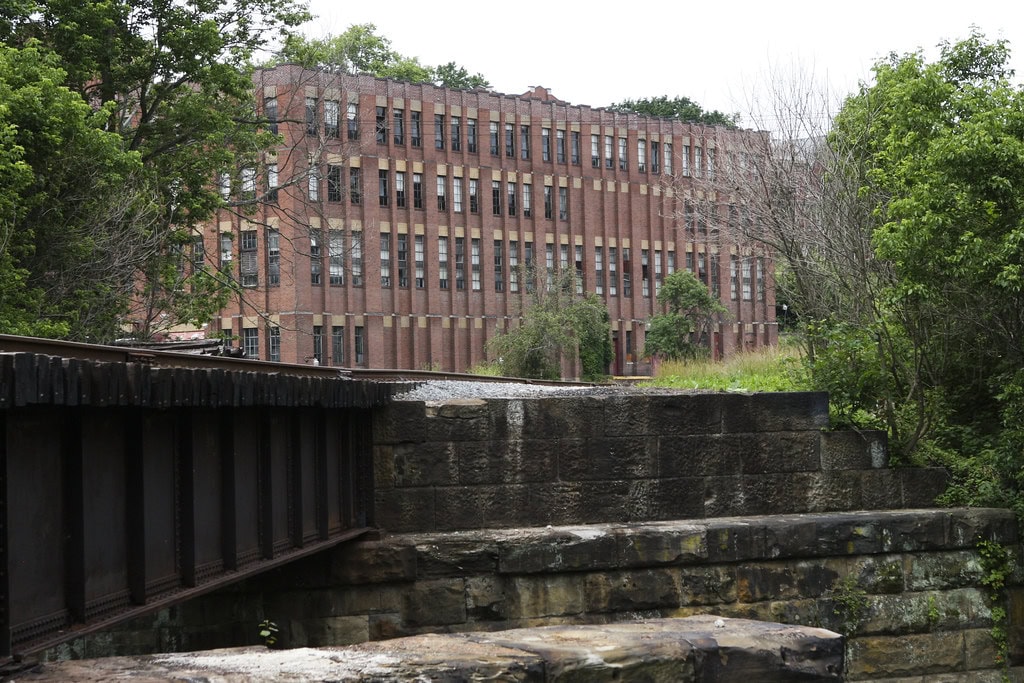
A 900-acre farm on the hillsides above the campus sustained Mayview State Hospital for decades.
The farm produced, raised, butchered, and canned everything needed: pigs, chickens, cows, corn, wheat, tomatoes, carrots, and more.
Residents worked the land as part of their treatment. Farm manager Edgar Krug ran operations for 20 years before it closed in 1981, ending nearly a century of agricultural self-sufficiency.
Unlike most state hospitals, such as Dixmont, which left behind a cemetery with over 1,000 graves, Mayview buried few patients on its property.
About 30 people were buried there, in a small fenced plot (now in Fairview Park) that was once part of the Mayview State Hospital complex.
The common practice seems to have been sending the dead to paupers' grave sites around the county.
The 1948 film "The Snake Pit" influenced public perceptions of mental hospitals nationwide. However, Mayview State Hospital largely avoided the scandals that plagued other institutions.
Indigents moved to Kane Hospital in 1958 as the facility focused solely on mental health care.
Closing Mayview State Hospital's Doors After 115 Years
On August 15, 2007, the state announced the civil section would close by December 31, 2008.
At that time, 225 patients needed individual assessment for community placement or transfer to another state hospital. The forensic center held 70 patients.
The closure halted for two weeks in November 2007 after two former patients died. One jumped or fell from a bridge. The other was struck by a train.
The deaths raised concerns about community integration. In February 2008, a task force met to discuss future uses for the site.
In November 2008, all 47 remaining forensic patients moved to Torrance State Hospital.
From August 2007 to December 2008, over 200 patients moved to community settings with 24-hour support staff. The hospital officially closed at the end of December 2008.
The closure was part of a statewide effort under Governor Ed Rendell to shift mental health care to community settings through the Community Hospital Integration Projects Program.
After closure: Mayview's demolition and redevelopment
Progress in deinstitutionalization stalled after the initial closures. Since 2015, the state stopped closing most vacant hospital beds, halting the shift toward community-based care that officials had promised.
Critics argued the state failed to adequately fund and support community mental health services.
The Mayview State Hospital campus had 335 acres and 80 buildings at its peak. Twelve buildings were used for patient care and hospital administration.
As of August 2007, about 500 staff members worked there with an annual operating budget of $63 million.
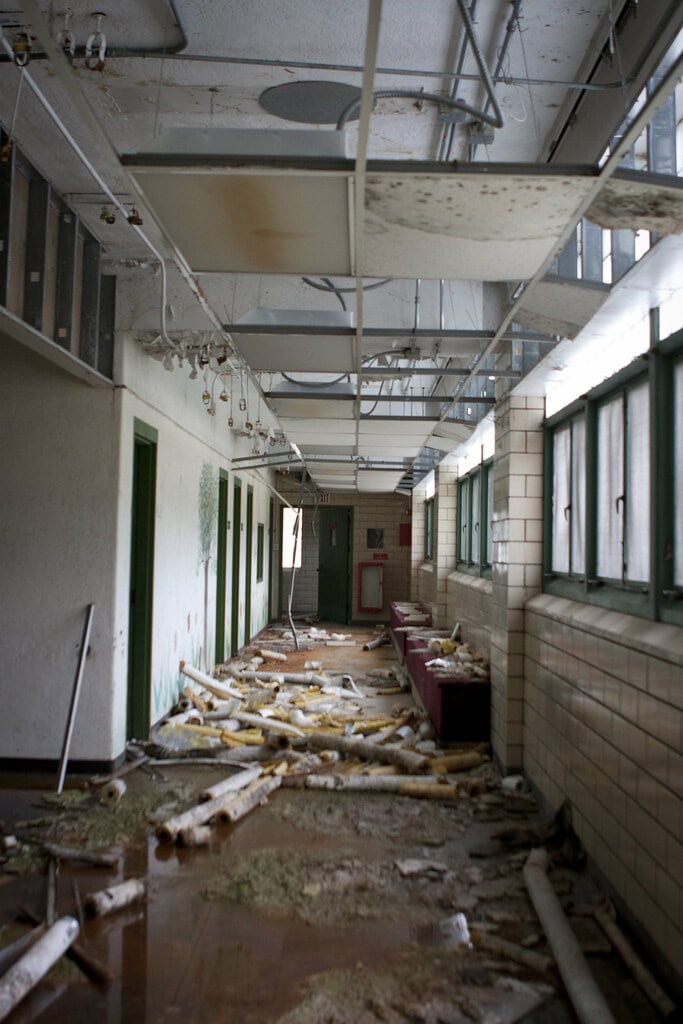
Many buildings sat empty before the official closure as patient numbers declined through the 1980s and 1990s.
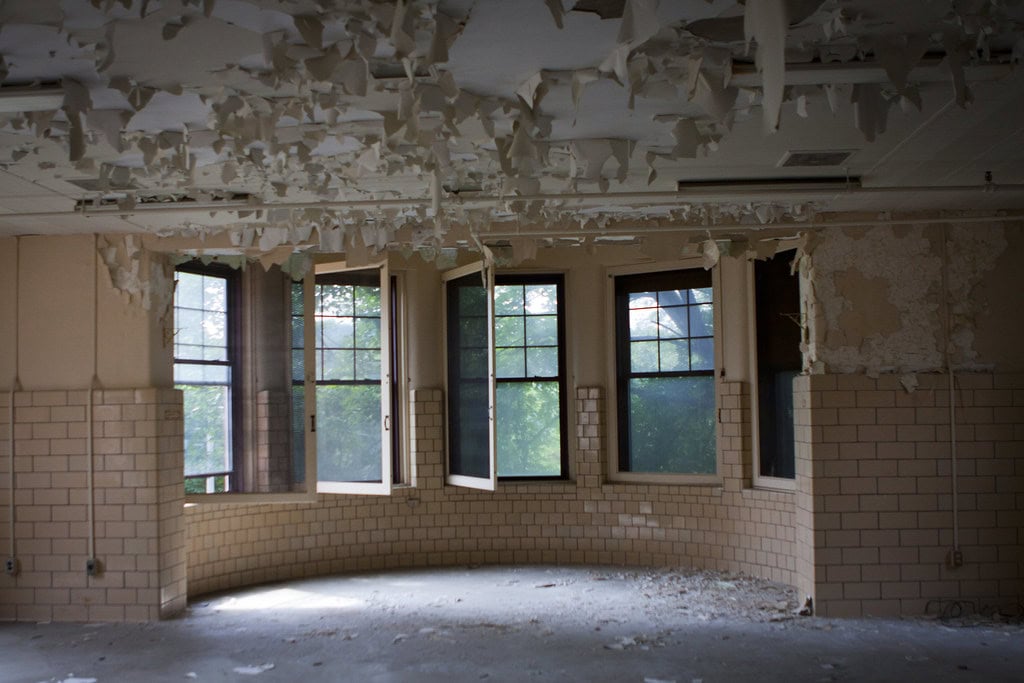
The entire campus was abandoned by 2008. The property's fate remained uncertain for two years.
In June 2010, the hospital was sold for $505,000 to Aloe Brothers of Mt. Washington. The agreement covered about 150-200 acres and all the buildings on site.
By early 2013, nearly all structures were demolished. By 2016, the remaining Mayview remnants were cleared to make way for residential development.
A New Neighborhood Rises from the Past
Charter Homes & Neighborhoods purchased the site from the Aloe Brothers and graded the land.
The development was named Hastings, reviving history from 150 years earlier, when a railroad stop allowed people to disembark and wait on the Hastings family porch.
The plan called for 500 homes on 80 acres. Century-old trees were preserved. Five miles of walking trails were created. Twenty-four acres of green space were set aside.
A natural TerraPark playground was built into the land. Crossroads at Hastings brought locally-owned businesses, including a coffee shop, athletic club, day care, spa, and pet grooming service.
The first occupants moved in by year's end in 2017. Across Mayview Road, 69 acres were conveyed to South Fayette Township to extend Fairview Park.
Boyce Mayview Park is nearby. The Upper St. Clair Community & Recreation Center overlooks the development.
The development is 30 minutes from downtown Pittsburgh and Pittsburgh International Airport.
The site has worn many faces through the years. In the 1800s, it sheltered the poor. By the 1900s, it became a place of healing for those struggling with mental illness.
In the 2000s, it transformed into a vibrant residential neighborhood. Each chapter in its story reflects shifting attitudes toward poverty and mental health.
The ancient trees, standing for more than a century, remain as silent witnesses to the lives, labors, and hopes of all who passed beneath their branches.