The Uneasy Life and Long Afterlife of Parkway Center Mall
It was once advertised as the future in concrete and carpeting: a mid-size, freeway-visible mall with its very own exit ramp, a place where westbound drivers could peel off the Parkway West and be shopping within minutes.
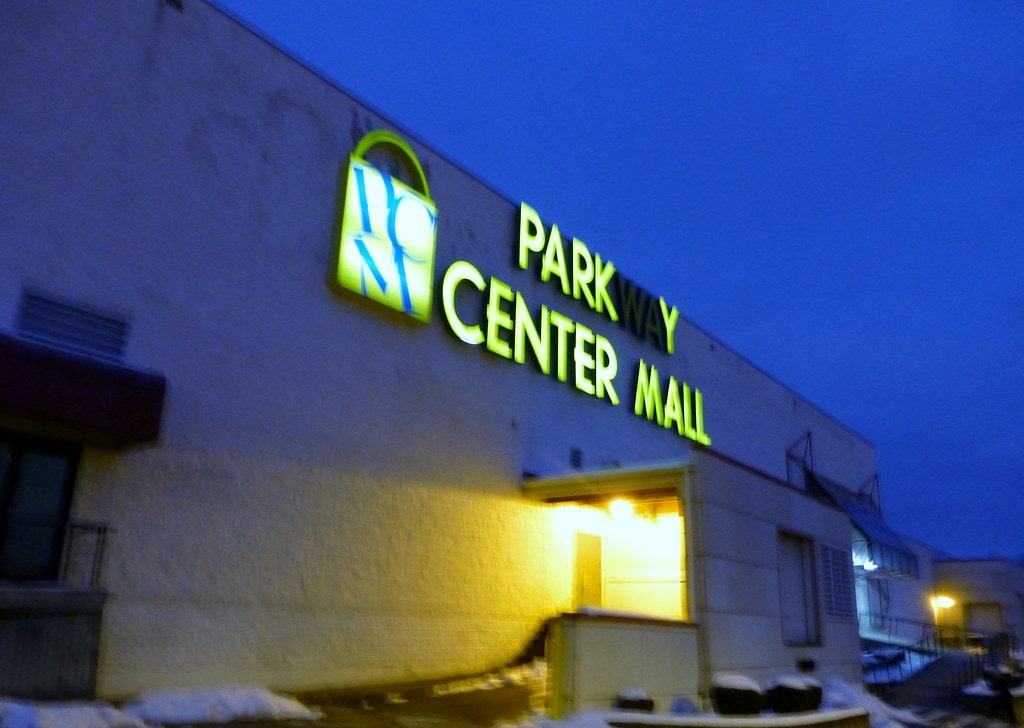
Parkway Center Mall, perched above the asphalt near the Fort Pitt Tunnel, promised convenience, jobs, and the sort of indoor, climate-controlled community that defined American retail ambition in the early 1980s.
Forty-odd years later, the mall is gone, the lone surviving supermarket has gone dark, and the surrounding office buildings are drifting into foreclosure.
What remains is not so much a ruin as a question mark on a hill. The story of Parkway Center Mall is a smaller version of the bigger American story.
A place built on filled-in land became a symbol of hope for the suburbs, then a spot for discount stores and teen hangouts, then an example of building problems, too much spending on repairs, and tough competition from newer malls just a few exits away.
The last business to operate there was not a department store, but a grocery store that outlived its neighbors, patching things up one renovation at a time, until even that no longer seemed worth the effort.
Parkway Center Mall rises from the fill
By the time Parkway Center Mall opened on November 4, 1982, the idea sounded simple enough: take a tough site above the Parkway West, level it with fill, and plant a three-level, roughly half-million-square-foot shopping center in full view of the traffic stream.
The development, backed by Kossman Development, came with its own dedicated ramp, a civic gesture financed with public loan money and justified by job counts.
Depending on who was counting, the project created around 1,000 to 1,400 jobs and cost about twenty-two million dollars to build.
It was anchored by a discount symphony of Gold Circle, Zayre, David Weis catalog showroom, Thrift Drug, and a Giant Eagle supermarket, with about eighty stores wrapped around them.
The site history was less elegant. Longtime workers recall city garbage trucks filling the hollow with refuse, then covering it with soil.
Visitors soon noticed the floors had a habit of shaking, the building settling on its improvised underpinnings while trucks thundered by on Interstate 376.
Eighties bustle, anchors, arcades, and salsa
Whatever tremors the floor produced, they were mostly written off as part of the scenery.
Once you stepped inside, Parkway Center Mall felt like a self-contained little republic of the 1980s, tailored to Pittsburgh in the long aftershock of the steel collapse.
The tenant list could have been filed under Archaeology: El-Bee Shoes and KayBee Toys, Jo Ann Fabrics and National Record Mart, Radio Shack and Computer Central, Baskin-Robbins, B. Dalton, GNC, Deb, Chess King, Petland, plus a scatter of aspirational boutiques with names like Sheer Performance, Foxmoor Casuals, and Scoop.
Chi-Chi's held down the casual-dining frontier with enchiladas and bottomless chips, while Dog Hut did the short-order work.
The arcade's glow spilled toward the food court, where Mr. Pockets and the other counters lived in a haze of fryer oil and clacking pool balls.
After dark, the upper levels shifted roles. Confetti and the Rodeo, later Club Zoo, remade the mall into a teen proving ground, complete with radio remotes and occasional visiting DJs or electronic acts.
On weekends, children were herded into indoor party zones to watch cartoons on repeat, discovering that a shopping mall could, with the right amount of sugar and noise, impersonate an amusement park.
Cracks in the floor and in the business model
The trouble announced itself in literal terms.
Not long after Gold Circle turned into a Kmart in 1986, the building shifted again, opening a crack along the length of the discount box so substantial that workers covered it with eight-inch steel plates.
The story fit what shoppers already felt underfoot: the persistent tremor of a structure resting on fill that continued to compact and settle.
Meanwhile, the seemingly stable roster of anchors began moving on. Zayre closed in 1989, one of several in the region to go dark.
Its space was briefly pressed into service as a Kaufmann's clearance center before being sliced up for a computer superstore and a Syms clothing outpost.
David Weis closed around 1990, only to be replaced by a Phar-Mor deep-discount drug and general merchandise store. Thrift Drug was absorbed into Eckerd in the late 1990s.
The changes looked like normal corporate musical chairs, but behind the scenes, they were rearrangements on a ship that was slowly, almost politely, taking on water.
Loans, lost anchors, and a hollowing interior
By the turn of the millennium, subtle decline had become a layout decision.
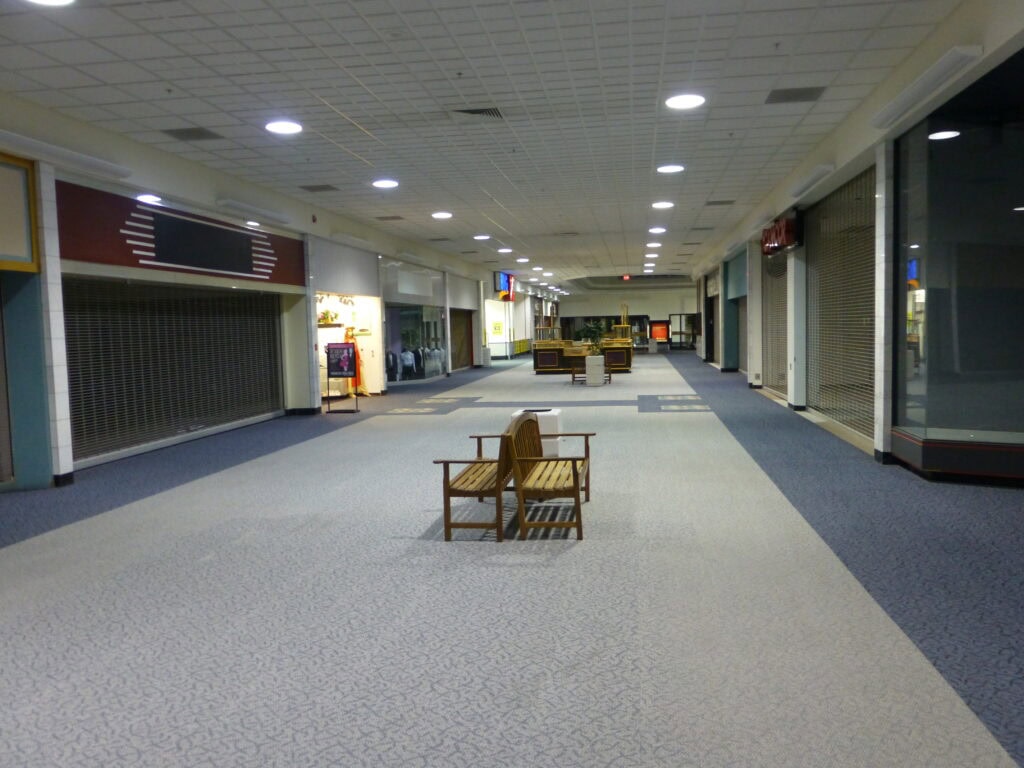
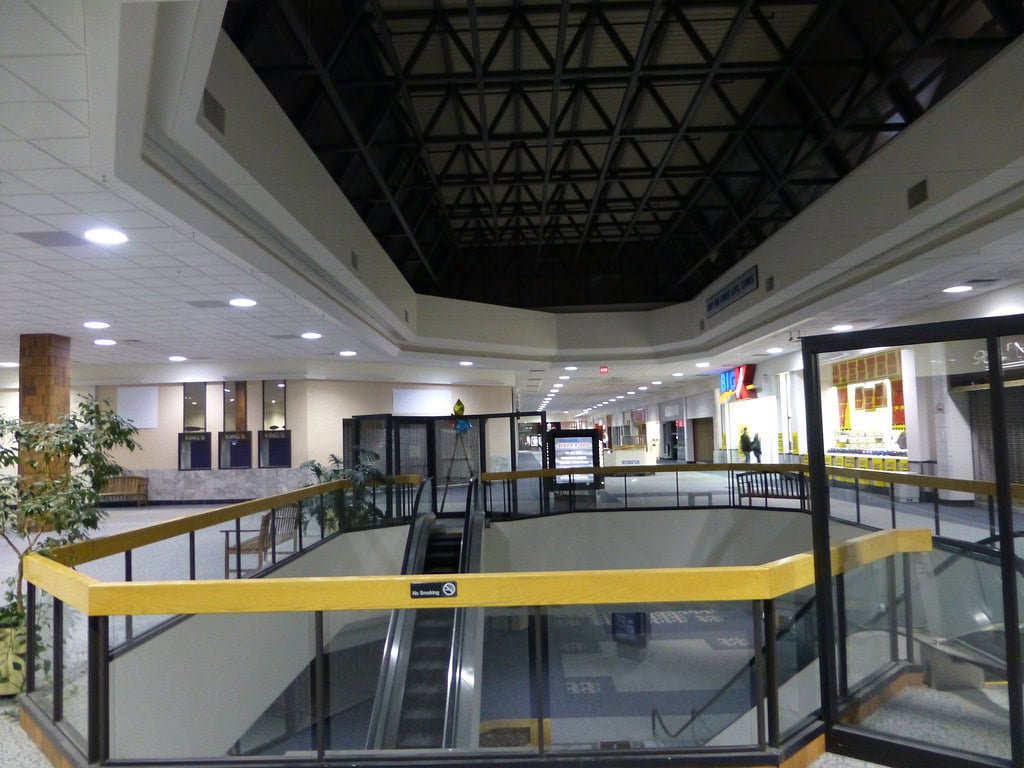
As anchors like Syms, Phar-Mor, and CompUSA left in the early 2000s, the owners consolidated the remaining tenants on the middle level and simply closed the first and third floors to the public.
The mall, once sold as three levels of possibility, had become a two-level building with one level in active use.
An Urban Redevelopment Authority loan that had helped pay for the ramp now had to be restructured; the mall never turned the profit that would have sent a share back to the city.
Yelp-era visitors described the corridors as ghostly and trashed, the storefronts empty, the parking lot heaving and cracked.
Inside, adaptive reuse took small, almost comic forms. The food court morphed into a dance studio and a driver's license center.
A handful of stalwarts - a comics shop, an optical store, a nail salon, a martial arts studio, a health chain - held on alongside Kmart and Giant Eagle, surrounded by vacant space and the faint feeling that the future was now happening a few exits down the highway.
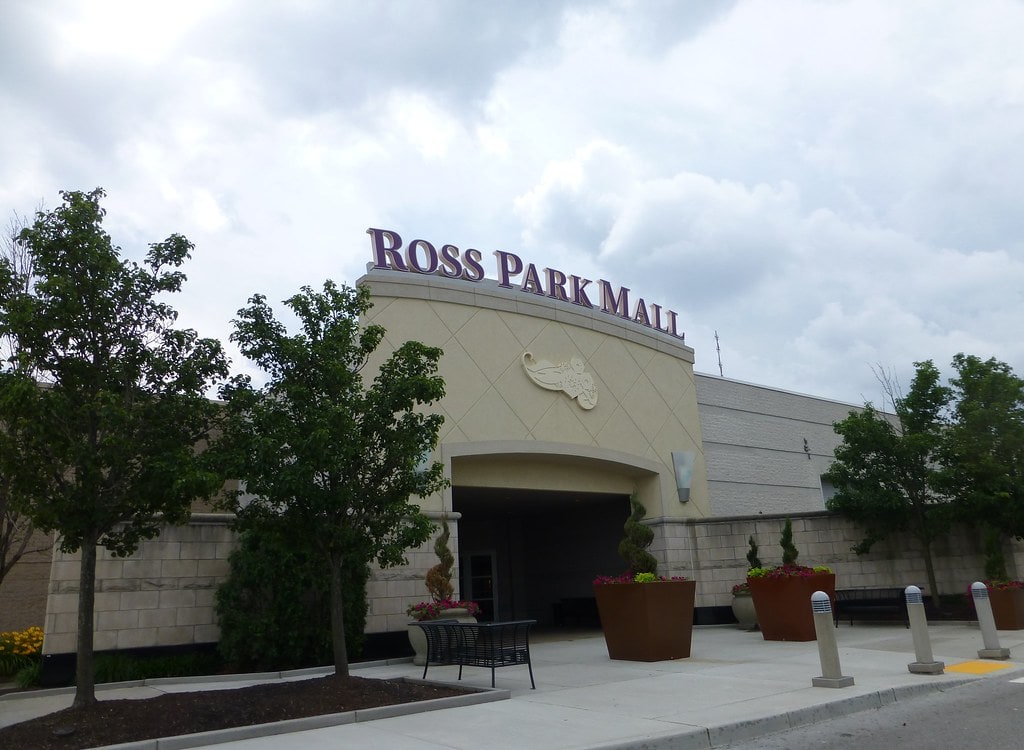
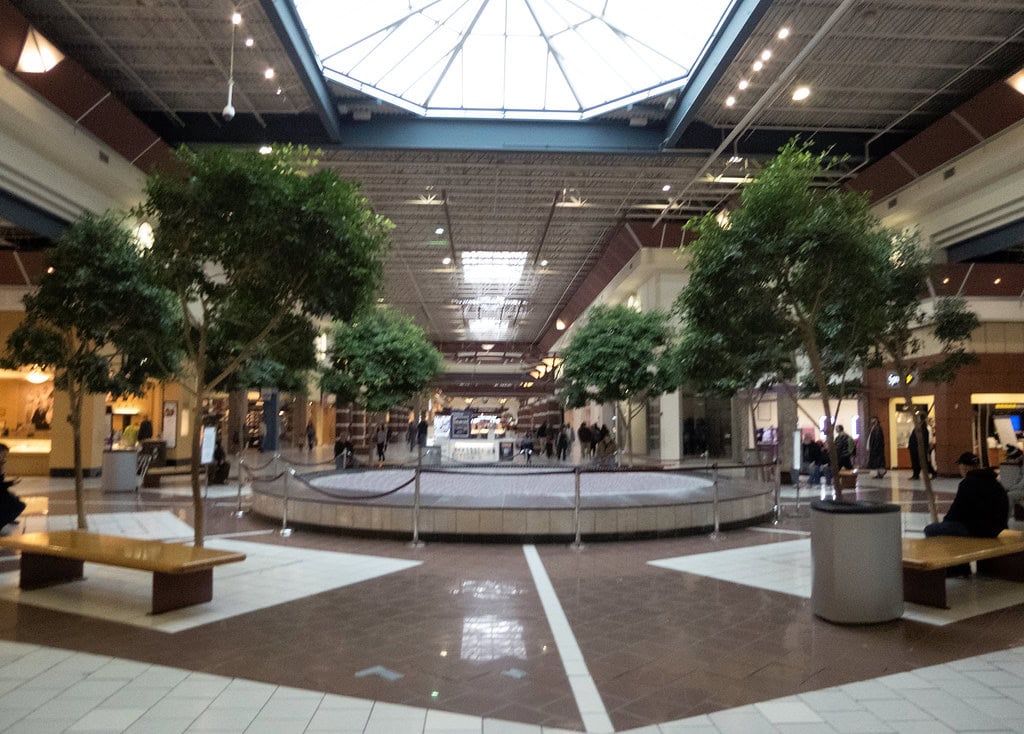
Dead mall status, one last Giant Eagle
The decisive blow came from a corporate office far from the Parkway.
Late in 2012, Kmart announced that its Parkway Center Mall store would close when its lease expired, ending a run that stretched back to the Gold Circle conversion.
The final day of sales in early January 2013 doubled as the effective last day of the mall itself.
The owner told the remaining small tenants - Sports Deli, 90's Nails, Minh in Stitches, Phantom of the Attic, Dalmo Optical, GNC, Yosei Kan's Martial Arts - that the second level would be closed, the first having been shut off for years.
On television, footage of the jammed, three-level mall from 1982 was spliced against near-empty concourses and shuttered gates.
Almost overnight, Parkway Center Mall graduated into the minor celebrity tier of dead malls: cataloged by urban explorers, mourned on nostalgia threads, photographed in the kind of gray light that makes abandoned escalators look heroic.
Demolition crews moved in during 2016, erasing most of the structure and leaving a steel skeleton, a lingering door labeled for Club Zoo, and, perched in the surviving box, the still-operating Giant Eagle.
Pandemic experiments, foreclosure, and maybe hope
For more than a decade after the mall closed, Giant Eagle functioned as both an everyday supermarket and a last man standing.
In 2020, amidst a pandemic rush to online grocery orders, it briefly became something stranger: a dedicated curbside pickup and delivery hub, closed to in-store shoppers while employees filled digital carts and ran bags to waiting cars.
That experiment ended, and the store reopened to the public, but the building around it did not get any younger.
By 2025, the grocer announced that it would close at the end of June, citing an inability to renew the lease and the daunting cost of reinvesting in a store and a development that had been in limbo since the first Obama administration.
At roughly the same time, much of the adjacent Parkway Center office park slid into foreclosure and sheriff's sale, its owner owing tens of millions on an aging complex.
City officials talk, once again, about mixed-use reinvention: housing, offices, neighborhood retail, maybe a linear park and trails to echo more successful redevelopments across town.
The hill above the Parkway West, once packed with mall walkers and club kids and bargain hunters, is back where it started - a rough site awaiting a new story.