
The Day Big Town Mall Opened Its Doors
On February 26, 1959, and somewhere between 10,000 and 15,000 people showed up to walk around a shopping mall in Mesquite, Texas. Think about that number.
Fifteen thousand people in a Dallas suburb, standing inside something most of them had never experienced - a fully enclosed, air-conditioned shopping center.
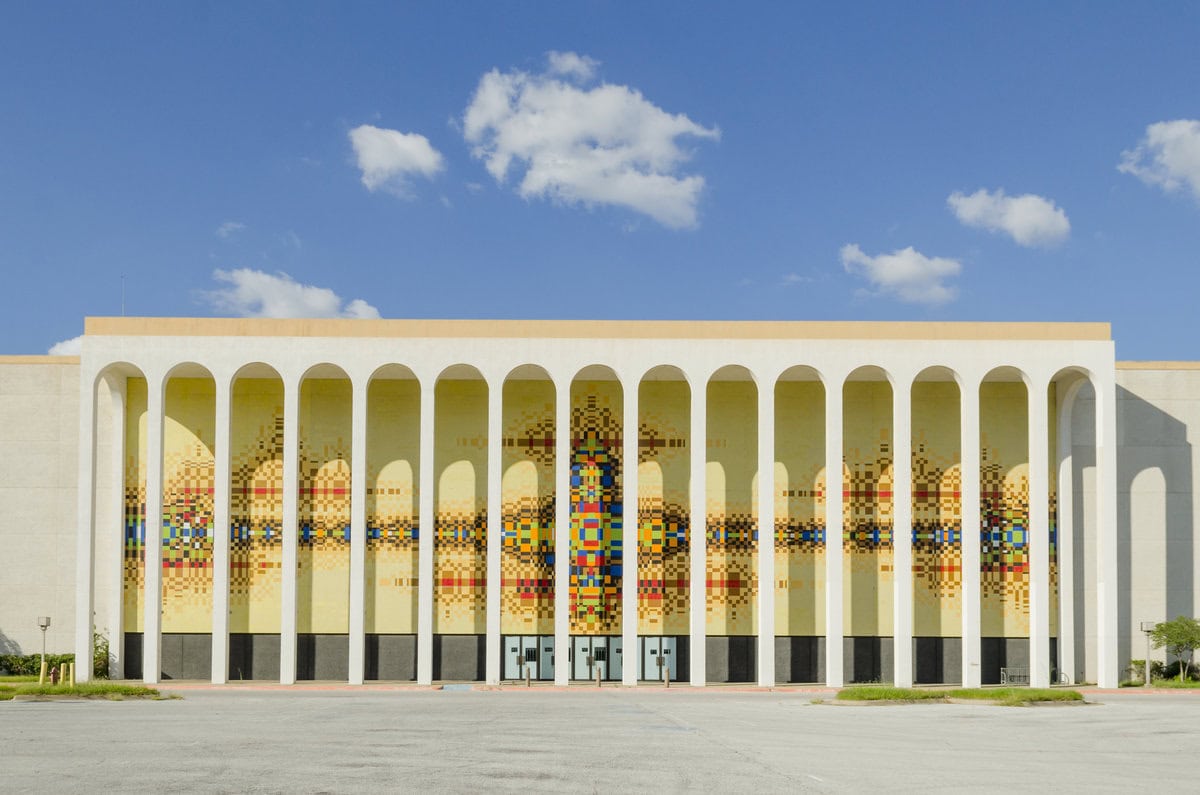
Big Town Mall sat at 800 Big Town Shopping Center, just off U.S. Highway 80 East and Loop 12, on 80 acres about 7 miles east of downtown Dallas.
The building covered roughly 600,000 square feet with space for 49 tenants and parking for more than 3,800 cars.
Two named corridors ran through the interior - Broadway heading toward the Sanger Brothers anchor at the north end, and Main Street connecting the building along its length.
Organized, scaled, and built to impress people.
The anchors alone would have been enough to draw a crowd. Sanger Brothers took the north end - three floors, 104,000 square feet.
Montgomery Ward anchored the south at 124,500 square feet across two floors. J.C. Penney claimed the northwest corner.
These were the stores Dallas-area families had been driving across town to reach one at a time. Now they were all in the same building.
How an Empty Field Turned Into a Major Development
The project was led by Gerri Von Frellick, a developer from Denver. He saw a business opportunity in the quickly growing suburbs spreading east from Dallas.
The Dallas architecture firm Tatum & Quade designed the building, and construction began in August 1957.
After about eighteen months of construction, the mall was ready.
Mesquite was a strong choice in the late 1950s. Its population was rising quickly. New roads were being built through land that had sat empty for many years.
Young families were moving east from Dallas into new neighborhoods, but those areas did not yet have enough stores and services to meet their needs.
Von Frellick's idea was simple: put many businesses in one building, make it enclosed, air-conditioned, and easy to reach, and people would come. That is exactly what happened.
The 80-acre site gave him enough space to plan for more than just the main mall building.
Big Town BowLanes was built on a separate part of the property and became a well-known local gathering place. It stayed open for years after the mall itself was gone.
The Cinema At Big Town opened on February 27, 1964, and regularly attracted people who wanted to see a movie without making a long drive.
Inside the main building, a 600-seat public auditorium called Town Square gave the property a community function that went beyond shopping.
Von Frellick chose Mesquite at exactly the right time. The building he created would influence the eastern Dallas suburbs for the next forty years.
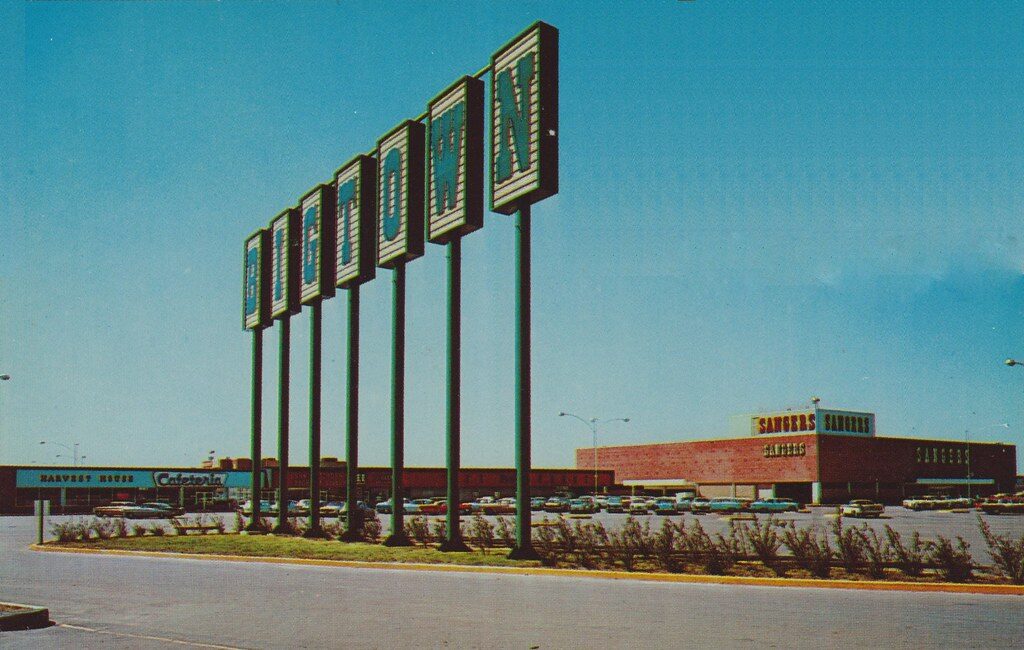
Lollipop Park and Everything Around It
If you walked into Big Town Mall on a Saturday morning in 1965, you had plenty to choose from.
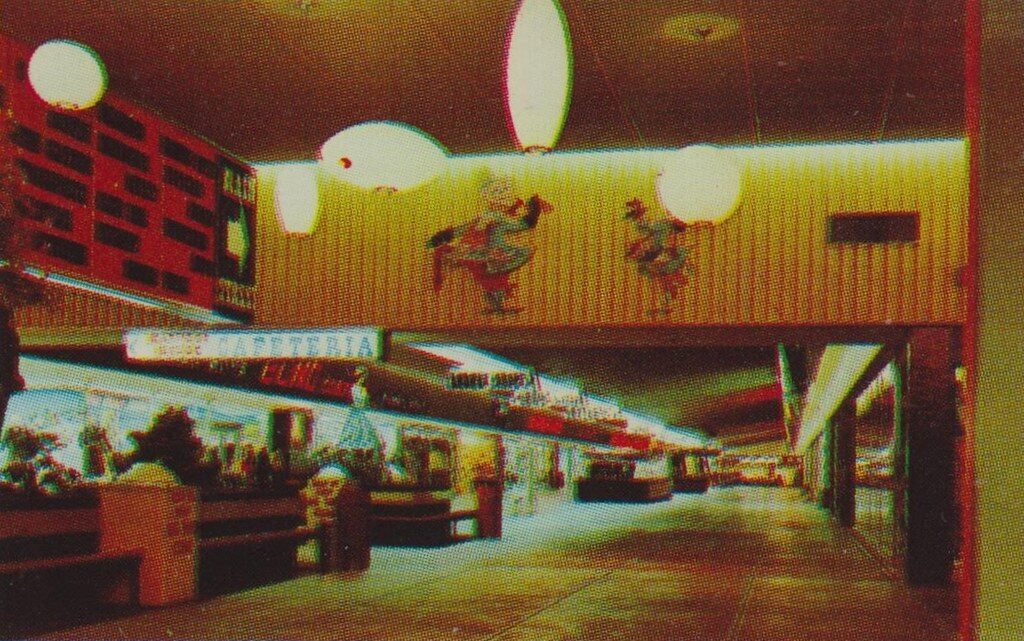
There was Woolworth's, with a cafeteria and enough merchandise to keep someone busy browsing for an hour.
There was Western Auto, Rexall Drug, Bond Clothes, Zales jewelry, Diaches jewelry, Lerner's clothing, and National Shirt Shops.
Wrigley's supermarket was there for anyone who wanted to take care of regular shopping during the same trip.
Olan Mills portrait studio was also there, where many families went at least once a year to have a good photograph taken.
The mall also had an early game room with ball-bearing baseball games and simulated driving machines that kept teenagers busy.
It also had Lollipop Park. This was an indoor children's amusement area built inside the mall.
It included a mini-train, a mini ferris wheel, Sky Fighter planes, roadway cars, Brownie tractors, helicopters, and a Magic Mountain Indian Village.
Parents could sit while their children spent hours there. Features like that made Big Town Mall more than a shopping place.
The property continued to expand. A Woolco discount store opened on the east side in spring 1967, adding another 101,000 square feet.
A major renovation in 1975 increased the Montgomery Ward space to 164,200 square feet. Another larger update followed in 1988.
The Cathay House restaurant served people who wanted a full meal, and Wyatt's Cafeteria out front served many others.
People who went there as children remember the smell inside, the distinct sound of a crowded Saturday, and the feeling that almost anything they needed could be found in that building.
The Long Slow Decline That Finally Hit Bottom
Town East Mall opened in 1971, four miles to the east, with Sears anchoring the lineup - and that was the beginning of the end, just a slow one.
NorthPark Center had already opened in North Dallas in 1965. The regional mall market was filling up fast, and Big Town Mall was no longer the newest or the largest option around.
For a while, it held its ground. The 1975 Ward expansion and the 1988 renovation showed that somebody was still willing to put money into the property.
The building even got a moment of pop culture attention in 1986 - David Byrne used the exterior for a fashion show scene in "True Stories."
The camera panned along the west side past the former Sanger-Harris, J.C. Penney, and a distant Montgomery Ward.
Interior mall scenes went to NorthPark. Big Town Mall got the parking lot.
The real damage came from the anchor side. Sanger-Harris had been rebranded from Sanger Brothers back in 1961, then absorbed into Houston-based Foley's in 1987.
Foley's shut the Big Town Mall location in 1989 and never came back.
Woolworth's followed in 1993. Through the mid and late 1990s, the tenants that had defined the place trickled out and were replaced by smaller, privately operated shops serving a very different customer base.
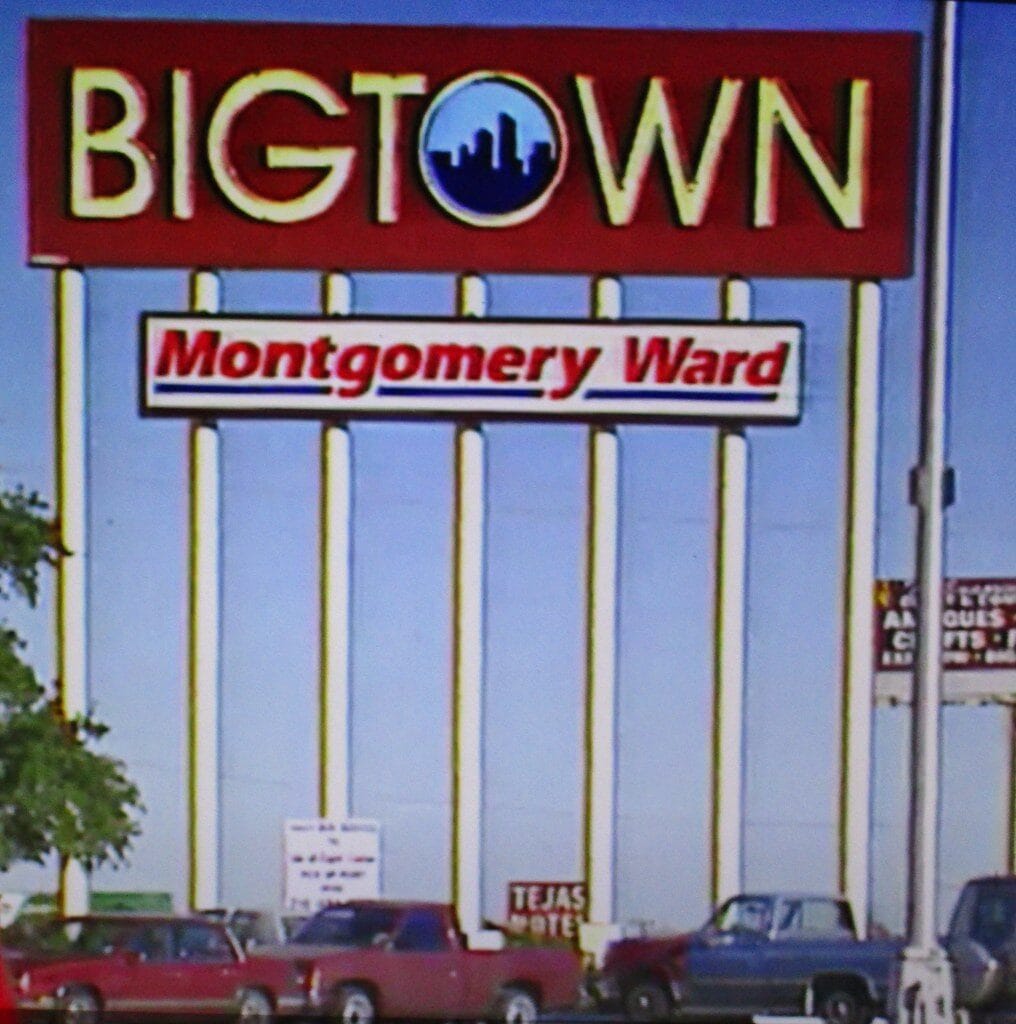
Montgomery Ward, the last original anchor still standing, went dark in March 2001 after the chain filed for bankruptcy.
The mall had outlasted its own purpose by roughly a decade, and after Ward's closed, there was nothing left worth arguing about.
Katrina Changes the Meaning of the Mall
Hurricane Katrina came ashore on August 29, 2005.
Within days, thousands of people were traveling north and farther inland, and many of them were going to Dallas.
The city needed a place to receive and sort the large number of arrivals.
Big Town Mall had been empty for years, so it became a staging area for evacuees entering the region.
The parking lots and the inside of the building were set up as a place for initial screening and routing.
Authorities searched everyone for weapons as they came through. Medical workers performed basic health checks. People were given snacks.
After that, they were sent along I-30 and I-35 to Reunion Arena, the Dallas Convention Center, and shelters in Fort Worth, Irving, Grand Prairie, and Oklahoma City.
For people who had spent Saturdays at Big Town in the 1960s or 1970s, seeing the building used this way had an impact that went far beyond a normal notice that a business had closed.
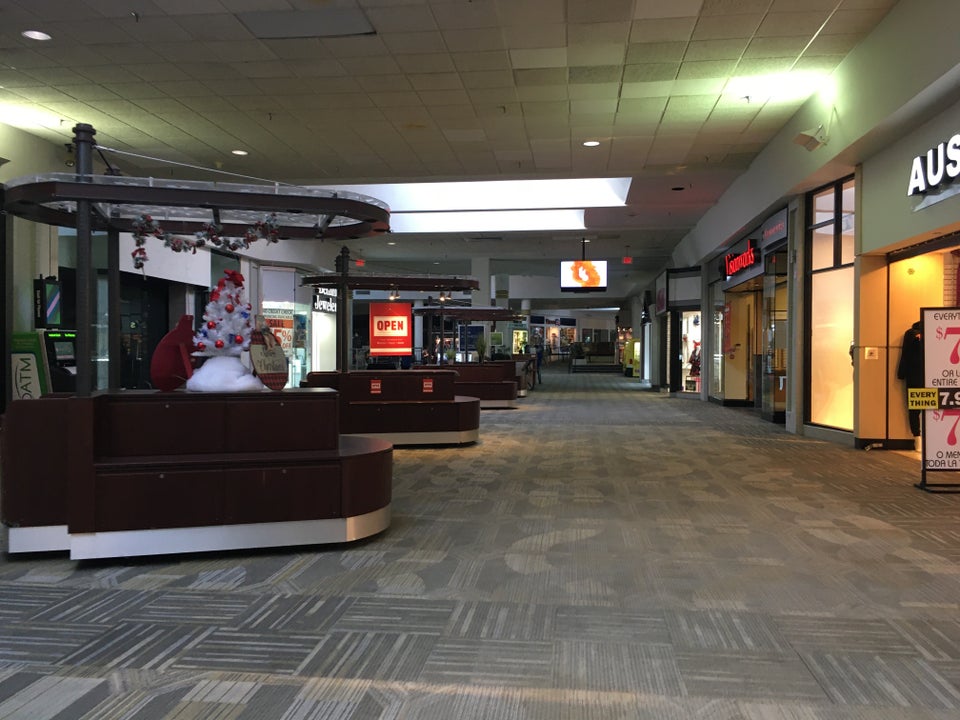
The mall walkways where Woolworth's and Lollipop Park had once operated were now passageways for people carrying all of their belongings in bags.
The large anchor spaces, which had not been able to bring in another retail tenant after Foley's left, were in use again, but in a way no one in 1959 would have expected.
Dallas took in tens of thousands of evacuees during those weeks in September.
Bulldozers, Big Plans, and a FedEx Hub
The demolition decision came down in early 2006.
Work started the week of May 22, crews punched holes in the upper floors of the former Sanger-Harris and Montgomery Ward spaces, and pulled the structure apart section by section.
By September 2006, the main building and most outparcels were cleared. The 80 acres Gerri Von Frellick broke ground on in August 1957 were rubble and open sky.
The Exhibition Hall was the only major structure that survived - it had spent years hosting gun shows, boat shows, and conventions, got a remodel in 2013, and kept going.
Big Town BowLanes lasted until December 2009 and the building was later demolished in September 2011.
A developer named Kent Jones drew up a sports and entertainment complex for the site in 2008 - baseball fields, soccer fields, an amphitheater, lodging, restaurants, and an indoor training facility.
The Great Recession killed that plan before construction ever started, and the land sat idle until August 2012, when it changed hands through a connection to Dallas-based SLJ Company.
In April 2016, Dallas developer Scott Rohrman's 42 Real Estate LLC announced a 334,000-square-foot FedEx regional distribution hub for the rezoned land.
FedEx wanted the spot for its access to I-30, U.S. 80, and the LBJ Freeway.
Construction finished by 2017, sorting equipment went in over the following months, and operations started around September 2017, bringing roughly 500 jobs to Mesquite.
By July 2017, the building had sold for $50.6 million. As of 2026, it's still running - a warehouse on the land that once drew 15,000 people to see what a shopping mall looked like.
AS A KID, I WENT TO BIG TOWN MALL OFTEN, IT WAS THE PLACE TO GO!! I AM GLAD THEY REPURPOSED THE PROPERTY!! WILL NEVER FORGET THE MALL, IT WILL ALWAYS BE IN MY HEART 💙💙💙 !!! LOL
I couldn’t agree more. Big Town Mall was such a cornerstone for the community back in the day. I’m also glad they’re making good use of the space now. Thanks for sharing your experience!
it's funny because my sister and I were just talking about Big Town a couple of days ago. We loved the shopping and eating when we moved to the area less that was less than a 5 minute drive. We started elementary school just after moving to the area so had a lot of fun shopping for clothes. Thanks for the memory.
I love it when old memories come up like that! Big Town was definitely a great spot for shopping and eating. Glad to hear it brought back good times for you and your sister. Thanks for your comment.
I was at Buckner Home before Big Town was built, but it was there my senior year in high school. We were allowed to go there Saturday afternoon if we had a pass signed by our dean. It was a fairly short walk, and we were dazzled by its presence. I graduated 1960 (the last graduating class of Buckner Home High School) and I went to Baylor University, and I never made it back since I had no car those years at Baylor. What I do remember most was the excitement in the area when it was built.
Thank you for sharing such a vivid memory. That detail about needing a pass signed by the dean to walk over on Saturdays says more about that era than any site plan ever could.