
Rockville Town Center is one of the few downtowns around here that a city built, condemned, and then knocked down on purpose.
And then mostly did it again.
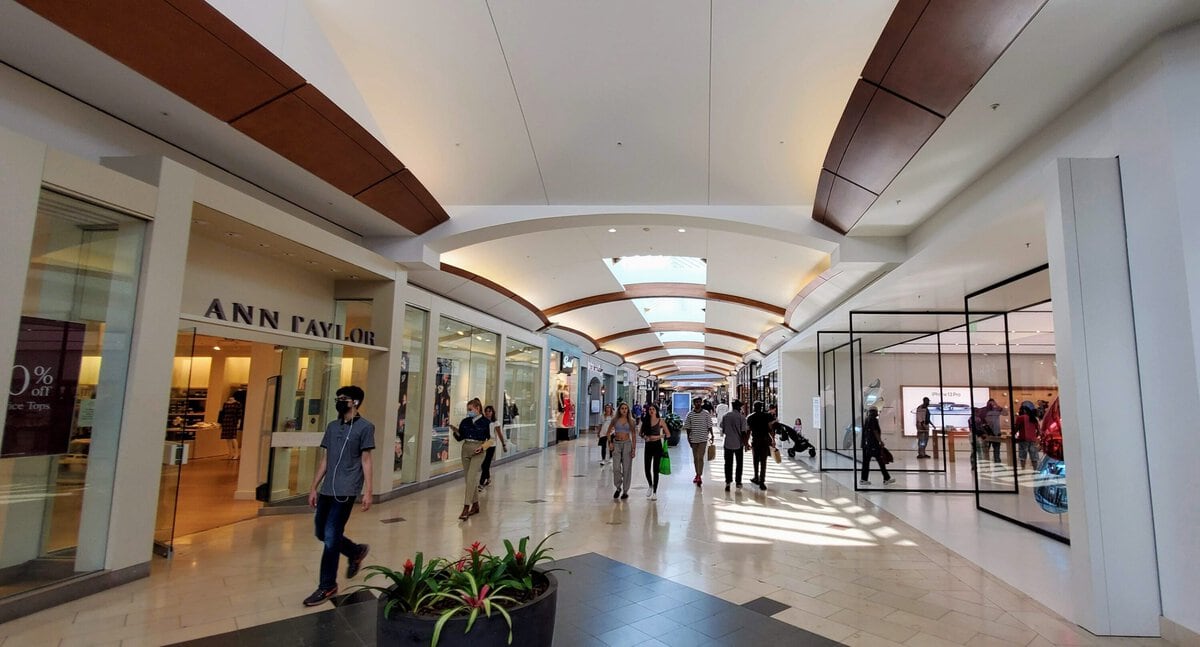
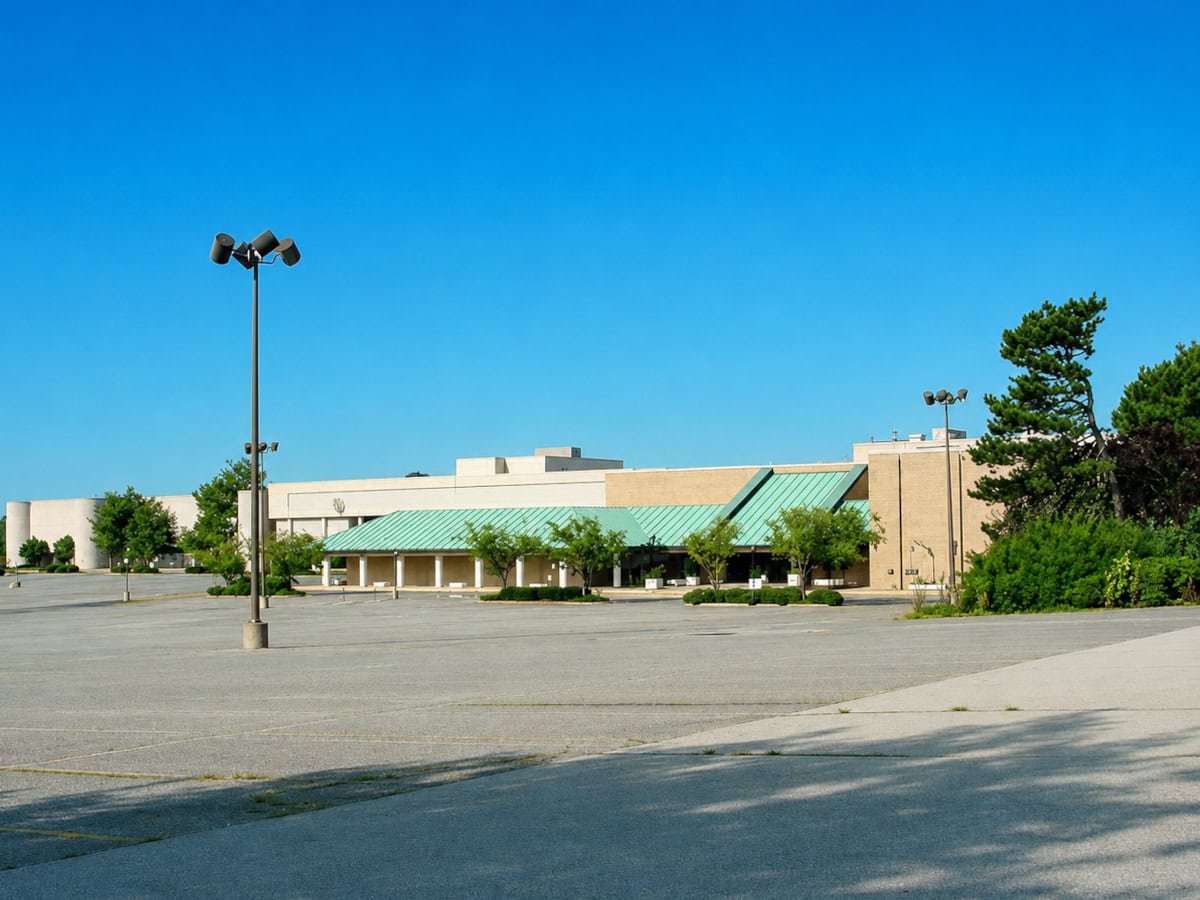
The first version was an enclosed Rockville mall.
It failed, emptied out, and came down.
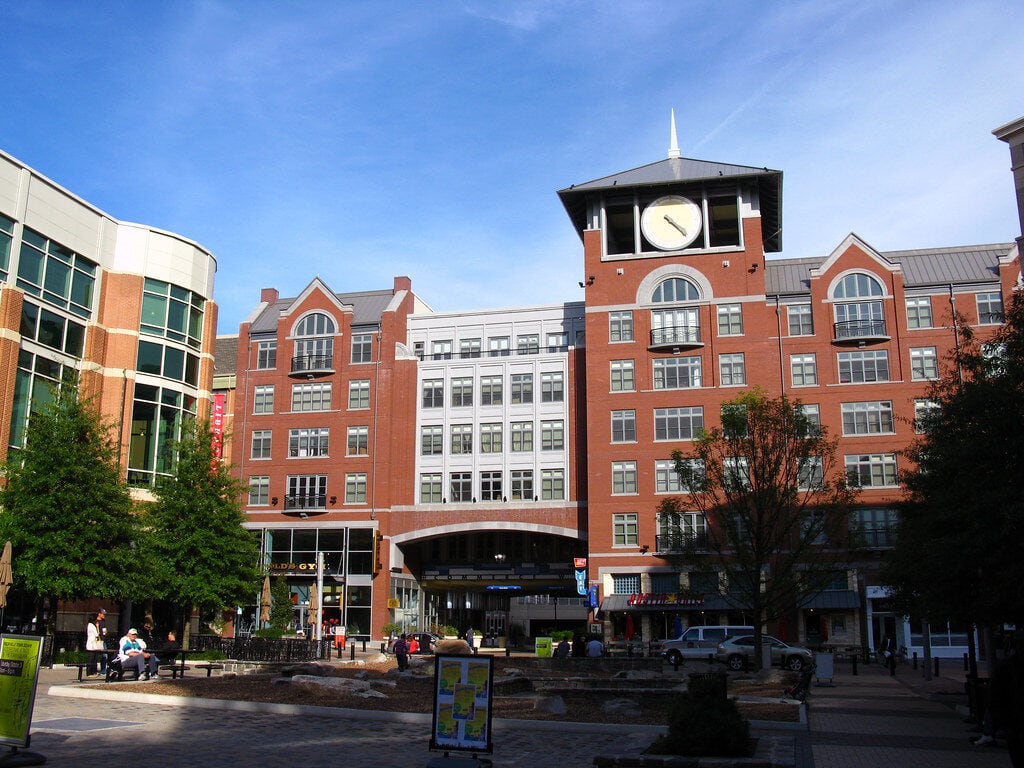
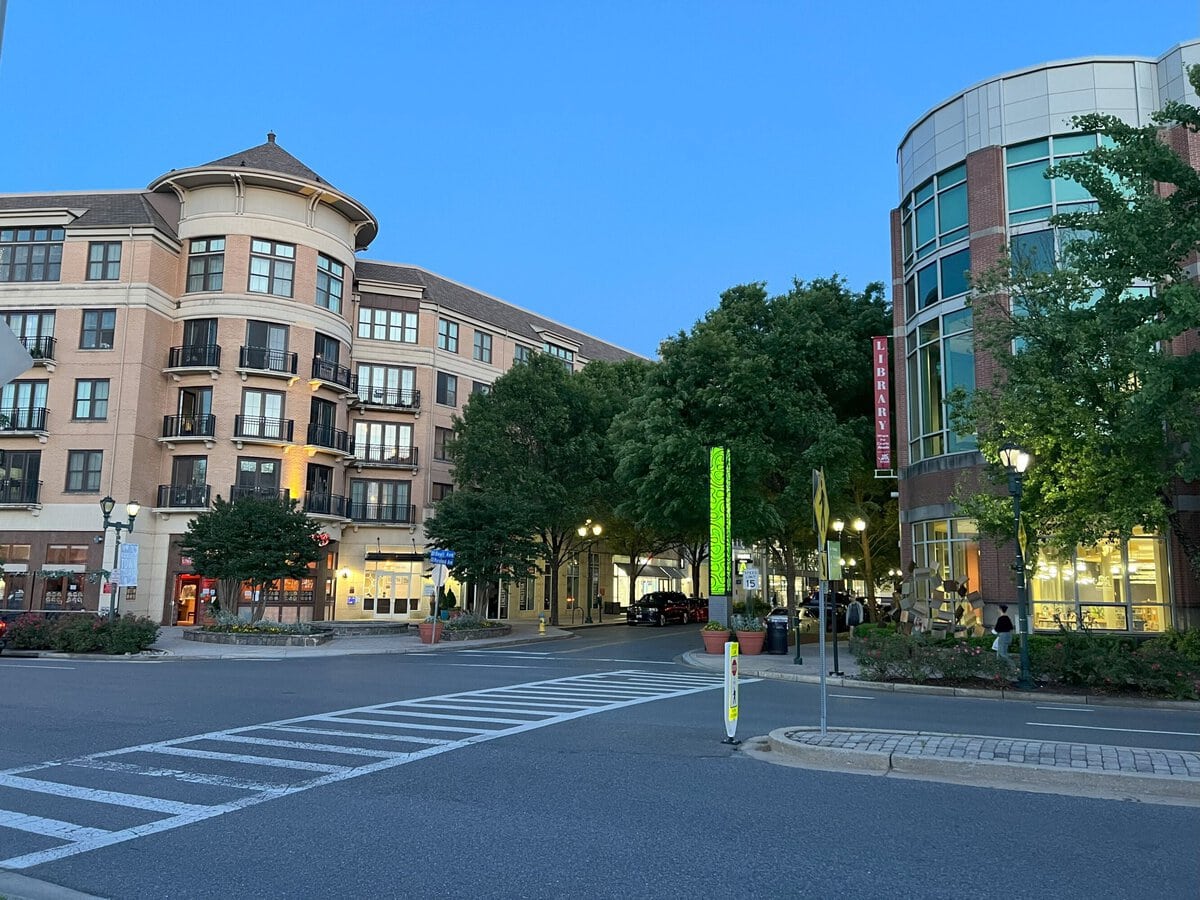
The second is the open-air square that's there now, the plaza and the clock tower and the winter ice rink.
In between, the heart of downtown was cleared and rebuilt almost from scratch.
Most of what's standing today is younger than the people walking through it.
All of it comes out of a 60-year argument over how to pull people downtown and keep them there.
Rockville has been on the wrong side of that argument before.
Here's the run of attempts.
What Rockville tore down to make room for the mall
By the late 1950s, the worry was that shoppers were drifting out to the new car-friendly stores along the highways.
A 1959 study said it plainly: too much traffic, nowhere to park, retail slipping away.
So the city cleared the board. By 1962, the urban renewal program covered 46 acres.
It moved out families, individuals, and more than 150 businesses.
It closed and rerouted streets like East Montgomery Avenue and Commerce Lane, cutting the old grid that had tied downtown to the neighborhoods around it.
What went up in place of all that was a superblock: county buildings, high-rise offices, apartment towers, and the enclosed mall, with shoppers on one real retail floor and cars in parking levels below.
That was the downtown planning fashion of the day.
Rockville bought all of it.
Rockville built a downtown mall that opened with one anchor
Rockville Mall opened in 1972 in the middle of downtown Rockville, Maryland, the Montgomery County seat.
It sat on 13 acres and was built to hold two department stores.
Only one opened with it.
That one was Lansburgh's, and the chain was bankrupt 6 months later.
The mall got brief replacements, but never the anchor it needed.
It opened thin, slipped again, and by 1981 most of its storefronts were empty.
A lot of the trouble was the building.
It sat low and hard to read from Rockville Pike, with a Courthouse Square entrance and parking people struggled to figure out.
From the road, it looked like a concrete block dropped into the center of town, hard to spot and harder to walk into.
And this was the thing that was supposed to save downtown.
To build it, Rockville had already torn the old downtown down.
Rockville Mall got a new name and emptied out
By 1978, the mall needed help and got a new name instead.
Management renamed it the Commons at Courthouse Square.
Shoppers did not come back.
By 1981, there were dozens of dark storefronts, and the last tenants were holding on between them.
It closed around 1982, 10 years after the doors first opened.
A project meant to bring downtown Rockville back to life had handed the city a closed mall sitting right beside its own City Hall and courthouse.
Rockville Metro Center spent tens of millions and stayed empty
A local firm, Eisinger Kilbane, bought the bankrupt mall and poured tens of millions into a makeover.
The work pushed some stores out toward the edges and brought in entertainment, a movie theater, and a billiards hall among them, and the whole thing reopened as Rockville Metro Center.
The new name had a reason.
In 1984, Metrorail's Red Line reached Rockville and Shady Grove, and the project tried to ride the arrival of the trains.
It didn't matter.
The complex still turned its back on Rockville Pike, still sat inside a superblock that worked nothing like a real downtown street.
Assessed values tied to the failed mall fell $15 million over the decade.
By the time Marine Midland Bank foreclosed in 1991, the place was 80 percent empty.
Two decades and two redevelopments in, downtown Rockville's centerpiece belonged to a bank.
Taking the mall apart and putting the streets back
The next move was to take it apart.
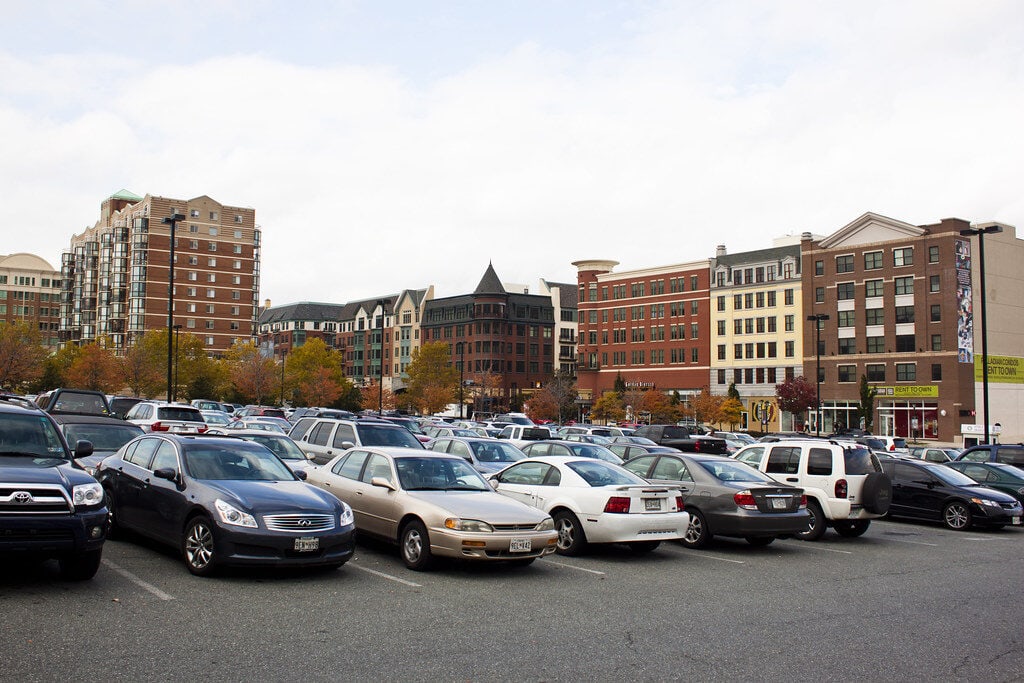
Rockville voted in 1993 to take it down, and by October 1995 the demolition was done.
The superblock that had defined downtown for a generation came undone.
The streets came back with it.
In 1997, Rockville created Courthouse Square Park with the Spirit of Rockville fountain, and pieces of the old grid returned.
Regal Cinemas opened downtown in 1998.
The empty department-store shell at 255 Rockville Pike became an office building, and Montgomery County government moved in.
This time the city wanted ordinary blocks people could walk, with buildings facing the street instead of hiding from it.
What it still didn't have was a center.
The 2007 rebuild anchored downtown Rockville with a library
A new master plan in 2001 threw the enclosed-mall idea out for good.
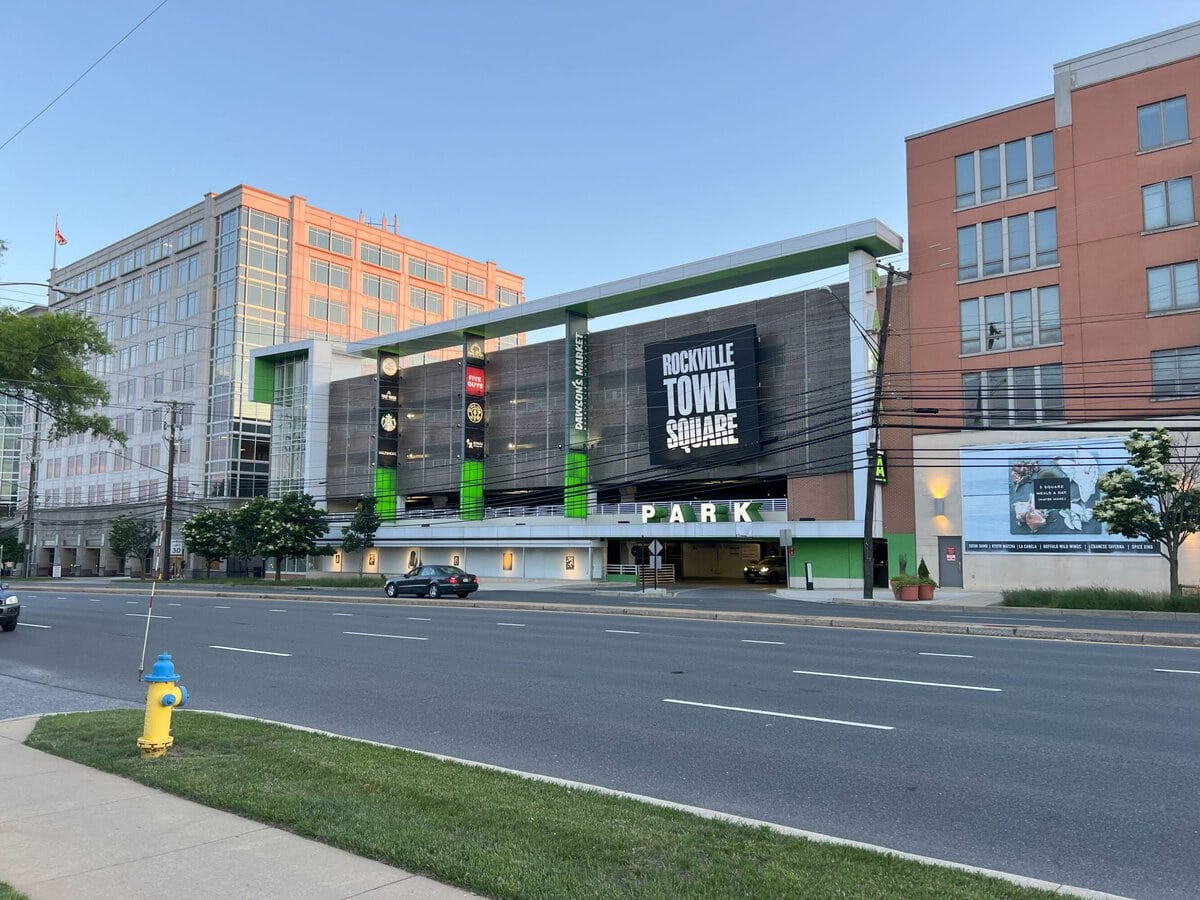
The next downtown would be open-air and built on streets: apartments over the shops, parking tucked behind and below, storefronts pushed right up to the sidewalk.
The partners signed the deal in September 2003, and construction ran from 2004 to 2007.
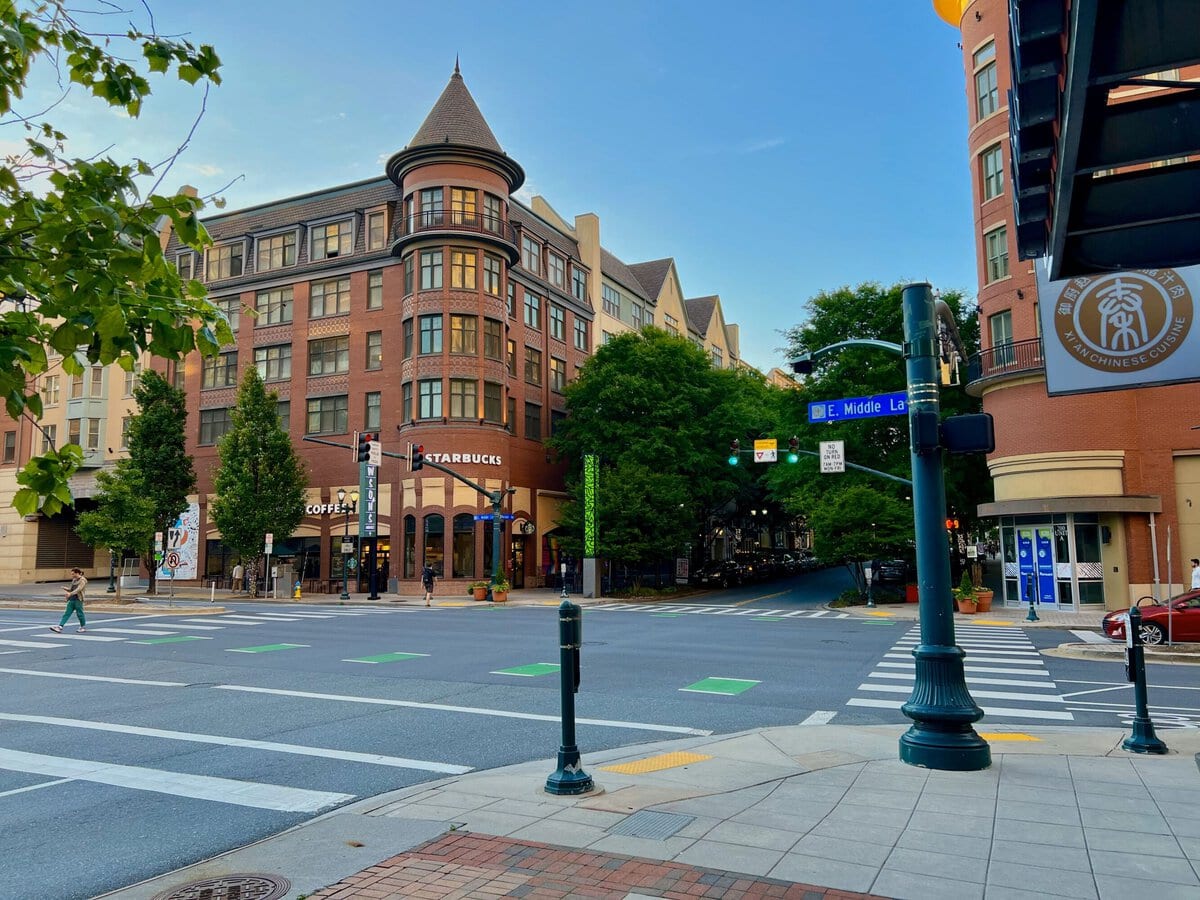
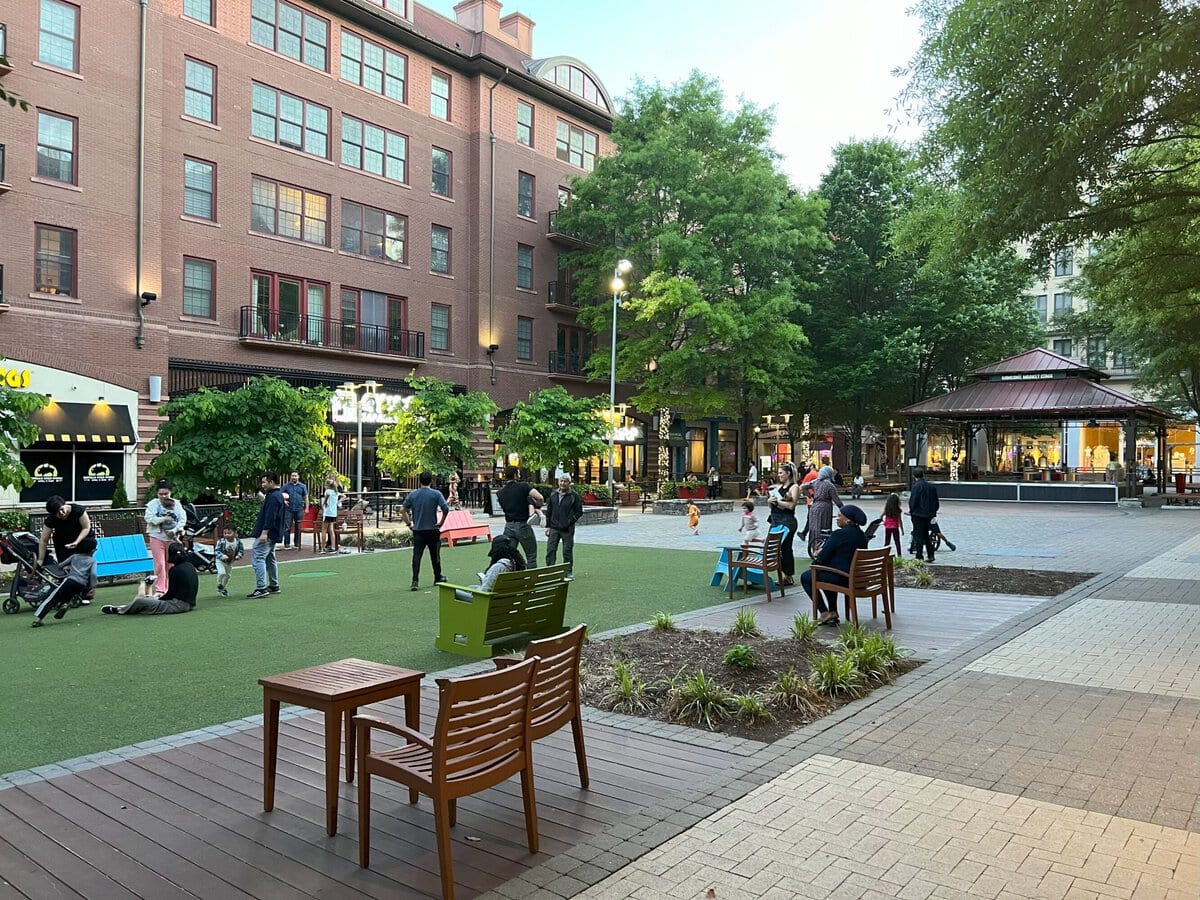
Rockville Town Square opened over Memorial Day weekend in 2007: six blocks and 12.5 acres, more than 180,000 square feet of shops and restaurants with 644 homes set above and around them.
To keep all of it from looking like one big project, the buildings used 38 different facades.
The civic anchors were public buildings.
A 100,000-square-foot county library opened on the square in late 2006, replacing the older Rockville library that had stood on Maryland Avenue since 1971.
A 40,000-square-foot arts building followed.
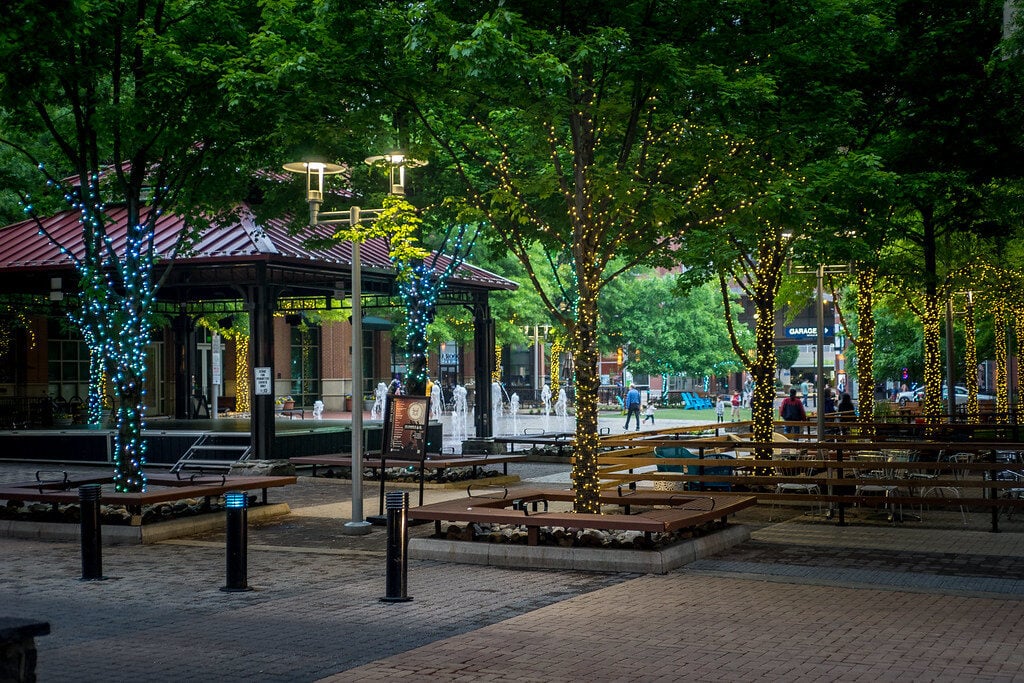
In the center sat a plaza the size of a football field, with a stage, a fountain, public art, and an ice rink in winter.
Starbucks was the first store to open, in February 2007.
What it cost Rockville to assemble the new downtown
The city didn't assemble the land by ordinary purchase alone.
It used condemnation for a strip mall and two other private properties.
Owners challenged it and lost, because the project carried public uses: the garages, the square, and the regional library.
Rockville spent $7 million to $8 million moving displaced businesses out, and a few of them later came back into the new development.
Then the market dropped out. The first condos sold fast, 30 on opening day and 160 in two months.
By April 2006, the regional condo market had collapsed.
The developers kept the 152-unit Palladian as for-sale condos and sold the rest of the housing to become rentals, the 492-unit Fenestra.
Buyers who had signed in those buildings were moved to the Palladian or got their deposits back.
By the time it opened, the project was mostly apartments wrapped around one block of condos.
The grocery store Town Square couldn't keep open
A neighborhood grocery was supposed to anchor everyday life on the square.
Super Fresh signed a 34,000-square-foot lease in early 2007, started paying rent, and never opened.
The lease was canceled in 2010.
Dawson's Market finally brought groceries to the space in 2012 and lasted six years before it closed in October 2018.
A new lease brought it back that December.
It shut for good on June 30, 2024, after 12 years tied to the square.
Other tenants turned over too.
Sushi Damo held a spot on Maryland Avenue for more than 15 years before another sushi place took over in 2024.
By 2019, the problem had a clear number: Town Center held 500,000 square feet of retail and only 17,000 to 20,000 people in its retail catchment area.
There was simply more store than there were shoppers.
So the city changed course. Pack more residents in, and stop asking retail to carry downtown by itself.
More housing, and another try at a grocery store.
Trader Joe's, a rebrand, and the last piece of the mall
On June 12, 2025, Trader Joe's opened in the old Dawson's space at 225 North Washington Street.
After 18 years, the square had the kind of grocery anchor it had been trying to make work since opening.
A new name arrived with it.
In February 2025, Rockville Town Square became The Square, with fresh signage, murals, and event programming from its current owner.
The restaurants kept rotating.
Buffalo Wild Wings served its last orders in December 2025, Panera closed in May 2026, and new names keep filling the rooms the old ones leave.
In 2025, the city also rewrote the rules.
A new master plan and floating zones now allow base heights up to 235 feet along Rockville Pike, with another 100 feet possible for projects that include enough affordable housing.
The idea is to put thousands of new homes downtown, enough to finally give the shops a crowd that stays.
One of the sites lined up for that housing is 255 Rockville Pike.
The office building there has been empty since 2021, and it's the last standing piece of the original Rockville Mall.
The proposal on the table would strip off the office levels, reuse the parking structure, and make room for up to 550 apartments.
For now, people come for the library, the farmers market, the January ice rink, and a cart of groceries from the grocery space the square spent years trying to make work.
The streets Rockville tore out in the 1960s are back, and this time there's somewhere to walk to.
Independent Publisher Notice
BestAttractions is an independent editorial publisher. We are not affiliated with, endorsed by, or acting on behalf of any location, business, property owner, manager, government agency, or organization described in this article. Comments posted on this page are not forwarded to, reviewed by, or acted upon by any entity mentioned in the article. For official inquiries, complaints, applications, bookings, or other requests, please contact the relevant entity directly through its official website or other verified channels.
Great story. Have lived in area since 1972 and watched the ups and downs of Rockville Town Center, Center, etc. While I like many of the stores and restaurants, the inside garage parking is the major issue in my visiting the shops or restaurants. We usually try a new sit down restaurant, but do not return as the effort to park in the garage outweighs the dining experience. Also, from time to time the parking garage charges and then does not charge for parking with validation. While the cost for parking is not not significant, it is yet another nuisance in addition to finding a parking space in the garage. Wishing the new plan will encourage more folks to shop in the area. I also hope the new condos and apartments have sufficient parking spaces for the residents - a limit of one space per unit is not practical for the suburbs (even though the planners think folks will not use cars and take public transportation - a fairy wish). We all want businesses to succeed and bring needed tax revenue to Rockville and Montgomery County. We also want the planners to be realistic and not idealistic in their planning. Wishing is not a practical plan for the community and its residents!
These are the current rates: you get 90 minutes free without validation, then it's $3 for up to 3 hours, $4 for 4, $5 for 5, $8 for up to 8 hours, and the most you'll pay in a day is $20. It's not expensive.
But you pointed out the real issue. The owner made the free time shorter to get cars to leave faster, and faster turnover actually discourages careful diners from coming back. They focused on the lunch crowd and made it harder for the dinner crowd.