
A weekday here begins with distance.
The house may sit behind pines, beyond a stone wall, or at the end of a driveway long enough to need its own winter plan.
The schools, grocery stores, medical offices, playing fields, and coffee stops are not far away in miles.
They are simply scattered, which means nearly every ordinary task begins with a car key.
That arrangement is the bargain at the center of this place.
Residents get wooded neighborhoods, a complete local school district, quick access to Manchester, a nearby airport, and enough retail to handle most weekly needs without turning every errand into an expedition.
What they do not get is a compact town center that organizes daily life on foot.
The town is affluent, settled, and highly educated.
Its 2025 population estimate was 23,973, and 93.2 percent of residents had lived in the same home a year earlier.
That stability can feel reassuring. It can also make the front door expensive.
A Weekday Built Around the Car
Before eight in the morning, the map becomes obvious.
School buses work through residential roads while parents and commuters funnel toward Route 101, South River Road, and the connections into Manchester.
The Census Bureau puts the mean commute at 25.3 minutes, a number that makes sense for people working nearby.
It says much less about a household trying to reach Boston several days a week.
Manchester is the practical center of gravity.
Its offices, hospitals, downtown services, and airport sit close enough to shape local routines without making this suburb feel urban.
Manchester-Boston Regional Airport currently offers nonstop flights to several major hubs and leisure destinations, a convenience that matters more after the first 6 a.m. departure than it does on a real-estate brochure.
Public transportation exists, but it does not set the rhythm.
Manchester Transit Authority's Route 7 reaches the commercial area and downtown Manchester, while shared-ride services cover limited parts of the town.
For most households, that is a backup rather than a replacement for driving.
This becomes especially important when children grow older.
A teenager may be surrounded by school activities, trails, sports, and stores yet remain dependent on an adult for transportation.
The town offers space, but not much independence without wheels.

The Schools Shape the Whole Calendar
Schools are not merely one local service among many.
They are part of the town's organizing principle.
The public district runs from prekindergarten through grade 12 and serves roughly 4,000 students.
The deeper signal appears in the adult population: 63 percent of residents age 25 or older hold at least a bachelor's degree.
Education is woven into household expectations, housing demand, public spending debates, and the weekly traffic pattern.
That does not mean every child will have the same experience.
A district can be academically ambitious and still require families to examine special-education support, course access, class size, extracurricular demands, and the social fit of an individual school.
Reputation is useful; it is not a substitute for looking closely.
What residents feel most immediately is the calendar.
Games, performances, pickups, practices, and school meetings create a second transportation network layered over the commute.
For families with two working adults, the question is rarely whether there is something for a child to do.
It is who will drive, who will leave work early, and how many separate directions the household must travel before dinner.
For many buyers, that trade is acceptable.
They are paying for the district and the space around it.
The premium is not hidden.
Errands Have Their Own Geography
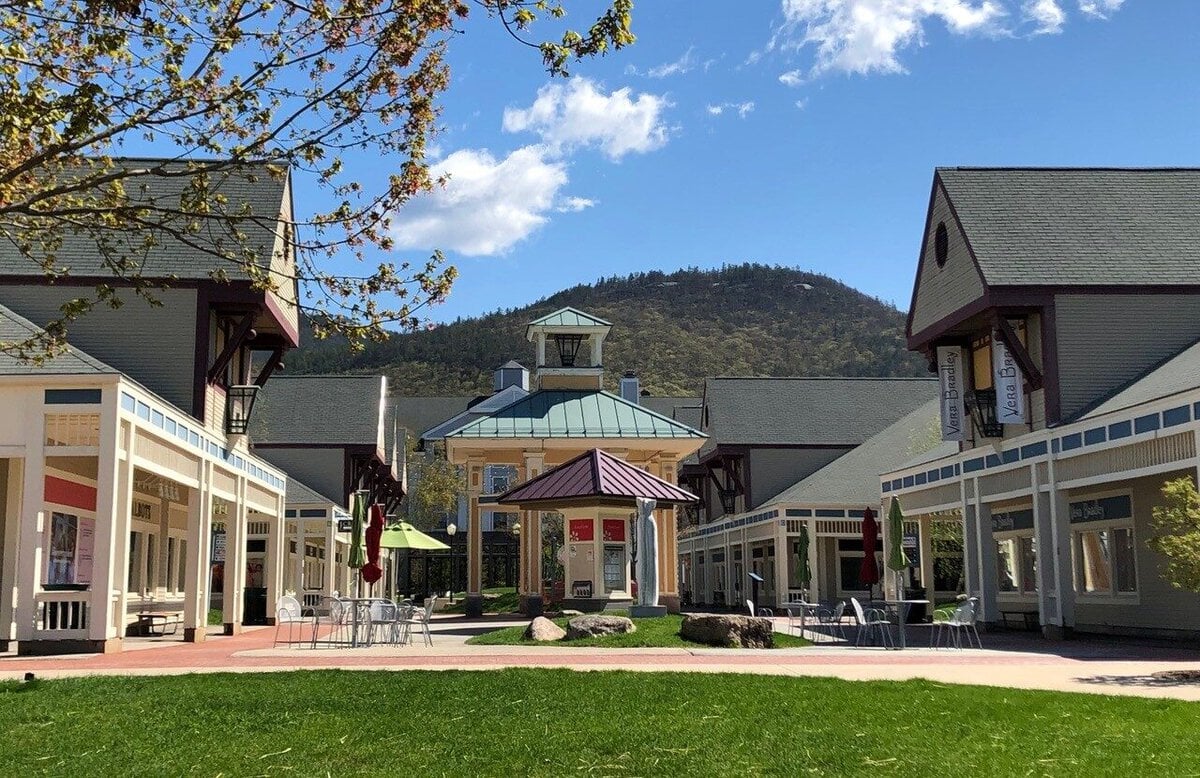
South River Road functions as the practical main street, though it does not look like a traditional one.
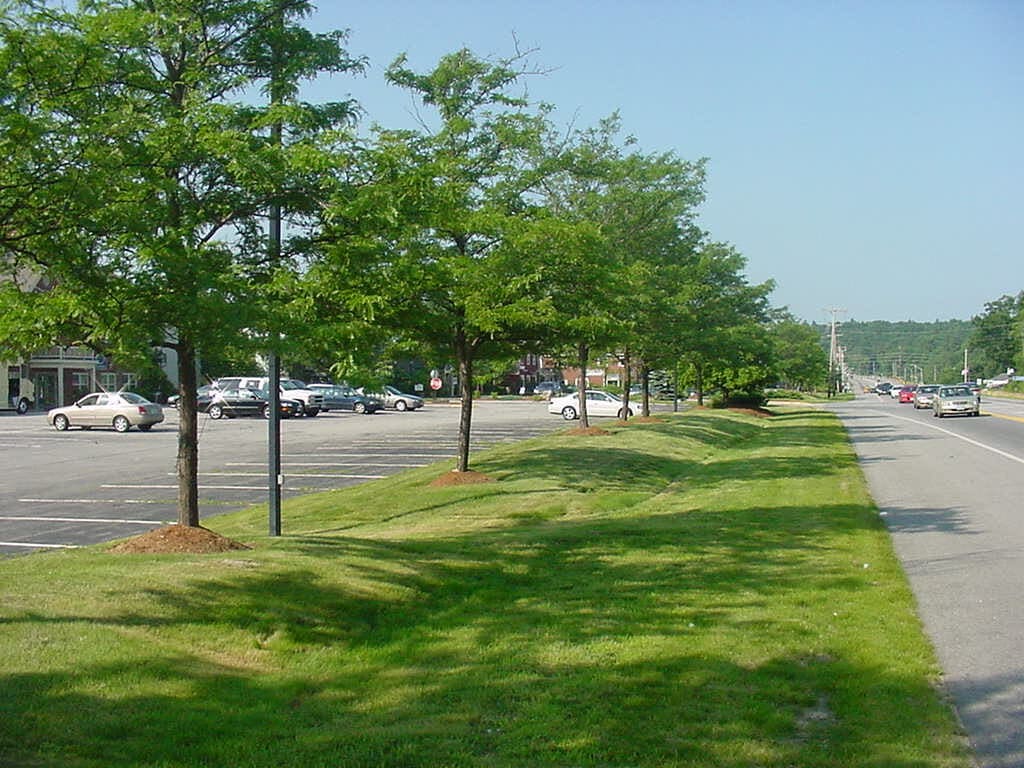
Groceries, pharmacies, restaurants, fitness businesses, medical offices, and national retailers sit along a corridor designed primarily for drivers.
In 2022, the town recorded nearly $660 million in retail sales, an unusually large total for a community of fewer than 25,000 people.
The convenience is real. A resident can handle groceries, a prescription, a haircut, and dinner without leaving town.
The experience, however, is a sequence of parking lots rather than a walk through a center.
That distinction matters.
Sidewalks and bicycle accommodations are being expanded along South River Road, and planning officials expect more pedestrian activity there.
Even so, one improved corridor cannot make widely separated residential neighborhoods walkable.
Most people will continue to drive to the place where they plan to walk.
Healthcare follows the same regional pattern.
Medical offices are available locally, while full-service hospitals, including Elliot Hospital and Catholic Medical Center, are in nearby Manchester.
The arrangement works well for routine appointments and gives residents access to larger systems without a long regional trip.
Daily life is efficient here. It is not spontaneous.
You generally decide where you are going before you leave the driveway.
Weekends Reveal the Softer Side
Saturday morning offers a better explanation of the town than another table of demographics.
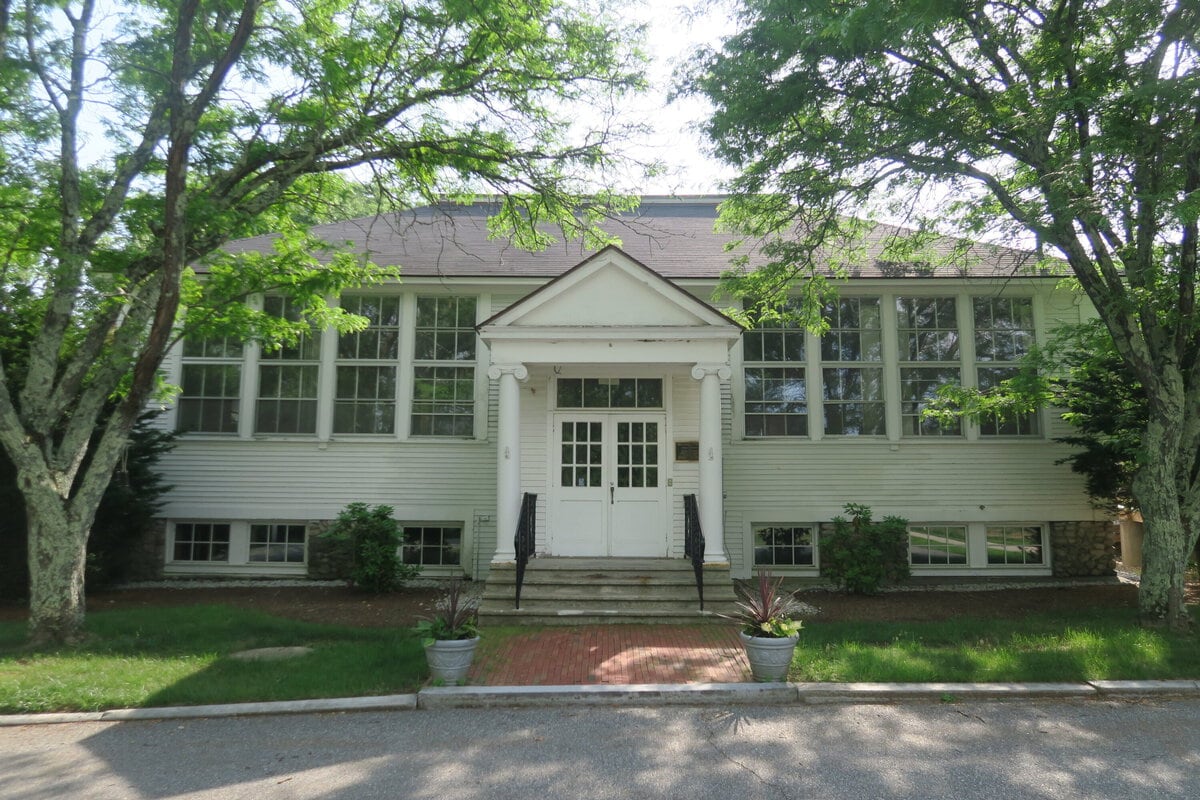
A household might return books at the public library near the village center, pick up groceries on South River Road, then head to Pulpit Rock Conservation Area.
That preserve covers 338 acres and has about four miles of trails.
The municipal trail network also includes Joppa Hill, Legacy Park, Van Loan Preserve, and smaller conservation areas maintained with help from local volunteers.
The Educational Farm at Joppa Hill adds something the commercial corridor cannot: fields, farm programs, and a reminder that the town's identity did not begin with office parks and subdivisions.
Community life appears in modest, recurring forms - library programs, trail workdays, youth sports, seasonal events, and the annual roadside cleanup that brings residents, students, clubs, and businesses together.
None of this produces a lively downtown weekend.
There is no dense strip where brunch, shopping, a playground, and an evening drink naturally connect.
Residents assemble their own day from separate destinations.
That can feel pleasantly unforced. It can also feel thin to someone who wants public life to happen without planning it.
The town is better at giving households room than giving strangers reasons to share the same sidewalk.

The Price of Quiet Starts at Home
The Census Bureau's 2020-2024 estimate placed the median value of an owner-occupied home at $612,100.
Median monthly owner costs for households with a mortgage reached $3,239, and median gross rent was $2,099.
About 82.9 percent of occupied homes were owner-occupied, so the rental market is a side door, not the main entrance.
Property taxes add the sharper edge. The 2025 rate was $16.49 per $1,000 of assessed value.
At that rate, a home assessed at $700,000 produces an annual bill of about $11,543 before exemptions or credits.
The town is conducting a full revaluation in 2026, with final values expected in September, so both assessments and the eventual tax rate deserve attention.
Still, the true cost is not contained in one bill.
Wooded lots bring leaves, branches, drainage questions, tree work, and sometimes long driveways.
Utility arrangements vary by address.
Some homes use private wells or septic systems, while municipal water or sewer reaches others.
The town advises new residents to confirm what is available at a specific property.
This is where privacy stops being an aesthetic and becomes a maintenance category.
The quiet is genuine. Someone has to plow it.
Winter Shows How the Town Operates
Winter turns local habits into rules.
From November 1 through April 1, vehicles cannot remain on public roads between midnight and 8 a.m. or interfere with snow removal.
That is not an unusual New England restriction, but it captures the larger operating logic: roads must stay clear, driveways must be managed, and weather can reorganize a morning before anyone reaches Route 101.
Trash works differently from what many newcomers expect.
The town does not provide household trash removal.
Residents hire a private company or take their own refuse and recycling to the transfer station on Chubbuck Road.
A Saturday trip there can include ordinary trash, zero-sort recycling, food-waste composting, bulky items, or a stop at the Second Chance shop.
These details sound small until they become weekly.
They also reveal the kind of resident the town rewards: someone comfortable managing a house, a vehicle, a schedule, and several services that denser municipalities handle collectively.
The payoff is control. The penalty is administration.
The Reveal: Bedford, New Hampshire
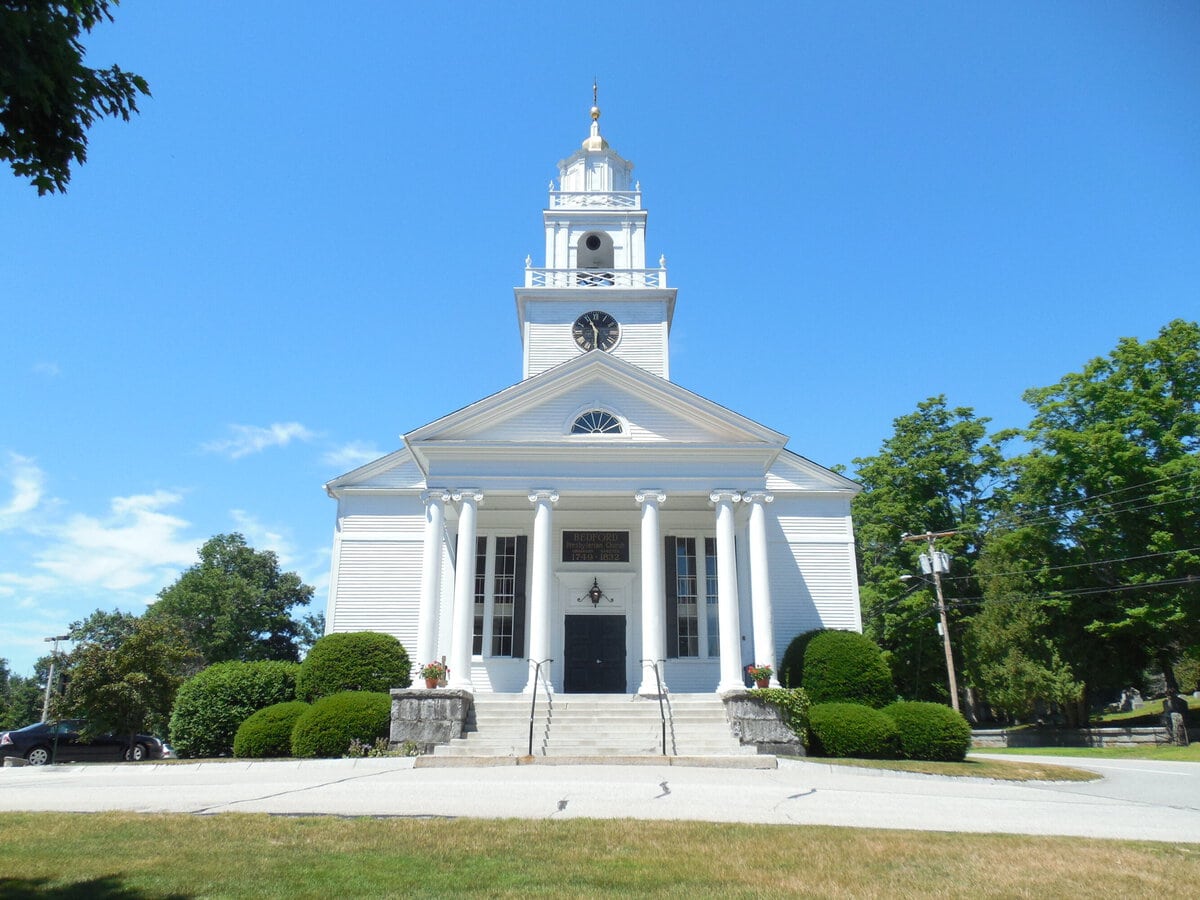
The town is Bedford, New Hampshire.
Bedford works best for households that want strong public institutions, wooded residential space, easy access to Manchester, nearby hospitals, a useful regional airport, and enough local retail to keep the week moving.
It is especially convincing for people whose jobs and family routines are centered in southern New Hampshire rather than Boston.
It is less persuasive for first-time buyers stretching toward the purchase price, renters seeking abundant choices, teenagers craving independence, or adults who want daily life to unfold on foot.
The five-figure tax bill is only the most visible cost.
Car dependence, winter work, property upkeep, and the logistics of dispersed family life arrive with it.
Yet the appeal is not difficult to understand.
Bedford offers a polished version of suburban New England: private without being remote, prosperous without being showy, and close to a city without absorbing much of its noise.
The front door is expensive because the town has become very good at protecting what is behind it.
On the map: Bedford, NH 03110
References
U.S. Census Bureau, QuickFacts: Bedford town, Hillsborough County, New Hampshire, population, housing, education, income, retail, and commuting estimates through 2025.
National Center for Education Statistics, Bedford School District directory information, 2024-2025 district enrollment, grade span, and school count.
Town of Bedford, Assessing, 2025 property-tax rate and 2026 revaluation schedule.
Town of Bedford, Planning Board minutes for December 1, 2025, South River Road sidewalks and pedestrian and bicycle accommodations.
Manchester Transit Authority, Route 7 - Bedford Grove Plaza and Second Street, fixed-route connection with downtown Manchester.
Manchester Transit Authority, Routes and schedules, service coverage in Manchester and parts of Bedford.
Manchester Transit Authority, StepSaver shared-ride transportation, service coverage in parts of Bedford.
Manchester-Boston Regional Airport, Airlines serving MHT, nonstop destinations available in July 2026.
Centers for Medicare & Medicaid Services, Elliot Hospital, Manchester hospital location and provider identification.
Centers for Medicare & Medicaid Services, Catholic Medical Center, Manchester hospital location and provider information.
Town of Bedford, Bedford Public Library, library location and community programming.
Town of Bedford, Bedford Trails, municipal conservation areas, trail systems, and volunteer stewardship.
Town of Bedford, Pulpit Rock Conservation Area design-build request, preserve acreage and trail mileage.
Town of Bedford, Clean Up Bedford Day, 2026 community roadside cleanup and participating local organizations.
Town of Bedford, New Residents, household trash removal and property utility guidance.
Town of Bedford, Transfer Station, resident access, accepted waste, recycling, and operating hours.
Town of Bedford, Second Chance Swap Shop, reuse program at the transfer-station property.
Town of Bedford, Winter Parking Ban, November 1 through April 1 parking restrictions for snow removal.
Independent Publisher Notice
BestAttractions is an independent editorial publisher. We are not affiliated with, endorsed by, or acting on behalf of any location, business, property owner, manager, government agency, or organization described in this article. Comments posted on this page are not forwarded to, reviewed by, or acted upon by any entity mentioned in the article. For official inquiries, complaints, applications, bookings, or other requests, please contact the relevant entity directly through its official website or other verified channels.