From the Ohio River Boulevard, most people noticed Dixmont first by the boiler building and smokestack, which rose above Route 65.
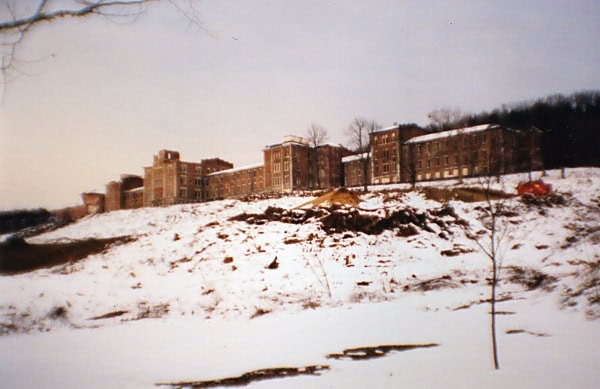
The main hospital sat back from the road on a wooded bluff overlooking the Ohio River, screened by trees and easy to ignore if you never had a reason to go up there.
That layout kept patients out of public view and gave everyone else space to talk. People called it the "crazy house up on the hill." Tunnel stories circulated in the area.
The hospital's reputation eventually came down to a few well-known stories, especially the ones about lobotomies and shock therapy.
For decades, the campus worked like a small town built around hospital units. Farms and workshops ran on the property.
Staff lived on site, and basic services were provided there. The cemetery existed for over a hundred years.
The hospital still faced the usual problems: too many patients, not enough money, and new ways of treating people that changed faster than the buildings.
When Dixmont State Hospital closed in 1984, the rumors intensified, and the property stayed out of reach.
Cornerstone day and the first 113 beds
In the 1850s, Pittsburgh's facilities could not handle the number of psychiatric patients being sent to them.
Planners looked for a dedicated institution, and Dorothea Dix pushed them away from the city and toward open land where privacy and space could be built into daily life.
A proposed location in Homestead was rejected in favor of the Ohio River valley between Pittsburgh and Sewickley.
A $10,000 appropriation covered the purchase of about 407 acres of farmland on a hilltop in what is now Kilbuck Township.
Architect Joseph W. Kerr designed the hospital to follow Thomas Story Kirkbride's plan, with building layout treated as part of care: light, fresh air, and separation by gender and severity.
Construction began in 1859.
On July 19 of that year, a cornerstone ceremony placed a time capsule in the foundation, including papers and a letter tied to Dix, along with a copy of her Memorial on conditions for the mentally ill in Pennsylvania.
The center section and two wards were finished first. In 1862, the hospital opened as the Department of the Insane in the Western Pennsylvania Hospital of Pittsburgh, taking in 113 transferred patients.
The main building later took the name Reed Hall, honoring superintendent Dr. Joseph Allison Reed. Dix spent time living on site to press the place toward her standards.
Reed Hall expands, and the campus learns work
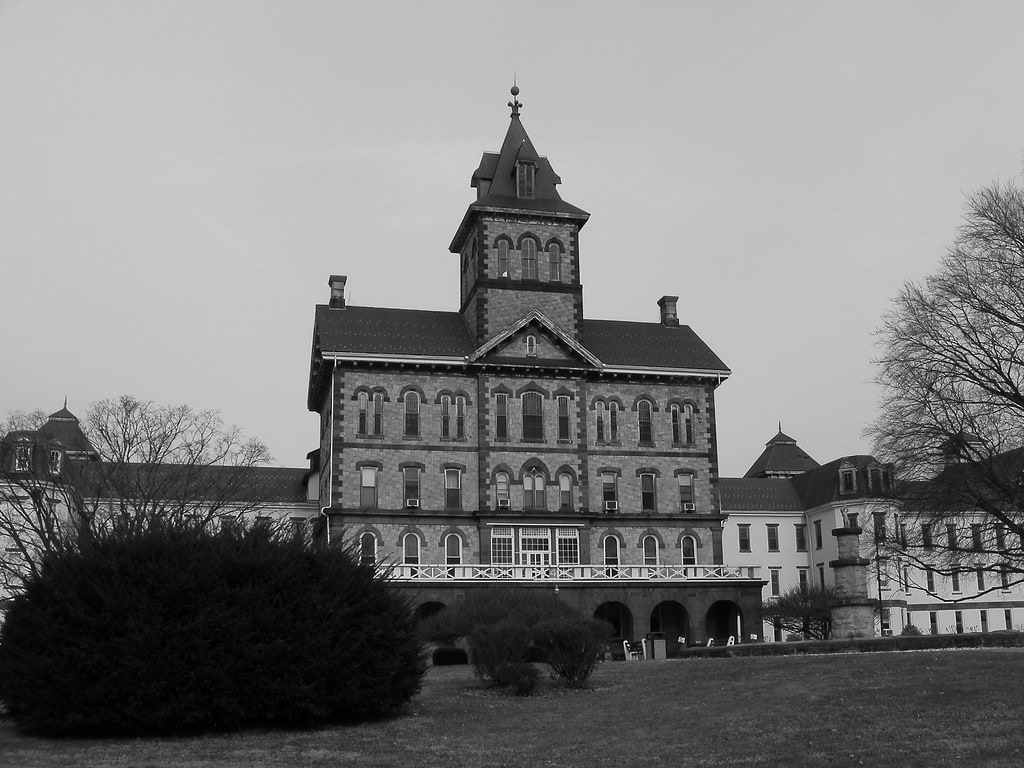
Reed Hall was based on the Kirkbride model but had a different layout. The outer wings curved forward instead of backward, so the rooms faced the river valley for better air and a more peaceful view.
The middle part had the lobby, offices, and chapel. Early features included gas lights, a main heating system, and water taken from the Ohio River.
Expansion continued after opening. The west wing was completed in 1868, and construction moved on to the east wing.
By the end of the 1800s, the extended wings and added space brought the resident population beyond 1,200 and into the 1,500 range.
The broader property was built to operate as a self-contained campus. Farms and livestock supported daily needs.
The grounds included a post office and a rail station. Electricity generation and water and sewage handling were managed on-site.
Staffing covered the clinical roles and the trades required to keep the place running, including bakers, butchers, farmhands, electricians, pipe fitters, other laborers, a barber, and a dentist.
In the early 1900s, a dining complex was built behind Reed Hall and connected by suspended walkways.
It included the main kitchen, freezers, and storage areas, with a cafeteria and auditorium on an upper level, and loading docks and staff quarters as part of the same facility.
Overcrowding years and the 1880s testimony
Dixmont took patients from across the region, including the Oil Region counties to the north and west.
In the late 1800s, people were sometimes admitted because of public fear as much as real sickness. A Titusville newspaper in 1874 mentioned a woman admitted after "religious frenzy" and revival meetings.
The hospital was large, but conditions changed as the census changed. Crowding was ongoing. After World War I, Dixmont reached about 1,000 patients.
Temporary beds were placed in hallways and attics. Admissions were suspended when no space remained.
The crowding also led to complaints. In 1883, Dr. Sevin of Erie, after years inside Dixmont, accused the institution of abuse and of keeping people confined after they should have been released.
A former patient, A.P. Hopkins, testified that attendants struck and restrained him and described injuries.
An investigation sided with the institution's doctors and dismissed the patient accounts, and the administration was cleared.
During the Great Depression, funding became scarce. The hospital did not have enough staff, and some employees were given room and board instead of salaries when money ran out.
From a private hospital to Dixmont State control
Dixmont's name changed as mental health language changed. In 1907, after leaving the Western Pennsylvania Hospital system, it became the Dixmont Hospital for the Insane.
In 1921, the name was shortened to Dixmont Hospital to remove the word "insane."
The change did not resolve the hospital's financial problems. Patient numbers remained high. The buildings continued to age.
Staff remained overworked. By mid-century, the hospital could not pay for what it needed with private-hospital funding.
In 1945, the Pennsylvania Department of Public Welfare took over, renamed it Dixmont State Hospital, and provided state funding.
The takeover also changed treatment. Care focused more on medical reasons for illness. New buildings and new ways of operating were added. Kirkbride's focus on building design and daily routines became less important.
By that time, Dixmont no longer felt like a quiet place far from the world. Instead, it had become a hospital having a hard time keeping up with new rules on its old hillside.

Modern buildings, hard medicine, and decline
Dr. Henry Hutchinson, who led the hospital from 1884 to 1945, had a medical-surgical building named after him.
Work started in 1949 on the building, but then stopped when the foundation slid down the hill.
The site was moved to a more stable spot, and the design was changed to reduce the chance of another slide. The Hutchinson Building opened in 1954 and shifted Dixmont into a medical-surgical setup.
It contained intensive care, X-ray facilities, isolation units, physical therapy areas, observation rooms, and instrument sterilization equipment.
It also had a small cafeteria and a barber shop. Patient rooms were placed at the ends of each floor around a nurses' pod, separated by half-glass walls for observation.
The morgue, laboratory, and autopsy unit were in the building as well.
Lobotomies and electroshock therapy were performed there on Mondays and Thursdays. Restraints returned as standard practice.
By the 1960s, antipsychotic drugs improved, and deinstitutionalization accelerated under the Community Mental Health Act as care shifted toward community settings.
Dixmont began to shrink. In 1967, many obsolete buildings were demolished, including the Men's Annex, greenhouses, stables, barns, garages, and cottages.
The $2 million Cammarata Building opened in 1971 as a geriatric center, modern in style beside Reed Hall.
The Hutchinson Building was later considered for reuse. Poor drainage flooded the basement, renovation costs exceeded its value, and it was demolished.
Closure and post-closure decline
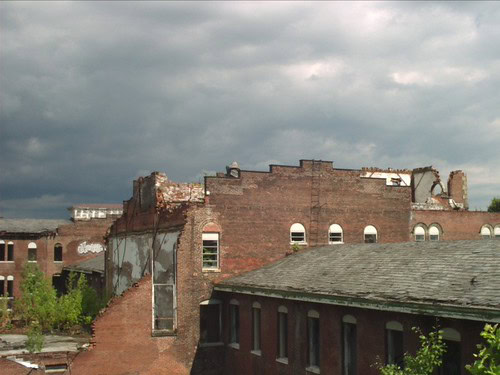
By 1983, several floors of Reed Hall were unused. The canteen and the Men's Annex were demolished as fire hazards.
Dixmont State Hospital closed in July 1984, and about 300 remaining patients were transferred to other institutions.
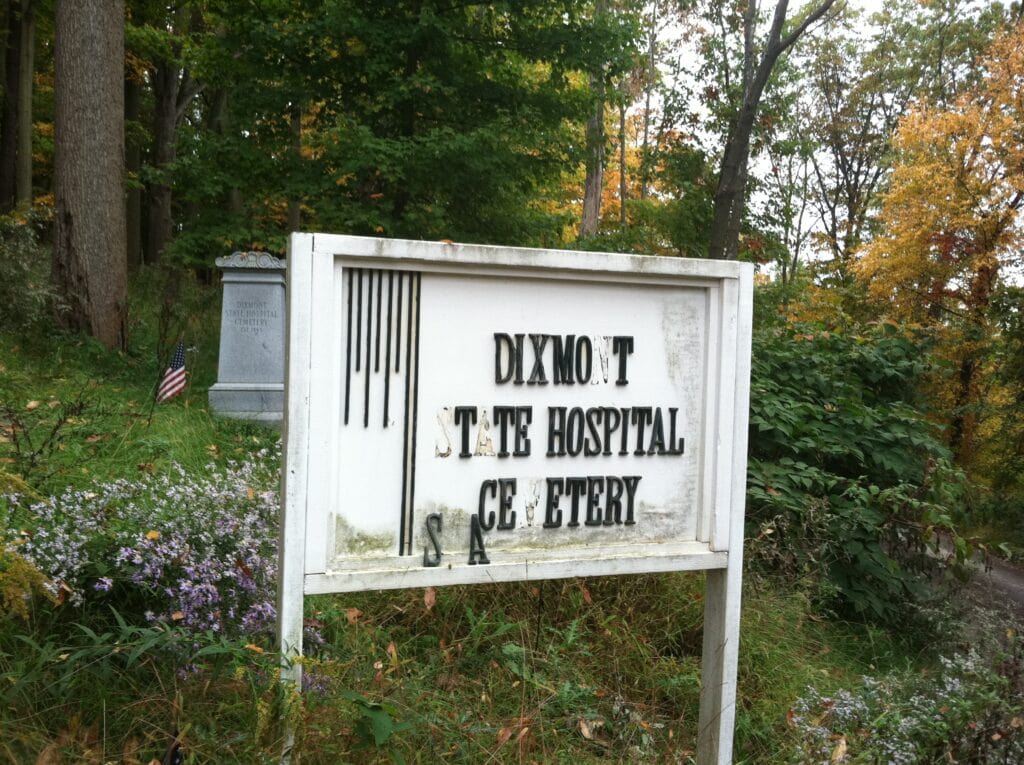
The cemetery remained in place. More than 1,300 patients were buried on the property, many with simple markers identified only by numbers.
Burials ran from 1863 to 1937. Families continued to search for graves after the hospital closed.
Reuse plans followed the closure. St. John's General Hospital proposed using the geriatric and infirmary buildings for a 200-bed nursing home and converting Reed Hall into independent senior living.
An upgrade to the sewage treatment plant for Kilbuck Township was also considered. None of these plans was built.
Holy Family Institute leased the Cammarata Building from 1985 to 1988 after a fire damaged its facility. In the late 1980s, a county jail was proposed for the site and was canceled in 1989 after public opposition.
The rest of the campus continued to deteriorate through trespassing, vandalism, and fire. In 1995, a fire largely destroyed Reed Hall's central administration section.
Landslides, a canceled Walmart, and a meadow
In 1999, the state sold the 407-acre Dixmont property to a private owner for $757,000. The cemetery stayed state-owned because Pennsylvania law prohibits the sale of grave sites.
The buyer kept the logbook that matched burial numbers to names and made that information available.
After the hospital closed, people started showing up. Some came to look. Some came to take.
Items were pulled out and sold as memorabilia, including a morgue table that was bought cheaply and turned into a bar. Psychics, low-budget filmmakers, and ghost hunters used the grounds.
In 2002, a local radio station brought a busload of people to the hospital grounds at midnight on Halloween.
In 2005, demolition began to clear the core buildings for a shopping center anchored by a Walmart Supercenter. Communities First!
opposed the plan on traffic concerns, but approvals moved forward. Crews recovered the cornerstone time capsule during demolition.
The glass jar was broken. Many of the contents were damaged.
Excavation destabilized the hillside above the river. A sequence of slides and rockfalls in 2006 slid onto Pennsylvania Route 65 and the Pittsburgh Line railroad tracks along the Ohio River.
Both were shut down for weeks. Concerns about further collapse followed, and Walmart abandoned the site in September 2007.
Work to make the land stable and replant trees came next. By 2012, most of this work was almost done, with plans to plant about 7,000 trees and smooth out the hill into a gentle meadow.
As of 2026, the land is mostly meadow and growing woods again, and people use it for things like paintball.
The sewage treatment plant remains, and the renovated Cammarata Building is the only Dixmont structure still standing.