
The ponds sit behind a chain-link fence off a South Texas boulevard, forty acres wedged between a city park and a stretch of highway.
Before 7 a.m. on a winter morning, the parking lot is already filling up. People pull spotting scopes from their trunks, check their phones for the latest reports, and walk fast toward the water.
The Roseate Spoonbills are out. So is something rarer - a female Crimson-collared Grosbeak, normally a bird of northeastern Mexico, that turned up here shortly before Thanksgiving and refused to leave for months.
Birders flew in from New York, from California, from other countries. Some days, dozens of them lined the same stretch of trail, all looking at the same shrub.
That a bird like this ended up in Edinburg rather than somewhere else is not an accident.
Edinburg sits in the Lower Rio Grande Valley, one of the most biologically productive birding corridors in the United States, and it turned a patch of reclaimed farmland into a destination that now draws serious birders and casual walkers alike.
Geographic position in the Lower Rio Grande Valley: Subtropical, migratory, wetland, and brushland bird communities converge here in a concentration unavailable anywhere else in the country.
World Birding Center founding site: Edinburg's Scenic Wetlands opened in March 2003 as the first of nine World Birding Center locations strung along the Rio Grande corridor.
Habitat built from reclaimed land: Former farm fields and municipal floodwater ponds were reshaped into ponds, trails, native plantings, and viewing docks that concentrate wildlife inside a 40-acre urban footprint.
Documented bird list: More than 8,300 checklists have been submitted from the site, with 306 confirmed species on record.
Rare bird magnetism: Prolonged visits by out-of-range species - the Crimson-collared Grosbeak among the most dramatic - repeatedly pull national birding attention to the site.
The Valley's Geography Gave Edinburg Its Raw Material
The Lower Rio Grande Valley was already a serious birding destination before anyone built a nature center.
The region sits near the convergence of subtropical woodland, Tamaulipan thornscrub, riparian forest, coastal wetlands, and the main migratory corridor running the length of the Americas.
That overlap produces a bird list that a birder from Ohio or Oregon cannot replicate anywhere closer to home.
Green Jay, Great Kiskadee, Plain Chachalaca, Altamira Oriole, Buff-bellied Hummingbird, Ringed Kingfisher, Clay-colored Thrush - these are the birds that put the Valley on the national birding map.
Edinburg benefits from being inside that geography. The city didn't earn those species; the landscape came with them.
Why Being First in the World Birding Center Network Mattered
The World Birding Center links nine sites across roughly 120 miles of the Rio Grande corridor, from Roma to South Padre Island.
Each site represents a different habitat type. Bentsen-Rio Grande Valley State Park anchors one end. South Padre Island anchors the other.
Edinburg opened first, in March 2003, which put the city into the founding chapter of a regional project designed to make the Valley a structured nature-tourism destination.
Edinburg didn't join a list. It started one. That timing gave the city's birding identity a visibility that later additions to the network couldn't replicate.
How the Site Itself Was Built
The land wasn't scenic to begin with. It was farmland, reclaimed and reshaped alongside the city's existing effluent and floodwater ponds.
What replaced it - wetland ponds, a dragonfly pond, a discovery pond, native plantings, a canal overlook, seven viewing docks, and 2.5 miles of walking trails - creates a concentration of micro-habitats inside forty acres.
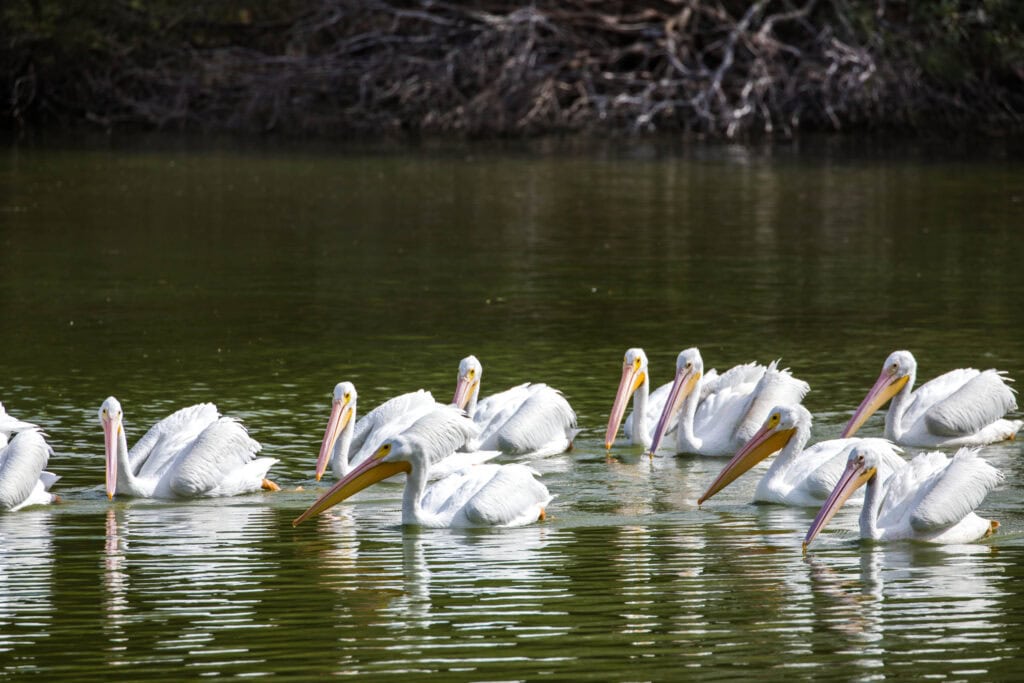
Water pulls in ducks, grebes, herons, egrets, spoonbills, ibis, shorebirds, gallinules, and kingfishers.
Native brush and trees attract wrens, thrashers, flycatchers, warblers, orioles, and the Valley's specialty species that make birders book flights in the first place.
The productive edge between water and vegetation runs the length of every trail. Forty acres sounds modest. It performs above its weight.
The Bird List Is the Core of the Site's Reputation
306 species on record. More than 8,300 submitted checklists.
The list covers waterfowl, wading birds, raptors, shorebirds, doves, hummingbirds, kingfishers, woodpeckers, flycatchers, vireos, warblers, sparrows, tanagers, and orioles.
Wintering ducks include Canvasback, Redhead, Ruddy Duck, and Green-winged Teal.
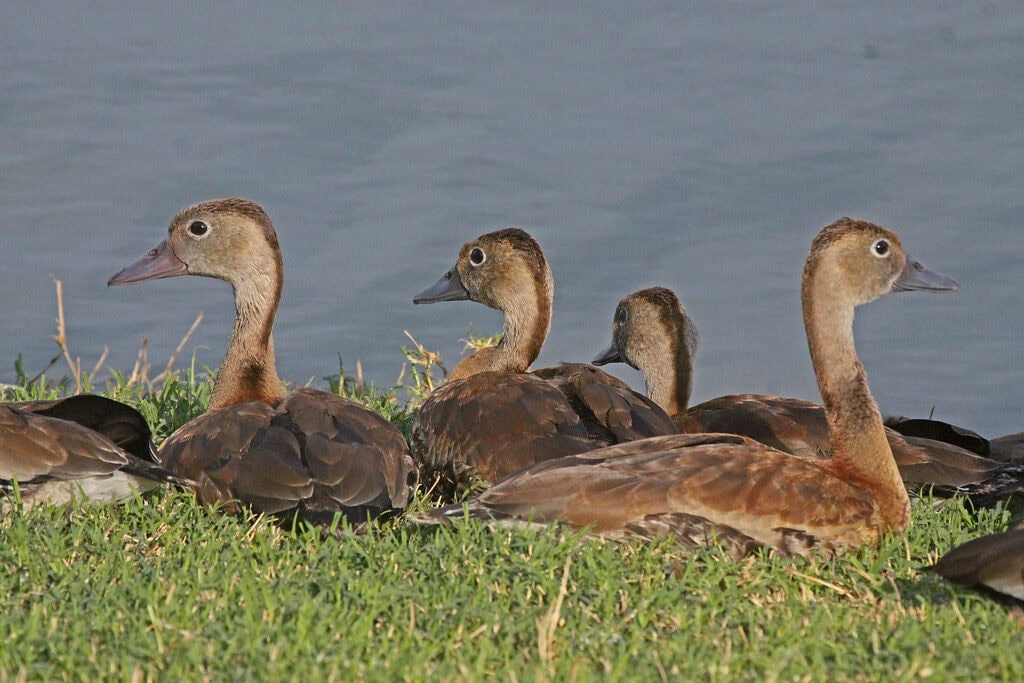
Year-round residents include Black-bellied Whistling-Duck, Roseate Spoonbill, Common Pauraque, and Green Parakeet. A visitor in January sees a different site than a visitor in May.
That seasonality gives the place a reason for return visits in a way that single-species destinations don't.
Freshwater Is Scarce Here, Which Makes This Wetland Count
Agriculture, ranching, urban development, and water management have fragmented most of the natural habitat in the Lower Rio Grande Valley.
An intact native wetland is rare. A managed site with ponds, mud edges, reeds, trees, and flowering plants becomes disproportionately important when the surrounding landscape offers little of the same.
Edinburg Scenic Wetlands works precisely because it combines water with structure in a region where that combination is hard to find.
Small sites built right become hotspots when the alternative is miles of altered landscape with nowhere for birds to land.
Butterflies and Dragonflies Filled In the Rest of the Year
The center includes a 3.5-acre native butterfly habitat and a dragonfly pond, with downloadable checklists for birds, butterflies, dragonflies and damselflies, trees, and native plants.
The Lower Rio Grande Valley records more than 300 butterfly species and nearly 100 dragonfly and damselfly species across the broader area.
For the site, that means something is always in season. When wintering waterfowl push north in spring, the butterfly gardens start producing.
When fall warblers move through, the dragonfly pond is still active. Birders, naturalists, and photographers overlap here in ways they don't at purely seasonal destinations.


Rare Birds Do Something Specific for a Site's Reputation
The Crimson-collared Grosbeak that arrived before Thanksgiving drew hundreds of visitors, possibly more than 1,000, over the course of its extended stay.
It was first noticed while birders were already searching the park for a Greater Scaup - another unusual visitor. That detail matters.
Sites with active birding communities, public access, early morning hours, and good habitat turn rare sightings into broadcast events.
The information reaches the national network within hours. The site becomes a destination almost overnight. Edinburg has been through this cycle more than once. Each time it happens, the site's reputation compounds.
What Made the Site Accessible to More Than Experts
Adults pay $3 to enter. Seniors and students pay $2. Children under five get in free. Early weekday access opens the grounds as early as 6:30 a.m.
- before the building and restrooms open - because birding peaks in the first hours of morning.
The site is at 714 S. Raul Longoria Road, open Monday through Saturday from 8 a.m. to 6 p.m. and Sunday from noon to 6:30 p.m.
It runs educational programs, field trips, guided walks, scout programs, and a fifth-grade wetlands curriculum.
The interpretive center, viewing docks, and walking trails serve the same family arriving for a Saturday outing and the visiting birder who has already recorded 290 of the site's 306 species and needs six more.
The Case for Edinburg Is Supported by What Keeps Showing Up
The bird does not care that the site was built on reclaimed farmland.
The Roseate Spoonbill wading in the pond, the Green Parakeet cutting across the sky, the Crimson-collared Grosbeak sitting in the same shrub for three months - none of that happened by coincidence.
Edinburg sits in the right geography, opened the right kind of site at the right moment, and built a habitat that rewards everyone who shows up before the sun gets high.
The 306-species list is what that combination produces.


Independent Publisher Notice
BestAttractions is an independent editorial publisher. We are not affiliated with, endorsed by, or acting on behalf of any location, business, property owner, manager, government agency, or organization described in this article.
Comments posted on this page are not forwarded to, reviewed by, or acted upon by any entity mentioned in the article.
For official inquiries, complaints, applications, bookings, or other requests, please contact the relevant entity directly through its official website or other verified channels.