
The first thing you notice is how quickly the streets change. One block feels like old Houston: porches, bungalows, deep shade, a dog that has clearly appointed itself mayor of the sidewalk.
A few blocks later, the houses are taller, newer, tighter to the lot, and priced as if the commute has already been solved for you. That is the whole deal here.
A typical sale now sits around $610,000, while the broader Houston market is closer to the low $300,000s on listing price. That gap is not decoration.
It is the price of buying into an Inner Loop location where downtown, trails, restaurants, and errands are close enough to change your weekly routine.
Buying a House in Greater Heights, Houston: What to Check Before You Offer
Greater Heights can make sense for buyers who want an inner-Houston location and can accept a large premium over the citywide norm.
The real question is whether a specific house justifies its price after flood history, insurance, condition, possible restrictions, and ownership costs are included.
Use the neighborhood name to narrow your search, then switch quickly to address-level due diligence.
"The Heights" and "Greater Heights" are often used loosely, while the legal and physical facts that affect a purchase attach to the property itself.
Start with the Greater Heights price premium
Zillow's Home Value Index put the typical Greater Heights home value at $611,964 as of July 31, 2026.
For Houston as a whole, the same metric was $263,563.
That makes the Greater Heights figure about 2.32 times the Houston figure, or roughly 132% higher.
Because both figures use the same metric and month, the comparison is useful.
It is not a prediction of a specific home's sale price, and ZHVI is not a median sale price.
The premium also changes the financing math. At the July 2026 Greater Heights ZHVI:
- A 20% down payment would be about $122,393.
- The remaining principal would be about $489,571.
- At an illustrative 6.5% interest rate on a 30-year fixed loan, principal and interest would be about $3,094 per month.
That last figure is an example, not a current mortgage quote.
It excludes property taxes, homeowners insurance, flood insurance if purchased or required, HOA charges, maintenance, and closing costs.
Do not compare neighborhoods only by listing price.
Compare the full monthly and cash-to-close cost for homes of similar size, age, condition, and flood profile.
Housing data source: Zillow Home Value Index, July 2026.
Author's calculations using Zillow Home Value Index data, July 2026. Data Provided by Zillow Group.
Treat historic status as an address question
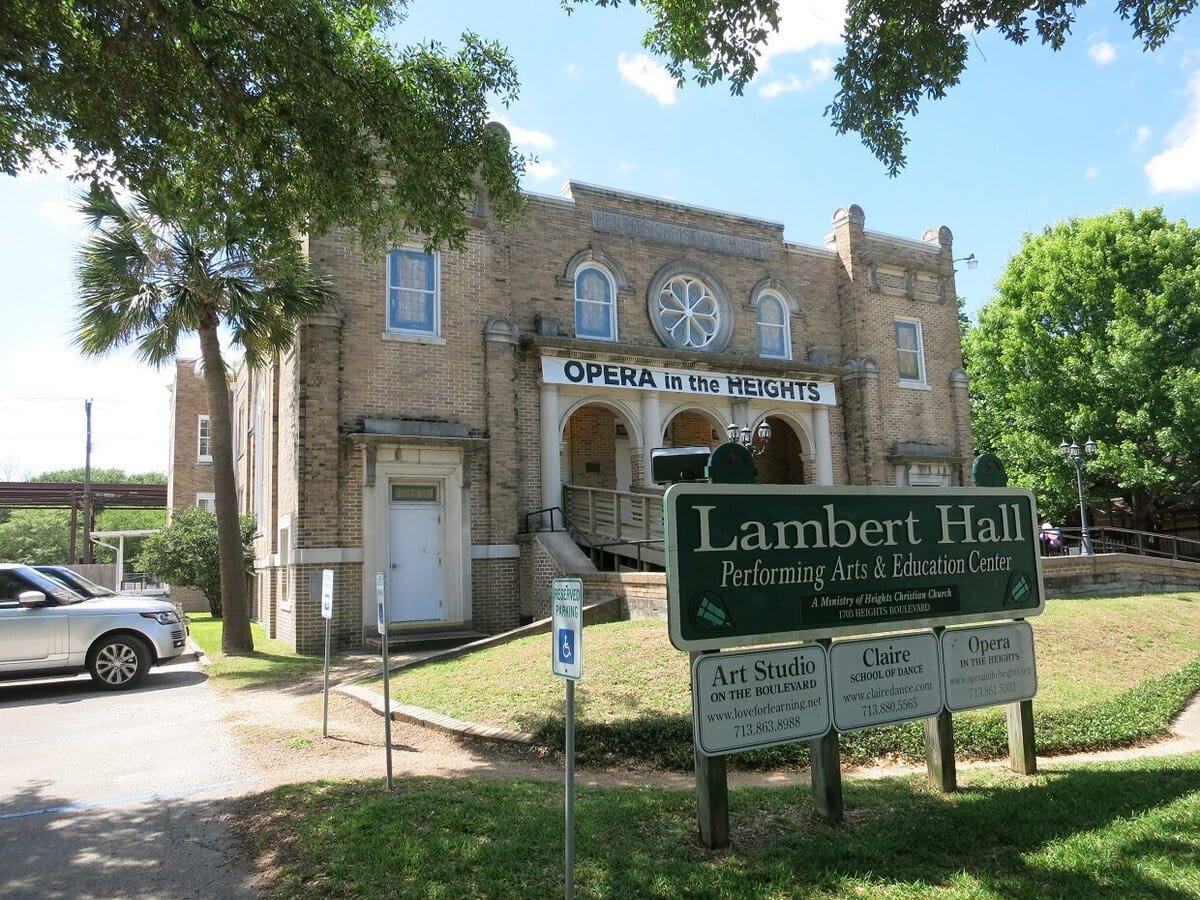
National Park Service records include multiple early-1900s properties in the Houston Heights Multiple Resource Area.
That history creates two questions buyers should not mix together.
First, National Register listing by itself does not place federal restrictions on what a non-federal private owner can do with a property.
The National Park Service says local or state laws may still apply.
Second, local historic-district status, deed restrictions, easements, and permitting rules are separate from National Register status.
Before offering on a house you expect to remodel, add onto, demolish, or substantially change, verify:
- whether the property is inside a local historic district;
- whether deed restrictions or easements limit use, setbacks, additions, or demolition;
- whether prior additions were permitted;
- whether your planned work would need special review or approval.
A newer house nearby does not prove that the same work is allowed on the property you are considering.
Flood risk deserves its own pre-offer check
Houston buyers should separate "the neighborhood did fine" from "this property has acceptable flood risk."
FEMA's flood products are location-specific, and FEMA cautions against turning area-level information into a parcel-specific conclusion.
Texas seller disclosure rules give buyers useful starting information.
FEMA's review of state disclosure practices notes that Texas requires disclosure of items including a property's flood-hazard or FEMA-zone status, an active flood-insurance policy, previous flood events or flood-related damage, past flood-insurance claims, and past disaster-related aid.
Use the disclosure as a lead, not the entire investigation. For a serious candidate:
- Look up the exact address in FEMA's Flood Map Service Center and note the effective map or panel.
- Read the seller's flood disclosures and ask follow-up questions about any prior water entry, repairs, claims, or disaster assistance.
- Get homeowners and flood-insurance quotes for the exact address before your contractual option or inspection period closes.
- During inspection, pay attention to grading, gutters, downspouts, drainage paths, low points around the structure, and signs of past moisture.
FEMA's Special Flood Hazard Area uses the 1%-annual-chance flood standard, but a mapped zone does not promise that flooding will or will not occur.
Drainage problems can also exist outside mapped high-risk zones.

Inspect the house you are actually buying, not the neighborhood's reputation
A neighborhood guide cannot tell you whether a particular foundation, roof, sewer line, electrical panel, addition, or HVAC system is sound.
Inspection has to answer that.
For an older house, focus on structural movement, crawl-space or under-floor conditions where applicable, moisture, drainage, electrical updates, plumbing materials, roof age, and additions.
For a newer or heavily remodeled home, focus on grading, roof and flashing details, drainage, attic ventilation, HVAC installation, and reasonably accessible concealed work.
At Houston Hobby Airport, NOAA's 1991-2020 climate normals put a typical July daily high around 92 F and the low around 76 F. Hobby is a regional reference, not a Greater Heights measurement.
Before buying, learn the cooling equipment's age and service history and inspect insulation and attic conditions.
Major replacement needs belong in the purchase budget.
Test the block before you buy the address
Greater Heights is not one uniform buying experience.
Even without relying on online walkability scores or commute calculators, you can learn a lot by testing the block yourself.
Visit a finalist on a weekday morning, a weekday evening, and a weekend night. Drive your actual commute. Walk to places you expect to use.
Listen for road, restaurant, construction, rail, school, or nightlife noise, and check street parking when nearby businesses are busy.
After rain, notice how water drains along the curb.
If school assignment matters, verify the exact address with the responsible public authority rather than assuming every property marketed as "The Heights" feeds the same campuses.
A Greater Heights pre-offer checklist
Before you commit, you should be able to answer these questions:
- Does the purchase still fit after down payment, taxes, insurance, maintenance, and any HOA cost are included?
- What does the seller disclose about flooding, water damage, flood claims, and disaster aid?
- What does the current FEMA product show for the exact address?
- Have you obtained insurance quotes early enough to change your decision?
- Is the property subject to local historic rules, deed restrictions, easements, or other limits that affect your plans?
- Does the inspection scope match the age and construction of this particular house?
- Have you tested the block during the hours that matter to your daily life?
- Are you comparing the house with truly similar alternatives rather than with a neighborhood-wide number?
Is buying in Greater Heights worth it?
Greater Heights is easier to justify when you specifically value the location and housing character enough to accept a large price premium over Houston overall, and when the exact property clears flood, insurance, condition, and use-restriction checks.
It is a weaker fit if your main goal is maximizing house size for the money, if the down payment would consume most of your cash reserves, or if you need broad freedom to alter a historic or restricted property without first confirming the rules.
The best Greater Heights purchase is the one whose price, condition, insurance cost, flood record, legal constraints, and day-to-day block still make sense after the first showing.
On the map: Greater Heights, Houston, TX 77008
Sources and further reading
- Zillow - Greater Heights, Houston housing market
- Zillow - Houston housing market
- FEMA - State flood-risk disclosure best practices
- FEMA - Flood Map Service Center
- National Park Service - National Register FAQs
- National Park Service - Houston Heights Multiple Resource Area record
- NOAA/NCEI - Houston Hobby 1991-2020 climate normals
Independent Publisher Notice
BestAttractions is an independent editorial publisher. We are not affiliated with, endorsed by, or acting on behalf of any location, business, property owner, manager, government agency, or organization described in this article. Comments posted on this page are not forwarded to, reviewed by, or acted upon by any entity mentioned in the article. For official inquiries, complaints, applications, bookings, or other requests, please contact the relevant entity directly through its official website or other verified channels.