
Cottonwood Mall: Utah's first enclosed mall opens
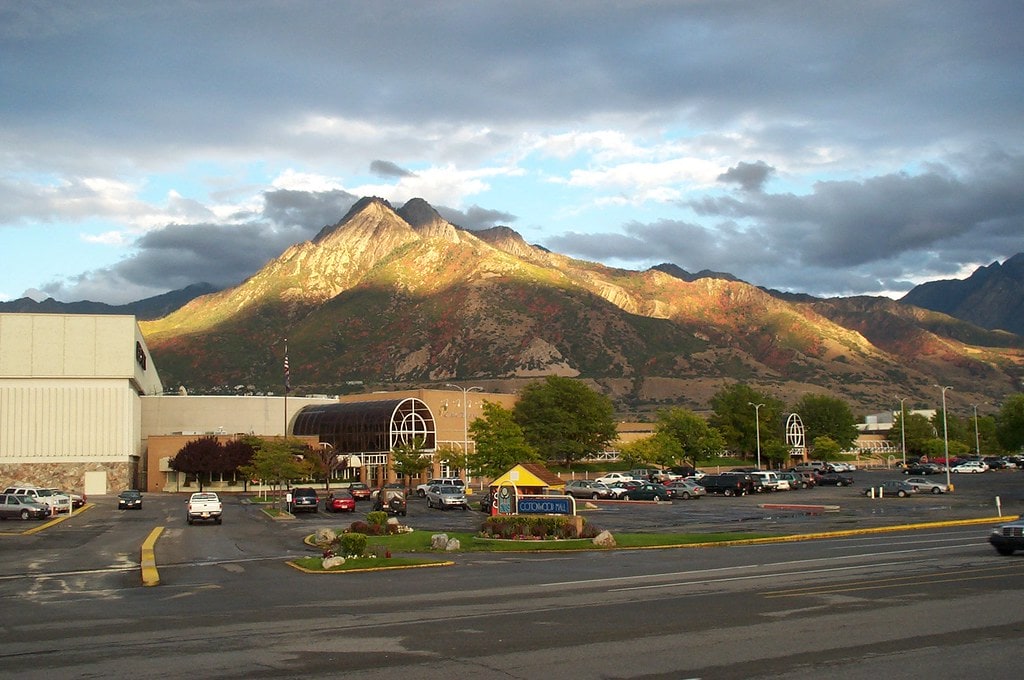
Cottonwood Mall opened in 1962 with a simple, slightly swaggering proposition: Utah could do modern, indoors.
Horman Construction built it under Sydney Horman Sr., laying out a main floor, a smaller downstairs mall level, and mezzanine office spaces - a little commerce below, a little management above.
The project cost $14 million, sat on roughly 52 acres, and started life at about 543,000 square feet, big enough to feel like a destination rather than a stop.
The mall did not wait politely for a ribbon. ZCMI, owned by The Church of Jesus Christ of Latter-day Saints, was dedicated on March 26, 1962, as a two-level, 128,000-square-foot anchor.
Before the official grand opening, Albertson's food center and the separate Cottonwood Bowling Lanes were already open for business, bringing early activity to the mall.
On August 16, 1962, eighteen stores debuted at once. By December, there were thirty-eight stores and fifteen office spaces.
The first tenants reflected the style of the era, including Josco Drug, La Rie's ladies' wear, Hot Shops Cafeteria, Anita Shops, Arthur Frank's menswear, and Woolworth's five-and-dime, where people bought everyday items one at a time.
1964-69: Paris, Penney's, and movies
Cottonwood's first expansion wasn't a dramatic change, but rather a steady addition of reasons for people to return.
In March 1964, the ZCMI Car Care Center opened. It was a clever idea: you could shop, eat, get your car fixed, and leave feeling like you had your life together.
On July 27, 1964, the Paris Department Store began business, two levels and 40,000 square feet of slightly dressier ambition.
Around that same time, Makoff's Ladies Wear opened on the south end, giving the mall a more boutique feel as it was already becoming a place with many different things.
By the mid-1960s, there were fifty-six stores and services, a number cities like to mention when they want to seem successful.
The mall also understood, early, that retail works better with entertainment tucked inside it like a prize.
In July 1968, the Fox Cottonwood Mall Theater showed its first feature film, initially a single auditorium with 850 seats, later expanding into a twin-screen setup.
JCPenney soon joined, starting construction in March 1968. On April 16, 1969, a two-story, 161,000-square-foot store opened on the south end, helping the mall feel more established.
1970s–80s: Tenants and hangout culture
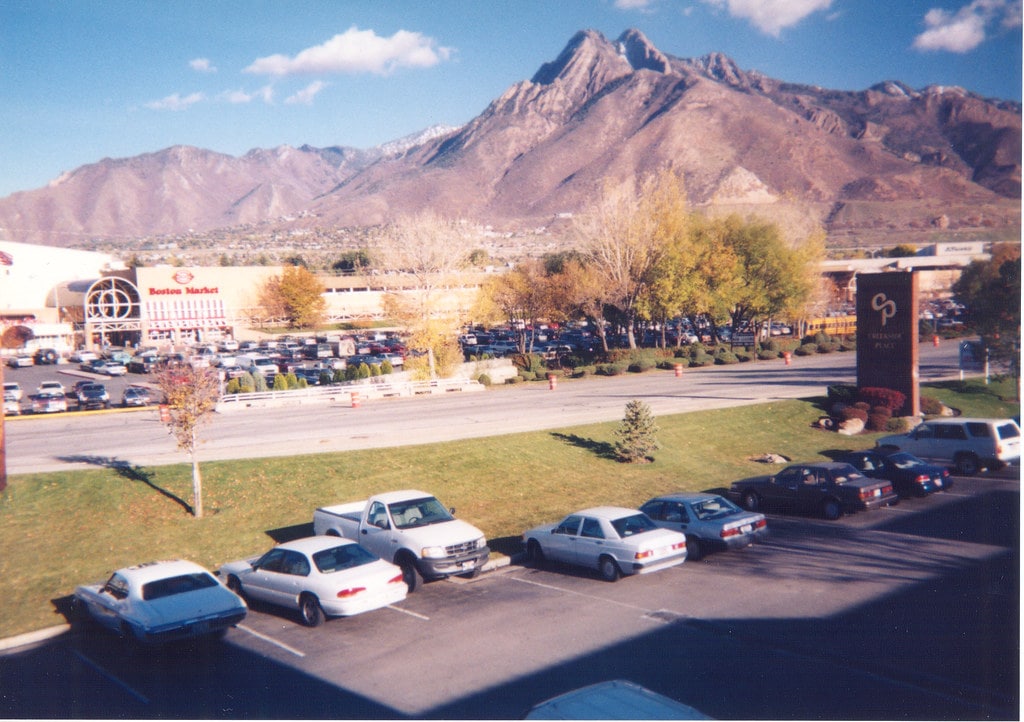
During the 1970s and 1980s, Cottonwood Mall found its groove. It wasn't brand new, but it wasn't worn out either. People went because it was simple.
You could park once and get several errands done without much effort. The mall had its own routine: browse a bit, buy what you needed, and keep walking just because you were there.
The variety of stores was what mattered. Fashion Fabrics and Singer brought in anyone who wanted to sew or thought about trying it.
Orange Julius was the fast treat between stops. Zales was where you went for the important gift, the kind that came in a box and meant something.
Baker's Shoes solved the problem of kids outgrowing their shoes or shoes wearing out. Hallmark Cards helped with birthdays, thank-yous, and those last-minute times when you forgot something.
Some places were less about buying and more about hanging around. Coachman's Restaurant gave you a sit-down reset when you were tired of carrying bags. Raspberry Records and Hart Bros.
Music were magnets for teenagers and music people, the ones who could spend an hour flipping through options and leave with one album like it mattered.
Hammonds Toys and Hobbies did the same kind of spell for kids, and for adults who liked pretending they were shopping for the kids.
Fernwoods, Pehrsons, and Zinik's were some of the familiar names that filled the mall. You might not mention them later, but you always knew where they were.
At its best, Cottonwood Mall felt like an indoor town square, except the benches sat beside cash registers.
Skylights and a new upstairs retail world
A mall that wants to stay young eventually chooses to make big changes. In June 1981, Cottonwood announced a major renovation: updating the inside, adding new skylights, and putting in new floors.
The changes were useful, but also made people feel better. Skylights are less about light than comfort. They show shoppers the building still cares.
The courtyard food court took over the empty supermarket, turning a quiet spot into a busy, good-smelling place.
The Paris store was closed and split into smaller shops, a common mall trick: turn a big old store into smaller, tempting new ones and call it new.
The second story and adjacent office mezzanine were refitted as part of an upper-level retail design, connecting with an upper level added to the mall's South Wing.
Even the west-facing facade was remodeled, because in mall life, visibility is a kind of oxygen.
When the renovation was dedicated on November 10, 1983, Cottonwood totaled 743,000 square feet with 150 stores and services.
ZCMI expanded dramatically too, adding a third level and an adjacent parking garage, reaching 237,000 square feet.
Ownership changes and decline
Cottonwood's next era was shaped as much by paperwork as by people. Horman Construction owned and operated the mall until 1985, when it was sold to John Price and Associates, and later to General Growth Properties.
The mall still felt local to shoppers, but its future was increasingly determined by distant balance sheets.
The 1990s offered small signals that the old retail world was thinning.
In October 1993, Woolworth announced the Ogden store would close; the Cottonwood Mall Woolworth stayed open and became the last operating Woolworth in Utah.
The local government changed, too.
In November 1999, the property became part of the new City of Holladay-Cottonwood, and in December, the name was shortened to Holladay, a simple change that was very different from the mall's more complicated changes.
That same year, the ZCMI chain was sold to May Department Stores, which kept the ZCMI nameplate for a while.
On April 18, 2001, ZCMI was rebranded as Meier & Frank, May's Portland-based division. In 2002, General Growth Properties acquired the mall.
That same year, Cottonwood Mall's parking lot was used as a park-and-ride for the Winter Olympics.
It was a strange moment, with the mall serving as infrastructure and its worth measured by its parking spaces and convenience.
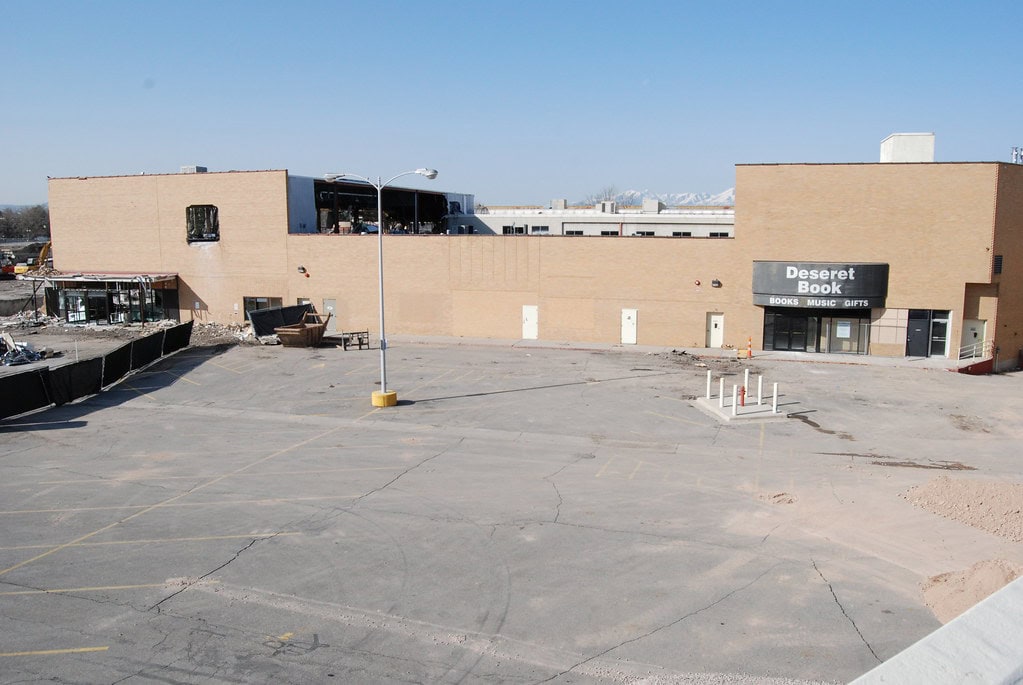
Demolition, bankruptcy, and the Cottonwood Hole
The decline of Cottonwood Mall wasn't subtle, just slow enough to feel deniable until it wasn't. By 2004, the mall was about 25 percent vacant.
The anchor story turned into a sequence of goodbyes: Meier & Frank closed September 9, 2006, reopening as Macy's next day.
JCPenney, after nearly forty years, also closed, pulling away one of the mall's main reasons to exist.
In July 2007, General Growth announced redevelopment: the mall would be "de-malled" and replaced with roughly 500,000 square feet of new retail, 100,000 square feet of office, and over 500 residential units.
Archival descriptions also captured the moment bluntly: the mall, built in the 1960s, closed down in 2007 as a European-style village concept took shape.
In August, Holladay City Council labeled the property "blighted," a word that sounds decisive until you watch it sit there.
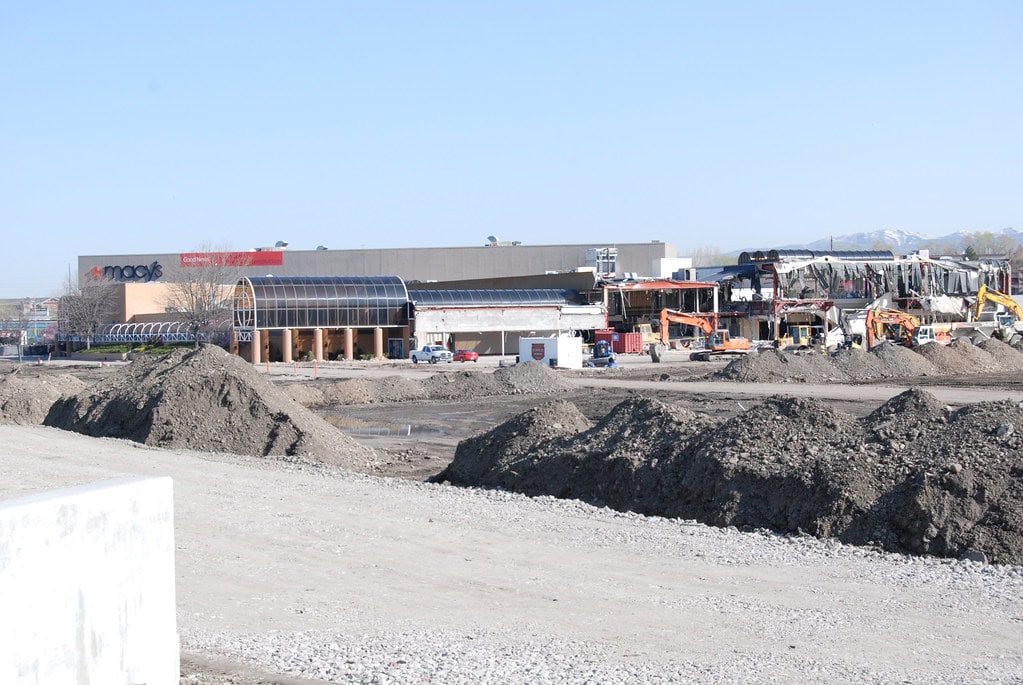
In mid-2008, the mall was torn down, except for the Macy's building.
Corporate descriptions called the site a unique infill opportunity about 7.5 miles from downtown Salt Lake City, and listed entitlements like 575,000 square feet of retail, 195,000 square feet of office, and 614 residential units.
TGI Friday's in the parking lot closed in March 2009, and then the real freeze: General Growth filed for bankruptcy in 2009, halting redevelopment.
The result was nearly a decade of absence. The Granite School District complained about lost tax revenue.
Nearby businesses closed as the mall's old customer gravity disappeared. Residents gave the void a name that did not try to be polite: the "Cottonwood Hole."
From Cottonwood plans to Holladay Quarter: the referendum fight
After bankruptcy, the site became a recurring local argument: everyone wanted "something," but nobody agreed on what "something" should look like.
General Growth reformed and split, and the Howard Hughes Corporation took over redevelopment. In 2011, Howard Hughes presented revised plans, but no large tenants came, and the hole stayed a hole.
In 2014, hope arrived as a grocery rumor that hardened briefly into an announced deal: Smith's Food and Drug would bring a 78,000-square-foot store and a multilevel parking structure as part of Cottonwood development, pitched as a European-style town center with about 600 residential units, 620,000 square feet of retail and entertainment, and 260,000 square feet of office space.
It never materialized. In 2017, Macy's announced it would close its store on the property, stripping away the last active landmark.
Then the politics got real. In 2018, the city pursued a redevelopment called "Holladay Quarter" with Ivory-Woodbury, dependent on a broad rezone that residents rejected in a referendum, 58% voting no.
The city argued it wasn't referable; the Utah Supreme Court ruled the rezone was legislative and subject to referendum.
Holladay reverted to the 2007 Site Development Master Plan, with tighter limits on height, usage, and density.
Holladay Hills: approvals, tenants, Trader Joe's
Working inside those constraints, Holladay Hills began to move. In December 2019, the planning commission approved initial phases.
The project became a joint venture among Woodbury Corporation, Millrock Capital, LLC, and Ball Ventures, described as a roughly 58-acre mixed-use development with over 600 residential units and up to 750,000 square feet of office, dining, shopping, and entertainment.
In December 2022, the city approved a plan to give the three-story Macy's building a new purpose: stores on the ground floor and offices above, which was a step toward getting special funding for the project.
By October 2024, Holladay Hills had real openings: The Grandeur debuted on October 21, 2024, offering apartments and seventeen penthouse condos, with amenities and ground-floor retail.
Chipotle, Rio Acai, and Kiln Holladay opened around the same period.
In July 2025, the city kept reviewing changes to the plan, focusing on parking and signs around the edges, as well as changes to some blocks, including updates and talks about building height limits like 90 feet in some areas and 60 feet in others.
The clearest signal of recovery arrived on October 31, 2025: a 13,400-square-foot Trader Joe's opened at 1895 E Rodeo Walk Drive, inside the former Macy's building, below Kiln - the seventh Trader Joe's in Utah.
And the future is also shaped by agreements: as of December 2025, a deal for affordable housing connected to the Cottonwood Mall project included 100 homes for people with lower incomes.
Cottonwood's story ends, for now, not with a big opening, but with steady, managed rebuilding.
The store you listed as Pearsons should be correctly spelled as Pehrsons...
My apologies about that. Grammar-correct can be a little too "helpful" sometimes, and it looks like it "soft-corrected" the spelling on me.
I bought my first Beatles album at a music store in Cottonwood Mall in February of 1964. I enlisted into the United States Air Force in January of 1967 and In June of 1973, I was assigned to the Cottonwood Mall USAF Recruiting Office as a front-line USAF Recruiter. The recruiting office was located behind Taylor Optical and had an outside entrance. I left in December of 1978 due to a reassignment after a successful tour as a front-line recruiter. The office remained open for several more years after I left but did eventually close; I am not sure exactly when. I have many great memories of walking down the main mall concourse and stopping to talk to people about the Air Force. Doc Taylor, who was the optician who owned Taylor Optical was also a wonderful neighbor. I was sad to see the end of Cottonwood Mall
Thank you for this - it is clear, specific, and truly meaningful. Your memory of stopping people in the mall to talk about the Air Force is a good reminder that malls were places where the community came together. Not just commerce - conversation, recruiting, social life, all of it under one roof.