Stand at South Hayes Street and Army-Navy Drive in the 1970s, and you would not have found the dense Pentagon City district people know now.
The land just south of the Pentagon was still mostly open. Sidewalks were limited. Foot traffic was rare. Cars moved along broad roads, but the area did not yet function as a real neighborhood.
Even so, the future of the site was already being mapped out.
During that decade, Arlington County approved a major redevelopment plan for Pentagon City that would turn this underused land into a dense mixed-use district.
The proposal was enormous. It called for about 2,000 hotel rooms, roughly 1.2 million square feet of office space, and around 800,000 square feet of commercial space.
Housing was a major part of the plan, with 7,150 apartments, along with a nursing home and about 13.5 acres of parkland.
The project faced resistance from nearby residents, but it moved forward. In December 1976, a Virginia judge upheld Arlington County's approval of the redevelopment plan after that legal challenge.
The transit arrived before the shopping center did. The Pentagon City Metrorail station opened first, with entrances on both sides of Hayes Street between 15th Street and Army-Navy Drive. That mattered.
The station gave the area a built-in advantage before the mall ever opened, and that direct Metro access later became one of the main reasons the shopping center succeeded.
How Fashion Centre at Pentagon City began
In February 1984, developers Rose Associates and Melvin Simon & Associates introduced a proposal for a major mixed-use complex on a 25-acre section of the larger Pentagon City tract.
The plan outlined a large enclosed shopping center combined with offices, housing, and a hotel.
Developers estimated the project would cost about $130 million and would include a three-level mall with three department store anchors and between 100 and 120 smaller stores.
The site stood within a block defined by South Joyce Street, Army-Navy Drive, South Hayes Street, and South 15th Street.
Plans also included a 22-story hotel, a high-rise residential building, a cultural center, and a garage with space for about 4,000 cars.
Arlington County officials approved a revised version of the project in July 1984. The new plan described a $150 million complex combining retail, office, and hotel space.
The design included a three-story mall anchored by department stores, a nine-story office building above the retail space, and an 18-story hotel.
The hotel height was reduced, one garage level was moved below ground, and the first level of the mall needed convenience stores, family restaurants, and a movie theater.
Developers aimed to create a regional retail center with a more upscale identity than typical suburban malls.
To allow more retail space, they shifted development capacity away from hotel use and toward stores and restaurants.
Designing a mall above a new Metro stop
The project drew attention across the Washington region even before construction finished.
By mid-1989, major retailers were already preparing to open stores in the new mall. Macy's and Nordstrom planned second locations in the Washington area inside the complex.
Their presence showed that retailers expected strong customer traffic.
Fashion Centre at Pentagon City opened in the fall of 1989. The building stood almost directly above the Pentagon City Metro station.
This location gave shoppers a choice that was unusual at the time. People could reach a large enclosed mall by subway instead of driving.
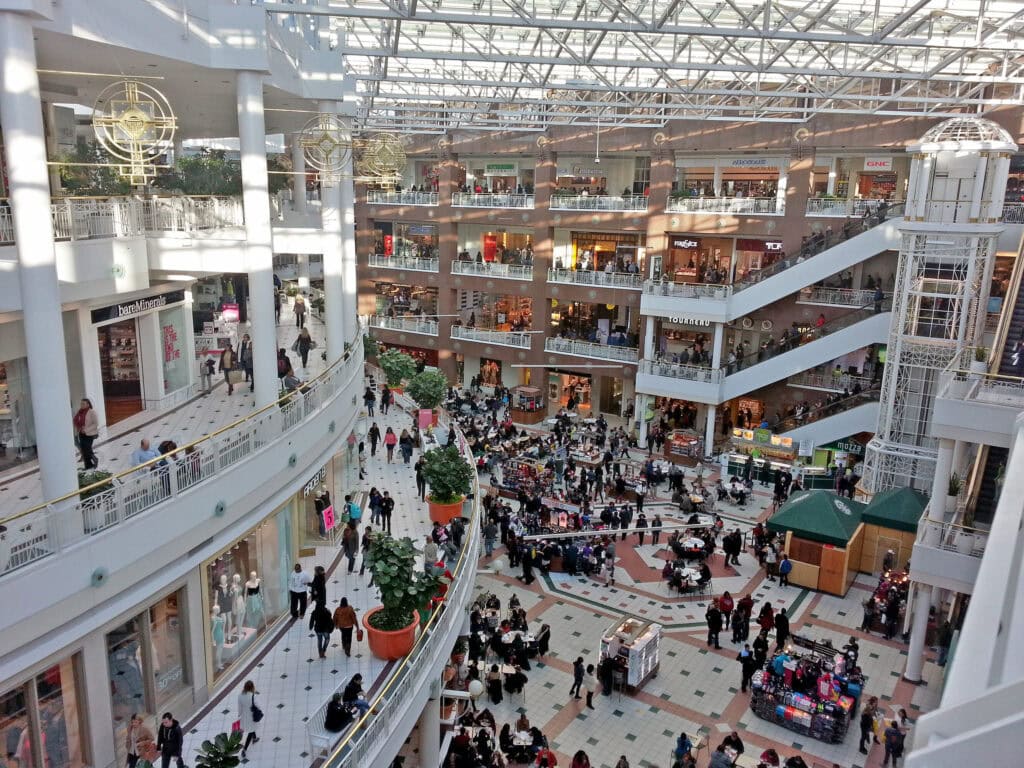
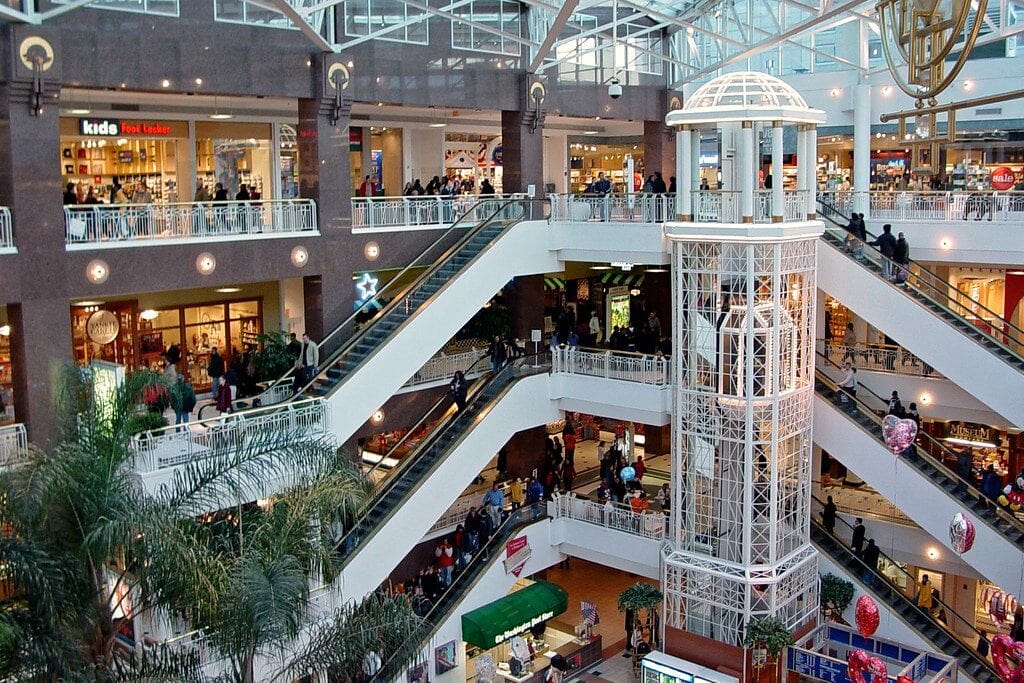
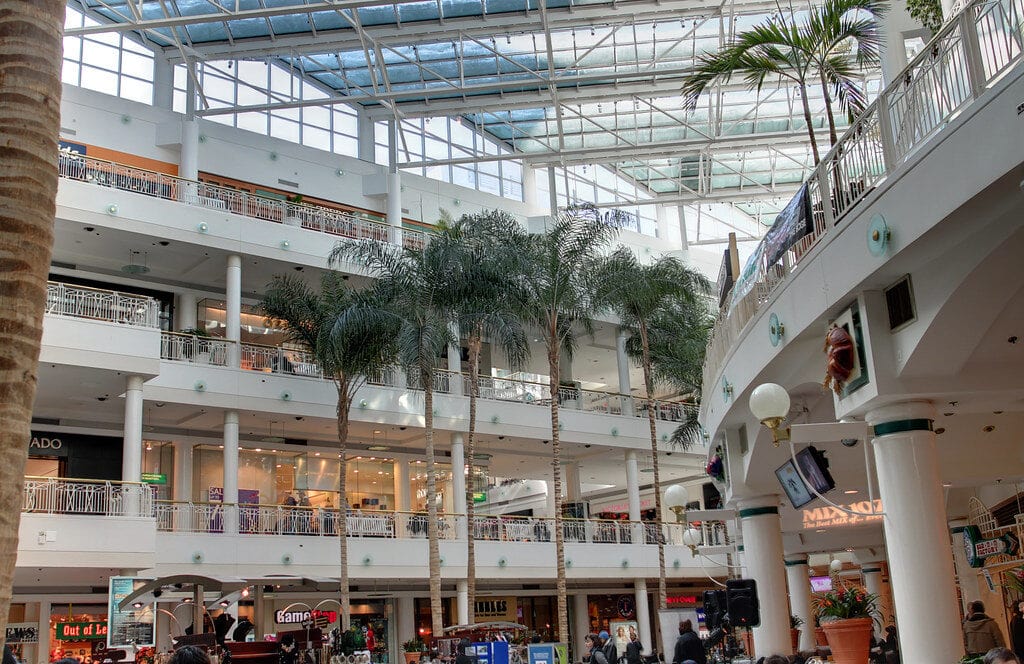
The design followed the style common in large malls during the late 1980s. A main court connected to long corridors of stores that extended through the mall.
Large skylights let natural light reach the interior. Dining tables, fountains, and indoor palm trees were part of the layout.
Streets surrounded the site, and the Metro line ran directly below it. This arrangement differed from typical suburban malls, which usually stood alone and were surrounded by large parking lots.
Fashion Centre instead formed part of a growing district near established neighborhoods and federal offices.
Opening days inside a bright glass atrium
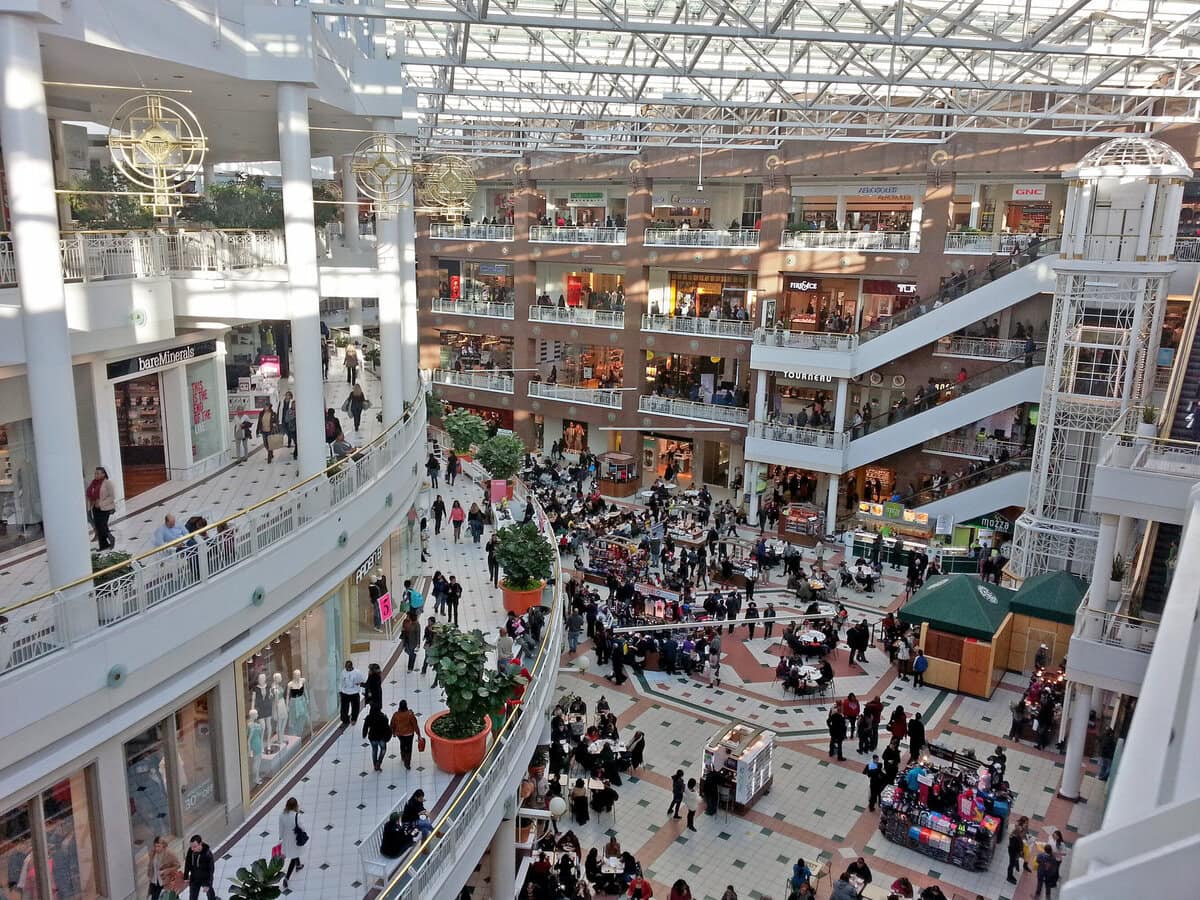
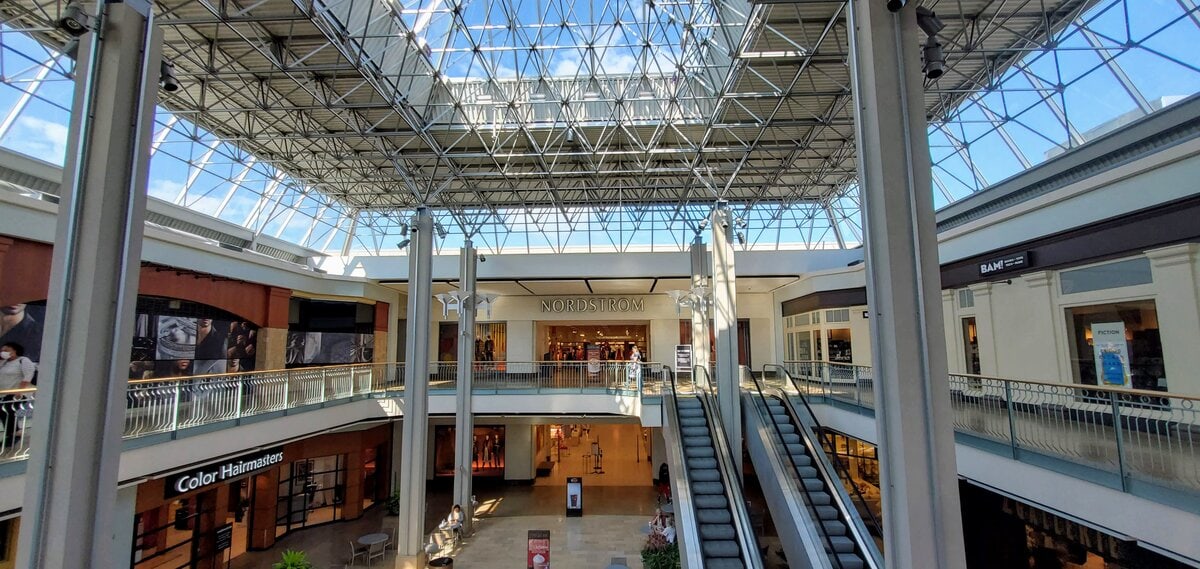
Shoppers who entered the mall in late 1989 stepped into a large, open interior space. Above the main atrium, a ceiling made of glass and white steel stretched across the building.
Blue lights near the ceiling added color to the atrium above several levels of stores. The design focused on height and openness.
Glass elevators moved between floors in the center of the atrium, drawing attention upward through the space.
Fashion Centre opened with many stores already operating, while others were still preparing to start business.
Other parts of the larger mixed-use development were still under construction. The Ritz-Carlton hotel next to the mall was planned to open in March 1990.
Early plans listed the hotel with 345 rooms. Later records list the building with 366 rooms and nearly 18,000 square feet of meeting space.
The full development covered about 25 acres and included an 860,000-square-foot shopping mall. Thousands of parking spaces surrounded the property.
Office tower, hotel, and the working mall
The complex quickly became more than a retail destination. The office tower above the mall filled with major tenants and turned the property into a daily workplace for many people.
By 1993, the consumer-products division of MCI operated from offices in the building, using the location as an internal development center for new services.
Office space later changed hands as companies moved in and out.
In 2000, the RAND Corporation announced plans to lease about 105,000 square feet in the Hayes Street office building, with an option to expand into another 61,000 square feet.
Ownership of the mall itself shifted not long after opening. In January 1991, the Lehndorff Group purchased a 50 percent stake from original developer Melvin Simon for about $200 million.
That amount roughly matched the total construction cost of the project. Melvin Simon continued to manage the mall after the transaction.
Over time, the property became part of a joint venture between Simon Property Group and Institutional Mall Investors.
A 2021 financing arrangement backed the property with a $455 million loan covering the mall space, the office building, and the land under the hotel.
Occupancy in the retail portion reached about 85 percent during the pandemic period of 2021, while the office building stood at about 75 percent leased.

Renovation reshapes the center for the 2010s
More than two decades after opening, Fashion Centre entered a major redevelopment phase.
Arlington County approved a site plan amendment on November 16, 2013, that allowed unused hotel development capacity to convert into retail space.
The change added about 51,000 square feet of new commercial area.
County property records, after the approval, listed about 1,080,000 square feet of retail space and roughly 172,000 square feet of office space within the complex.
Construction began soon after. In July 2014, work started on a renovation and expansion budgeted at more than $70 million.
The project continued through 2016 and focused on improving the entrance facing South Hayes Street.
About 52,000 square feet of new space appeared at that entrance with additional stores, restaurants, and outdoor seating.
Interior upgrades changed many features of the building.
The renovation replaced one prominent glass elevator with two new glass-enclosed elevators and added escalators linking the Metro level directly to the ground floor.
Lighting, tile, railings, columns, and other interior finishes received updates throughout the mall.
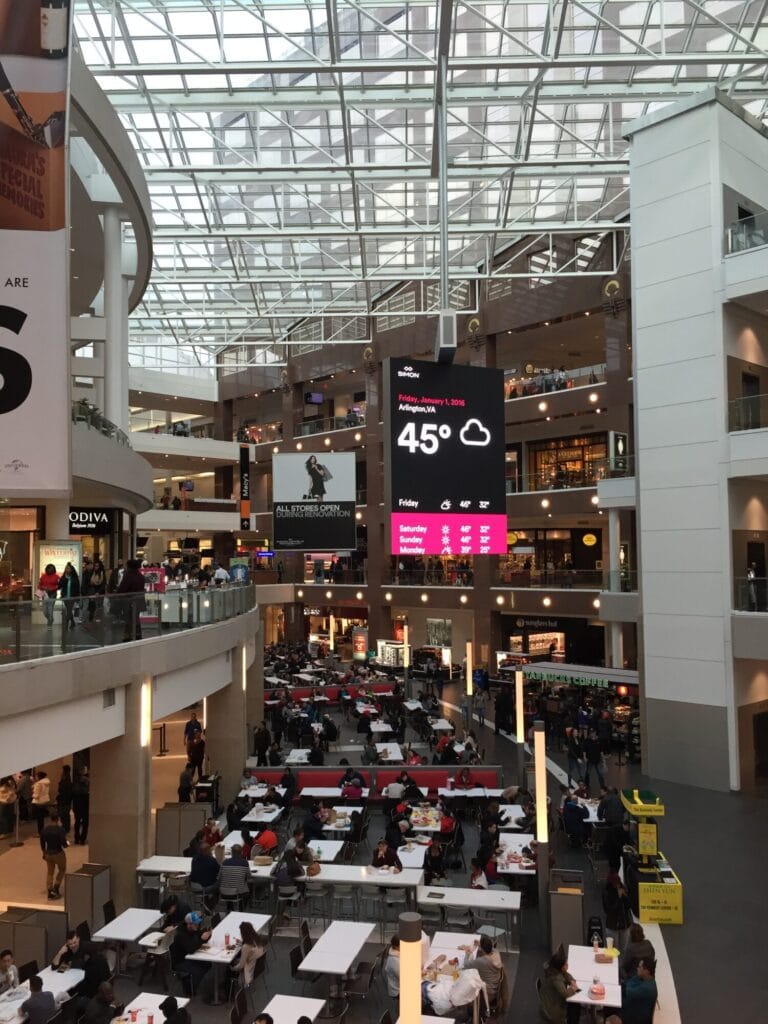
The food court also changed. Designers reworked the area to seat about 750 people and added new dining options.
Restaurants in the expansion included Matchbox and the Sugar Factory, while Zara opened a large two-level store with entrances both inside the mall and from the street.
Retail changes and security incidents in the 2020s
More stores started renting space again after the hardest months of the COVID-19 pandemic.
By 2021, stores like Levi's, Vince, Casa Furniture, Day & Night Cereal Bar, Subway, and Sante' in the Ritz-Carlton had opened or were planning to open.
Fashion remained a key part of the mall's identity. In 2024, Mango opened a store there, joining longtime tenants such as Macy's, Nordstrom, Zara, Apple, Coach, and Aerie.
Late 2025 brought more new stores. By November 21 that year, stores like Duck Donuts, Moge Tee, Pop Mart, Sakina's Grill, and Timberland were open in the mall.
Other stores, including Bowl'd Masala, Gatcha, Lacoste, Mezeh Mediterranean Grill, NOVA Jewelers, and Perfumania, were getting ready to open.
Events during this time also showed how hard it can be to run a busy mall.
On March 29, 2025, several fights broke out in the food court, so police cleared everyone out of the building. Officers charged three teenagers and made sure the area was safe.
The mall opened the next day again with more security. Another incident on October 11, 2025, involved a large, rowdy crowd that security and police broke up.
Shopping activity kept going into 2026. Lacoste opened a store in February next to Nordstrom on the first floor. Earlier that month, both Starbucks stands inside the mall closed.
Fashion Centre at Pentagon City is still a large shopping center connected to the Metro, with more than 140 stores and restaurants.
Its mix of shopping, offices, easy transit, and a big hotel continues to keep Pentagon City busy.
Fashion Centre at Pentagon City
Shopping mall in Arlington County, Virginia
Address: 1100 S Hayes St, Arlington, VA 22202
Opened: October 5, 1989
Developers: Melvin Simon & Associates and Rose Associates
Owner: Simon Property Group
Floor area: 1,036,072 square feetClosest cities:
Washington, DC
Arlington, VA
Alexandria, VA
Crystal City, VA
Rosslyn, VA
Annandale, VA
Fairfax, VA