
Bay City Mall lost every department store it opened with. The food court came down. The original name was retired. The doors stayed open.
The mall opened in 1991 in Bangor Township, Michigan, with Target, Sears, and a department-store chain that soon became Younkers. A cinema started showing films that October.
A craft retailer now works out of the last anchor space after moving in during June 2025. A sporting goods store took over the old Sears box. The cinema kept projecting films. Cars still pull into the parking lot.
No single owner saved the building. No single lease carried it through. Over three decades, the mall survived through replacement after replacement, each one moving the property farther from the mall it was built to be.
Bay City Mall and the Move That Remade Wilder Road
For most of the twentieth century, Sears was a downtown Bay City institution. When the company decided it wanted a larger, modern store, the question was where.
An expansion next to the existing downtown location ran into environmental problems.
An addition at Hampton Square Mall had its own complications.
Eventually, Robert B. Aikens & Associates landed on a stretch of East Wilder Road in Bangor Township, with help from Homart Development Company, the shopping-center arm tied to Sears.
The original plan for that site was a strip-style retail center. Negotiations with Sears, Target, and H.C. Prange changed that.
Each retailer preferred an enclosed format, and the strip-center proposal gave way to a full regional mall.
Wah Yee Associates designed a single-level enclosed center with anchor boxes at each end, interior concourses, a food court, and a cinema.
Groundbreaking began in 1989. The estimated construction cost was $28 million. Bangor Township backed the project with bond financing and road improvements.
The site near Interstate 75 gave the mall reach into the broader Saginaw Valley and communities north along the Lake Huron side of Michigan.
JCPenney had already left downtown for Hampton Square Mall.
With Sears about to follow, the shift in Bay City's retail center of gravity was no longer a question. Measured in parking lots and anchor leases, it was a fact.
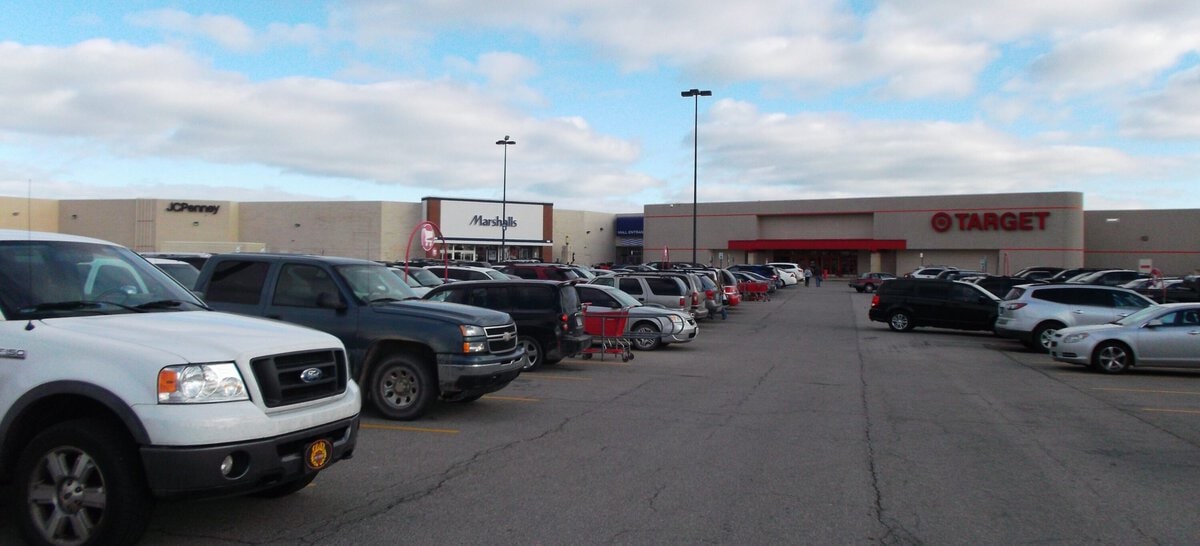
Opening Day: Bay City Mall Takes Shape, 1990-1991
Target and Sears opened before the full enclosed mall was ready, operating from their anchor boxes while interior construction continued.
The enclosed concourse held a soft opening in April 1991 with about 26 stores.
By the end of that year, Bay City Mall was fully operating with roughly 39 stores, its three anchor tenants, a food court, and a six-screen cinema that opened on October 16, 1991.
The third anchor was H.C. Prange, a regional department-store chain. Prange did not last long under that name.
The chain was acquired and converted, and by 1992 the store had become Younkers, a Midwest department-store brand that would remain part of the mall's identity for more than two decades.
The mall's gross leasable area was in the range of 523,000 to 530,000 square feet.
The surrounding site had 2,695 parking spaces, outparcel pads for restaurants and freestanding retailers, and the highway-oriented commercial context that would define the Wilder Road corridor for decades.
For Bay City shoppers, the mall meant department stores, a food court, a movie theater, and the kind of enclosed-mall experience they had previously been more likely to find in larger regional centers such as Saginaw.
The Full Lineup: JCPenney Arrives, and the Mall Reaches Its Peak
The mall opened with three anchors. Its peak configuration had four. JCPenney relocated from Hampton Square Mall and joined as part of the mall's department-store anchor lineup.
With Target in one wing, Sears and Younkers on the main corridor, and JCPenney added through expansion, the center had the full stack of early-1990s regional mall retail.
National specialty chains filled the interior spaces. Old Navy announced a 12,000-square-foot location in January 2007, with construction planned for spring and an opening expected in late July.
The store opened in the Target wing, across from Dunham's Sports.
The cinema grew with the mall's traffic. The original six screens expanded to eight in November 1997. In 2008, the theater absorbed former storefront space to enlarge its lobby.
The Wilder Road corridor had developed into Bay City's primary retail strip, with restaurants, hotels, and large-format retailers filling the surrounding land.
General Growth Properties consolidated its ownership of the GGP/Homart I portfolio in 2007, acquiring the remaining 50 percent interest in a 22-property group that included Bay City Mall.
The center still had all four anchors and a functioning food court.
Cracks in the Anchor Structure
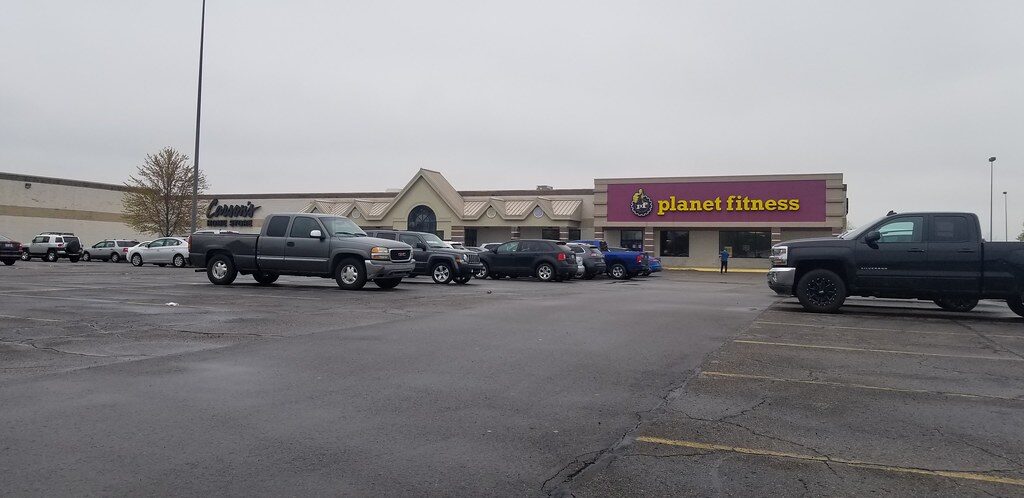
Old Navy closed in 2012. Planet Fitness opened in October of the same year. A national apparel chain out, a fitness tenant in. It was not yet a pattern, but it became one.
General Growth Properties had run into severe financial difficulty during the late-2000s crisis.
By 2010, Bay City Mall had been separated from its main portfolio and placed in a lender-controlled trust. Cushman & Wakefield took over management.
A signage improvement program of roughly $200,000 was planned for the Wilder Road frontage.
In April 2013, Bay City Mall Partners LLC, formed in Michigan on March 18, 2013, purchased the center for $7.5 million.
The buyers were connected with Lormax Stern and Wayzata Investment. Marshalls and rue21 joined the tenant mix later that year.
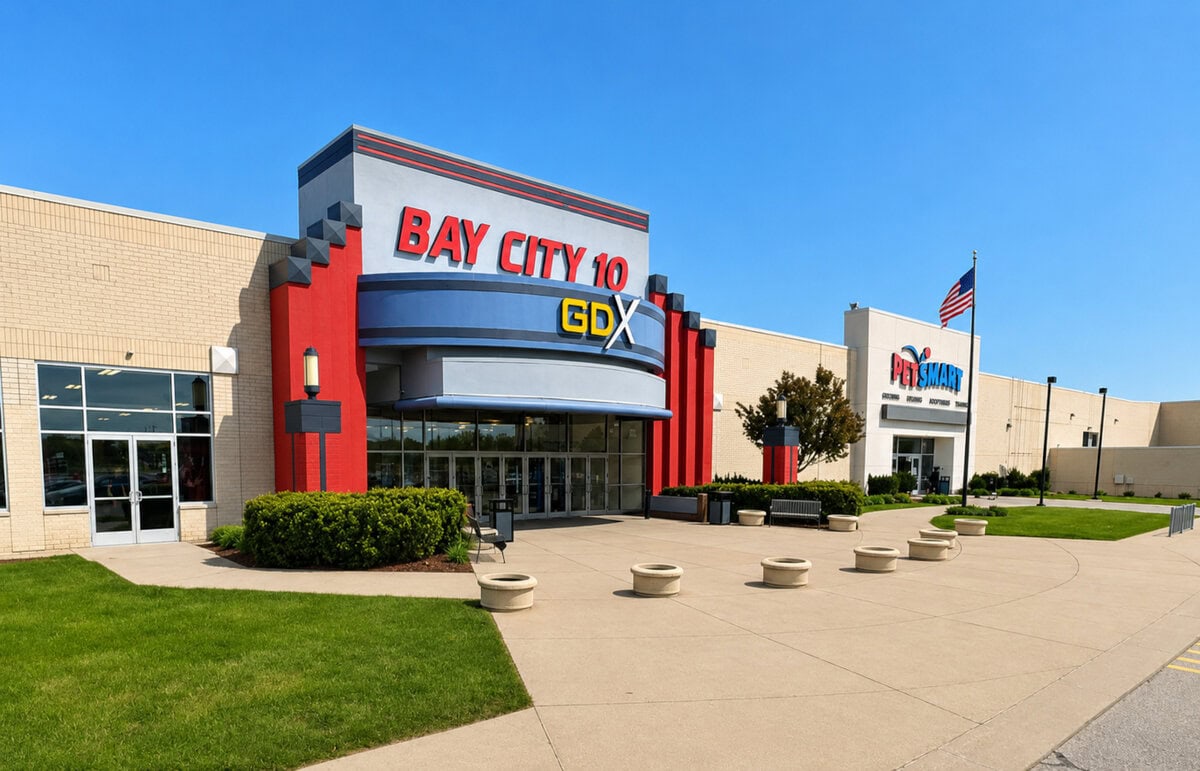
That December, Goodrich Quality Theatres began construction on a major cinema expansion.
Two new auditoriums were added to the Bay City 8, each with nearly 300 seats, stadium seating, premium high-back chairs, large-format screens wider than 50 feet, and Dolby Atmos sound in one auditorium.
Existing auditoriums were upgraded. The project, designed by Paradigm Design and built by Wolgast Corporation, was completed in 2014 as the ten-screen Bay City 10.
Department-store traffic was already declining nationally. The theater had just received its biggest upgrade since opening. The two trends ran in opposite directions inside the same building.

The Anchor Losses: Sears, Target, Younkers, JCPenney
Sears began its store-closing sale at Bay City Mall on October 31, 2014. It was the first original anchor to go.
Target appeared on the corporate closure list four days later. The Bay City store at 4135 Wilder Road closed on February 1, 2015.
Two of the mall's three original anchors were gone within months of each other. Both had been part of the center since before it fully opened.
Younkers partially filled the Sears gap. The chain opened a home and furniture store in part of the former Sears building in 2016, keeping some activity in that wing.
Then, in August 2018, Bon-Ton, Younkers' parent company, liquidated. Both Younkers locations at the mall closed. The main department-store space that Younkers had occupied since the Prange conversion in 1992 went dark.
JCPenney entered bankruptcy in 2020. The Bay City Mall store was included in the closure program on June 23, 2020, and closed in October. It was the mall's last traditional national department-store anchor.
Between 2014 and 2020, every conventional anchor that had defined Bay City Mall since 1991 was gone. The center still had Marshalls, Dunham's, the theater, and Planet Fitness.
What it no longer had was the department-store structure around which its original layout had been organized.
Rebuilding the Anchor Map: New Tenants and a New Name
In May 2017, plans were announced to remove the food court and bring in PetSmart, occupying space that had served lunch-counter and fast-food traffic since 1991.
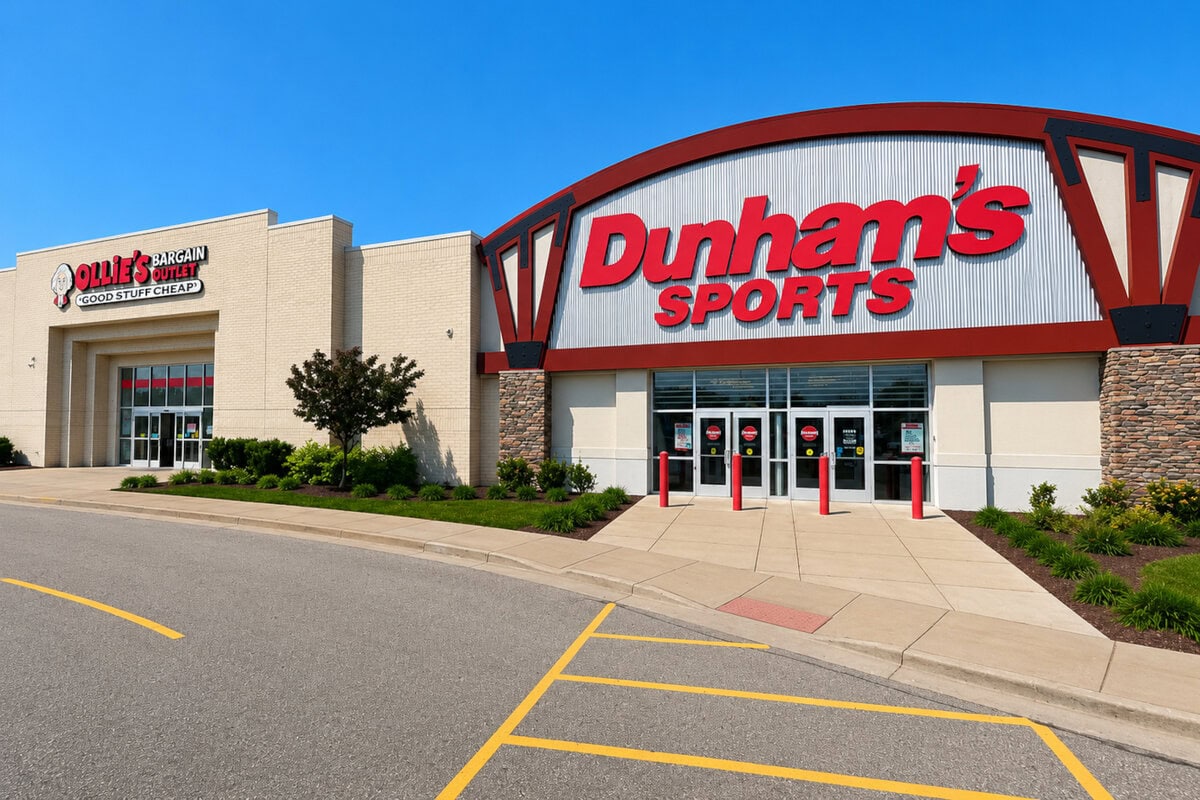
Ollie's Bargain Outlet opened in the former Sears area that September. The food court had been part of the original design since the mall opened; its removal marked a clear break from the conventional format.
In August 2017, the mall was renamed Bay City Town Center. The center was no longer defined only by department stores, and marketing it as a conventional regional mall no longer made sense.
Dunham's Sports had been in the Target wing. In September 2019, the store moved into the former Younkers home and furniture space, carved from the old Sears building.
The chain of losses and subdivisions had produced a new spatial logic, one that no longer followed the original department-store map.
An announcement in August 2018 named Big R/Stock + Field as a planned tenant for the former Target space. That plan was canceled.
The Target building, which the mall had purchased in 2016, remained one of the more difficult spaces to repurpose.
A similar separate-property situation at the JCPenney property later affected what the center could and could not do with that building.
The COVID-19 shutdown in March 2020 closed the theater.
Goodrich Quality Theatres had already entered financial distress, and the theater continued under Bay City Cinemas branding with its ten screens and 2014 upgrades intact.
What Came Next: Hobby Lobby and the 2025 Changes
The former Younkers space gained a tenant after several years of vacancy. It had opened as H.C. Prange in 1991, changed to Younkers in 1992, and remained empty after 2018.
Hobby Lobby opened a 50,000-square-foot store at 4131 East Wilder Road on June 13, 2025. The store was the chain's 35th Michigan location. A public grand-opening event took place on June 16.
The same year also included store closures. GameStop closed its Bay City location in January. The remaining inventory was moved before the store closed. Claire's filed for Chapter 11 bankruptcy in August.
The Bay City Town Center location was listed among 18 stores identified for closure, with sales expected to end by September 7.
The center added one large tenant and lost smaller retailers in the same year.
On April 23, 2025, the Bangor Township Planning Commission approved Bay City Mall Partners LLC's request for commercial condominium approval for the property.
The commission voted 7-0. The vote created a condominium structure and did not involve structural changes.
The materials stated that the Target and JCPenney buildings had separate owners. That ownership detail affected the center's options for future changes.
By November 2025, available spaces ranged from 650 to 20,000 square feet. The site plan listed more than 10 acres still open for development.
Bay City Town Center Today: An Enclosed Mall Without Department Stores
Bay City Town Center operates Monday through Saturday from 10 a.m. to 9 p.m. and Sunday from noon to 6 p.m. The 2026 tenant list includes Bath & Body Works, Zales, Spencer's, and Shoe Dept./Encore Shoes.
Smaller spaces hold a different group of uses: Bay Valley Academy, X-Treme Carpet Racing, Champion Force Athletics, Great Lakes Golf, the Saginaw River Museum, Kellie Prowse Photograph Studio & Gallery, Born to Bloom, and Saginaw River Dawgs.
None of those tenants belonged to the original plan. The mall opened in 1991 with Sears, Target, and Prange's. Younkers followed through the Prange conversion, and JCPenney arrived later through expansion.
It now runs on sporting goods, off-price retail, pet supplies, fitness, a craft chain, a ten-screen cinema, and local operators.
The change has been substantial and visible. The original structure still stands. The concourses remain. The anchor wings remain. The parking fields remain.
The food court is gone. The department stores are gone. The craft store that replaced the former Younkers space opened just the year before.
Bay City Town Center is not a dead mall. It is not the mall that opened in 1991.
It remains a large enclosed building in Bay City's main retail corridor. It still draws traffic from Wilder Road. It still serves as a gathering place.
It is still working through the empty spaces that have not yet found tenants.
Independent Publisher Notice
BestAttractions is an independent editorial publisher. We are not affiliated with, endorsed by, or acting on behalf of any location, business, property owner, manager, government agency, or organization described in this article. Comments posted on this page are not forwarded to, reviewed by, or acted upon by any entity mentioned in the article. For official inquiries, complaints, applications, bookings, or other requests, please contact the relevant entity directly through its official website or other verified channels.