Edmond's public art reputation came from two decades of policy, matching funds, a standing civic commission, and the decision to scatter more than 300 pieces across the city - parks, intersections, campuses, and downtown streets - rather than concentrate everything in one place.
A standing commission: Edmond created a permanent body to select, fund, place, and maintain art year after year rather than waiting for one-off donations.
Money structured to last: A one-percent set-aside from major city construction, a private matching program, and direct donor contributions gave the program three income streams.
Art in ordinary civic space: Works landed at fire stations, along boulevard medians, on the UCO campus, and beside public buildings - not behind admission fees.
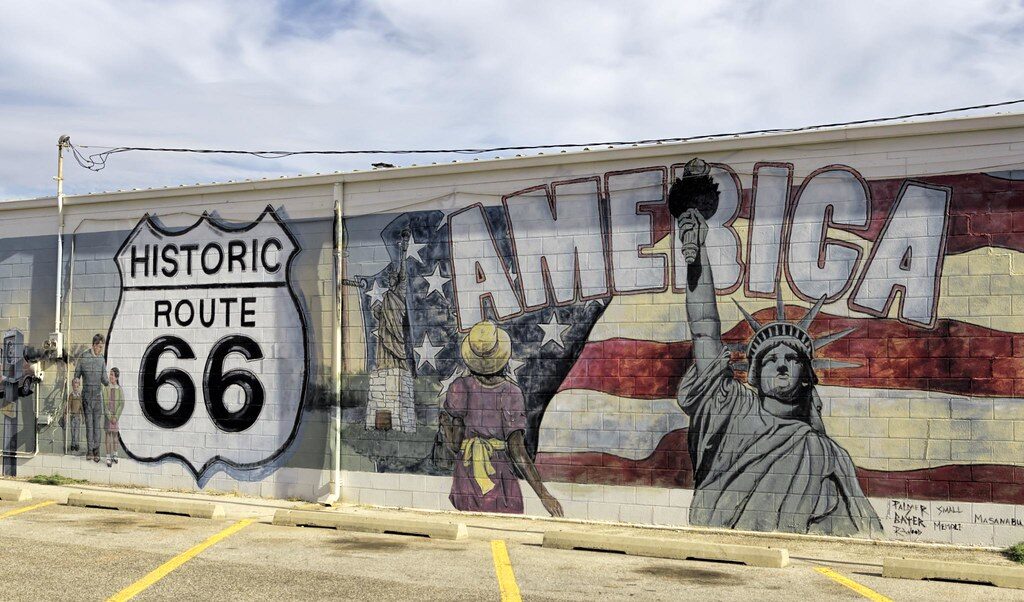
Route 66: Thirteen-plus miles of the Mother Road run through Edmond. Public art gave travelers a reason to stop.
A city already wired for the arts: The Fine Arts Institute, the university, and street festivals created a public that treated art as part of normal city life.
Range: Bronze monuments share space with the Blue Hippo, Route 66 murals, and hand-painted utility boxes. The variety is part of why people keep noticing it.
Edmond Public Art's Roots: A 1939 Mural and a 2001 Statue
"Pre-Settlement Days," painted for the Edmond Post Office under the 1939 WPA program, eventually moved into City Council Chambers when the building became municipal offices.
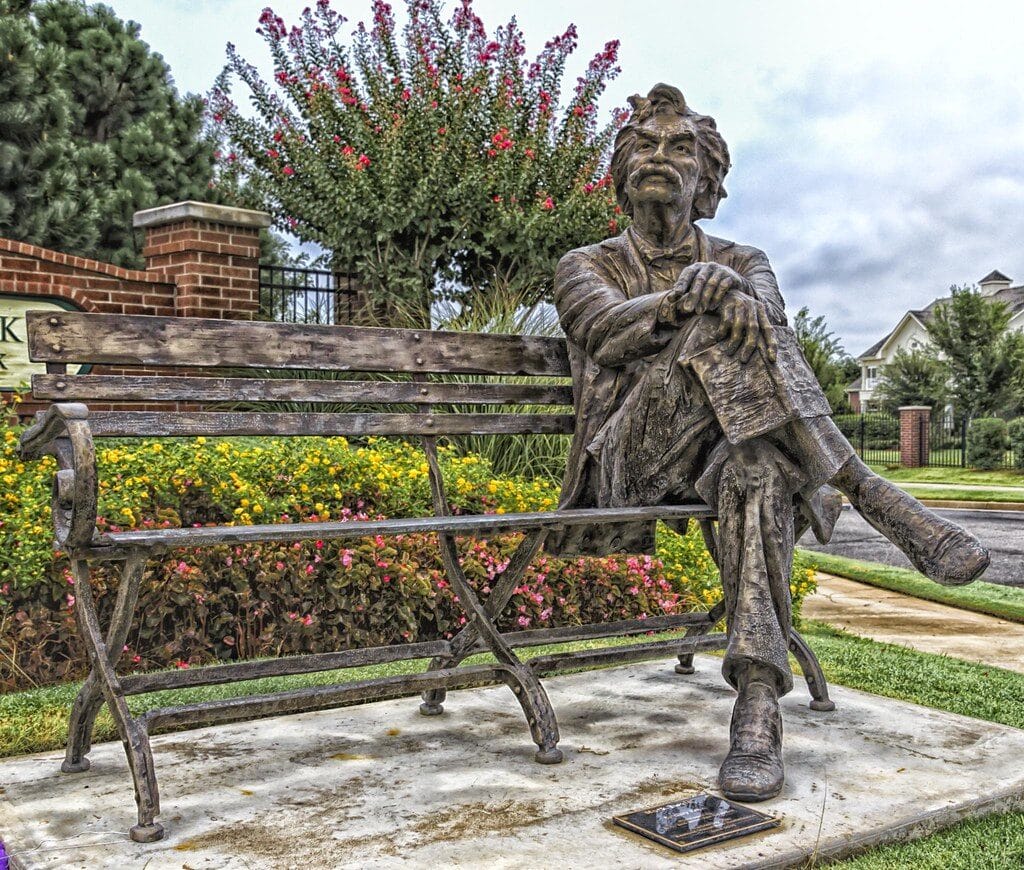
Edmond had a habit of placing art in civic spaces before anyone called it a program. The Shannon Miller statue, dedicated in May 2001, proved public sculpture could work as a landmark and community symbol.
The city launched its formal program that year with 13 pieces and created the Visual Arts Commission to run it.
The Visual Arts Commission: Why a Permanent Body Matters
Most cities that try public art do it informally - a donor offers something, the city says yes, the piece goes up, and nobody maintains it.
The Visual Arts Commission was built differently - with a mandate to select work, approve locations, maintain the collection, and create clear channels for artists and private donors.
Selection criteria include artistic quality, originality, site fit, and project feasibility. Those standards in writing kept the collection from becoming a yard sale of donated bronzes.
" by Kool Cats Photography over 15 Million Views is licensed under CC BY-NC 2.0
How Edmond Pays for 300-Plus Pieces
In January 2002, the City Council approved a $97,000 allocation tied to downtown enhancement funds.
A 2004 ordinance formalized the backbone: one percent of the construction budget for any city project valued at $250,000 or more goes toward public art.
Of that, 85 percent covers acquisition, 13 percent funds a revolving maintenance account, and 2 percent covers administration.
The matching model runs alongside it. A donor brings a project idea; if approved, the city matches up to half the cost, capped at $30,000 per piece. Donors stay invested in what gets built.
Spread Across the City, Not Locked in One Place
Art shows up at fire stations, recreation facilities, the UCO campus, historic downtown, and along Route 66.
Pieces like "Humpty Dumpty" and "Dali" became natural photo stops, not because anyone promoted them as attractions, but because they were in places people already went.
The "Outside the Box" program extended that logic to city-owned transformer boxes, turning utility infrastructure into approved art surfaces and making graffiti less appealing.
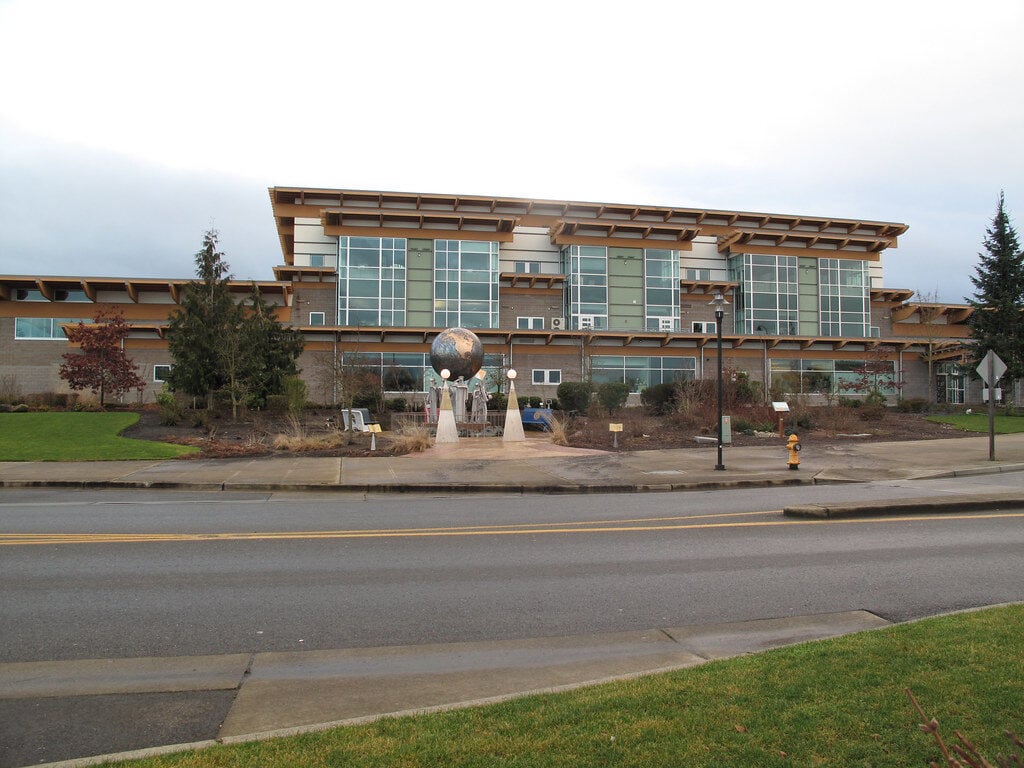
Route 66, Tourism, and What a 10-Ton Sculpture Can Do
"Touch the Clouds" originally stood in front of the Houston Astrodome. The bronze - more than 20 feet tall, about 15 feet wide, more than 10 tons - depicts the Lakota leader Touch the Clouds.
Edmond acquired it and placed it on the UCO campus near Route 66. The Blue Hippo works differently: whimsical enough that people photograph it and tell others about it.
The 2004 mural "Mainstreet Edmond," built around a Route 66 shield, connects downtown to the Mother Road.
Edmond promotes 13.4 miles of Route 66 through the city, and public art gives the highway something to slow down for.
The Arts Ecosystem That Made the Program Make Sense
The Fine Arts Institute of Edmond started in 1985 when four mothers decided children needed more access to art education.
That first year, 90 students took classes in a rented church room. By 2023, more than 5,200 students took in-house classes, with outside programming reaching 72,000 more.
The institute's 8,000-square-foot building at 27 East Edwards opened in 2004.
The Downtown Edmond Arts Festival brings more than 160 artists each year into the same streets where the permanent collection stands.
Public art took hold because it landed in a city already organized around arts participation.
" by Kool Cats Photography over 15 Million Views is licensed under CC BY-NC 2.0
Additional Factors That Kept Edmond's Art Scene Growing
Mural activity expanded sharply around 2020, adding Oklahoma artists to the collection faster than bronze commissions allow.
Uncommon Ground Sculpture Park, planned at North Coltrane Road and East 2nd Street, carries a $10 million city forgivable loan and a $5 million state allocation.
If completed, Edmond ends up with two identities: a distributed collection woven into everyday civic space and a destination park that draws visitors specifically for the art.
Edmond's 300-plus pieces are the cumulative evidence of a policy that kept working.
A permanent commission, a structured funding model, citywide placement, and a community already invested in arts programming built an identity that never depended on a single gift or moment.
Independent Publisher Notice
BestAttractions is an independent editorial publisher. We are not affiliated with, endorsed by, or acting on behalf of any location, business, property owner, manager, government agency, or organization described in this article. Comments posted on this page are not forwarded to, reviewed by, or acted upon by any entity mentioned in the article. For official inquiries, complaints, applications, bookings, or other requests, please contact the relevant entity directly through its official website or other verified channels.