
Before Tri-County Mall became a vacant 76-acre redevelopment problem, it was an open-air shopping center with fountains, plantings, and long walks between storefronts.
It opened on September 26, 1960, at 11700 Princeton Pike in Springdale, Ohio, near Kemper Road and just south of Interstate 275, about 13 miles north of Fountain Square.
Opened as Tri-County Center, it grew from 51 stores and 4,000 parking spaces into one of northern Cincinnati's key enclosed malls, with four anchors and more than 200 tenants by 1992.
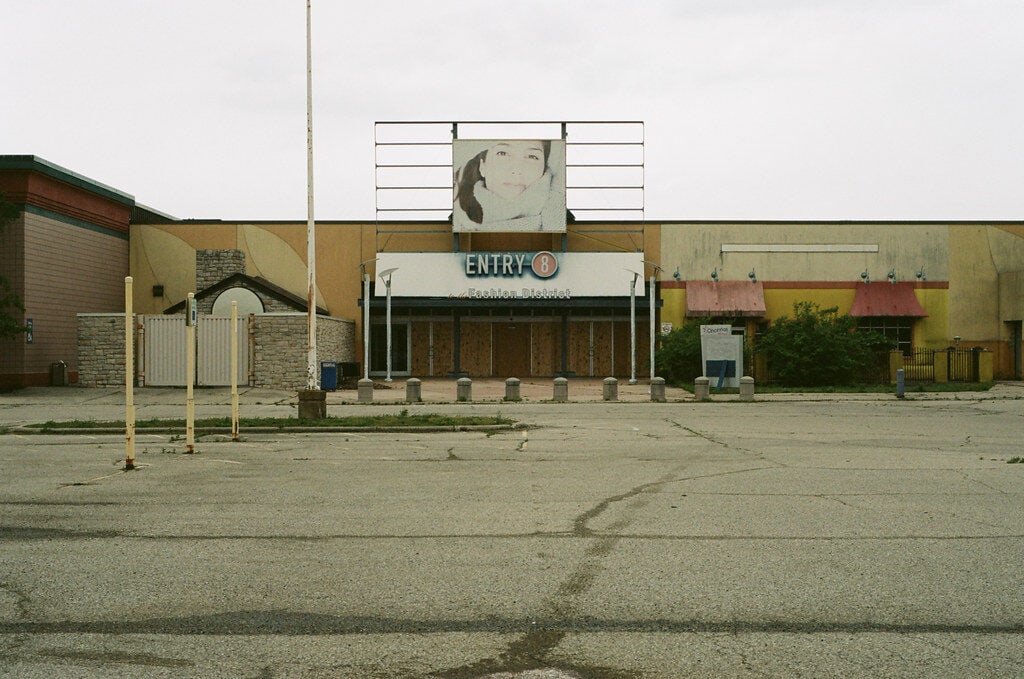
Anchor closures, foreclosure, and a failed redevelopment followed. The interior closed to the public on May 15, 2022, and the building still stood in early 2026, waiting on a $4.5 million wrecking contract.
Tri-County Mall Began as a Garden-Like Shopping Center
The project cost about $25 million and opened with about 500,000 square feet of retail space.
There were 51 stores and roughly 4,000 parking spaces, set in parking fields around the buildings, with an early site plan that left room for later growth.
Shillito's anchored the north end with a three-level store of about 170,000 square feet. Pogue's anchored the south end with a two-level store of about 110,000 square feet.
Between them were the daily errands and small pleasures of suburban shopping: Kroger, S.S. Kresge, Gray Drug, Chandler's Shoes, Brendamour's Sporting Goods, Friedman's Home Furnishings, Three Sisters, Carlson's Hardware and Appliance, Fanny Farmer Candies, Federal Bake Shop, and Northtown Stationers.
Shoppers pulled into 11700 Princeton Pike instead of driving downtown to Fountain Square.
By 1968, the Sidewalks Were Gone
The center was once open to the sky. By 1968, that had changed.
Shillito's added a fourth floor in 1962. The addition made the store larger and brought in a discount-oriented basement-style department.
Five years after that, Sears opened at Tri-County with retail space, auto-related services, and restaurant features.
The new Sears wing gave the property a different feel. It was enclosed, brighter, and easier to manage than the older open-air walkways.
Fountains, tropical plants, palm trees, skylights, antique-style light fixtures, and specialty stores filled the area.
Casual Corner, Hickory Farms, Lane Bryant, Spencer Gifts, Waldenbooks, and Wurlitzer came in during that expansion.
The center was turning from a set of stores connected by sidewalks into an indoor public space made for shopping.
Inside the corridors, rain, heat, and Ohio winters mattered much less. The property also had about 925,000 square feet of leasable space.
Tri-County Center had become Tri-County Mall.
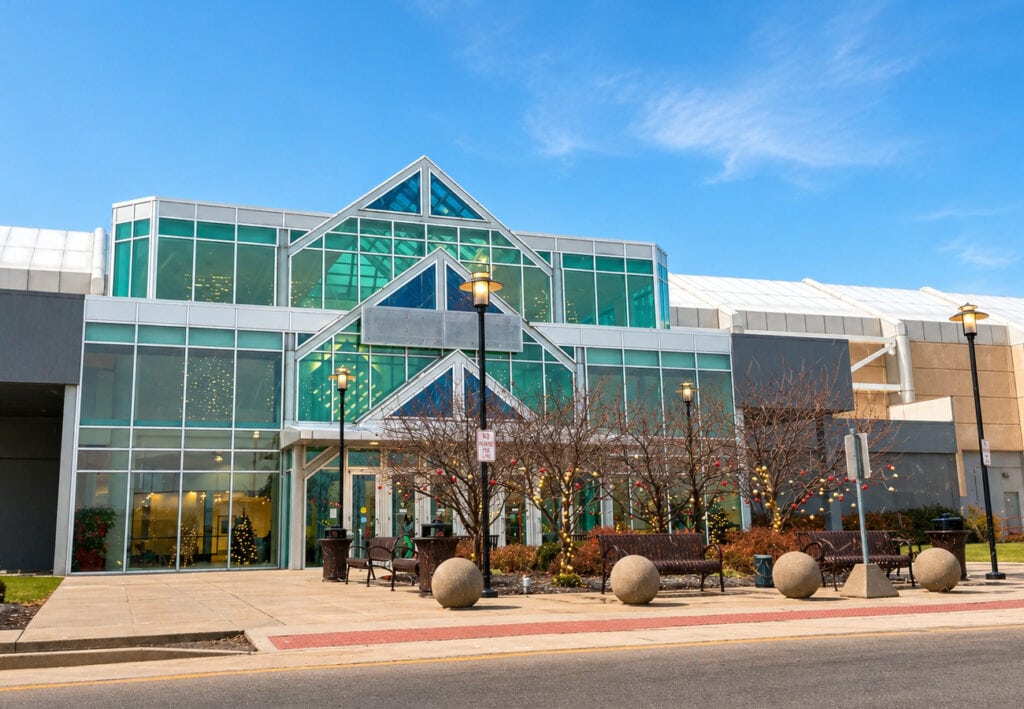
By 1976, Tri-County Outgrew Springdale
Pogue's expanded and renovated its store in 1971. The project added a third level, updated the interior, and gave more space to home furnishings and service departments.
The mall's main entrance changed in 1976 with earth-tone finishes, decorative fountains, and kiosk-style retail areas.
Warm colors, seating areas, water features, and small selling spaces in the common areas matched the indoor-mall style of the period.
Tri-County had evolved from an open-air suburban shopping center into an enclosed regional mall.
It had become a department-store destination for Springdale, Sharonville, Fairfield, Forest Park, Glendale, West Chester Township, and nearby parts of Butler and Hamilton counties.
Its position near Interstate 275 helped turn the property into a northern Cincinnati retail stop, not just a Springdale shopping center.
Ownership changed in 1979. The mall sold for about $34 million.
The Signs Changed Before the Building Did
Shillito's became Shillito-Rike's in 1982 and then Lazarus in 1986. The north anchor stayed open, but one of Cincinnati's longtime retail names was gone from the mall entrance.
The south anchor changed more quickly. Pogue's became L.S. Ayres in the mid-1980s. L.S. Ayres closed at Tri-County in 1988.
Later that same year, JCPenney opened in the former Pogue's space, replacing one of the mall's original local department-store names with a national chain.
In less than a decade, one anchor building had carried three store names: Pogue's, L.S. Ayres, and JCPenney.
The mall added a food court near the main entrance in 1985. It had nine restaurants, which made the mall a place for lunch, an after-school stop, or somewhere to sit while someone else kept shopping.
By the mid-1980s, Tri-County had almost 1 million square feet of space and more than 90 tenants.
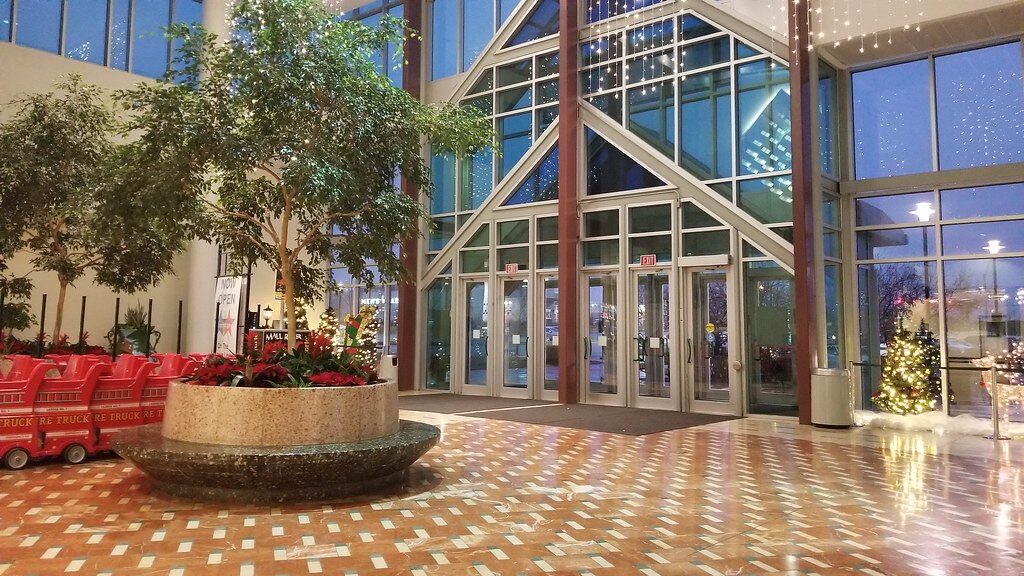
The Waterfall Years Made Tri-County Feel Huge
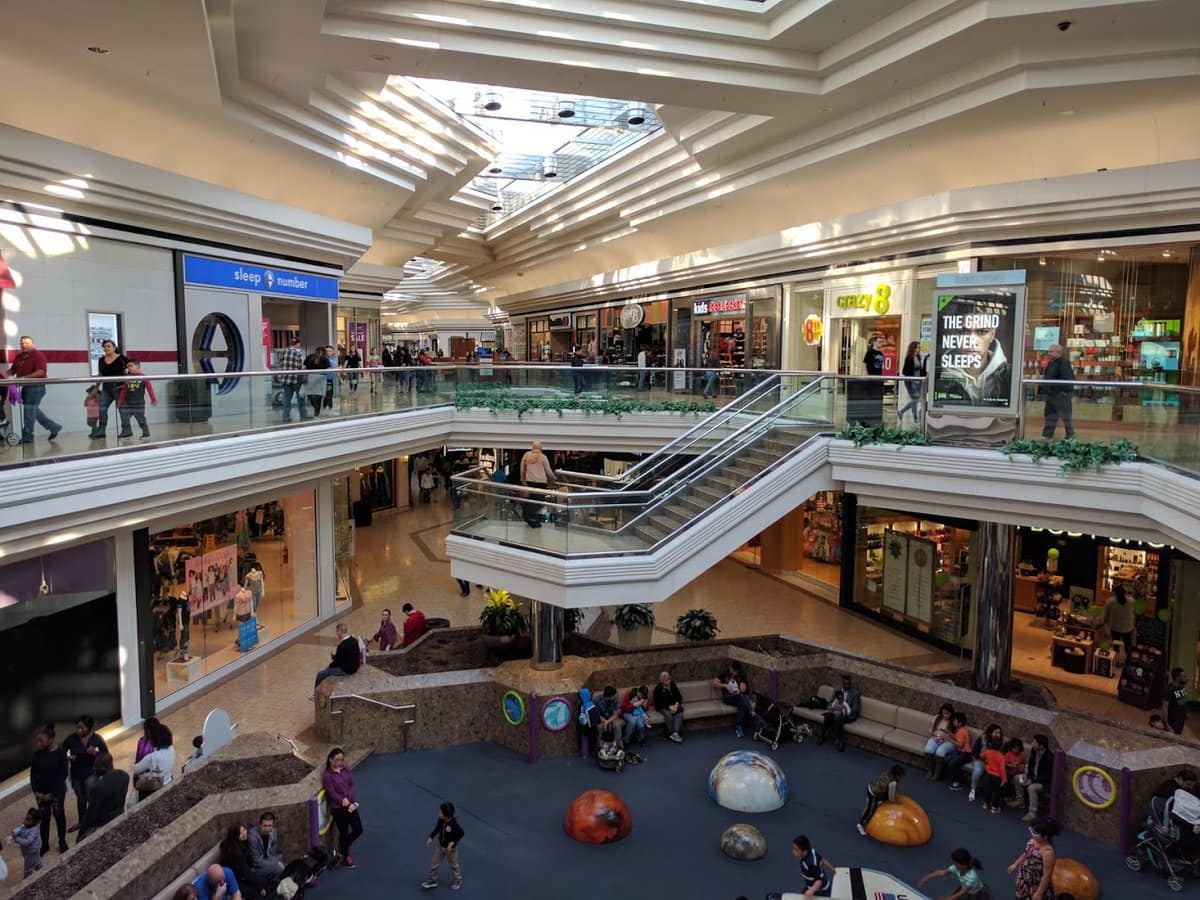
The waterfall fountain stood at the center of the rebuilt Tri-County Mall after an $85 million expansion and renovation.
The work ran between 1988 and 1990 and changed the property more than any earlier project.
A second level was added to much of the enclosed mall. Storefronts changed. The food court moved closer to Sears and became larger.
The older interior gave way to a late-1980s look built around height, glass, water, and bright common areas.
The expanded mall was dedicated on October 25, 1990. Lazarus received its own major remodel in the early 1990s, with an atrium, expanded departments, and a pedestrian bridge to a large parking garage.
That work cost more than $14 million.
McAlpin's opened in 1992 as the fourth major anchor. Its store covered roughly 236,000 to 240,000 square feet.
After McAlpin's opened, Tri-County had more than 1.2 million square feet and more than 200 stores and services.
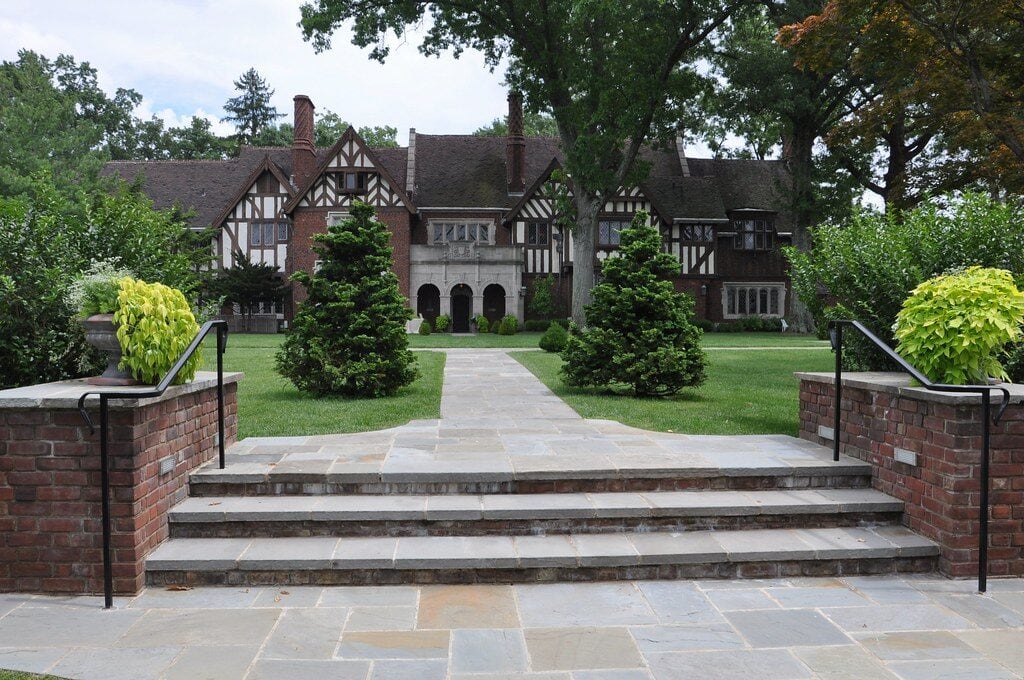
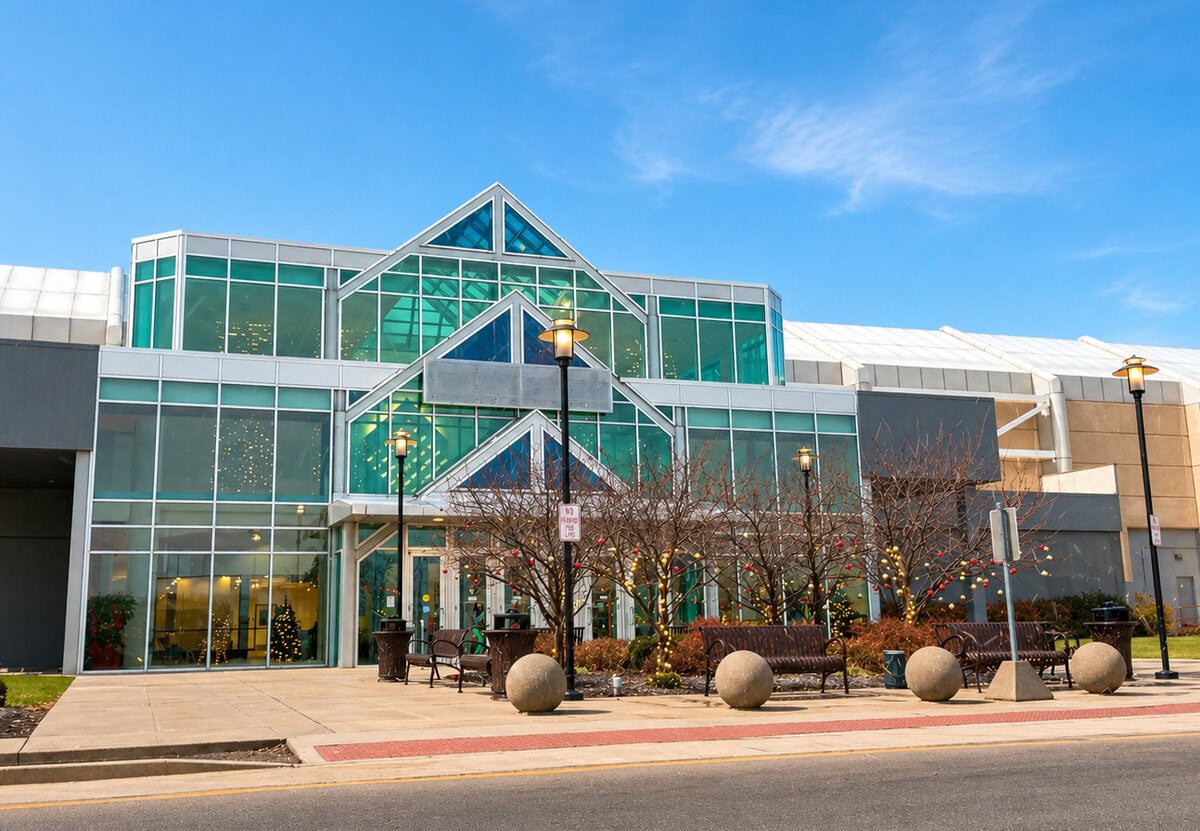
Four Anchors Made the Mall Feel Unshakable
In 1992, Lazarus, JCPenney, Sears, and McAlpin's gave Tri-County four major department stores.
The mall had enough space, parking, tenants, and highway access to stand against the largest retail centers in the Cincinnati region.
Smaller stores occupied the areas between the anchors. Shoppers went from department stores to music shops, clothing stores, jewelry counters, gift stores, software retailers, and teen-focused chains.
The food court gave people another reason to stay. The parking garage helped the mall handle holiday crowds.
The anchors drew shoppers through the corridors. Each department store brought in its own customers, and the smaller stores relied on people moving between them.
McAlpin's later became Dillard's after corporate consolidation in the late 1990s. Lazarus became Lazarus-Macy's in 2003 and Macy's in 2005.
The building still looked like a major regional mall, but Cincinnati department-store names were being replaced by national brands.
The property was sold in 1997 for about $147 million. On a holiday weekend, the parking garage filled, the food court had a wait, and the anchors moved shoppers through the corridors the way they were meant to.
Anchor Closures Broke the Old Mall Model
JCPenney closed at Tri-County in 2005, the same year the property sold for about $180 million.
The old south anchor was reworked into a new mall entrance and reused by Ethan Allen, BJ's Restaurant and Brewhouse, and other tenants.
The upper level later became Krazy City, with rides, miniature golf, and go-karts.
Those replacement uses showed the problem inside the building. Full-line department stores were harder to replace, so the mall tried furniture, restaurants, and entertainment.
The mall sold for about $180 million in 2005, then was acquired out of foreclosure in 2013 for about $45 million.
Newer lifestyle centers and open-air districts drew tenants and shoppers, and that shift later showed up sharply when Dillard's moved its attention to Liberty Center in Butler County.
Tri-County added stricter youth curfew rules in 2010 for Friday and Saturday afternoons and evenings.
Dillard's became a clearance center in 2013. It closed in 2015.
By 2021, Nothing Was Left to Anchor
By 2021, the old anchor system was gone. JCPenney had closed in 2005. Dillard's had closed in 2015.
Sears closed in 2018 after operating at Tri-County since 1967. Macy's closed in spring 2021, ending the last full-line traditional department store at the mall.
The interior still had holdover shops, service businesses, restaurants, and exterior-facing tenants.
Starbucks, Chipotle, Outback Steakhouse, and Men's Wearhouse were expected to keep operating separately from the interior mall.
Most interior tenants had to leave before the public interior closed on May 15, 2022.
BJ's Restaurant and Brewhouse closed at the end of 2023 after about 15 years at the property.
Artisan Village Collapsed Before City Center Springdale
A $1 billion to $1.3 billion redevelopment plan ended the mall's retail era before a new district took its place. Artisan Village was approved in concept in late 2021 and early 2022.
The plan covered more than 70 acres and included apartments, retail, restaurants, office space, education, entertainment, recreation, hotels, green space, trails, bioswales, and public areas.
It called for up to 2,600 residential units. A redevelopment group bought the mall property in March 2022, and the interior mall closed soon after.
The first phase was set to begin in 2022. Later, the goal moved to breaking ground by the end of 2023. That date passed too.
The delays became a bigger ownership problem. Foreclosure issues followed, and by mid-2024, the earlier effort had fallen apart because the redevelopment group did not secure the money needed to keep the project going.
In July 2024, the property moved into a new structure tied to AV Cincinnati Acquisition and the name City Center Springdale.
The mixed-use goal stayed, but the layout and schedule changed.
The mall was closed, but it still had not become something new.
Demolition Plans Still Wait for a Standing Building
By August 2025, O'Rourke Wrecking Company had a $4.5 million deal to demolish Tri-County Mall. The job was expected to take about 12 months after it received full approval.
Local approvals still controlled the schedule. On August 12, 2025, the Planning Commission voted 7-0 to continue a proposal to divide the property into four parcels.
Concerns included the redevelopment plan, access, traffic, stormwater, drainage, and the fact that there was no final development plan.
By Spring 2026, the old Tri-County Mall building still stood on the 76-acre site.
The property prospered in the 1960s with fountains, department stores, and about 4,000 parking spaces. In 2026, it has a demolition contract, but the timeline to tear it down has not yet begun.
Notable Milestones
1959 - Plans advanced for a large suburban shopping center north of Cincinnati.
September 26, 1960 - Tri-County Center opened as an open-air shopping center at 11700 Princeton Pike.
1962 - Shillito's added a fourth level and expanded its department store.
1967 - Sears opened, adding a third anchor and a new enclosed wing.
1968 - The remaining open-air sections were enclosed, creating Tri-County Mall.
1971 - Pogue's expanded and renovated its store with a third level.
1976 - The main entrance was renovated with earth tones, fountains, and kiosk-style retail areas.
1979 - The mall sold for about $34 million.
1982 - Shillito's became Shillito-Rike's.
1985 - A nine-restaurant food court opened near the main entrance.
1986 - Shillito-Rike's became Lazarus.
1988 - L.S. Ayres closed, and JCPenney opened in the former Pogue's space.
1990 - An $85 million expansion added a second level and a center-court waterfall.
October 25, 1990 - The expanded Tri-County Mall was dedicated.
1992 - McAlpin's opened as the fourth major anchor.
1997 - The property sold for about $147 million.
2005 - JCPenney closed, Lazarus-Macy's became Macy's, and the mall sold for about $180 million.
2013 - The mall was acquired out of foreclosure for about $45 million.
2015 - Dillard's closed after operating as a clearance center.
2018 - Sears closed after more than 50 years at the mall.
Spring 2021 - Macy's closed, ending the mall's traditional department-store anchors.
May 15, 2022 - The interior mall closed to the public.
2022 - Artisan Village redevelopment plans moved forward, then later stalled.
Mid-2024 - The earlier redevelopment effort collapsed after financing and foreclosure problems.
July 2024 - The site moved into the City Center Springdale redevelopment structure.
August 12, 2025 - A proposed four-parcel split was continued by a 7-0 Planning Commission vote.
August 2025 - O'Rourke Wrecking Company had a $4.5 million demolition contract.
Spring 2026 - The former mall building still stood on the 76-acre site.
Independent Publisher Notice
BestAttractions is an independent editorial publisher. We are not affiliated with, endorsed by, or acting on behalf of any location, business, property owner, manager, government agency, or organization described in this article.
Comments posted on this page are not forwarded to, reviewed by, or acted upon by any entity mentioned in the article.
For official inquiries, complaints, applications, bookings, or other requests, please contact the relevant entity directly through its official website or other verified channels.
There use to be a large restaurant when it first opened. It may have been cafeteria style. It was out in front of Pogue’s, across from Martin’s Clothing store for women. Does anyone remember the name of the restaurant?
I love hearing about the early days of the mall. Hopefully, someone recalls the name of the restaurant.
Forum was the name of the restaurant in Tri County mall years ago.
That actually fits perfectly with the era: a slightly grand, vaguely Roman name for a restaurant in a regional mall. It tells you a lot about what Tri-County was aiming for back then.
I so miss the days of mall shopping! It was a big part of my young adult life to spend time shopping and walking the malls especially Tri County as it was one of my favorites. The mall was huge and you could spend all day there shopping (mostly clothing stores) and munching fast food when you got tired. It's really a sad day. I wonder if the malls will ever make a comeback. It's truly not the same shopping online when you can't see, feel and compare items like a mall. Nothing like seeing products in person. How did we ever let technology make us so lazy that we can't drive to a mall to shop? Bring back the beautiful malls I so miss!
Thank you for writing this out - it is long and personal. I think you are right that online shopping can never fully replace the physical act of comparing things in person. The "feel" part matters. Fabric, fit, color under real light - that is the stuff that makes you confident in what you are buying, and screens are still terrible at it.